
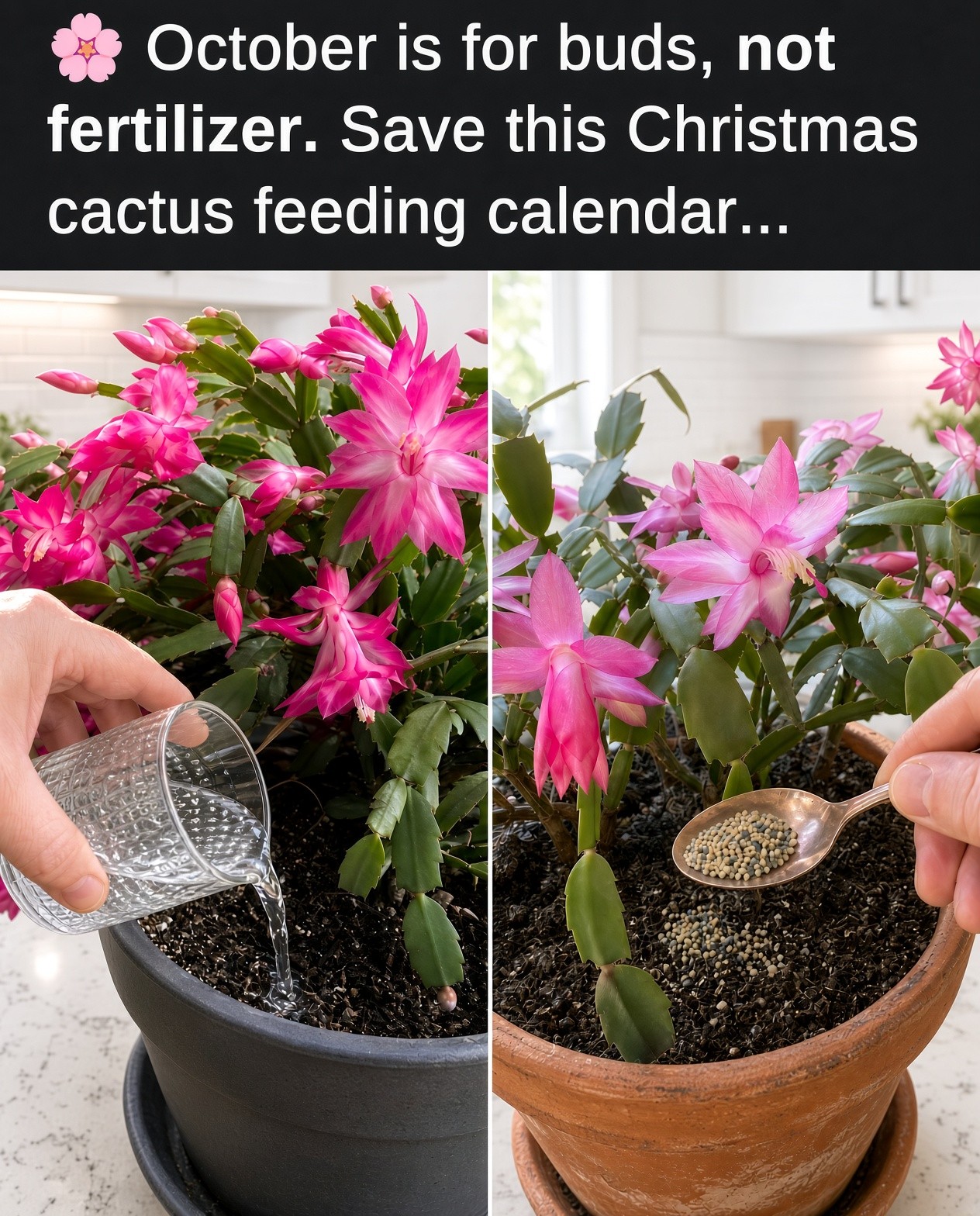
A simple seasonal feeding calendar to support healthy growth and help your Christmas cactus bloom at the right time.
A Christmas cactus can grow plenty of green segments and still produce very few flowers if its care routine does not match the seasons. Fertilizer matters, but timing and dilution matter more than using a strong formula. These tropical forest cacti do best with light feeding during active growth followed by a pause as they prepare to bloom. This practical calendar explains when to feed, when to stop, and how to avoid common mistakes. Use it as a flexible guide: your plant’s actual growth, indoor temperatures, light, and flowering time should determine the final schedule.
Quick Fertilizer Calendar
| Months | Feeding plan |
|---|---|
| January–February | Usually no fertilizer; allow a post-bloom rest. |
| March | Restart with diluted balanced fertilizer when new growth begins. |
| April–July | Feed lightly every 2–4 weeks during active growth. |
| August | Give the final light feeding, then begin winding down. |
| September–December | Stop routine feeding while buds form and flowers open. |
January–February: Let the Plant Rest
After holiday flowers fade, Christmas cactus usually enters a slower period. Do not keep feeding simply because the calendar says so. Give it bright, indirect light and water when the upper layer of mix begins to dry. Empty the saucer after watering so roots are not left standing in water. A healthy plant may produce little new growth during this rest period. Avoid repotting or heavy pruning unless there is a clear reason, such as rotten roots or damaged stems. A quiet winter rest helps the plant transition into active growth as light levels improve.

March: Restart With a Light Balanced Feed
When fresh stem segments appear in spring, restart with a complete, balanced liquid houseplant fertilizer. Choose a product suitable for indoor flowering plants and dilute it to about half the label strength—or less if the product is concentrated or the plant is small. Apply fertilizer to already-moist mix rather than a bone-dry root ball. A light monthly feeding is a reasonable starting point. The goal is to support new segments and roots, not force rapid, soft growth. If the plant was recently repotted into a mix containing fertilizer, wait until that initial supply has diminished before adding more.

April–May: Feed During Active Growth
As the plant produces new segments, continue diluted balanced fertilizer roughly every two to four weeks, depending on the label, growth rate, and potting mix. More fertilizer is not automatically better: excess salts can injure roots and leave segments yellow, reddish, or dry at the tips. Water thoroughly when needed and let excess drain. Christmas cactus is a tropical forest cactus rather than a desert cactus, so it prefers an airy, well-drained mix and more consistent moisture than many desert species. Keep it in bright indirect light and rotate the pot occasionally. If growth is weak, check light, roots, and watering before increasing fertilizer.

June–July: Maintain a Steady Routine
During warm months, continue modest feeding while the plant actively produces healthy segments. A sheltered outdoor position can work in mild weather, but choose bright shade or filtered light and introduce the plant gradually. Direct midday sun may scorch segments, and sudden temperature changes can stress the plant. Do not feed a wilted, overheated, waterlogged, or recently disturbed plant; correct the stress first. If weather is extremely hot or growth has stopped, reduce or pause feeding rather than applying fertilizer by habit. Make sure the pot drains freely and never leave it standing in water.

August: Plan the Final Feeding
Late summer is the time to wind down the fertilizer routine. Many growers give the final light feed in August, then stop as the plant approaches bud formation. A balanced fertilizer is sufficient for most home-grown plants; a special high-phosphorus bloom booster is not essential and cannot compensate for poor light or incorrect temperature. Follow the product label and avoid high doses. Do not prune late in the season if you want buds soon, because flowers form at the tips of mature segments. Keep the plant healthy and let its growth mature rather than encouraging tender new foliage as flowering conditions approach.

September: Stop Feeding and Prepare for Buds
By September, stop routine fertilizer for a typical Christmas cactus preparing to flower. Extra feeding can encourage vegetative growth when the plant needs stable conditions for bud formation. Give it bright daytime light and long, uninterrupted nights. Many holiday cacti respond to around 12–14 hours of darkness nightly for several weeks, along with cooler nights; exact needs vary by cultivar and room conditions. Keep it away from bright lamps at night if you are using a controlled dark period. Water a little less often as growth slows, but do not let the root ball become bone dry.

October: Keep Fertilizer Off the Schedule
October is often a bud-setting month, so continue to withhold fertilizer. Maintain long nights, appropriately cooler temperatures, and steady but more restrained watering. Do not interpret every wrinkled segment as a need for fertilizer; check moisture and roots first. If small buds appear, avoid repeatedly moving or turning the plant, because abrupt changes in light, temperature, or watering can contribute to bud drop. Keep it away from cold drafts, heaters, and sudden temperature swings. Protect the developing buds rather than pushing the plant into more leafy growth. Adjust the calendar if your cactus blooms earlier or later.

November–December: Protect Buds and Enjoy Flowers
When buds are visible and flowers open, continue to skip fertilizer. Place the plant in bright, indirect light and keep its surroundings reasonably stable. Water when the upper layer of mix dries, then let excess water drain. Keep it away from heating vents, chilly windows, and door drafts. Sudden changes can cause buds or flowers to drop. Once flowering finishes, allow a quiet recovery period and gradually return to the spring feeding routine when new growth begins. The aim is not to feed flowers into existence at the last minute; it is to grow healthy segments during the active season and provide the cues that trigger flowering.

Water Before You Fertilize
Fertilizer is not a substitute for proper watering. Before feeding, check that the mix is not bone dry and the plant is not waterlogged. If the soil is dry, water it first and let the excess drain. Then apply diluted fertilizer according to the product directions; do not double-dose because a previous feeding was missed. An airy mix and a pot with drainage holes reduce root problems. If water runs straight through a very dry mix, moisten the root ball gradually rather than pouring on a large amount at once. Remove runoff from the saucer.

Recognize Overfeeding and Salt Buildup
Too much fertilizer can cause brown or brittle segment tips, yellowing, reddish discoloration, wilting despite moist soil, or a crust of salts on the mix. These symptoms can also come from light, watering, temperature, or root problems, so inspect the whole plant. If salt buildup is likely and the pot drains well, flush the mix with clean water and let it drain completely; then pause feeding for several weeks. Do not flush a pot without drainage or a plant with severely rotten roots. Restart only when active growth resumes and use a weaker solution.
Adjust the Calendar to Your Plant
A month-by-month calendar is a guide, not a rigid rule. Indoor temperatures, window direction, cultivar, pot size, and flowering time all affect timing. Thanksgiving cactus often flowers earlier than true Christmas cactus, so its feeding and dark-period schedule may shift earlier. Easter cactus has a different seasonal cycle and should not be forced to follow the same timetable. Recently repotted plants may already have nutrients in their mix, while plants growing slowly in dim conditions may need better light rather than more fertilizer. Watch for new segments and buds, keep notes about flowering time, and adjust next year’s routine.