
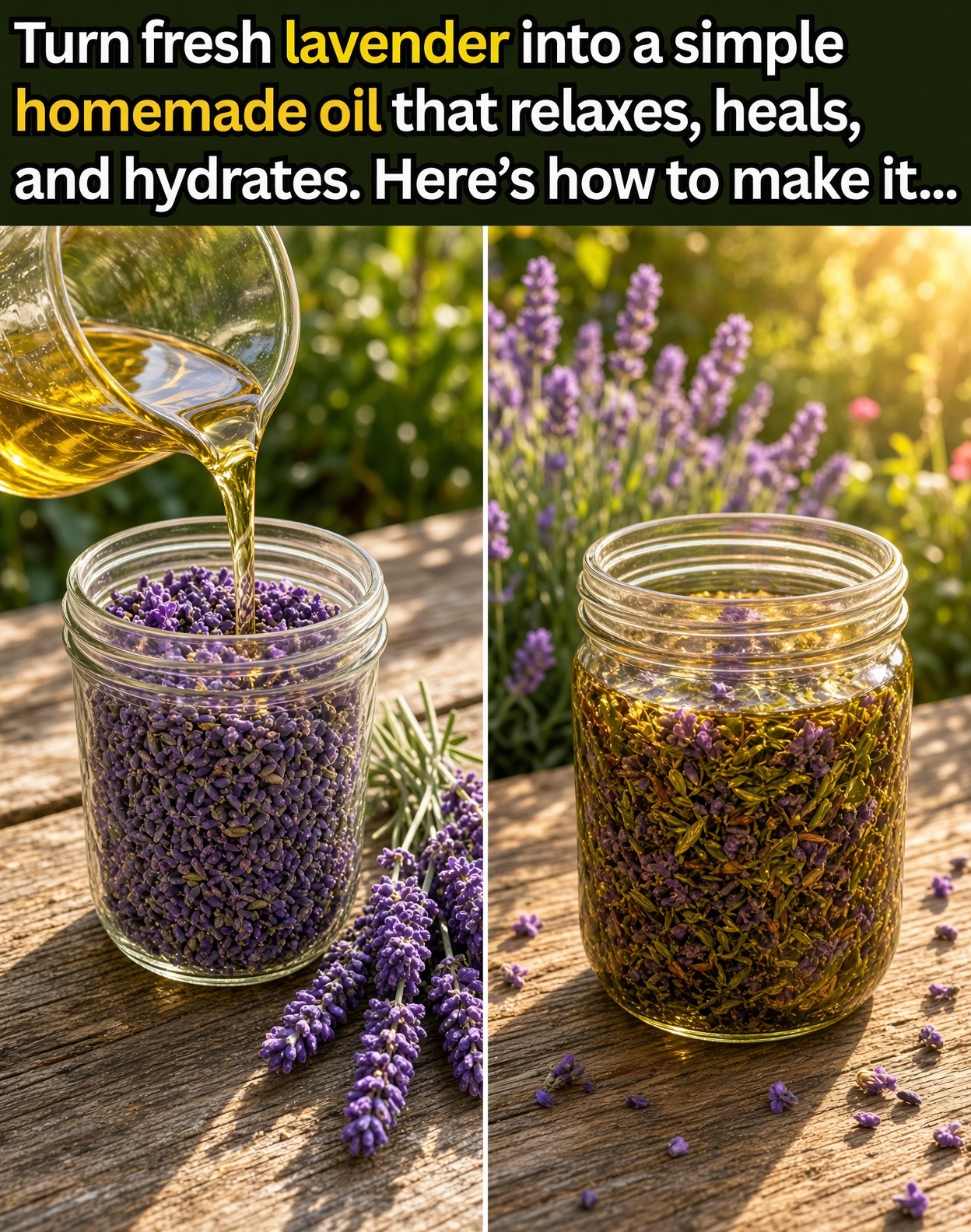
Lavender-infused oil is a simple homemade preparation made by steeping dried lavender in a carrier oil. It is different from lavender essential oil: an infusion is a carrier oil that has taken on some of the plant’s aroma and oil-soluble components, while essential oil is a highly concentrated product made by distillation. Making an infusion at home does not require special equipment, and the finished oil can be useful as a scented body oil, massage oil, or ingredient in simple personal-care projects.

Why Make Lavender-Infused Oil?
The appeal is as much about the process as the finished product. Dried lavender contributes a familiar floral fragrance while the carrier oil provides a smooth base that can be applied to the skin. Jojoba, sweet almond, olive, and fractionated coconut oils are common choices, although the best option depends on how you plan to use the finished preparation. Keep expectations realistic: research on lavender varies by preparation and purpose, and evidence for many claimed health benefits remains limited.

Infused Oil vs. Lavender Essential Oil
These two products should not be treated as interchangeable. Lavender-infused oil is primarily a carrier oil containing material extracted from dried lavender. Lavender essential oil is concentrated and normally used in much smaller amounts, often diluted before skin application. Confusing the two can lead to using a concentrated essential oil in a way that is not appropriate for the skin. For a simple homemade project, an infusion is the gentler and more straightforward preparation.

What You Need
For a small batch, use about 1 cup of completely dried lavender buds and enough carrier oil to cover them generously. You will also need a clean, completely dry glass jar, a fine strainer or cheesecloth, a clean bowl, and a dark glass bottle for storage. The exact amount is flexible: the important point is that the dried plant material stays submerged beneath the oil throughout the infusion.

Choose Dried Lavender
Use lavender that is genuinely dry and crisp rather than freshly picked flowers. Fresh plant material introduces additional moisture, which can shorten the life of a homemade oil and increase the chance of spoilage. If you harvest lavender yourself, dry the flower stems thoroughly in a clean, airy place before removing the buds. Once dry, keep the buds in a sealed container until you are ready to make the infusion.

Cold Infusion Method
The slow method is the simplest approach. Put the dried lavender into a clean jar, then pour in enough carrier oil to completely cover it. Close the jar and place it in a warm location away from harsh direct sunlight. Let the lavender infuse for roughly two to four weeks, giving the jar a gentle shake every few days. The oil should remain clear and free of signs of moisture or spoilage. When the infusion is finished, strain it carefully through cheesecloth or a fine strainer.

Gentle Warm Infusion
If you want the preparation sooner, a gentle warm infusion can shorten the process. Combine the dried lavender and carrier oil in a heat-safe container and warm it indirectly using a double boiler or another controlled low-heat setup. Keep the temperature gentle rather than allowing the oil to simmer or boil. After a few hours, allow the oil to cool before straining. Low heat is preferable because excessive heating can change the fragrance and degrade delicate components.

Strain the Oil Thoroughly
Straining is more important than it may look. Tiny pieces of lavender left in the finished oil can continue to break down during storage. Pour the cooled infusion through a fine strainer or several layers of clean cheesecloth, then repeat if necessary. A clean funnel can make the transfer into a storage bottle easier and reduce spills.

How to Store Lavender-Infused Oil
Transfer the finished oil to a clean, dry, preferably dark glass bottle. Store it in a cool place away from heat and strong light. Label the bottle with the preparation date and the carrier oil used. Homemade infused oils do not have one universal shelf life because stability depends on the carrier oil, cleanliness, storage conditions, and whether moisture entered the preparation. If the oil develops an unpleasant smell, visible mold, unexpected cloudiness, or other signs of spoilage, discard it rather than trying to rescue it.

1. Use It as a Simple Body Oil
A small amount of lavender-infused oil can be smoothed over dry skin after bathing while the skin is still slightly damp. The carrier oil helps reduce the feeling of dryness and leaves a soft finish. Start with a small amount because using too much can make the skin feel greasy. This is a cosmetic use rather than a treatment for a medical skin condition.

2. Make a Relaxing Massage Oil
The floral scent makes lavender-infused oil a natural fit for a relaxing massage routine. Warm a small amount between your hands and use it on areas such as the shoulders, arms, hands, or feet. The relaxing experience may come from the massage itself as well as the aroma. Research on lavender and stress or anxiety is still mixed, so it is better to describe this as a comfort ritual rather than a proven medical treatment.

3. Use It on Dry Hands and Cuticles
Dry hands and rough cuticles can benefit from a small amount of plain carrier oil. Massage a drop into the cuticles and the skin around the nails, especially after washing your hands. Because the lavender is infused rather than concentrated essential oil, the preparation has a mild botanical aroma. Stop using it if redness, itching, burning, or another irritation develops.

4. Add It to a Homemade Body Balm
Lavender-infused oil can also become one ingredient in a simple balm. Combine it with a suitable wax and a stable plant oil, melt the ingredients gently, then pour the mixture into clean containers. A balm is convenient for elbows, heels, hands, and other areas where a thicker texture is useful. Keep water out of the recipe because homemade oil-and-wax products without preservatives are not the same as commercial water-based creams.
5. Create a Bedtime Self-Care Ritual
Lavender is widely used for its pleasant fragrance in aromatherapy and personal-care products. You can use a small amount of infused oil as part of a quiet evening routine, such as massaging your hands or feet before bed. This should be considered a relaxation ritual rather than a guaranteed sleep treatment. The National Center for Complementary and Integrative Health notes that evidence for lavender aromatherapy and sleep remains uncertain.
6. Use It in a Simple Bath Routine
A little infused oil can be added to a bath for a fragrant, moisturizing-feeling experience. Because oil does not naturally disperse through water, use only a modest amount and remember that it can make the tub slippery. For better control, you can instead apply the oil to damp skin after bathing and rinse the tub normally.

7. Make a Light Hair-End Oil
A drop or two can be smoothed over dry hair ends when they need extra softness and shine. Avoid saturating the scalp or hair because a plant oil can feel heavy, particularly on fine hair. This is a cosmetic use: there is not enough evidence to claim that homemade lavender-infused oil stimulates hair growth or treats hair loss.
Important Skin Safety
Before applying a homemade lavender preparation widely, test a small amount on a limited area of skin and monitor for irritation. Topical products containing lavender can cause allergic skin reactions in some people. Do not use homemade infused oil as a substitute for treatment of serious skin problems, infected wounds, significant burns, or other medical conditions. If you are pregnant, breastfeeding, taking medicines, or have concerns about using herbal products, ask a qualified health professional about whether lavender is appropriate for you.
Infusion Troubleshooting
If the finished oil smells sour, rancid, or otherwise unpleasant, discard it. The same applies if you see mold or unexpected moisture. The most useful prevention steps are simple: start with completely dry lavender, use clean and dry equipment, keep the plant material covered with oil, strain carefully, and store the finished oil away from heat and light. Making smaller batches can also be sensible because you can use them while the carrier oil is fresh.
How to Harvest Lavender for Infusion
If you grow your own lavender, harvest on a dry day after morning dew has disappeared. Flower stems can be cut when the buds are well developed, then bundled loosely and dried in a cool, airy location away from strong sunlight. Once the flowers feel crisp and contain no obvious moisture, remove the buds from the stems and store them in a clean airtight container. Proper drying is one of the most important steps when preparing a homemade oil infusion.
Final Thoughts
Lavender-infused oil is an accessible homemade project that combines a familiar garden herb with a simple carrier oil. The key is to keep the preparation dry, clean, gently processed, and realistically described. Use dried lavender, choose a suitable carrier oil, allow enough time for infusion, strain thoroughly, and store the finished oil carefully. For personal care, think of it as a fragrant cosmetic and relaxation product rather than a cure-all. Lavender has a long history of traditional use, while modern research continues to investigate which benefits are actually supported by evidence.