
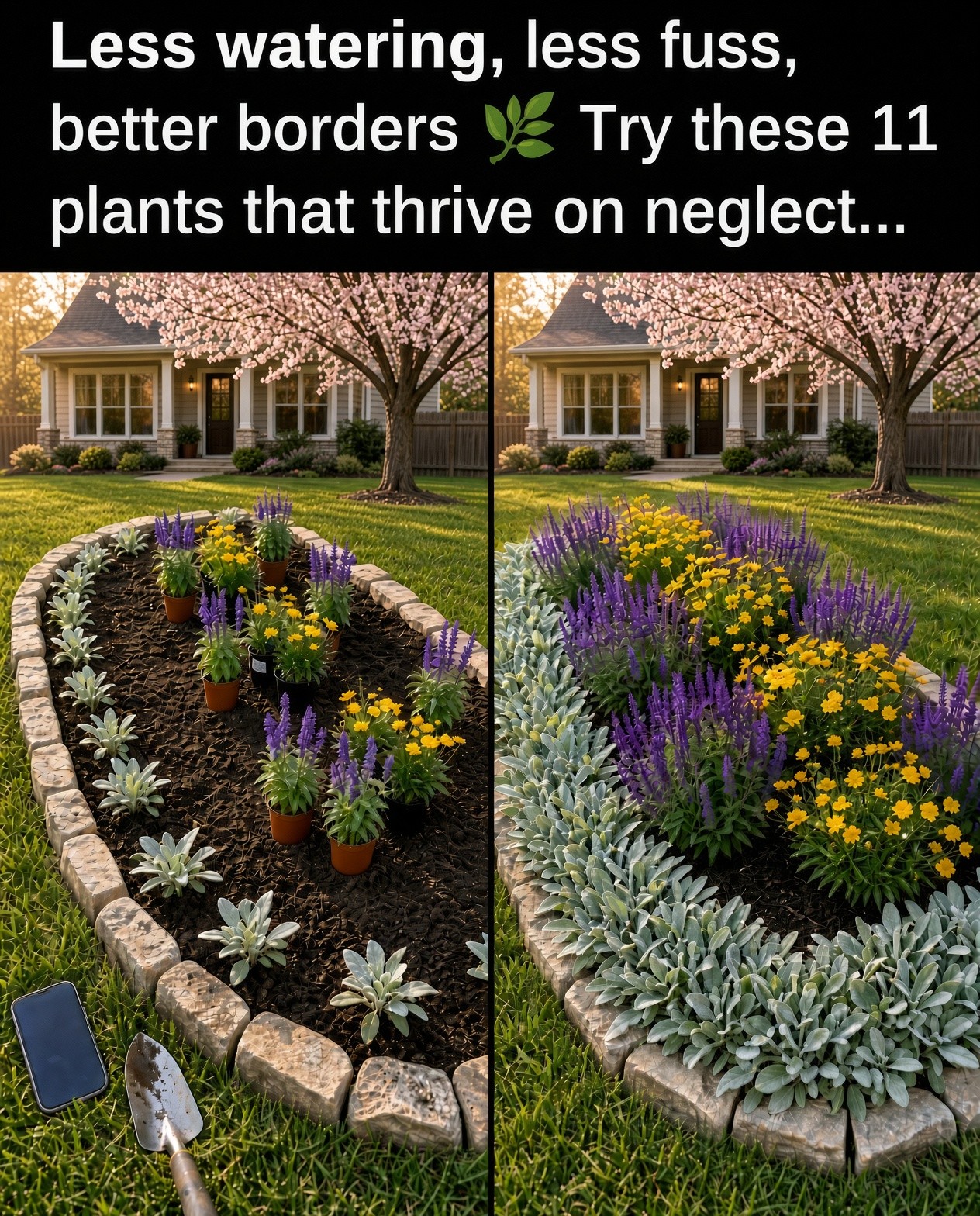
A beautiful border does not have to become a second full-time job. The easiest gardens usually begin with plants that match the conditions already present in the space. When a perennial is suited to the available sunlight, drainage and moisture, it can settle in and provide flowers or foliage without demanding constant watering, trimming or replacing. That makes plant selection one of the most useful ways to reduce garden maintenance.
Low-maintenance should not be confused with maintenance-free. Newly planted perennials still need regular watering while roots establish, and even established plants may occasionally need cutting back, dividing or removing damaged growth. The goal is to choose dependable plants that do not require daily attention. The following selections are especially useful for borders because they offer long-lasting structure, attractive flowers or foliage, and relatively simple care when planted in suitable conditions.

1. Catmint
Catmint, particularly Nepeta × faassenii types, is a reliable choice for sunny borders. Its soft gray-green foliage forms attractive mounds, while spikes of lavender-blue flowers can continue for a long season. RHS describes catmint as easy to grow and low maintenance, with most types preferring full sun and soil that drains freely. Once established, many varieties cope well with dry conditions, making them useful along paths, edging and sunny beds.

2. Coreopsis ‘Moonbeam’
Threadleaf coreopsis such as ‘Moonbeam’ brings a light, airy look to the front or middle of a border. Its fine foliage and pale yellow flowers create a softer texture than many broad-leaved perennials. It is particularly useful in warm, sunny areas where a gardener wants repeat flowering without complicated maintenance. Give it well-drained soil and enough sun, and it can become a dependable clump that returns each year.
3. Russian Sage
Russian sage, commonly known botanically as Perovskia atriplicifolia, adds height without creating a heavy visual block. Its silvery stems and blue-purple flowers suit dry, sunny borders and gravel-style planting. It tolerates lean soil once established and is particularly valuable where overwatering would be a problem. Place it where it receives strong light and avoid keeping its roots in wet soil.

4. ‘Autumn Joy’ Sedum
‘Autumn Joy’ is a classic stonecrop for gardeners who want strong late-season structure. The plant forms a sturdy clump of succulent foliage followed by broad flower heads that change color as the season progresses. It handles sunny conditions and relatively dry soil well once established. Its upright shape also keeps a border looking intentional after many summer flowers begin to fade.

5. Lamb’s Ear
Lamb’s ear is valued less for spectacular flowers than for its unusual foliage. The thick, silvery leaves create a soft carpet along a sunny path or border edge and contrast beautifully with green-leaved plants. ‘Silver Carpet’ is a useful non-flowering type when foliage is the main attraction. Keep it in well-drained soil and avoid persistently wet conditions, especially in humid climates.

6. Clump-Forming Daylilies
Daylilies can provide a long season of dependable color with comparatively little routine work. For a tidy border, select named clump-forming cultivars rather than plants chosen solely for rapid spreading. ‘Stella de Oro’ is a familiar compact type with golden flowers. Daylilies tolerate a range of conditions, but flowering is generally strongest with good light and adequate moisture during establishment.

7. English Lavender
English lavender is one of the most useful choices for a sunny, dry border. Its silver-gray foliage remains attractive outside the flowering period, and its fragrant purple flower spikes add color and interest. RHS notes that lavender thrives in full sun and free-draining soil and is drought tolerant once established. Avoid heavy, wet ground, because poor drainage is one of the quickest ways to shorten a lavender plant’s life.

8. Globe Thistle
Globe thistle gives a border a strong architectural accent. The round blue flower heads rise above deeply divided foliage and are particularly effective when repeated in groups. Echinops ritro prefers sunny conditions and well-drained soil and can tolerate dry periods once established. Its unusual flower shape also adds variety to borders dominated by flat flower clusters or upright spikes.

9. Yarrow
Yarrow can be an excellent low-effort perennial when the right cultivar is selected for the space. Cultivars such as ‘Moonshine’ provide flat flower clusters and aromatic foliage, while their upright stems bring useful height without making the planting feel crowded. Yarrow generally prefers sun and good drainage. In borders where spreading is a concern, choose a well-behaved cultivar and monitor its growth rather than assuming every yarrow behaves identically.
.jpg)
10. Blue Fescue
Blue fescue is ideal when a border needs a neat evergreen-looking clump with fine texture. Its blue-gray blades form rounded tufts that work especially well along paths, rock gardens and the front of perennial beds. It does not need frequent shaping, and the foliage provides contrast even when nearby flowers are out of bloom. Give it sunlight and soil that drains well rather than a constantly wet planting site.

11. Bergenia
Bergenia is a particularly useful choice when a border needs substantial foliage rather than nonstop flowers. Its large, glossy leaves can provide structure through much of the year, while pink, red or white flowers appear in late winter or spring depending on the type and climate. RHS describes bergenias as easy to grow and adaptable to sun or shade. They prefer moist but well-drained soil and should not be left in permanently waterlogged ground.

How to Make a Low-Maintenance Border Work
The plants themselves are only half of the equation. Start by observing the site before buying anything. A border that receives full sun for most of the day can support lavender, catmint, Russian sage, sedum, globe thistle and blue fescue particularly well when drainage is good. A shadier or more moisture-retentive position may call for different choices, with bergenia being one of the more adaptable plants in this list.

Spacing also matters. Crowding plants may create an attractive display quickly, but it can increase competition for water and encourage poor air circulation. Give each perennial enough room to reach its mature size. A layer of suitable mulch can help reduce weeds and slow moisture loss, but keep mulch away from the crowns and stems of plants that dislike excessive moisture.

Choose Plants for Your Conditions, Not Just Their Looks
The biggest maintenance mistake is putting a plant in a location that conflicts with its natural preferences. Lavender in heavy wet soil, catmint in deep shade, or a drought-tolerant perennial in a constantly irrigated bed can turn an easy-care plant into a demanding one. Matching plant to site usually saves more time than any pruning trick.
Final Thoughts
A low-maintenance border is not about ignoring plants. It is about choosing dependable perennials that fit the site and then giving them the basic care they actually need. Catmint, coreopsis, Russian sage, sedum, lamb’s ear, daylilies, lavender, globe thistle, yarrow, blue fescue and bergenia each offer a different combination of flowers, foliage, texture and seasonal interest. Used thoughtfully, they can reduce the amount of watering, trimming and replacing required while keeping the garden attractive for much longer.
