
Wondering how to make a poinsettia turn red again after its festive color fades? The secret is not a special fertilizer or a trick watering method. Poinsettias respond strongly to the length of their nights. With healthy growth during the brighter months and a carefully controlled period of uninterrupted darkness in autumn, many plants can develop colorful bracts again.

One important detail: the red, pink, cream, or white parts commonly called flowers are actually modified leaves known as bracts. The real flowers are the small yellowish structures in the center. Bract color develops in response to the plant’s day-length cues, and the exact shade depends on the cultivar. A red variety should turn red; a white or pink variety will not become red simply because it receives more darkness.
1. Understand why poinsettias lose their color
After the holiday display, the colored bracts may fade or drop as the plant moves through its natural growth cycle. This does not automatically mean the poinsettia is dead. If the stems are firm and new leaves appear, it can often be kept as a green houseplant and encouraged to rebloom.
Poinsettias are short-day plants, more precisely plants that need long, uninterrupted nights to initiate flowering and colored bracts. Indoor lamps, hallway lights, televisions, or streetlights shining onto the plant during its dark period can interfere with that process. Consistency matters more than any one product or additive.
2. Give it bright light during the day
Place the plant near a bright window where it receives plenty of natural light while the sun is up. Avoid letting leaves touch cold glass, and keep the plant away from drafts, heaters, fireplaces, and sudden temperature swings. A comfortable indoor range around 18–21°C (65–70°F) generally suits poinsettias well.
Turn the pot occasionally so growth receives light evenly. If the plant has been outdoors for summer, bring it inside before cool nights arrive; cold exposure can cause leaf drop and stress.
3. Provide complete darkness every night
For holiday color, many extension guides recommend about 14 hours of uninterrupted darkness each night for roughly 8–10 weeks. Start in early autumn if you want color around the winter holidays. Exact timing varies by variety and growing conditions, so begin early rather than waiting until the bracts should already be red.

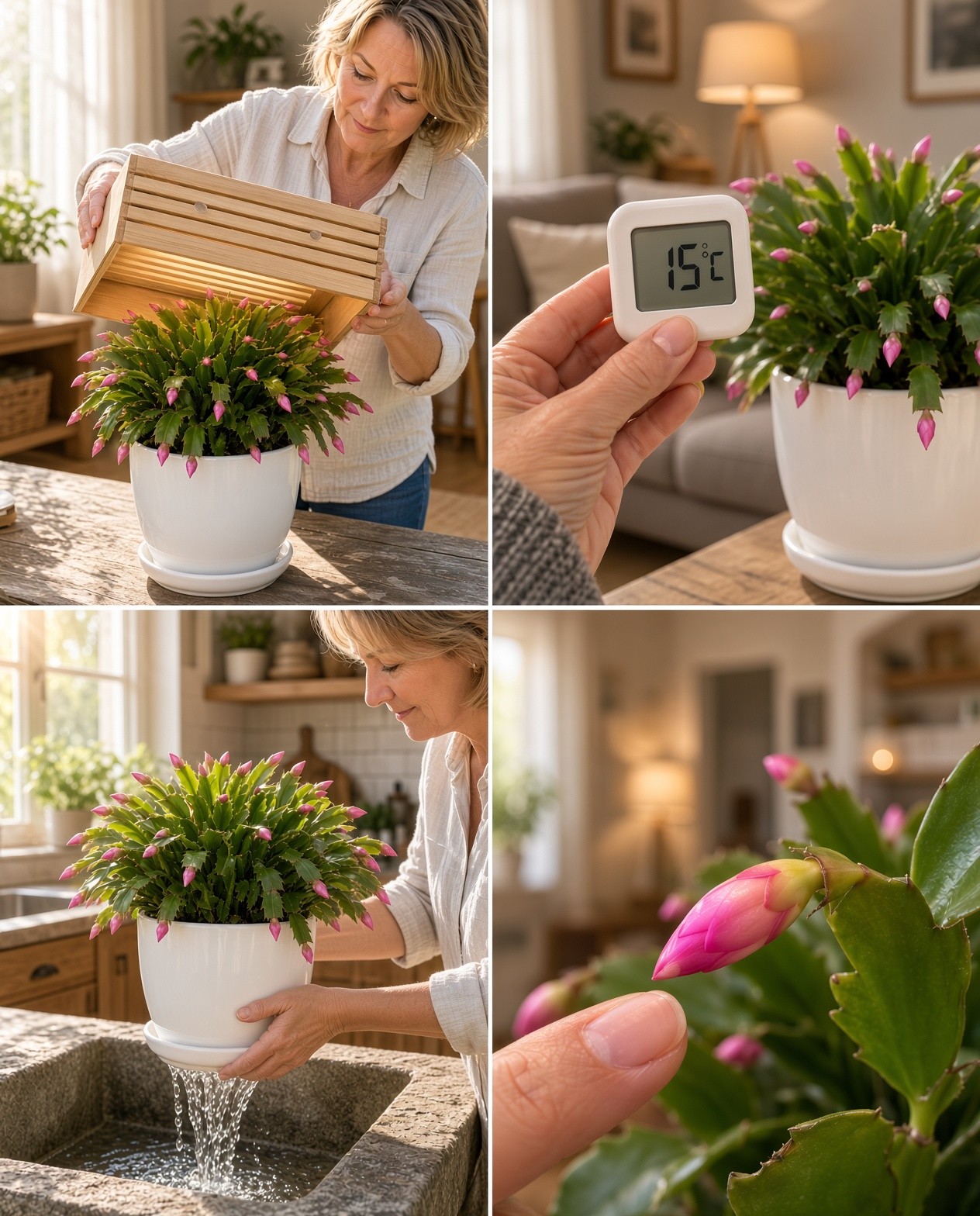
Each evening, place the plant in a dark closet or cover it with a ventilated, opaque box. Return it to bright light the next morning. Do not use a translucent cover, and avoid opening the closet or exposing the plant to room lights during the dark hours. A reliable routine—same time every evening and morning—is easier to maintain than an occasional long dark spell.
4. Water carefully and ensure good drainage
Check the potting mix with your finger. Water thoroughly when the surface begins to feel dry, then allow excess water to drain away. Never leave the pot sitting in a saucer full of water. If the plant is wrapped in decorative foil, remove the pot for watering or make sure drainage openings are not blocked.
Overwatering can suffocate roots and cause yellowing leaves or sudden leaf drop, while letting the root ball dry out completely can also stress the plant. The goal is evenly managed moisture, not constantly soggy soil. As growth slows, the plant may use less water, so check the mix instead of following a rigid calendar.
5. Prune and shape at the right time
If you are keeping the plant beyond the holidays, pruning is usually a spring task once the display has faded and the plant is ready to resume active growth. Some extension recommendations advise cutting stems back to roughly 8–10 cm (3–4 inches) above the soil in early spring. Use clean pruners and wear gloves if the milky sap irritates your skin.
During late spring and summer, pinch growing tips as needed to encourage branching and a fuller shape. Stop pinching by late summer or early September, depending on your local schedule, because late pruning can remove growth needed for the coming display. Do not severely prune a plant while it is trying to form its colored bracts.
6. Feed during active growth—not as a color shortcut
Fertilizer does not directly turn green bracts red. Its role is to support healthy leaves and stems while the plant is actively growing. If you keep the poinsettia year-round, use a balanced houseplant fertilizer according to its label during spring and summer. Reduce or stop feeding during the flowering display unless the product directions or a local horticultural recommendation say otherwise.
7. Repot only when it needs it
If roots fill the container or water runs straight through the mix, move the plant into a pot only slightly larger, with drainage holes, using fresh, well-draining potting mix. A pot that is much too large can hold excess moisture for longer than the roots can use. Repotting alone will not trigger red bracts; light and darkness remain the main seasonal signals.
Common mistakes that keep poinsettias green
- Interrupted darkness: a brief exposure to household light can delay the response. Protect the nightly dark window.
- Not enough daytime light: the plant still needs bright light during the day to maintain healthy growth.
- Starting too late: bracts need weeks to develop color. Begin the schedule in early autumn for a holiday display.
- Wrong expectations for the variety: poinsettias come in red, white, pink, and other colors; the cultivar determines the likely bract color.
- Waterlogging or cold drafts: stress can lead to leaf drop and a weak plant, even if the darkness schedule is correct.
- Late pinching: pruning too late may remove developing shoots and delay the display.
Can you make a poinsettia red again in October?
Yes, it may still be possible, but results depend on how far along the plant is and the variety. If you begin now, provide bright light during the day and a consistent, completely dark night for the coming weeks. Bracts do not usually change color overnight, and a home-grown plant may be less compact or less dramatically colored than a greenhouse-grown specimen. Think of the process as guiding its natural seasonal cycle rather than forcing an instant change.
A realistic expectation
Reblooming a poinsettia is a rewarding project, but it takes daily consistency. Keep the plant healthy through the growing season, manage water and temperature, and protect the dark period each night in autumn. If the plant stays green this year, it can still make an attractive foliage plant while you try again next season.