
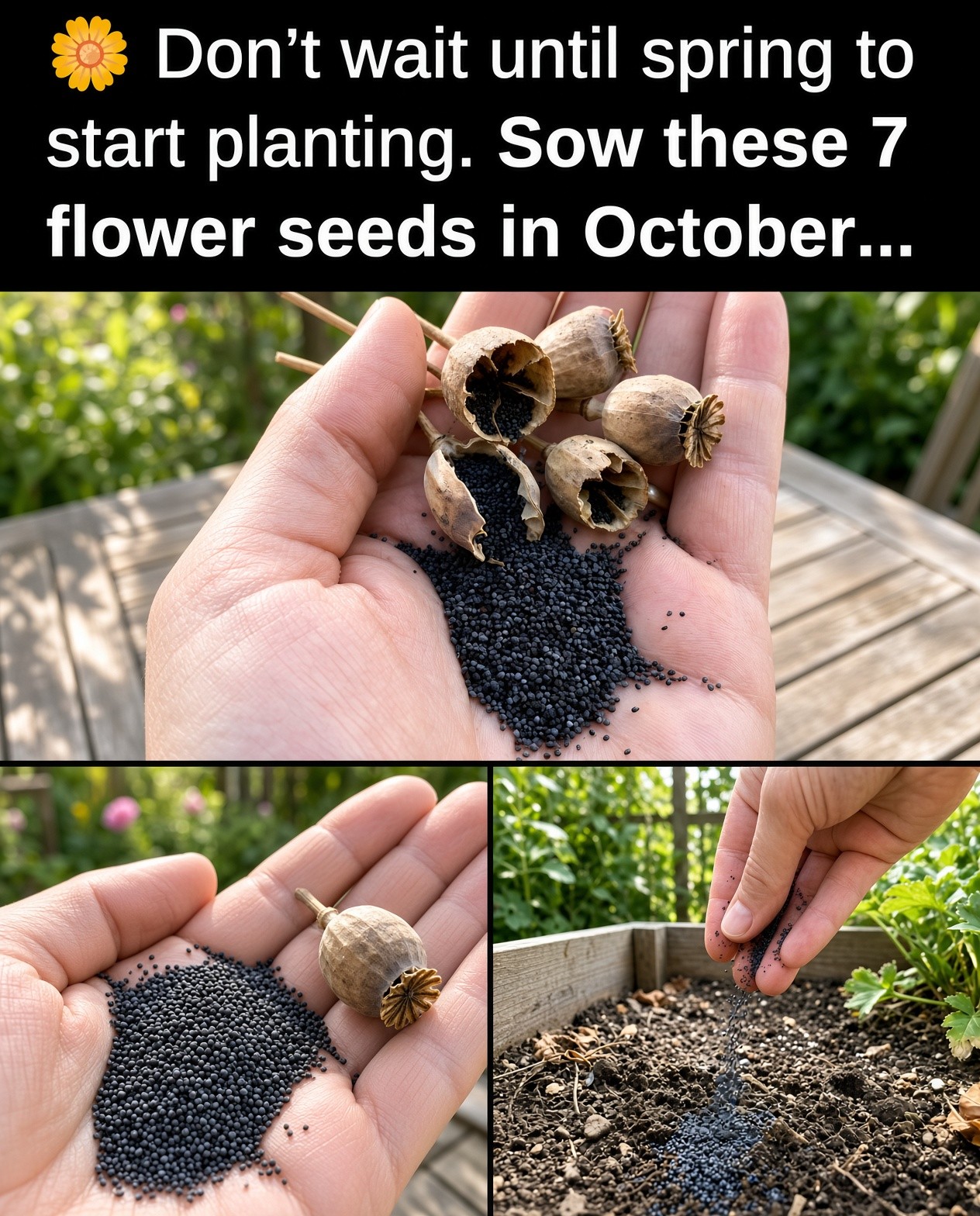
A little autumn preparation can set the stage for a brighter spring. These hardy annuals may benefit from fall sowing in suitable climates, provided you match seed depth and timing to local conditions.
When summer flowers fade, it is tempting to put the seed packets away until spring. Yet October can be a useful sowing window for some cool-season annuals. In mild-winter regions, seeds may germinate and establish before the coldest weather, giving plants a head start when growth resumes. In colder areas, the same seeds may be better sown later as dormant seed or held until spring.

The key is choosing flowers suited to your climate and following the instructions for each seed. Some seeds need light and should be pressed onto the soil surface; others germinate best when covered. The seven flowers below can bring a mix of vivid color, fragrance, and airy texture to a spring garden when timing and conditions are right.
1. Calendula: Cheerful Flowers for Cool Weather
Calendula (Calendula officinalis), often called pot marigold, is a dependable cool-season annual in mild climates. Its golden, apricot, and orange blooms can brighten beds when summer flowers are fading. Choose a sunny spot with well-drained soil, scatter seeds about 6 mm (¼ inch) deep, and water gently. Thin seedlings so air can move between plants. Calendula generally prefers modest fertility rather than a heavily fertilized bed. In cold regions, October sowing may be too early if seedlings would emerge before severe freezes; dormant sowing or spring sowing may be more reliable.

2. Bachelor’s Buttons: Blue Cornflowers
Bachelor’s buttons (Centaurea cyanus), also known as cornflowers, produce vivid blue flowers that pair beautifully with orange calendula and pink poppies. They prefer sun and soil that drains well. Rake the bed smooth, sow seeds roughly 6 mm (¼ inch) deep, and keep the surface lightly moist until germination. Thin young plants to allow airflow and room for branching. These flowers can self-seed, but remove spent heads if you do not want volunteers. Choose October sowing where the climate allows seedlings to establish without being killed by harsh winter conditions.

3. Annual Larkspur: Tall, Airy Flower Spikes
Annual larkspur (Consolida ajacis) adds height with elegant spikes of pink, white, blue, or purple blooms. It often performs best when sown directly where it will grow because it dislikes root disturbance. Wait until the soil is cool; sowing into warm soil can lead to poor germination. Cover seeds lightly, around 6 mm (¼ inch), and mark the row so you can recognize seedlings later. Larkspur is toxic if eaten, so keep seeds and plants away from children and pets. In regions with mild autumns, sowing may work well; in colder climates, follow local timing guidance.

4. Love-in-a-Mist: Delicate Blue Blooms and Seed Pods
Love-in-a-mist (Nigella damascena) has fine, feathery foliage surrounding delicate blue, white, or pink flowers. It is usually easiest to sow directly in place because transplanting can disturb its roots. Choose a sunny bed with good drainage, scatter seeds, and cover only lightly. Once established, nigella often self-sows; leave a few seed pods to mature if you want volunteers next year. For a tidy display, thin crowded seedlings and leave enough space for the plants to form their distinctive seed capsules. October is suitable in some climates, but avoid sowing so early that seedlings face damaging cold.

5. Shirley Poppies: Papery Spring Color
Shirley poppies (Papaver rhoeas cultivars) produce delicate petals in red, pink, coral, and white. Their seeds are tiny and need light to germinate, so sow them on a finely prepared, weed-free surface rather than burying them. Press the seeds gently against the soil to improve contact, and water with a fine spray so they are not washed away. Mixing seed with a little dry sand can help spread it evenly. Mark the location, because seedlings are small and easy to mistake for weeds. Fall sowing can give poppies an early start in suitable areas, but climate and local guidance matter.

6. Ladybird Poppies: Bold Red Flowers
Ladybird poppies are known for intense red petals and dark markings near the center. Their small seeds are usually surface-sown and gently pressed into contact with the soil, rather than covered. Give them full sun and a clear patch where young seedlings will not have to compete with weeds. Thin seedlings once they are easy to identify, leaving enough room for healthy growth and air circulation. Because common names can refer to different poppy varieties, check the botanical name and instructions on your packet before planting. Do not assume every poppy has identical growing requirements.

7. Sweet Peas: Fragrant Climbers for Spring
Sweet peas (Lathyrus odoratus) bring fragrance and ruffled flowers in pink, purple, white, red, and other shades. In areas with mild winters, October sowing can let plants develop roots before spring growth accelerates. Sow seeds about 1–2 cm (½ inch) deep in well-drained soil near a trellis, netting, or fence. Some gardeners soak hard-coated seeds briefly before sowing, but follow the packet directions. Sweet pea seeds and plants are toxic if eaten, so store seed packets safely and keep children and pets from chewing the plants.

How to Prepare a Bed for October Flower Seeds
Choose a sunny or appropriately lighted area and remove weeds before they set seed. Loosen the top few centimeters of soil, break up large clods, and rake the surface level. Most annual flowers need drainage more than rich soil, so avoid creating a wet, heavily amended seedbed. Sow each type at the depth printed on its packet: tiny poppy and nigella seeds generally stay near the surface, while larger sweet pea seeds need covering. Water gently and label every sowing area.

Adjust Sowing to Your Climate, Not Just the Calendar
October is not the same everywhere. The right date depends on soil temperature, frost timing, winter rainfall, and how quickly seedlings grow in your region. In mild-winter areas, some hardy annuals can establish in autumn and flower earlier in spring. In places with severe winters, seeds may germinate too soon and be damaged, so dormant sowing after the soil has cooled or waiting until spring may be safer. Use your local extension service and the seed packet as the final guide.
Simple Tips for Successful October Sowing
- Start with a clean seedbed. Remove weeds and loosen the surface so young seedlings face less competition.
- Use the right depth. Tiny seeds often need light; larger seeds usually need a thin covering of soil.
- Water gently. Keep the seedbed evenly moist while avoiding puddles or erosion that can move seeds.
- Skip heavy fertilizer. Many hardy annuals grow well in ordinary, well-drained soil. Excess nitrogen can encourage soft leafy growth.
- Mark each sowing. Labels help prevent seedlings from being mistaken for weeds in spring.
- Avoid thick mulch over tiny seeds. A heavy layer may block seedlings from reaching the light.
- Keep a garden record. Note the sowing date, weather, germination, and bloom time to improve next year’s results.
Common Mistakes to Avoid
Sowing too early into warm soil can trigger seedlings that are then damaged by winter. Sowing too late in cold, wet ground may leave seeds vulnerable to rot or prevent them from establishing. Other common problems include burying light-dependent seeds too deeply, watering so forcefully that seeds wash away, and sowing into compacted soil with poor drainage. If you are unsure, sow a small test patch rather than using the entire packet.
Frequently Asked Questions
Can I sow these flowers in October in every climate?
No. October sowing works best in climates where the chosen flowers can establish safely. In very cold regions, dormant sowing or spring sowing may be more reliable; in warm regions, local seasonal timing may differ.
Do all flower seeds need to be covered with soil?
No. Tiny seeds such as many poppies and nigella often need light and should be pressed onto the surface. Follow the packet directions for each variety.
Should I fertilize the seedbed?
Usually, moderate soil preparation and good drainage are more important than heavy feeding. Excess fertilizer can promote weak, leafy growth rather than sturdy plants.
Are sweet peas and larkspur safe around children and pets?
No. Sweet pea seeds and plants, and larkspur, can be toxic if eaten. Store seed packets securely and prevent children and pets from chewing or swallowing any part of these plants.
Final Thoughts
Calendula, cornflowers, larkspur, love-in-a-mist, poppies, and sweet peas offer a varied palette for spring. Direct sowing in October can save indoor space and help plants settle where they will grow, but success depends on climate, soil, and careful seed placement. Prepare a clean bed, label each sowing, and let local conditions—not the calendar alone—guide your timing.