
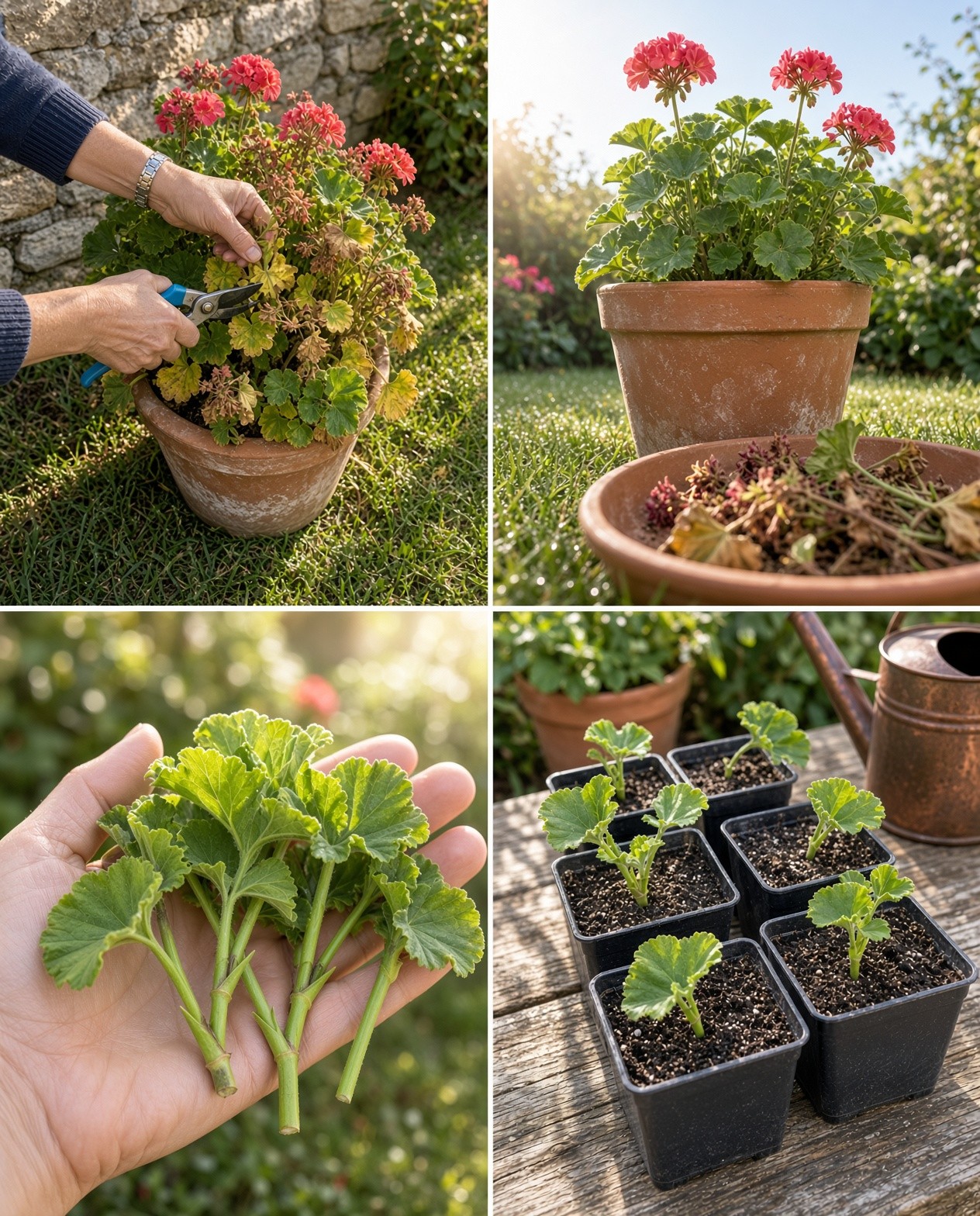

October is the moment to shift from summer flowering to winter preparation. A little attention now can help tender, familiar “geraniums” — usually pelargoniums — survive the cold months and return with fresh growth next season.
Start with the weather forecast rather than the calendar. In mild, frost-free regions, plants may keep flowering outdoors; where frost is possible, protect or move tender pelargoniums before freezing temperatures arrive. Hardy cranesbill geraniums are different and can usually remain in the garden.
1. Remove Spent Flowers and Damaged Growth
 Inspect each plant and remove faded flower clusters, yellow or dead leaves, broken stems, and any clearly diseased material. Follow a spent flower stalk down to where it joins the main stem, then snap it off carefully or use clean pruning scissors. This keeps the plant tidy and reduces decaying debris where fungal problems can develop.
Do not strip away healthy foliage just because it is October. If your plant is still flowering and the weather is mild, leave healthy blooms and leaves in place. Put diseased debris in household waste if you cannot be sure your compost gets hot enough to destroy pathogens.
2. Water Less Often — but Check the Soil
 Shorter days and cooler weather usually slow growth and evaporation, so a geranium may need water less frequently than it did in summer. Rather than following a rigid schedule, feel the potting mix: if the upper layer is dry, water thoroughly and let excess drain away. Empty the saucer so the roots are not left sitting in water.
Plants kept indoors in a cool room generally need less water than actively growing plants beside a bright, warm window. Avoid both extremes: waterlogged compost can cause root rot, while a plant kept too dry for too long can wilt and lose leaves. Drainage holes are essential.
3. Ease Off Fertilizer as Growth Slows
 Do not try to push a geranium into vigorous new growth just before winter. If you plan to overwinter it in a cool or semi-dormant state, stop routine feeding until growth resumes in spring. Low light combined with excess fertilizer can produce soft, stretched stems that are harder to maintain.
If the plant remains actively growing in a warm, bright indoor spot, follow the fertilizer label and use a restrained approach. The priority in October is a healthy plant with suitable light, careful watering, and protection from frost — not extra fertilizer.
4. Choose a Winter Plan Before Frost Arrives
 Move tender pelargoniums indoors before the first damaging frost. Before bringing them in, inspect leaf undersides, stems, and the soil surface for pests. Discard plants with severe rot or widespread disease so they do not spread problems to houseplants.
Option A: Keep the plant growing. Pot up garden plants if needed, trim back by roughly one-third to one-half if they are too large, and place them by a bright, sunny window. Keep them away from cold drafts and hot radiators, and water when the mix begins to dry.
Option B: Store it dormant. Some gardeners lift plants, remove loose soil, and keep them in a cool, dry, frost-free place. This method requires checking for shriveled or rotting material and is not the best fit for every home or climate. Follow a trusted local extension guide for your preferred storage method.
Option C: Take cuttings. If space is limited, take healthy stem-tip cuttings around 3–4 inches (7.5–10 cm) long, remove the lower leaves, and place them in a clean, free-draining rooting medium. Keep them in bright indirect light while roots develop.
5. Inspect for Pests and Disease
 Before plants come indoors, check for aphids, whiteflies, and spider mites, especially on the undersides of leaves and around tender shoot tips. Look for sticky residue, stippling, webbing, unusual spots, gray mold, or soft dark stems. Isolate new arrivals from other houseplants while you monitor them.
Remove affected leaves and treat pests with a product labelled for the plant and pest, following all directions. Improve airflow and avoid leaving wet, fallen leaves packed around the base. Do not bring a heavily infested or rotting plant into a crowded indoor plant area.
Your October Geranium Checklist
- Check local forecasts and protect tender pelargoniums before frost.
- Deadhead spent flowers and remove dead or diseased foliage.
- Check soil moisture before watering; never leave pots standing in water.
- Pause routine feeding if growth is slowing or the plant is being stored.
- Inspect for pests before moving plants indoors.
- Choose whether to keep plants growing, store them dormant, or propagate cuttings.
- Label varieties so you can identify favorites next spring.
Common Mistakes to Avoid
Do not wait until a frost has blackened the leaves, water on the same schedule as midsummer, or place a warm plant in a dark corner. Avoid severe pruning unless it is part of the overwintering method you have chosen. Most importantly, identify whether you have tender pelargoniums or hardy garden geraniums before deciding what winter protection they need.
Final Thoughts
Successful October care is about adjusting to cooler weather, not forcing more growth. Tidy the plant, check moisture and pests, and make a winter plan suited to your climate and available light. With those basics covered, many favorite pelargoniums can be saved and enjoyed again next year.