
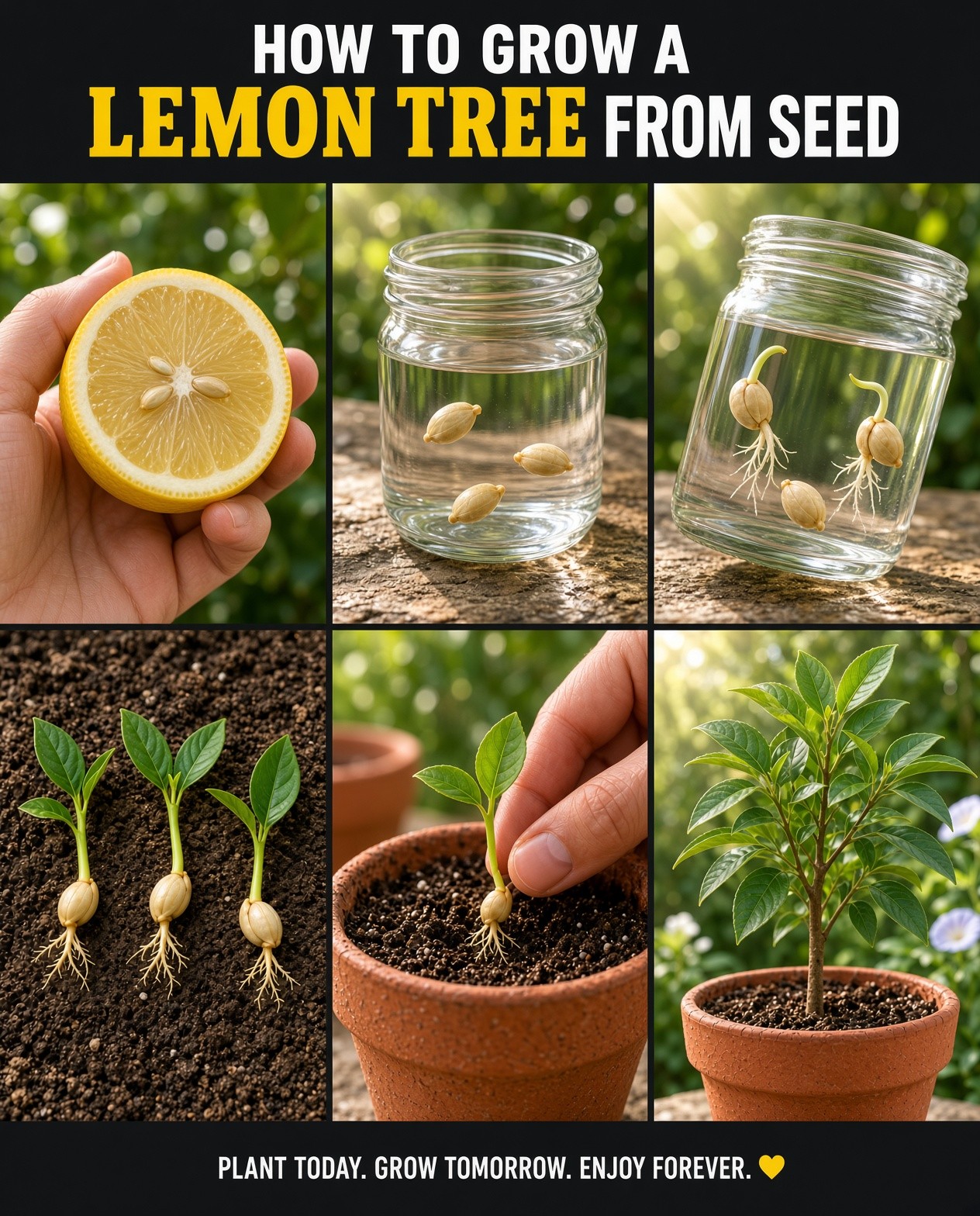
A fresh lemon seed can become a glossy green citrus plant with the right warmth, light, moisture, and patience. Follow these practical steps from seed preparation to long-term care.
Growing a lemon tree from seed is an inexpensive way to explore plant propagation. The process begins with a fruit from the kitchen, but success depends on more than placing a seed in soil. Freshness, drainage, warmth, and good light all help a young plant establish itself. It is also important to have realistic expectations: a seed-grown tree may take years to fruit, and its fruit may not match the lemon from which the seed came.

For gardeners who want a dependable crop as soon as possible, a grafted lemon tree from a reputable nursery is generally the more predictable option. For anyone who enjoys watching a plant develop from its earliest stage, growing from seed can be satisfying in its own right. The following guide explains the process and the care a young lemon plant needs.
1. Choose Fresh, Healthy Lemon Seeds
Start with a ripe, healthy lemon and collect several plump seeds. Fresh seeds generally germinate more reliably than seeds that have dried out for a long time. Use several because not every seed will sprout, even when conditions are good. Seeds from grocery-store lemons can grow into attractive plants, but the resulting tree may not produce fruit identical to the parent lemon. Commercial citrus trees are often grafted for more predictable fruit and growth. If your main goal is a dependable harvest, a grafted nursery tree is usually a better choice; if you enjoy the process, seed growing is a rewarding experiment.
2. Clean the Seeds and Keep Them Moist
Rinse away all traces of lemon pulp and sticky residue. Fruit remains can encourage mold in the growing medium, so gently rub the seed surface under clean water. Handle seeds carefully and avoid scraping or damaging the embryo inside. Removing the thin outer seed coat is sometimes suggested to speed germination, but it is optional and can damage the seed if forced. Planting the seed intact is perfectly reasonable. Citrus seeds can lose viability when they dry out, so prepare the potting mix before removing seeds from the fruit and sow them promptly.

3. Use a Small Pot and Well-Draining Mix
Choose a clean small pot or seed-starting cell with drainage holes. A container around 8–10 cm (3–4 inches) wide is enough to start a seed. Fill it with fresh seed-starting mix or a light, well-draining potting mix; avoid dense garden soil that can compact in a small container. Moisten the mix until evenly damp but not soggy. Plant each seed about 1–1.5 cm (½ inch) deep, cover lightly, and press the surface gently. If sowing multiple seeds in one container, leave space between them or use separate pots to make later transplanting easier.

4. Provide Warmth and Steady Moisture
Lemon seeds germinate best in warm conditions. Aim for a consistently warm spot, roughly 21–27°C (70–80°F), away from cold drafts. Keep the growing medium lightly moist throughout germination, but never waterlogged. Too much water deprives roots of oxygen and encourages seed rot. Water gently so seeds are not displaced. A loose transparent cover can help retain humidity, but allow some airflow and remove the cover once seedlings emerge. Check the pot regularly rather than watering automatically every day.

5. Be Patient While the Seeds Sprout
Germination time varies with seed freshness, temperature, and moisture. Some seeds may sprout in two to four weeks, while others take longer. Avoid repeatedly digging into the pot to check for roots because that can damage developing seedlings. Once shoots appear, remove any humidity cover and provide strong light. If several seedlings emerge together, allow them to develop a little before separating them. Lift them carefully with some growing medium around the roots rather than pulling them apart by their stems. Keep the strongest seedlings and give each its own container as it grows.

6. Give Seedlings Plenty of Light
After germination, light becomes one of the most important factors in growing a sturdy lemon plant. Place the pot near a bright window where the seedling receives several hours of direct sun, or supplement with a grow light if indoor light is weak. Rotate the pot periodically so growth stays balanced. If the stem becomes long and thin or leaves lean strongly toward the window, the plant may need more light. Introduce seedlings gradually to stronger outdoor sunlight to prevent leaf scorch. Move them outside only when temperatures are suitable, and protect them from cold nights and strong wind.

7. Water Correctly and Feed During Active Growth
Water thoroughly when the upper layer of potting mix begins to dry, allowing excess water to drain away. Do not leave the pot standing in a saucer full of water. Lemon plants like consistent moisture but are vulnerable to root problems in constantly wet soil. Once the seedling has several sets of true leaves and is growing actively, begin feeding with a balanced citrus or container-plant fertilizer according to the label. Start conservatively rather than applying extra fertilizer to force growth. Reduce feeding when growth slows in low-light or cool conditions, and avoid fertilizing a stressed or very dry plant.

8. Pot Up as the Lemon Tree Grows
When roots begin filling the starter pot or emerging from drainage holes, move the plant into a slightly larger container. Increase pot size gradually rather than placing a tiny seedling straight into a huge pot that stays wet for too long. Use a fresh, free-draining mix and a pot with drainage holes. Handle the root ball gently, keep the stem at the same soil level, and water after repotting. As the tree becomes larger, it may benefit from time outdoors in warm weather, provided you acclimate it gradually. Bring it back to shelter before temperatures become too cold for citrus.

9. Pruning, Pests, and Long-Term Expectations
Young lemon trees usually need little pruning at first. Remove dead or damaged growth and allow the plant to develop a healthy structure. Watch for common indoor citrus pests such as scale insects, aphids, spider mites, and mealybugs. Inspect leaf undersides and new growth, isolate infested plants, and use a treatment labeled for citrus or indoor edible plants as directed. Seed-grown lemons may take many years to flower and fruit, and fruit quality is not guaranteed. Some seedlings remain ornamental for a long time. If reliable fruit is the priority, consider a grafted lemon variety suited to your climate.

Common Problems and Simple Fixes
- No sprouts: Seeds may have dried out, the mix may be too cold or too wet, or the seed may not be viable. Try fresh seeds and warm, airy growing medium.
- Mold on the soil: Reduce excess moisture, improve airflow, and remove decaying debris from the surface.
- Long, weak stems: Increase light gradually and rotate the pot for balanced growth.
- Yellow leaves: Check drainage and watering first. Nutrient problems, cold conditions, and pests can also cause yellowing.
- Leaf drop: Sudden changes in light, temperature, watering, or location can stress citrus. Stabilize conditions and inspect for pests.
Frequently Asked Questions
How long does a lemon seed take to germinate?
Under warm, moist conditions, some seeds sprout within a few weeks, but timing varies. Continue caring for the pot without digging up the seed to check progress.
Will a lemon tree grown from seed produce fruit?
It may, but it can take many years and the fruit may differ from the parent. Seedlings are less predictable than grafted nursery trees.
Can I grow a lemon tree indoors?
Yes, as a houseplant, if you can provide strong light, warmth, good drainage, and enough space. Fruiting indoors is more demanding than simply keeping the plant healthy.
When should I move the seedling to a larger pot?
Repot when roots begin filling the starter container or emerging from drainage holes. Move up only one pot size at a time and keep the root ball intact.
Final Thoughts
Growing a lemon tree from seed rewards patience and careful observation. Start with fresh seeds, use a small pot and free-draining mix, keep moisture steady without waterlogging, and give the seedling strong light. As it grows, pot it up gradually and protect it from cold. Whether it eventually produces fruit or remains a decorative citrus plant, a seed-grown lemon tree can be a memorable gardening project.