
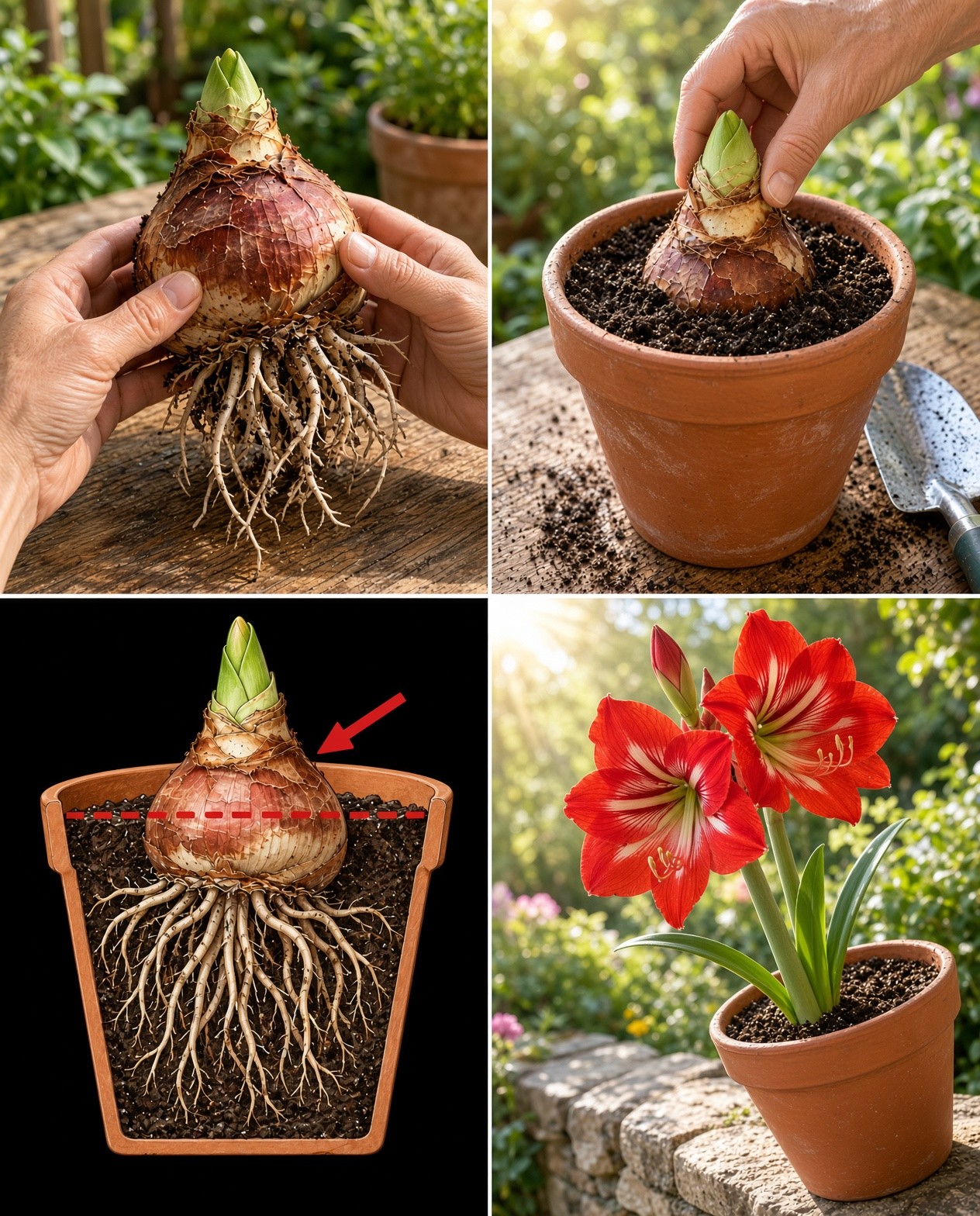
Few indoor plants make a winter room feel more festive than an amaryllis in full bloom. Its tall stems and trumpet-shaped flowers bring vivid color to a windowsill, dining table, or holiday arrangement—and growing one from a bulb is straightforward when you get the timing, potting, and watering right.
For the best chance of Christmas flowers, plan for roughly six to eight weeks from planting to bloom. Every bulb grows at its own pace, so treat the calendar as a guide rather than a promise. These practical amaryllis care tips explain how to choose a bulb, plant it correctly, encourage strong stems, keep flowers fresh, and care for the plant after the holidays.
Choose a healthy amaryllis bulb
The easiest route to Christmas flowers begins with a healthy bulb. Choose one that feels firm and heavy for its size, with dry papery outer skin and no soft patches, wet spots, deep cuts, or fuzzy mold. Larger bulbs generally have more stored energy and are more likely to produce strong stems or more than one flower stalk. Some varieties produce classic red blooms, while others open in white, blush pink, salmon, burgundy, or striped combinations. Pick a variety you love, and check the package for its expected flowering time. A bulb that has already started to show a green tip may flower sooner than a fully dormant one, so take that into account when planning a holiday display. Store unplanted bulbs in a cool, dry, airy place for a short time; do not seal them in a damp plastic bag.

Time planting for Christmas
Amaryllis bulbs commonly bloom about six to eight weeks after potting, although some take closer to ten weeks. For flowers around December 25, mid-October through early November is a useful starting window, but the variety, bulb condition, indoor temperature, and light all affect the schedule. Count backward from the date you want the flowers, then allow a little flexibility: blooms may open early or late. If you want several plants to flower in succession, pot bulbs a week or two apart rather than all on the same day. This spreads the display across the holiday season. Since it is already late October, planting now can still work well for Christmas, especially with a healthy bulb kept in a warm, bright room, but an exact bloom date cannot be guaranteed.

Pick a snug pot and airy potting mix
Choose a sturdy pot with drainage holes, about 2.5–5 cm (1–2 inches) wider than the bulb. Amaryllis prefers a snug fit, and an oversized container holds more wet mix than the roots need. A heavy terracotta or ceramic pot helps prevent tall flower stems from tipping the plant over. Use a fresh, well-draining indoor potting mix; adding perlite improves airflow and drainage if the mix feels dense. Avoid garden soil, which can compact in a container and stay wet for too long. If you want to use a decorative cachepot without holes, grow the bulb in a draining nursery pot inside it, and empty any collected water after watering. Clean containers and fresh mix reduce the risk of disease and bulb rot.

Plant the bulb with its shoulders exposed
Add potting mix to the pot, position the bulb with its pointed end facing upward, and spread any roots gently over the surface. Fill around the roots and press the mix lightly so the bulb stands securely. Leave the upper third to half of the bulb above the soil line; do not bury it completely. Keeping the bulb’s neck dry helps reduce rot. Leave a little space between the soil surface and the rim so water does not spill over. Water once after planting, allowing excess to drain freely from the bottom, then empty the saucer. The goal is evenly damp mix, not a waterlogged pot. If the bulb wobbles, add a little more mix around its base rather than pushing it deeply into the soil.

Give it warmth, light, and careful water
Place the freshly potted bulb in a warm spot, ideally around 20–24°C (68–75°F), away from cold drafts. Before growth appears, water sparingly: the bulb contains stored energy, and overly wet mix can cause it to rot before roots and shoots develop. Once a shoot begins to grow, check the mix regularly and water when the surface starts to dry. Water the soil, not directly into the bulb’s neck, and never leave the pot standing in water. As the flower stalk and leaves lengthen, provide bright light from a sunny window. Rotate the pot every day or two so the stem does not lean strongly toward the light. If growth is pale or floppy, it may need a brighter location.

Support the stalk and extend the bloom
The flower stalk can rise quickly and may become top-heavy when several large blooms open. Turn the pot regularly and, if needed, add a slim stake placed carefully near the pot’s edge so you do not pierce the bulb. Secure the stem loosely with a soft tie. When buds begin to show color, move the plant to a bright but slightly cooler spot and keep it away from radiators, fireplaces, and hot direct sun. Cooler conditions help the flowers last longer. Individual blooms may remain attractive for several days, and a full display can last for weeks depending on the variety and room temperature. Remove each faded flower to prevent seed formation, but avoid damaging the remaining buds or healthy stem.

Keep the bulb after the flowers fade
Amaryllis is not necessarily a one-season plant. Once the flowers fade, remove the spent blooms. You can remove the flower stalk when it starts to yellow; keep every healthy green leaf. The leaves capture light and replenish the bulb’s reserves for a future display. Move the plant to the brightest suitable window and continue watering whenever the surface of the mix begins to dry. After active leaf growth is established, feed with a balanced houseplant fertilizer according to its label, often every two to four weeks during the growing period. Do not overfeed or let the pot remain soggy. A plant that receives strong light and months of healthy leaf growth has a better chance of flowering again than one that is put away immediately after Christmas.

Plan the rest period for another winter display
To encourage a timed rebloom, many growers give the bulb a rest period. After several months of active growth, reduce watering in late summer or early autumn and allow the leaves to yellow naturally. Keep the resting bulb in a cool, dry, dark place for roughly eight to ten weeks, following the requirements for your variety and growing conditions. Do not store a damp bulb in a sealed container, and check it occasionally for softness or mold. When the rest period is complete, remove dead foliage, refresh the potting mix if needed, and begin watering lightly again. Move the pot into warmth and light as growth starts. Dormancy is a scheduling technique rather than a universal requirement for every indoor amaryllis, so follow the supplier’s guidance when available.

Troubleshoot common amaryllis problems
A bulb that produces leaves but no flowers may need more light, better care during the previous growing season, or additional time to rebuild its reserves. A soft, foul-smelling bulb is often rotting; reduce excess moisture and discard a bulb that is badly decayed. Yellow leaves during active growth can indicate overwatering, poor drainage, or natural aging after the growing season. A leaning stalk usually needs brighter light and regular pot rotation, with a stake for support. If the plant grows too quickly and appears likely to flower early, a somewhat cooler bright location may slow development; if it is lagging, ensure it is warm enough and not waterlogged. Keep the bulb and leaves away from pets, especially cats and dogs, because amaryllis bulbs are toxic if chewed or eaten.

Frequently Asked Questions
How long does amaryllis take to bloom?
Most bulbs flower about six to eight weeks after planting, but some take longer. Variety, warmth, light, and bulb condition influence the timing.
Can I still plant amaryllis in late October?
Yes. Late October is still a reasonable time to plant for a possible Christmas display, although the exact date of flowering varies.
Should I bury the whole bulb?
No. Leave roughly the top third to half above the potting mix to keep the bulb neck drier and help prevent rot.
How often should I water it?
Water lightly at first, then increase as shoots and leaves develop. Let the mix surface begin to dry between waterings and always empty the saucer.
Can an amaryllis bloom again next year?
Often, yes. Keep its leaves growing in bright light after flowering, water and feed appropriately, then provide a suitable rest period if you want to schedule winter blooms.
Enjoy a Christmas bloom—and prepare for next year
Growing amaryllis indoors is a rewarding winter project because a single bulb can deliver a dramatic display with relatively little equipment. Start with a firm bulb, use a snug pot with drainage, leave the bulb’s shoulders exposed, and avoid excessive water before growth begins. Warmth helps the shoot develop, bright light keeps it sturdy, and cooler conditions once buds color up can extend the show.
When the flowers fade, do not throw the plant away. Keeping its leaves healthy through the following growing season gives the bulb a chance to store energy for another round. With a little patience and a simple care routine, an amaryllis can become a seasonal favorite for many winters.