
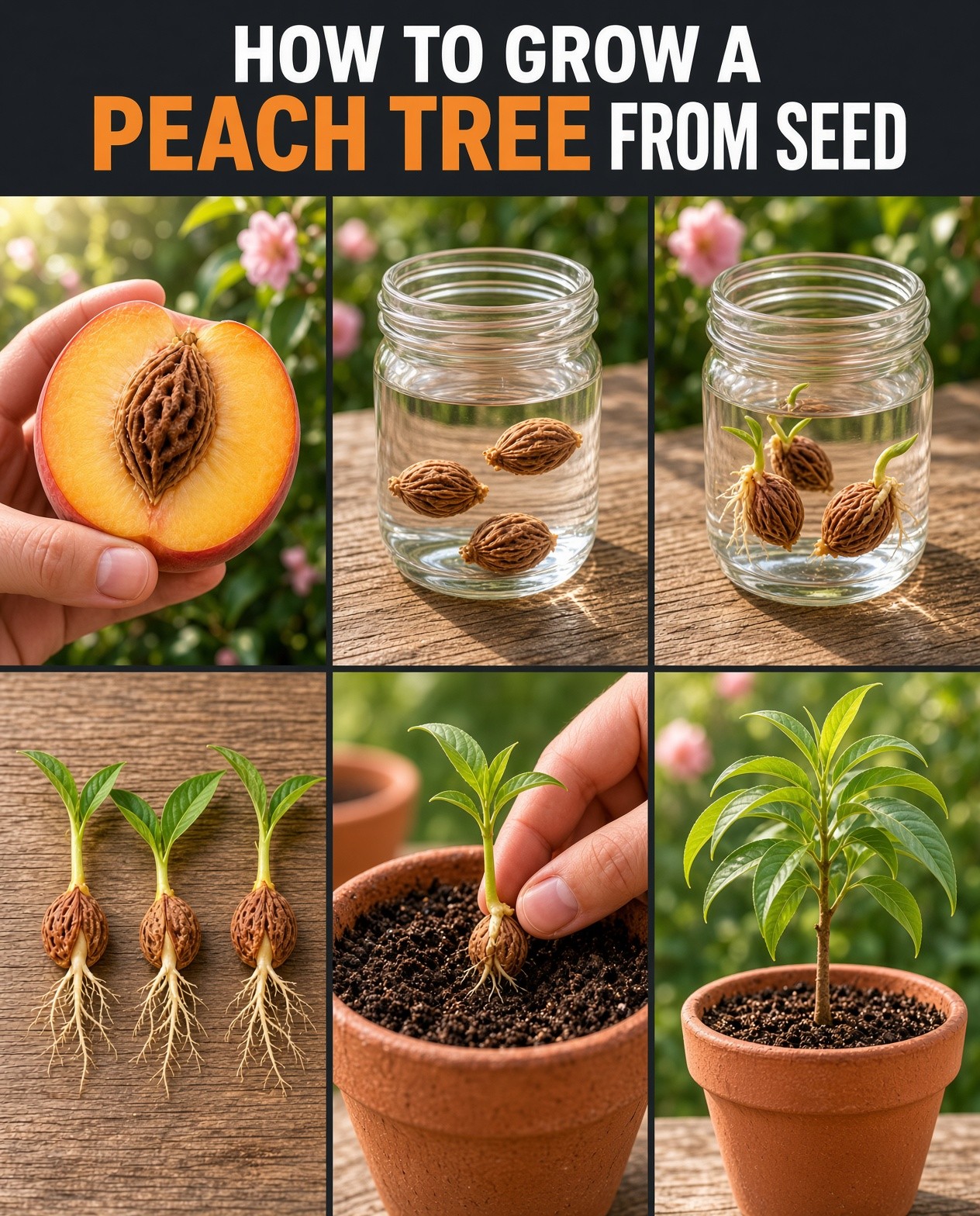
Growing a peach tree from a pit is an enjoyable way to turn kitchen scraps into a living plant. The key is patience: clean the pit well, provide a cold period, and give the seedling bright light and careful watering.

A peach pit is the starting point; germination takes time and results can vary.
Set expectations first: a seed-grown peach may not produce fruit identical to its parent. Fruit quality, harvest time, tree size, and cold tolerance can vary. For a named variety and predictable results, choose a grafted nursery tree; growing from a pit is a rewarding experiment.
Peach seeds need cold, moist conditions called cold stratification to help overcome dormancy. Start with several pits, since not every seed is viable.
At a glance
- Best starting material: a clean pit from a healthy, ripe peach.
- Cold treatment: often around 90–120 days, depending on the seed and method.
- Planting depth: approximately 1–1.5 inches (2.5–4 cm).
- Moisture: evenly moist, never waterlogged.
- Biggest caveat: seed-grown trees do not reliably reproduce the parent variety.
1. Choose a healthy peach pit
Start with a ripe, healthy peach from a tree that grows well in your region. Eat the fruit, then remove every trace of flesh from the hard stone. Sticky fruit residue encourages mold while the seed is stored. Rinse the pit under running water and gently scrub it with a soft brush. Let the outside dry in a ventilated place for a day or two. Do not use a pit that is cracked, badly damaged, or smells rotten.
2. Understand the pit and the kernel
 The hard, grooved stone is the pit; the seed kernel is inside it. You can chill the whole cleaned pit, which is less fiddly, or carefully crack the shell and chill the kernel. Opening it may help moisture reach the seed, but it introduces a risk of damaging the embryo. If you choose to open it, use a nutcracker or suitable pliers, wrap the pit in a towel, keep fingers away from the jaws, and apply gentle pressure. Never crush the kernel or use a sharp knife toward your hand. If the shell resists, leave it intact.
3. Give the seed a cold, moist period
 Peach seeds commonly need cold stratification: a sustained period of cool, moist conditions that imitates winter and helps overcome dormancy. Place the intact pit or kernel in a clean bag or container with a barely damp paper towel, or a little clean damp sand or vermiculite. The medium should feel moist, not dripping. Seal the container loosely or use a bag with some room for air, label it with the date, and place it in the refrigerator around 1–5°C (34–41°F). Keep it away from freezing temperatures and check it every week or two for mold, excess water, or a root beginning to emerge.
Discard seeds that become soft, slimy, or persistently moldy. Condensation is normal; standing water and freezing are not.
4. Plant the seed after chilling
 Many guides recommend roughly three to four months of cold treatment; the exact time varies with the seed and conditions. Check the kernel regularly, but do not assume every seed will sprout. When a small root appears—or the chilling period is complete—plant it carefully in a clean pot with drainage holes and fresh, well-draining potting mix. Set the seed about 2.5–4 cm (1–1.5 inches) deep, with the emerging root pointing down if it is already sprouted. Cover lightly, water until the mix is evenly moist, and let excess water drain away. A deep pot gives the developing root more room.
5. Care for the young seedling
 Place the pot where the seedling will receive strong light, gradually acclimating it to outdoor sun once temperatures are suitable. Keep the soil lightly and consistently moist, not saturated. Water when the surface begins to dry and empty any saucer beneath the pot. Waterlogged soil can deprive roots of oxygen and encourage rot. Do not rush to fertilize a newly germinated seed; once steady new growth is established, use a balanced fertilizer sparingly and follow its label. Turn an indoor pot occasionally for even growth, and protect tender leaves from cold snaps, strong wind, and intense sudden midday sun.
Pale, stretched growth often signals insufficient light. Yellow leaves may indicate overwatering, poor drainage, or nutrient issues, so check conditions before adding fertilizer.
6. Move the tree outdoors and plan for years ahead
 When the seedling is sturdy and the weather is mild, harden it off over 7–10 days: begin with a short stay in a sheltered outdoor spot, then gradually increase exposure to sunlight and wind. Plant it in a sunny location with well-drained soil, enough room for a mature tree, and good air circulation. Avoid low pockets where cold air collects or water stands. Water deeply during dry spells while roots establish, and mulch the root zone while keeping mulch a hand-width away from the trunk. Protect the young tree from animals and mower damage.
Common problems and how to avoid them
The seed does not sprout
The seed may need more chilling, may have dried out, or may not be viable. Check moisture and temperature, allow the full cold period, and avoid repeatedly handling it.
Mold appears during stratification
Leftover fruit and excess water encourage mold. Clean the pit, use barely damp medium, and discard rotten or foul-smelling seeds.
The seedling wilts after planting
Wilting can follow transplant shock, dry mix, soggy roots, or sudden sun exposure. Keep the mix evenly moist and harden the plant off gradually.
Will it produce peaches?
Possibly, but timing and quality are uncertain. Seedlings need to mature before flowering, and fruit may differ from the original. Climate matters too: peach trees need suitable winter chill and protection from late frosts.
When should you plant the seedling in the ground?
Move the tree outdoors when it is actively growing and hard frost has passed. Harden it off gradually before full sun. Choose a sunny site with well-drained soil and enough room; avoid wet ground and provide good airflow.
During the first season, prioritize roots: water during dry spells, remove competing weeds, and protect the trunk. Follow local advice for pruning and pest control. If it fruits, thin crowded young peaches when needed.
Check the tree weekly during warm, dry weather, especially while it is still in a pot. Containers dry faster than garden soil, but a fixed daily watering schedule can still lead to overwatering. Feel the mix a little below the surface and water thoroughly only when it begins to dry. In the ground, a broad mulch ring helps conserve moisture and limit weeds; keep the mulch away from direct contact with the bark. Record when the seed was chilled and when growth began, so you can adjust your approach if you try again with another pit.
Frequently asked questions
Can I plant the whole pit without opening it?
Yes. Stratify and plant a cleaned whole pit. Opening the shell is optional and can damage the kernel.
Can I skip the refrigerator?
Autumn sowing can provide natural chilling where winters are suitable. Protect the pit from rodents and soggy soil; a refrigerator is more reliable in mild-winter climates.
Should I fertilize while the seed is germinating?
Do not fertilize during stratification. Wait until the seedling is growing steadily, then feed lightly according to the product label.
Is a seed-grown peach tree the best way to get fruit?
For a known cultivar, buy a grafted tree. A pit is best for experimentation and learning how fruit trees develop.
Final checklist
- Remove all fruit flesh and clean the pit.
- Choose either the intact pit or a carefully opened kernel.
- Provide a cold, moist stratification period and check it regularly.
- Plant in a draining container with fresh potting mix.
- Give the seedling strong light and careful, consistent watering.
- Harden it off before planting outdoors in a sunny, well-drained site.
- Remember that fruit quality and timing are not guaranteed.