
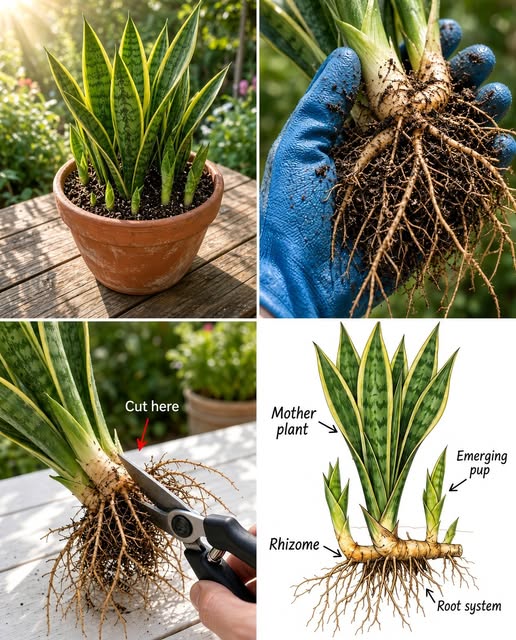
Want more snake plants without buying new ones? Learn how to support healthy pups, separate rooted offsets, and grow new plants while protecting the original plant.
Snake plants are among the easiest houseplants to keep, and a mature plant can gradually become a whole collection. The secret is to encourage steady, healthy growth and then propagate the young shoots, known as pups, when they are ready. Although no method can make every plant produce offsets on demand, the right light, careful watering, a suitable potting mix, and patience give your plant a good chance to thrive. This guide explains how to encourage pups, recognize when they are ready, and turn them into independent plants without damaging the mother plant.
Choose a Healthy Mother Plant
Start with a mature snake plant that has firm, upright leaves and no signs of pests, soft spots, or foul-smelling soil. Snake plants—commonly labeled Sansevieria and now generally classified as Dracaena trifasciata—grow from underground rhizomes. As the plant becomes established, these horizontal stems can send up new shoots called pups. A healthy parent plant is the best starting point because it has stored energy to support both its existing leaves and new growth. Avoid trying to force pups from a plant that is severely dehydrated, rotting, or recently damaged. Correct its care first, then give it time to recover. More pups are a gradual result of good growing conditions, not a guaranteed response to one trick.

Recognize New Pups Early
Pups usually appear as small, pointed leaves emerging from the soil near the mother plant. At first they may look like a narrow green spike, but as they grow they begin to develop the familiar upright, sword-shaped leaves. Check around the edges of the pot when watering or rotating the plant, but do not dig repeatedly to search for hidden shoots. Disturbing the rhizomes can damage tender growth. Let the young shoot grow until it is large enough to handle and, ideally, has developed its own roots. A well-developed pup is easier to separate and is more likely to establish quickly than a tiny shoot removed too soon.

Give It Bright, Indirect Light
Light helps a snake plant maintain steady growth, and a bright spot near an east- or west-facing window is often ideal. It tolerates lower light, but growth may slow and pup production can be less noticeable. Avoid moving a plant from a dim corner straight into harsh direct sun; acclimate it gradually to prevent leaf scorch. Rotate the pot occasionally so all sides receive reasonably even light. If natural light is limited, a suitable grow light can help. Remember that light supports overall vigor rather than guaranteeing pups on a particular schedule. Be patient: some mature plants produce offsets readily, while others take longer even when their care is good.

Use a Free-Draining Potting Mix
Snake plants need oxygen around their roots and rhizomes. Choose a commercial cactus or succulent mix, or improve a regular houseplant mix with perlite or pumice so excess water drains freely. Use a pot with drainage holes and empty the saucer after watering. A decorative container without drainage can trap water and increase the risk of rot. Do not add a thick layer of stones to the bottom as a substitute for drainage holes; a suitable mix and a hole that lets water escape are more useful. Keep the plant in a container that fits its root system. A modestly snug pot is fine, but a badly crowded, unstable root ball may eventually benefit from careful repotting.

Water Deeply, Then Let the Soil Dry
Overwatering is one of the most common reasons snake plants decline. Water thoroughly enough to moisten the root ball, allow the excess to drain, and wait until the mix has dried well before watering again. The interval depends on light, temperature, pot size, and the season, so check the soil rather than following a rigid weekly schedule. Plants usually need less water in cool, dim winter conditions. Do not pour water into the center of the leaf rosette and leave it standing there. If the base becomes soft or the soil smells sour, stop watering and inspect the roots for rot. Correct moisture helps the mother plant remain strong enough to support new shoots.

Feed Lightly During Active Growth
A snake plant does not need heavy feeding to make pups. During spring and summer, you can use a balanced houseplant fertilizer diluted according to the product label, provided the plant is actively growing. Too much fertilizer can damage roots and create weak or stressed growth, so more is not better. Avoid fertilizing a plant with rotting roots or a newly separated pup; allow it to settle first. Fresh potting mix may already contain nutrients, so take that into account. In autumn and winter, growth often slows indoors, and feeding can usually be reduced or paused. Consistent light, suitable watering, and healthy roots matter more than special “pup-producing” fertilizers.

When and How to Separate a Pup
Spring and early summer are convenient times to divide a snake plant because warmth and active growth help the new plant establish, although indoor plants can sometimes be divided at other times. Watering lightly the day before may make the root ball easier to handle, but it should not be soggy. Slide the plant from its pot and gently remove enough soil to see where the pup joins the parent rhizome. With clean, sharp scissors or a knife, separate the pup while keeping roots attached to it. Each division should have healthy leaves and a usable section of rhizome or roots. If the pup is tiny or has no roots, it is usually better to leave it attached and allow it to grow larger.

Pot the New Plant Correctly
Choose a small pot with drainage holes that comfortably fits the pup’s roots. Fill it with a free-draining succulent mix, position the pup at its previous soil depth, and gently firm the mix around it without packing it hard. Do not bury the leaves or rhizome deeply. Water modestly to settle the soil, then let the mix dry appropriately before watering again. Place the new plant in bright, indirect light and avoid intense sun while it adjusts. A little temporary pause in growth is normal after division. Wait until you see signs of new growth before resuming light feeding. Labeling the pot with the variety and date can help you track how quickly your new plant establishes.

Leaf Cuttings: A Different Option
If your plant has no pups, leaf cuttings can produce additional snake plants, but they take longer and may not preserve the parent’s variegation. Use a healthy leaf and cut it into sections about 5–8 cm (2–3 inches) long. Mark which end was closest to the base of the leaf so you can plant each piece the right way up. Let the cut ends dry briefly, then insert the bottom end into a lightly moist, well-draining propagation medium. Keep the medium barely moist, not wet, in a warm place with bright indirect light. Rooting and new shoots can take weeks or months. For yellow-edged varieties such as ‘Laurentii,’ division is the better choice because leaf cuttings commonly produce green offspring without the yellow margins.

Quick Care Checklist for More Pups
- Provide bright, indirect light where possible.
- Use a draining pot and an airy cactus or succulent mix.
- Let the soil dry well between waterings.
- Feed lightly only during active growth.
- Leave small pups attached until they have a useful root system.
- Use clean tools and keep the parent plant’s roots as intact as possible.
Avoid products promising instant pups or frequent disturbance of the root ball. Snake plants grow at their own pace. Stable conditions and healthy roots are the most dependable way to encourage gradual growth.
Frequently Asked Questions
Why is my snake plant not producing pups?
It may be young, growing slowly in low light, or recovering from stress. Improve light and drainage, water only when the soil has dried, and give it time. Some plants naturally produce offsets more readily than others.
Should I keep a snake plant root-bound to get pups?
A slightly snug pot is generally fine, but deliberately keeping a plant severely crowded is not a reliable way to force pups. Repot when the roots are badly congested, the plant is unstable, or the potting mix has broken down.
How long does a separated pup take to grow?
A rooted pup may settle over several weeks, but visible new growth depends on light, temperature, and season. Avoid overwatering while it establishes.
Can I grow a variegated snake plant from a leaf cutting?
Leaf cuttings from many yellow-edged variegated cultivars often produce plain green shoots. To keep the parent’s pattern, propagate by dividing a rooted pup or rhizome section.