
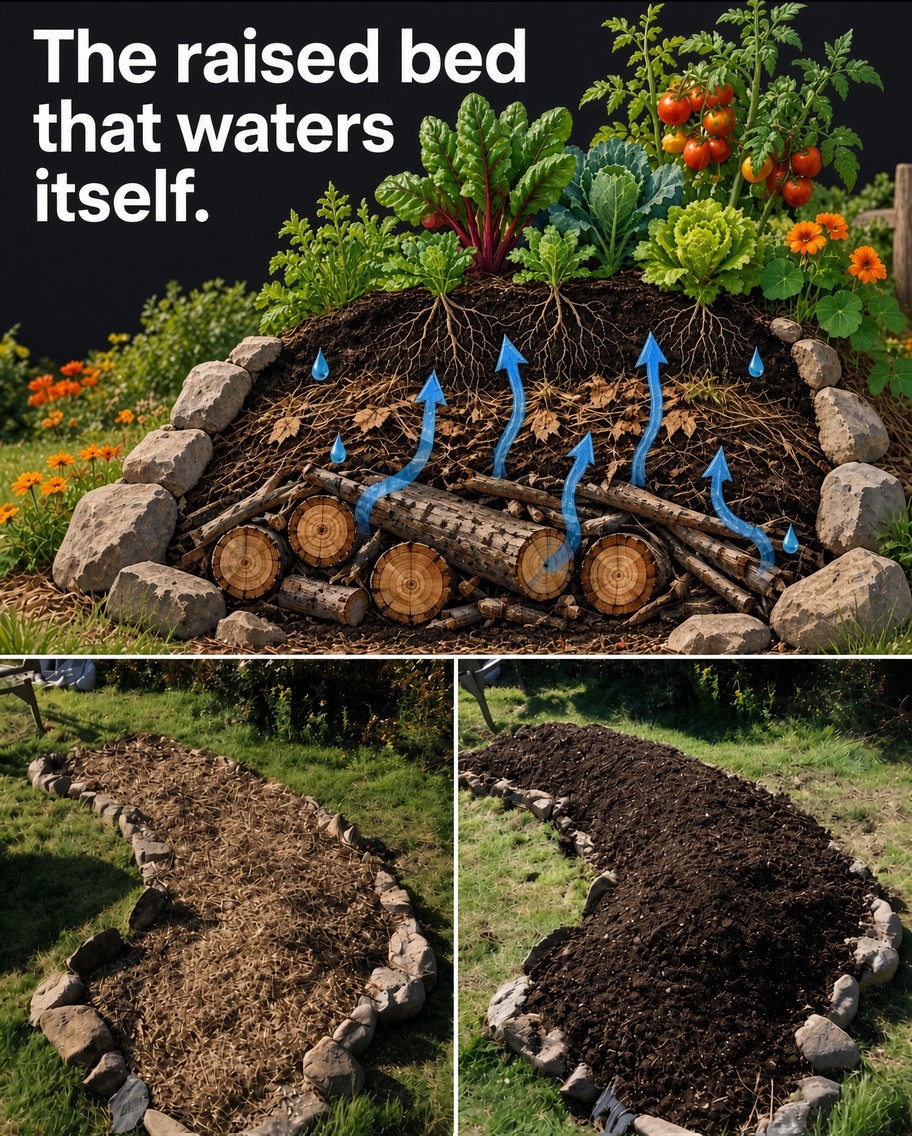
Hugelkultur uses woody material beneath a planting layer to create a raised or mounded growing area. It can be a practical way to reuse logs and branches and reduce the amount of purchased soil in a deep bed, but some popular claims about the method are stronger than the scientific evidence. This guide separates the practical technique from the hype.
What is a hugelkultur raised bed?
Hugelkultur is a gardening method in which woody material such as logs and branches forms a lower layer beneath soil and other organic matter. The name is German for “mound culture,” and the traditional form creates a raised or mounded growing area. Modern gardeners also use the idea inside framed raised beds, where logs and branches occupy part of the lower volume and a planting layer sits above them. The method can reduce the amount of purchased soil needed for a deep bed while giving bulky woody debris a useful destination. However, extension sources do not agree that every claimed benefit is scientifically established. Washington State University Extension notes that there is currently no science-based evidence that hugelkultur itself is a superior method for using woody material. It is best viewed as one option for building a raised growing area, not as a guaranteed shortcut to better harvests.

Why gardeners use wood in the base
The main practical reason to put logs and branches in a deep raised bed is volume. Woody material can occupy space that otherwise would have to be filled with purchased soil, compost or other growing media. Oklahoma State University Extension describes a framed-bed variation in which logs, branches, twigs and leaf litter are placed at the bottom and covered with planting soil. Decomposing wood also becomes organic matter over time, and some extension guidance describes it as capable of holding water as it breaks down. However, wood does not behave like finished compost. Large pieces decompose slowly and can temporarily affect nitrogen availability around them. For that reason, the upper growing layer should still contain suitable soil and compost rather than relying on fresh wood as the immediate root medium.

Choose the wood carefully
Use sound, untreated natural wood and avoid lumber that has been painted, stained, chemically treated or contaminated. Be cautious with species that can release compounds capable of suppressing nearby plants; black walnut is a commonly cited example because of its juglone content. The original Rural Sprout guide also advises against cedar, cherry and black walnut, but the broader evidence is more nuanced than a simple universal blacklist. The safest practical approach is to use ordinary untreated logs and branches from known, non-problematic species, preferably material already available on your property. Partially decomposed wood can be useful because it is already beginning to break down. If you use fresh woody material, remember that decomposition requires nitrogen, water and microbes. Do not treat the logs as an instant fertilizer. They are a long-term organic layer, not a substitute for fertile planting soil.

Start with the bed location and size
Choose the site before gathering materials because a hugelkultur bed becomes difficult to move once constructed. Most vegetables need strong sunlight, so select a position that receives the light required by your crops. Make the bed narrow enough that you can reach the center without stepping into it. A framed rectangular bed is often easier to maintain than a very steep mound. Consider drainage as well: the bed should not sit where water routinely pools. If the bed is very deep, remember that its lower layers will gradually settle as organic material decomposes. The final height may decrease over time, so you may need to add soil or compost later. A sensible design is one that remains practical after settling, not one that depends on maintaining a dramatic mound forever.

Build the woody foundation
Place the largest logs at the bottom of the bed and arrange them so they form a stable foundation rather than a loose pile. Smaller branches can fill some gaps between larger pieces. If the wood is very dry, wetting it before covering it can help begin decomposition, although the bed should still drain freely. The aim is not to create a sealed container. You want a substantial woody layer that will gradually break down while supporting the material above it. Avoid packing logs against walls or edging in a way that could push outward as the structure shifts. In a framed bed, leave enough space for a generous layer of soil above the woody foundation. Roots need a dependable planting medium, and vegetables with deeper root systems should not be forced to grow entirely in fresh woody debris.

Add branches and organic material
After the largest logs are positioned, add progressively smaller branches and woody pieces. You can then incorporate suitable organic material such as leaves, straw and other plant residues. The traditional idea is to combine larger woody material with smaller organic materials before finishing with soil. Do not pack every layer into a solid, airless mass. Decomposition depends on microorganisms, moisture and oxygen, so some structure and air space are useful. Avoid huge pockets of dry material that can settle unpredictably. Extension guidance differs on how strongly to promote the layering technique, so think of this stage as practical filling rather than a precise recipe with guaranteed results. Use clean garden materials and avoid burying diseased plant debris, invasive weed roots or anything contaminated with chemicals.

Add a proper soil and compost growing layer
The most important layer for the plants themselves is the soil near the surface. Once the woody foundation and organic materials are in place, add a generous layer of quality planting soil and well-finished compost. This is where most vegetable roots will initially grow, so it should have good structure, drainage and fertility. Do not assume that decomposing logs will immediately supply everything plants need. Fresh woody material can create temporary nitrogen competition as microorganisms break it down, and extension literature warns that this can affect nearby roots. Finished compost and soil give crops a more predictable environment from the beginning. If your bed is deep, calculate how much soil is genuinely needed for the crops you plan to grow rather than making the bed unnecessarily tall. Taller is not automatically better.

Plant the right crops
A newly built hugelkultur bed can be planted much like another raised bed once the upper soil layer is deep enough. Choose crops according to the actual depth, fertility, sunlight and moisture conditions rather than assuming every plant will thrive because wood is underneath. Leafy greens, herbs and many common vegetables can work well in raised beds when the surface soil is fertile and well drained. Deep-rooted crops need enough usable soil depth, especially during the first season. Because the bed can settle as organic material decomposes, avoid positioning long-term perennials where a changing soil level could create problems. Water new plants normally while they establish. The presence of buried wood does not mean a fresh bed can automatically go weeks without irrigation. Water needs still depend on weather, soil texture, crop type and root development.

Understand the moisture claims
One of the most repeated claims about hugelkultur is that buried wood acts like a giant sponge and eventually makes a bed almost self-watering. That claim should be treated cautiously. Some extension publications describe water storage by decomposing woody material, and Oklahoma State University discusses water retention as a potential benefit of its raised-bed variation. At the same time, other extension experts caution that coarse material beneath fine soil can create a perched water table and may stress roots under some conditions. The result depends on the materials, bed design, soil texture, climate and drainage. Do not stop watering simply because a bed contains logs. Instead, check the soil and plants. A well-designed raised bed should drain excess water while holding enough moisture for healthy roots. Good irrigation practice matters more than promising that hugelkultur will eliminate watering.

Maintain the bed as it settles
Hugelkultur is not a build-it-once system that never changes. Buried organic material will shrink as it decomposes, so the bed can lose height and the soil surface can settle. Monitor the level during the first several seasons and top it up with quality compost and soil when necessary. Watch plant growth for signs of nutrient shortage, particularly if a large amount of fresh wood was used. Pale foliage and weak growth can have many causes, but nitrogen competition is one possibility when microorganisms are actively decomposing woody material. Keep weeds under control, maintain surface mulch where appropriate and continue ordinary irrigation and crop-rotation practices. The useful mindset is to treat a hugelkultur bed as a living raised bed whose structure changes over time. If you maintain the planting layer properly, it can remain productive even as the original logs gradually disappear.
