
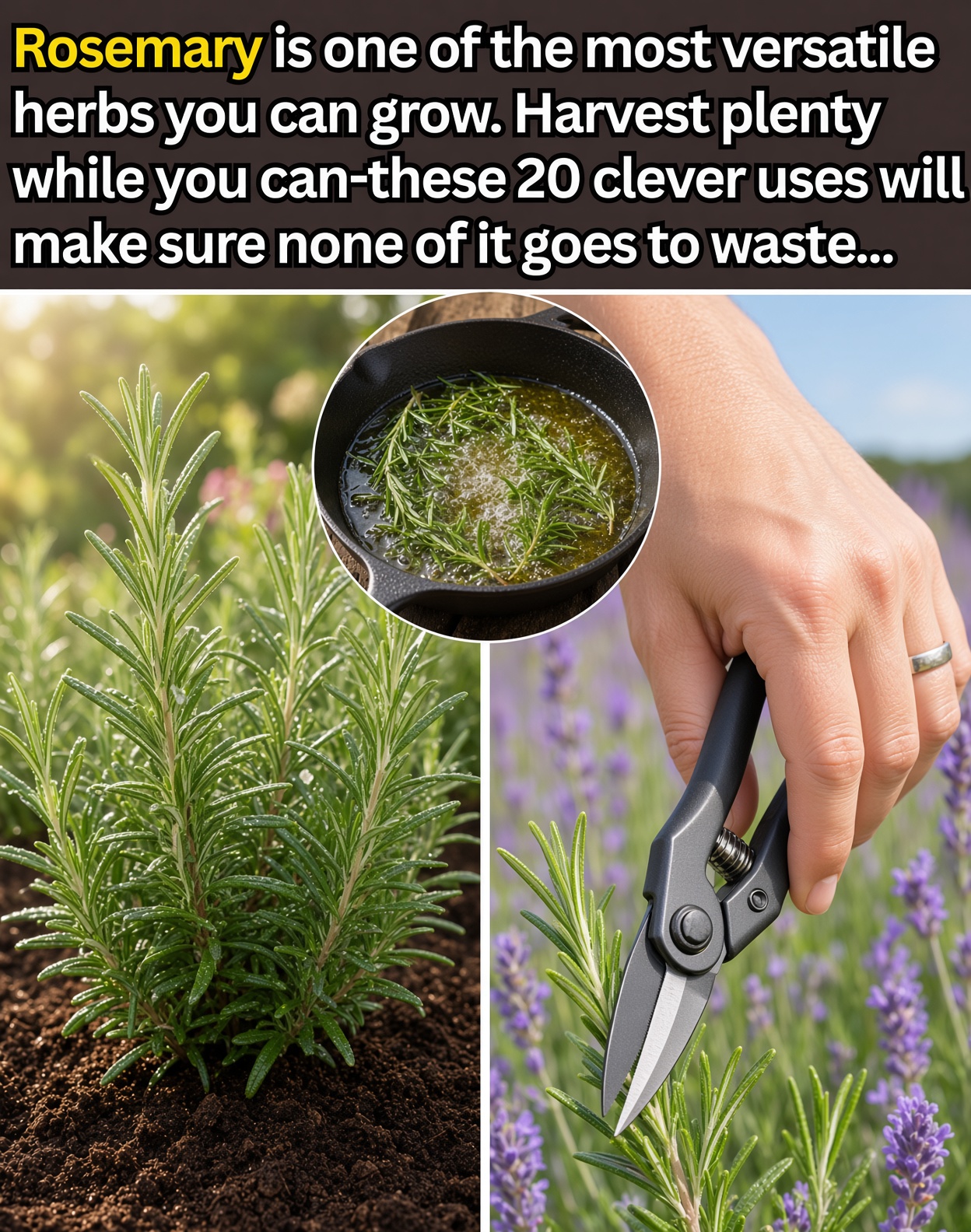
1. Make Rosemary-Infused Olive Oil
Fresh rosemary can lend olive oil a deep herbal aroma that works beautifully with bread, roasted vegetables, potatoes, pasta, and simple dressings. For a quick refrigerator infusion, combine clean rosemary with oil, let it flavor the oil briefly, then strain and chill. Do not leave fresh herb-infused oil at room temperature for long periods; fresh plant material can create food-safety risks in oil. For longer storage, use a tested preservation method or refrigerated commercial preparation.

2. Make Homemade Rosemary Salt
Rosemary salt is an easy way to preserve the flavor of a large harvest. Chop dried rosemary finely and combine it with coarse salt, then let the mixture dry fully before sealing it in a clean jar. Use it sparingly on roasted vegetables, potatoes, beans, grilled meats, eggs, focaccia, or savory snacks. Because the rosemary flavor is concentrated, a little can go a long way.

3. Simmer a Natural Home Freshener
A saucepan of water with rosemary and lemon can make the house smell fresh and herbal. Keep the heat low, replenish the water as needed, and never leave a simmering pan unattended. You can vary the scent with orange peel, cinnamon, or a few whole cloves. This is best treated as a pleasant fragrance rather than a proven disinfectant or odor-removing treatment.

4. Make a Simple Rosemary Hair Rinse
A mild rosemary rinse can be used as a simple grooming ritual. Steep fresh sprigs in hot water, let the liquid cool completely, strain it, and use it as the final rinse after shampooing. It can leave the hair smelling fresh and feeling clean, but claims that homemade rosemary water reliably regrows hair are stronger than the available evidence. For persistent hair loss, identify the cause instead of relying on a home rinse alone.

5. Prepare Rosemary Ice Cubes
Freeze small rosemary sprigs or chopped leaves in ice-cube trays with water, then add the cubes to lemonade, sparkling water, iced tea, or other cold drinks. This is especially useful when the garden produces more rosemary than you can use fresh. You can also freeze chopped leaves in small portions for savory cooking. Label freezer portions with the date so older batches are used first.

6. Use Rosemary in Cocktails and Lemonade
Rosemary adds an aromatic, piney note to lemonade, sparkling water, and mixed drinks. A lightly bruised sprig can release more fragrance, while a rosemary simple syrup can distribute the flavor evenly through a drink. For a nonalcoholic version, combine lemon juice, sparkling water, a little sweetener, and rosemary. Keep the herb as an accent rather than allowing its flavor to overpower the rest of the drink.

7. Make Rosemary Butter
Compound butter is one of the fastest ways to turn a surplus herb into something useful. Soften unsalted butter, finely chop rosemary, and mix in garlic, lemon zest, black pepper, or a little salt. Roll the mixture into a log, chill it, and slice as needed. Rosemary butter melts beautifully over potatoes, corn, roasted vegetables, fish, chicken, beans, and warm bread.

8. Dry Rosemary for the Pantry
Drying is ideal when you have more rosemary than you can use immediately. Harvest healthy stems, tie them into small bunches, and hang them in a warm, dry, well-ventilated place away from strong direct sunlight. A dehydrator can speed the process. The leaves should become crisp and brittle rather than soft or flexible. Store the dried rosemary in an airtight jar and label it with the date.

9. Make a Rosemary Herbal Tea
Rosemary can be steeped in hot water as a simple caffeine-free herbal beverage. Use a small amount of fresh or dried herb, steep for a few minutes, and strain before drinking. Lemon or honey can soften the flavor. Traditional use and laboratory research are interesting, but a homemade cup should not be presented as a proven treatment for headaches, poor memory, or disease. Concentrated preparations deserve additional caution.

10. Create a Rosemary Salt Scrub
For a simple body scrub, combine finely chopped dried rosemary with sugar and a skin-friendly carrier oil. Massage gently over damp skin, then rinse. Avoid broken skin, the face, and areas that are irritated. A patch test is sensible, especially if you are prone to sensitive skin. The main benefit is the mechanical exfoliation and aromatic experience, not a guaranteed medical effect.

11. Make a Rosemary Sachet for Drawers
Dry rosemary can be placed in small breathable sachets and tucked into drawers, closets, or linen storage for a pleasant herbal scent. The aroma may also discourage some insects, but sachets are not a guaranteed moth treatment. Keep the sachet dry and replace it when the fragrance fades. This is a simple way to use woody rosemary pieces that are less convenient for cooking.

12. Add Rosemary to Homemade Seasoning Blends
Combine dried rosemary with thyme, oregano, garlic, onion, black pepper, or smoked paprika for a versatile seasoning blend. Use it on roasted vegetables, potatoes, chicken, beans, soups, and savory breads. Grind the woody leaves lightly if you prefer a finer texture. Store blends in small airtight jars away from heat and moisture, and add a date so you can rotate older batches first.

13. Grill With Rosemary Stems as Aromatic Skewers
Thick rosemary stems can be useful around the grill when you want extra herbal aroma. Strip most of the leaves, soak the stems briefly, and use them to support suitable pieces of vegetables or other foods. Monitor the grill closely because rosemary is woody and can char. The safest approach is to think of the stems as an aromatic cooking aid, not a replacement for standard food-safety practices or durable skewers.

14. Make Rosemary Vinegar for Food
A rosemary vinegar can add a bright herbal note to salad dressings, marinades, and quick sauces. Use clean, dry rosemary with a suitable vinegar in a clean jar and allow the flavor to develop before straining. Keep the herb fully submerged. Vinegar is acidic, but homemade infused products should still be prepared with clean equipment and stored appropriately. A small bottle makes a useful pantry gift.

15. Add Rosemary to Honey for Flavor
Rosemary-infused honey combines sweet and savory aromas and can be drizzled over toast, roasted vegetables, cheese, or baked goods. Use dried rosemary or a short, controlled fresh-herb infusion and store the finished product according to a safe recipe. Honey should never be given to infants under one year of age. Treat the infusion as a culinary ingredient rather than an immune-boosting medicine.

16. Compost Rosemary Trimmings
Dry or fresh rosemary trimmings can go into a balanced compost pile when they are free of disease and contaminants. Chop woody material so it breaks down more readily, then mix it with a varied supply of greens and browns. Rosemary is not a fertilizer by itself, but composting the trimmings returns organic material to the garden instead of sending it to the bin.

17. Grow Rosemary as a Drought-Tolerant Garden Accent
A healthy rosemary bush can serve as both a culinary crop and an ornamental planting. It prefers full sun and well-drained soil, and once established it generally tolerates dry periods better than many leafy herbs. In colder regions, grow it in a container so the plant can be protected during freezing weather. Regular light pruning keeps growth compact and gives you plenty of usable stems.

18. Invite Pollinators With Rosemary Flowers
When rosemary is allowed to flower, its small blossoms can attract bees and other visiting pollinators. This is a useful reminder that not every stem needs to be harvested for the kitchen. Let selected branches bloom while continuing to harvest from other parts of the plant. Flowering also adds seasonal color to herb beds and borders.

19. Make Rosemary Soap Carefully
Rosemary can be incorporated into melt-and-pour soap as a dried herb or fragrance ingredient. Melt-and-pour products are simpler for beginners because you avoid handling caustic lye. Traditional cold-process soap requires strict safety procedures, accurate measurements, protective equipment, and proper curing; it should never be treated as a casual kitchen experiment. For a simple homemade project, use a reputable melt-and-pour base and skin-safe fragrance guidance.

20. Use Rosemary to Reduce Kitchen Waste
The most useful rosemary trick may be to use the whole harvest in different ways. Tender tips can season meals, mature stems can be dried or used around the grill, excess leaves can be frozen, and woody trimmings can go into compost. By matching each part of the plant to the right job, you can keep more of the harvest out of the waste stream and build a small pantry of homemade ingredients at the same time.

Why Growing Your Own Rosemary Pays Off
A rosemary bush can provide much more than occasional sprigs for a roast. Because the plant is evergreen in suitable climates and can tolerate dry periods once established, a single healthy shrub can supply fresh material for cooking, preserving, crafts, and garden use over a long season. Keeping a pair of kitchen scissors nearby makes harvesting easy, while drying or freezing the surplus prevents a large flush of growth from going unused. The most practical approach is to use rosemary according to the plant’s condition: harvest tender tips for cooking, allow some flowering stems to remain for pollinators, and prune lightly enough that the shrub keeps a healthy framework. This turns an abundant herb into a steady stream of useful ingredients instead of a once-a-year harvest.

Practical note: Rosemary is exceptionally versatile, but some popular online medical and pest-control claims are stronger than the evidence supports. This rewrite focuses on practical culinary, household, garden, and preservation uses, with safety details where they matter.