
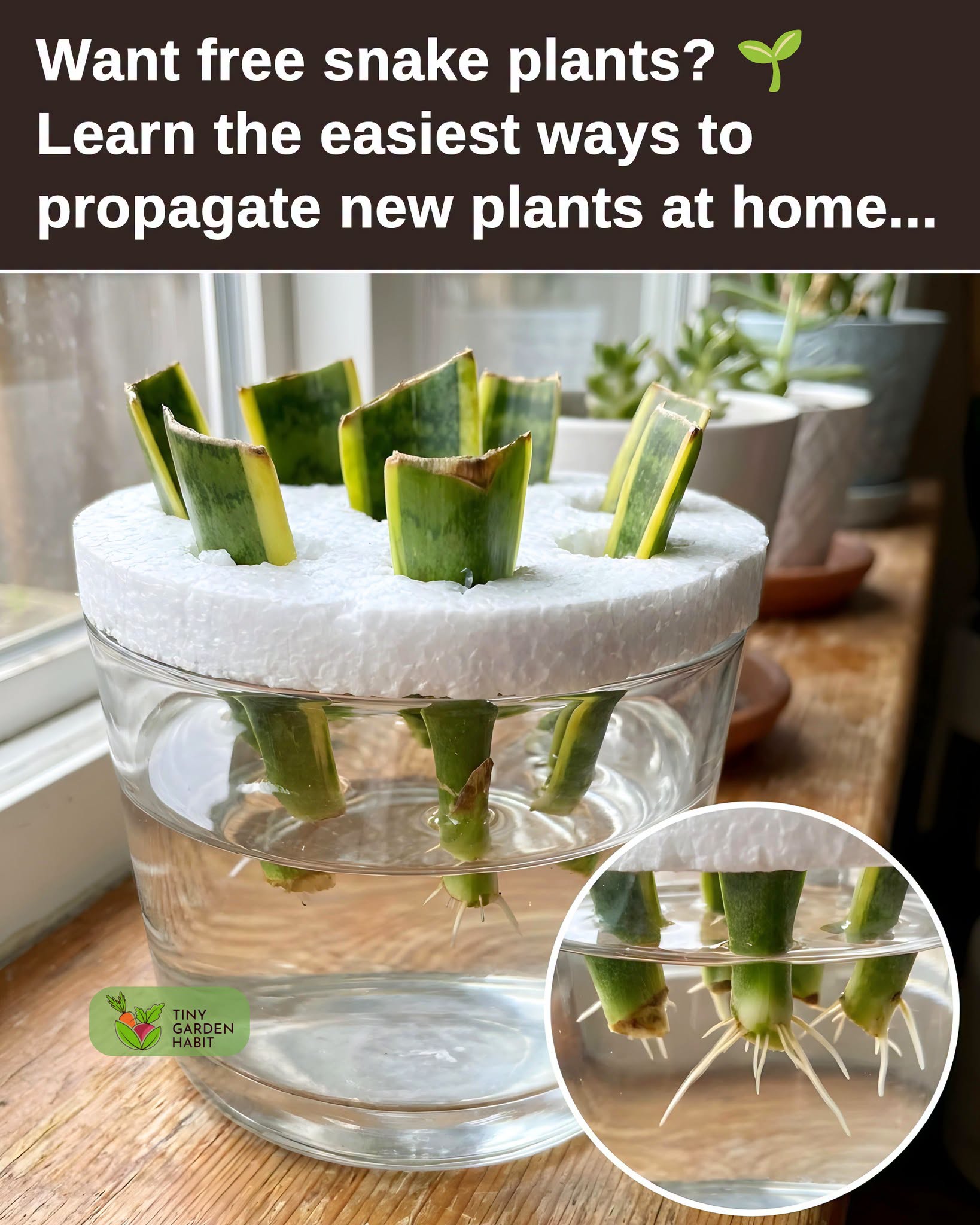
Snake plants are among the easiest houseplants to multiply at home. Their upright leaves, sturdy roots, and ability to tolerate dry conditions make them ideal for beginners. If you already have a healthy plant, propagation can give you several new plants without buying more. The process is simple, but choosing the right method and keeping moisture under control will greatly improve your results. A good propagation project starts with realistic expectations. Snake plants are naturally slow growers, so success is measured by steady root development rather than rapid changes above the soil. Choose a season when the plant is actively growing if possible, and keep the new cuttings away from cold drafts.

Choose a Healthy Parent Plant
Before taking any cuttings, start with a strong parent plant. Look for firm leaves with good color, no mushy areas, and no obvious signs of pests or disease. A healthy parent plant has more stored energy and is better able to produce new roots and shoots. Avoid taking material from a plant that is already stressed, severely dehydrated, or suffering from rot. Check the plant closely before cutting. Healthy leaves should feel firm rather than soft or watery. If the parent plant is crowded, propagation can also be a useful way to refresh its appearance while creating additional containers. Always work on a clean surface and keep freshly cut pieces away from contaminated soil or standing water.

1. Propagating Snake Plant in Water
Water propagation is popular because it is easy to understand and lets you watch roots develop. Select a healthy leaf and use a clean, sharp knife or pair of scissors to cut it near the base. You can root the whole leaf or divide a long leaf into several sections. Keep track of which end was closest to the roots because the cutting needs to be placed in the correct direction. Leaf cuttings are especially useful when you want to produce several plants from one mature leaf. Make each section large enough to handle easily, and avoid crushing the edges during cutting. Letting the cut surface remain clean and undisturbed gives the tissue time to begin forming new roots.

Prepare the Water Cutting
Place the lower end of the cutting into a clean glass or jar containing a small amount of water. Only the bottom portion should be submerged; keeping a large section underwater can encourage rot. Set the container in a warm location with bright, indirect light. Direct, intense sunlight through glass can heat the water and stress the cutting. A clear glass makes it easier to monitor both the water and the cutting. Keep the water level modest rather than filling the entire container. If the cutting starts becoming soft, dark, or unpleasant-smelling, remove it promptly because those are warning signs that the tissue may be rotting.

Change the Water Regularly
Fresh water helps keep the cutting’s environment clean. Replace the water every few days or whenever it becomes cloudy. Rooting is not instant, so patience is important. Depending on conditions, roots may take several weeks to become noticeable. Avoid repeatedly pulling the cutting out to check it because disturbing new roots can slow development. Do not expect every cutting to root at exactly the same speed. Some pieces may remain unchanged for a while before producing visible roots. Stable warmth and light are more useful than constant handling. If algae develops in a clear container, clean the container and replace the water before returning the cutting to its growing spot.

Move Rooted Cuttings Into Soil
When a water-rooted cutting has developed a useful group of healthy roots, it can be transferred to soil. Use a small pot with drainage holes and a loose, well-draining mix. Plant the rooted end gently and keep the soil only lightly moist at first. Give the young plant bright, indirect light while it adjusts to its new growing medium. Use only a small amount of soil around the new roots at first and avoid compacting it tightly. The goal is to provide support while allowing air to reach the root zone. Once the cutting begins producing fresh leaves or shoots, gradually treat it like a young established houseplant.

2. Propagating Snake Plant Directly in Soil
Soil propagation is another practical option and eliminates the need to move a cutting from water later. Make a clean cut, then allow the cut surface to dry for a short period before planting. This helps reduce excess moisture around the wound. Insert the correct end into a small container filled with a fast-draining potting mix. A dry period after cutting is useful because snake plant leaves contain a lot of moisture. Do not bury a large portion of the leaf. The cutting should be stable, but the buried area should remain relatively small so that excess moisture does not stay trapped around the fresh wound.

Water Soil Cuttings Carefully
Newly planted cuttings need much less water than an established houseplant. Keep the growing medium from becoming constantly wet and allow it to dry between light waterings. Place the container somewhere warm with bright, indirect light. Because you cannot see roots developing underground, it is especially important not to overwater simply because no new growth is visible. A pot that is too large can hold moisture for a long time, which is not ideal for an unrooted cutting. Choose a container only slightly larger than the material being propagated. If the soil feels damp for many days, wait rather than adding more water.

3. Propagating by Division
Division is often the fastest method when a mature snake plant has several natural growth points or pups. Carefully remove the plant from its pot and brush away enough soil to see how the underground stems and roots connect. Separate natural clusters with your hands when possible, or use a clean sharp knife when the roots are tightly joined. Division is particularly useful when you can clearly see separate pups growing from the parent plant. Work slowly around the root ball so you do not unnecessarily tear healthy roots. If a cut is necessary, make it clean and avoid repeatedly sawing through the same section.

Replant Each Division
Each divided section should have healthy roots and several leaves when possible. Place every division in its own appropriately sized pot with fresh, well-draining soil. Water lightly after planting and keep the containers in bright, indirect light. Some temporary drooping or slower growth can occur while the divisions recover from being separated. After division, keep the newly separated plants in conditions similar to those they experienced before. Sudden changes in light or watering can add stress. Once new growth resumes, you can move the plants into their preferred display locations and begin a normal long-term care routine.

4. Growing Snake Plants From Seeds
Growing snake plants from seed is possible, although it is less common for ordinary houseplant propagation. It is a slower approach and gives gardeners an opportunity to watch a plant develop from the earliest stage. Fresh viable seeds should be placed in a light seed-starting medium and kept warm with gentle moisture. Seed propagation can be rewarding because every seedling develops its own root and leaf system from the beginning. It is also useful for gardeners interested in experimenting with different plants. Because the process is slow, it is best viewed as a long-term project rather than a quick way to fill a shelf.

Care for Young Seedlings
Once seedlings emerge, provide plenty of bright, indirect light and avoid keeping their small root systems saturated. Young plants are more delicate than mature snake plants, so moisture needs to be managed carefully. As seedlings become stronger and develop several leaves, they can gradually be moved into individual small pots. Avoid strong direct afternoon sun on very young seedlings. Their small leaves and roots can dry out faster than those of established plants. Gentle moisture, warmth, and consistent light are usually more helpful than heavy feeding during the earliest stage of development.

The Best Method for Beginners
For most people, water propagation and soil propagation are the easiest ways to start. Water is helpful when you want to observe roots, while soil propagation is convenient because the cutting can remain in its growing container. Division is an excellent choice for a large crowded plant because the new sections already have roots and can establish faster. If your goal is speed, division is generally the most practical choice for a mature plant. If your goal is to create many small plants from one leaf, cuttings offer more opportunities. Water and soil methods can both work well when the cutting is healthy and the environment is not excessively wet.

Common Mistakes to Avoid
Overwatering is the biggest mistake to avoid during propagation. Another common problem is using damaged leaves or planting a cutting upside down. Containers without drainage can also trap moisture around developing roots. Give every cutting stable conditions instead of moving it from place to place, and resist the temptation to interfere with it every few days. Another mistake is checking the roots too frequently. Every time a cutting is pulled from its medium, delicate new roots can be disturbed. Give the plant time to work undisturbed. Good drainage, moderate moisture, and steady light usually matter much more than complicated propagation products.

How Long Does Propagation Take?
There is no exact timetable for every snake plant. Light, temperature, humidity, the condition of the cutting, and the propagation method all affect the speed of development. Water and soil cuttings can take several weeks or longer to establish, while division usually provides the quickest visible result because each section already has roots. A slow start does not necessarily mean failure. Some varieties and growing conditions simply take longer. Look for gradual signs such as firmness, resistance when a cutting is gently tested, or new shoots emerging near the base. If the cutting remains firm and healthy, continued patience may be worthwhile.

Final Care for New Snake Plants
Once a propagated plant begins producing fresh growth, care becomes much like caring for an established snake plant. Provide bright, indirect light, use well-draining soil, and allow the growing medium to dry between waterings. Do not rush into a very large pot. With patience and restrained watering, a single healthy snake plant can become a collection of attractive new plants to keep or share. Once established, new snake plants are wonderfully low maintenance. They can tolerate periods of dryness and do not require frequent feeding. Rotate the pot occasionally if growth leans toward the light, and inspect leaves from time to time so problems can be noticed before they spread. With simple care, propagated plants can remain attractive for years.
