
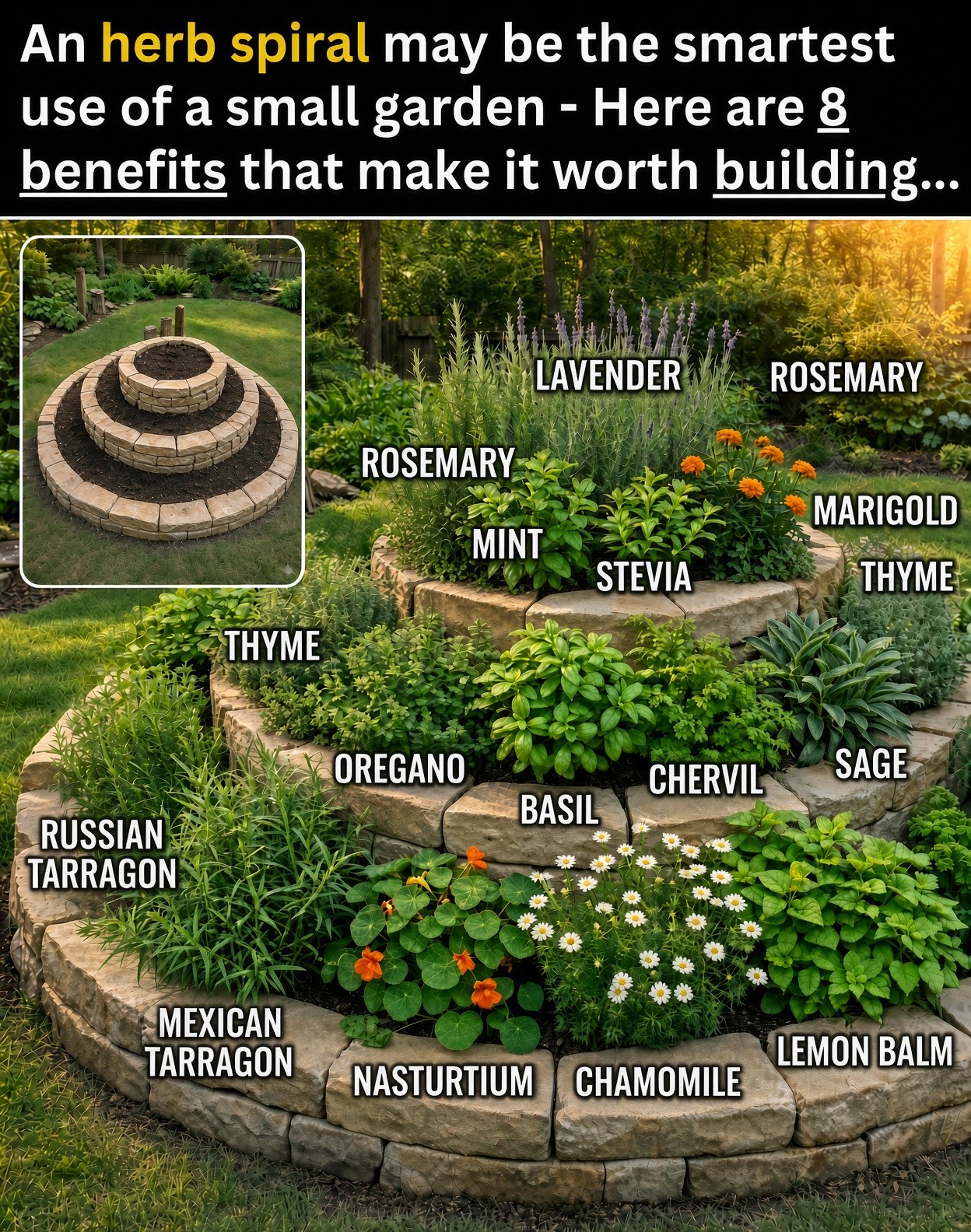
What Is an Herb Spiral?
An herb spiral is a compact raised planting bed arranged in a spiral that climbs toward a higher center. It combines a small footprint with different planting positions, allowing herbs with different preferences to grow in one feature. The Gardening Soul guide describes a typical spiral as a few feet wide with the center raised above the outer edge. The idea is useful, but it is important not to exaggerate what the shape can do. A spiral can create differences in light, temperature, soil depth, and moisture because height and exposure change across the bed. RHS guidance confirms that ordinary gardens contain many microclimates created by slope, orientation, walls, shade, and exposure. University Extension guidance also confirms that culinary herbs vary considerably in their light, soil, and moisture requirements.

1. Make More Use of a Small Footprint
One of the most useful reasons to build an herb spiral is simple space efficiency. A flat herb bed spreads planting area horizontally, while a spiral adds height and several tiers of soil. That makes the design particularly attractive for urban gardens, patios, courtyards, and small backyards. The goal should not be to cram every herb imaginable into the same structure. Crowding can make watering, harvesting, and airflow more difficult. Instead, choose a manageable group of herbs and give each enough space for mature growth. University of Minnesota Extension notes that most herbs need at least six hours of direct sunlight and generally perform best in well-drained soil. A compact spiral works best when its size matches the amount of light and access available around it.

2. Create Different Growing Conditions
A spiral can place plants in different microclimates within a small area. The upper section is usually more exposed to sunlight and often drains more quickly, while lower positions can hold moisture longer and receive some shade from the plants and structure above them. That makes the design convenient for grouping herbs according to need. Penn State Extension explains that Mediterranean herbs such as rosemary, oregano, sage, and thyme prefer full sun and well-drained, relatively dry soil, while University of Minnesota Extension notes that parsley and related herbs prefer somewhat more moisture with good depth and drainage. Use those differences when planning the spiral, but remember that the effect is gradual rather than absolute.

3. Match Herbs to Their Water Needs
Herb spirals are especially useful when your plant list includes herbs that should not be watered identically. Rosemary, thyme, oregano, and sage generally like the soil to dry somewhat between waterings. Parsley and other moisture-loving herbs usually need a more even supply of water. University of Minnesota Extension recommends well-drained soil for herbs and notes that mint-family herbs tolerate heat and dry soil once established, while carrot-family herbs prefer slightly more moisture. Put the dry-loving herbs higher on the spiral and moisture-loving herbs lower down. Mint and lemon balm should be contained because they can spread aggressively. This arrangement can simplify care because the planting position itself supports different moisture preferences.

4. Turn the Herb Garden Into a Focal Point
A spiral is both a garden bed and a piece of garden structure. Stone, brick, reclaimed concrete, or other safe durable materials give it a strong outline, while herbs provide changing colors, textures, flowers, and fragrance through the seasons. Penn State Extension notes that herbs can be integrated into formal or informal landscapes and that their varied foliage and flowers can contribute significant ornamental value. A spiral can sit near the kitchen, beside a path, next to a patio, or within a vegetable garden. Choose building materials that fit the existing landscape so the spiral looks intentional rather than like an isolated project. The best result is one that is attractive enough to function as a focal point but practical enough that you actually use the herbs growing in it.

5. Give Flowering Herbs a Place in the Pollinator Garden
Many culinary herbs produce nectar-bearing flowers that attract bees, butterflies, and beneficial insects. Penn State Extension specifically notes that herb flowers can attract pollinators and beneficial insects, while other herbs can serve as host plants for butterfly caterpillars. An herb spiral can therefore provide food for people while contributing another small source of habitat to the garden. Allow selected plants such as thyme, oregano, sage, or chives to flower instead of harvesting every stem. Avoid unnecessary insecticide use around flowering herbs. A mixed spiral cannot replace a larger pollinator habitat, but it can add useful diversity when combined with native flowers and other long-blooming plants.

6. Keep Harvesting Simple
A major practical advantage is that herbs are concentrated in one accessible area. Instead of walking among several beds to gather parsley, thyme, sage, or basil, you can keep frequently used herbs close together. University of Minnesota Extension recommends harvesting by snipping leaves and stems as needed throughout the season. Place everyday cooking herbs in the easiest-to-reach positions and less frequently used or taller herbs toward the back or center. Regular harvesting can also help many herbs stay compact and productive. Once you have a surplus, dry or freeze herbs rather than allowing a good harvest to become waste. An herb spiral works particularly well when its location is close enough to the kitchen that collecting a few leaves takes less time than opening the refrigerator.

7. Use the Slope to Observe Moisture Differences
A spiral makes moisture differences visible if you pay attention. After watering or rain, the upper area may dry sooner because it is more exposed, while lower sections can remain moist longer. RHS explains that slope, aspect, walls, shade, and exposure influence local garden microclimates. Use those changes to guide your planting and watering decisions rather than assuming the whole bed has identical conditions. Check the soil near the root zone before adding more water. University of Minnesota Extension notes that herbs need regular watering but should not be kept in overly wet sites. The result can be a more deliberate irrigation routine: dry-loving herbs receive less frequent watering, while plants that need steadier moisture are placed where the soil remains suitable for longer.

8. Build It From Durable or Reclaimed Materials
The spiral does not require expensive landscaping stone. The source guide suggests stone, brick, recycled concrete, logs, bottles, and other materials. Reuse can reduce waste and make the structure visually unique, but choose materials carefully because the bed will support heavy soil for years. Avoid contaminated materials and treated wood that is unsuitable for contact with an edible garden. Plain cardboard can help suppress existing grass and weeds under the footprint when appropriate, but persistent perennial weeds may need to be removed first. The most sustainable material is often the one that is safe, locally available, durable, and easy to repair. Build for stability rather than novelty.

Step 1: Choose the Best Location
Start with the site before thinking about the wall. The original guide recommends a sunny position receiving around six to eight hours of light, and University of Minnesota Extension broadly recommends at least six hours of direct sunlight for most herbs. Avoid low spots that remain wet after rain. Watch the area at different times of day and note whether a fence, wall, tree, or building creates shade or reflected heat. RHS guidance explains that walls and slopes can create warmer, cooler, wetter, or drier microclimates. If your goal is to grow rosemary and thyme, prioritize strong sun and drainage. If you also want parsley or other moisture-loving herbs, make sure the lower area has suitable conditions.

Step 2: Mark the Spiral Before Building
Use a hose, rope, or string to draw the shape on the ground before carrying heavy materials. The Gardening Soul design suggests a spiral several feet across with a raised center, but the exact dimensions should fit your garden and your reach. Walk around the outline and imagine weeding, watering, harvesting, and moving a wheelbarrow or watering can. If the inner curve is difficult to reach, reduce the diameter rather than making the bed larger. A practical spiral should be accessible from all sides or have a clear approach path. This planning stage is also where you can decide where the spiral opening should face and where taller herbs should go so the structure does not shade plants that need full sun.

Step 3: Build a Stable Spiral Wall
Remove grass and persistent weeds, then build the outer edge from the widest part toward the center. Stack brick or stone with staggered joints for stability and gradually increase the height as the spiral winds inward. The center should be higher than the base, but the slope should remain gentle enough that soil will stay in place. Think of the wall as a retaining structure rather than a decorative pile. If you are working with heavy stone, use broad, stable placement and avoid creating a tall unsupported face. A modest, low spiral is often safer and easier to maintain than a dramatic tower. Once the wall is stable, fill the interior gradually instead of dumping all of the soil in one load.

Step 4: Fill With Well-Drained Soil
University of Minnesota Extension says most herbs grow best in well-drained soil around pH 6.0 to 7.5 and warns against heavy clay, soggy ground, and excessive fertility. Use a good-quality soil or growing mix that will not stay saturated. The upper zone can be the quickest draining area, while the middle and lower sections can hold somewhat more moisture. Do not pack the soil tightly because roots need oxygen as well as water. It is not necessary to create completely different soil recipes for each tier; the more important strategy is to choose plants whose natural preferences match the position. After filling, water the bed well and allow the soil to settle before finalizing the planting arrangement.

Step 5: Plant Herbs by Light, Moisture, and Height
A practical layout puts rosemary, thyme, oregano, and lavender toward the sunny upper section where drainage is strongest. Sage, chives, dill, and similar herbs can occupy middle positions depending on the season and local conditions. Parsley and basil can be placed lower where moisture is easier to maintain. Keep mint and lemon balm contained because both can become aggressive spreaders. Also consider plant height: taller herbs should be positioned so they do not cast heavy shade over shorter sun-loving plants. Penn State Extension and University of Minnesota Extension both stress the importance of matching herbs to their actual growing preferences. Start with a manageable number of species and leave enough room for mature growth rather than filling every open patch on day one.

Step 6: Water, Mulch, Harvest, and Maintain
Water the newly planted spiral thoroughly, then adjust irrigation according to each zone. The upper section may dry first, while lower pockets can stay moist longer. A modest layer of suitable mulch can reduce evaporation and suppress weeds, but do not bury the crowns of woody herbs. Harvest often by snipping leaves and stems, and preserve extra herbs by air drying, dehydrating, or freezing. University of Minnesota Extension recommends those preservation methods and also notes that container and garden herbs should be watered regularly without allowing them to wilt or sit in soggy soil. Check the wall periodically for loose materials, top up settled soil, and remove aggressive weeds before they become established.

Final Tips for a Long-Lasting Herb Spiral
Keep the spiral easy to repair and easy to reach. Replace loose stones, refresh compacted or settled soil, and divide overcrowded herbs when necessary. Keep invasive herbs contained and rotate annual herbs such as basil as seasons change. Avoid trying to force every culinary herb into the same design; the whole advantage comes from respecting their differences. A small spiral with a thoughtful planting plan can be more useful than a large structure packed with too many species. Once established, it can become a convenient daily source of fresh herbs while also adding texture, fragrance, flowers, and habitat to the garden. The best spiral is one that fits your climate, your available space, and the amount of maintenance you realistically want to do.
