
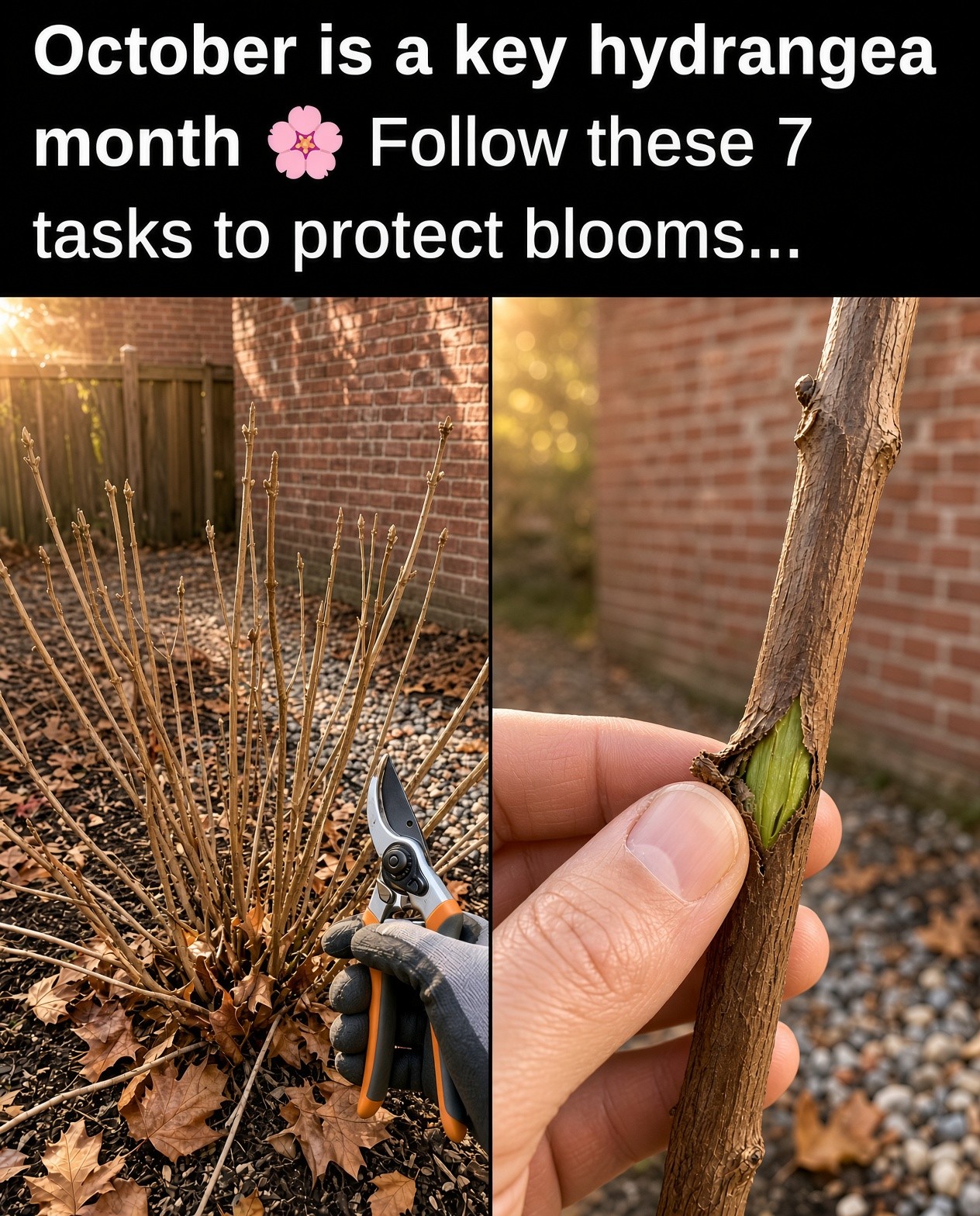
Why October Hydrangea Care Matters
October is when many hydrangeas begin winding down for winter, but they are not all managed the same way. The most important task is to know whether your shrub flowers on old wood, new wood, or both. Bigleaf and oakleaf hydrangeas generally form next season’s flower buds on existing stems, while smooth and panicle hydrangeas flower on current-season growth. University of Minnesota Extension explains that bigleaf hydrangeas form buds in late summer and early fall, which means poorly timed pruning can remove next year’s flowers. October care should therefore focus on plant identification, sensible moisture, selective cleanup, root protection, and winter preparation rather than aggressive cutting. It is also helpful to note the plant’s location, exposure, soil texture, and winter damage from the previous year. Those observations can guide spring decisions about pruning and protection. If a shrub is healthy and well matched to the site, the best October task may simply be to leave it stable and avoid unnecessary disturbance. Hydrangeas generally respond better to correct timing and consistent care than to frequent intervention.

1. Identify Your Hydrangea Before You Prune
Before using loppers or pruning shears, identify the type of hydrangea you are growing. Bigleaf hydrangea (Hydrangea macrophylla) and oakleaf hydrangea (H. quercifolia) generally bloom on old wood, so buds for the following season may already be present on the stems by autumn. Cutting those stems in October can reduce flowering next year. Smooth hydrangea (H. arborescens) and panicle hydrangea (H. paniculata) bloom on new wood and are more tolerant of major pruning later in dormancy. Some reblooming bigleaf cultivars flower on both old and new wood. University Extension sources emphasize that pruning timing depends on species and cultivar, so a plant tag or reliable identification guide is worth checking before you make structural cuts. It is also helpful to note the plant’s location, exposure, soil texture, and winter damage from the previous year. Those observations can guide spring decisions about pruning and protection. If a shrub is healthy and well matched to the site, the best October task may simply be to leave it stable and avoid unnecessary disturbance. Hydrangeas generally respond better to correct timing and consistent care than to frequent intervention.

2. Water Deeply When October Is Dry
Cooler temperatures do not mean a hydrangea automatically has enough water. If October is dry, check the soil beneath the canopy rather than judging moisture by the appearance of the leaves alone. University of Minnesota Extension recommends deep watering established shrubs until the upper 6 to 9 inches of soil are moist, while warning against shallow watering that encourages a weak root system. Apply water slowly around the root zone so it soaks in instead of running away. Newly planted hydrangeas and shrubs growing in sandy soils may need closer monitoring. At the same time, do not water saturated ground repeatedly. Roots need oxygen as well as moisture, and persistent overwatering can cause serious root stress.

3. Remove Diseased Foliage and Debris
Selective fall cleanup is more useful than stripping the entire shrub. Remove leaves or stems that clearly show disease, especially when symptoms are spreading instead of simply fading with autumn. Penn State Extension recommends cleaning pruning tools when cutting diseased plant material and notes that proper sanitation helps reduce the spread of plant pathogens. Do not automatically remove every yellowing leaf, because normal seasonal senescence is expected. Visibly diseased debris should also be handled carefully rather than piled at the base of the shrub. Healthy leaves and stems can be left in place as the plant enters dormancy. The goal is to remove material that is genuinely problematic while preserving useful plant structure.

4. Leave Dry Flower Heads When They Look Good
Hydrangea flower heads do not have to be cut off in October. University of Minnesota Extension notes that dry tan heads on panicle hydrangeas provide winter interest and can be left until late winter or spring. Old flower clusters on other types can also remain if they are healthy and attractive. If you prefer a tidier appearance, remove individual flower heads carefully without cutting deep into the stem. This is different from pruning away whole branches that may carry next year’s buds. Keeping some dry blooms is also a simple way to maintain structure through winter. When you are uncertain about the variety, preserving the stems is usually preferable to making an irreversible fall cut.

5. Refresh Mulch Around the Root Zone
A moderate mulch layer helps maintain more even soil moisture and temperature as autumn turns colder. University of Minnesota Extension recommends a roughly 2 to 3 inch layer of mulch around woody plants and warns against piling it directly against stems and trunks. Apply mulch across the root zone, but keep the crown of the hydrangea uncovered. Suitable materials include wood chips, bark, or clean shredded leaves. Mulch should reduce evaporation, moderate temperature fluctuations, and help suppress weeds. It should not create a deep, wet mound that keeps poorly drained soil saturated. If the existing mulch is already adequate, simply maintain it rather than continually adding more.

6. Skip Unnecessary Late-Season Fertilizer
October is usually not the time to push hydrangeas into new growth with heavy feeding. University of Minnesota Extension warns that late-season nitrogen can encourage tender growth that may not harden properly before winter. A soil test is more useful than guessing about nutrient deficiencies or adding fertilizer because flowers were disappointing. If pH or nutrient levels need correction, use test results and plan the appropriate treatment for the correct season. Healthy hydrangeas usually benefit more from proper soil, moisture, light, and pruning timing than from repeated applications of fertilizer.

7. Protect Bigleaf Hydrangeas Where Winters Are Harsh
Bigleaf hydrangeas deserve special attention in colder climates because many cultivars carry next season’s flower buds on old wood. Penn State Extension explains that winter injury to those buds can lead to few or no flowers, even when the roots and plant itself survive. In areas with severe cold, consider a breathable protective barrier that reduces exposure to wind and animal browsing. University of Minnesota Extension describes using a hardware-cloth ring around bigleaf hydrangeas to protect stems from rabbits. The exact method should fit the cultivar and your climate. Avoid wrapping the plant tightly in impermeable plastic, which can trap moisture and reduce airflow.

8. Move Container Hydrangeas to Shelter
Hydrangeas growing in pots can experience greater winter temperature swings because the root system has less insulation than a plant growing in the ground. Before a hard freeze, move container plants to a protected location that still provides the dormancy conditions the plant needs. A cold garage, sheltered porch, or other protected space may be suitable depending on your climate and cultivar. Continue checking the potting mix so the root ball does not become completely dry, but avoid keeping it constantly wet. Container care should be adjusted to the actual weather and the plant’s hardiness rather than following a single indoor or outdoor rule.

9. Do Not Mistake Normal Autumn Yellowing for Disease
Hydrangea leaves naturally change as days shorten and temperatures fall. Yellowing, browning, and leaf drop can be part of normal seasonal senescence. Before treating a plant, look at the whole shrub. If growth has been healthy and the plant is simply slowing down, there may be nothing to correct. In contrast, widespread spotting, sudden wilting, stem collapse, or repeated root-zone saturation can indicate a problem that deserves investigation. This distinction helps prevent unnecessary watering, fertilizer applications, or pruning. A good October routine is to observe trends and environmental conditions rather than reacting to every changing leaf.

10. Hold Off on Major Pruning When You Are Unsure
If you cannot confidently identify your hydrangea, postpone major pruning. Penn State Extension notes that old-wood hydrangeas can lose next year’s flowers when pruned at the wrong time, while smooth and panicle hydrangeas bloom on new wood and are more forgiving. A small cleanup of dead, broken, or clearly diseased material is different from cutting branches to reduce size or reshape the shrub. October is a poor month for experimenting with an unfamiliar plant. Check the nursery tag, compare the shrub with an extension guide, or ask a knowledgeable local nursery before making structural cuts.

11. Aim for Moist Soil, Not Waterlogged Soil
As winter approaches, aim to let hydrangeas enter dormancy with adequate moisture but without saturated roots. University of Minnesota Extension explains that both under-watering and over-watering can harm woody plants; too much water can fill soil pores that normally hold oxygen and can contribute to root suffocation. After a long dry spell, give the shrub a deep watering when the soil needs it. After heavy rain, leave it alone and check whether drainage is functioning. Moderate mulch can help stabilize moisture, but it should not become a thick wet layer over poorly drained soil.

Final October Hydrangea Checklist
A sensible October routine is simple: identify the hydrangea, avoid major pruning when it flowers on old wood, water deeply during dry spells, remove clearly diseased material, maintain moderate mulch, avoid unnecessary late fertilizer, and protect vulnerable bigleaf plants where winter damage is a concern. Panicle and smooth hydrangeas allow more flexibility with pruning, while bigleaf and oakleaf types require greater caution because they can carry flower buds on old wood. You do not need to turn fall cleanup into a complete cutback. Healthy stems and dry flower heads can provide useful winter structure while roots benefit from stable moisture and moderate protection.

Keep the plant label or cultivar name with your gardening notes so spring pruning is based on the exact hydrangea rather than guesswork. This small habit can prevent the most expensive fall mistake: removing stems that already hold next year’s flower buds.