
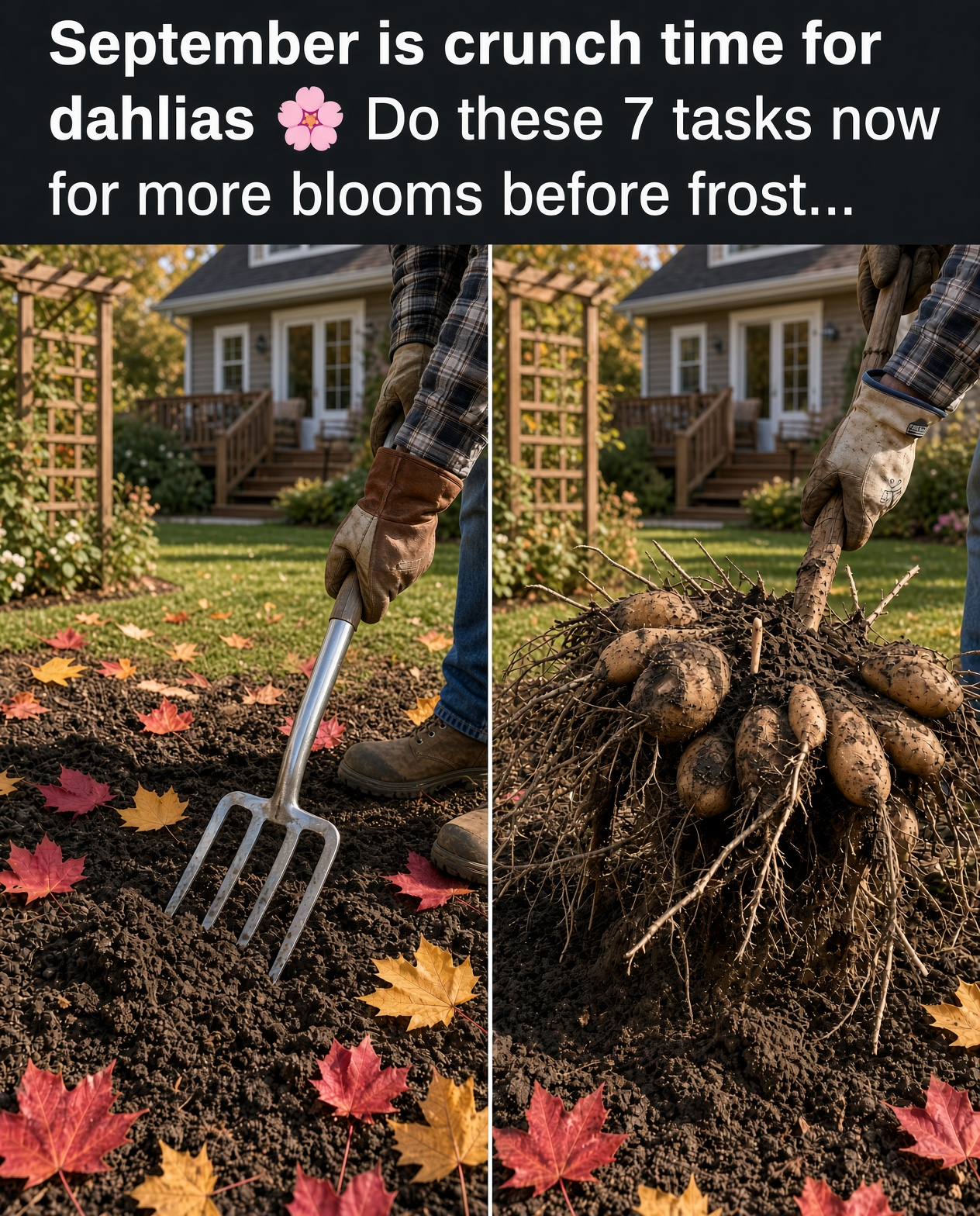

September is not the time to abandon your dahlias. In many gardens, this is when the plants are still carrying a huge number of buds and flowers, but cooler nights, rain, and autumn winds begin to create new challenges.
A few well-timed jobs can help you keep the plants flowering while also preparing their underground tubers for the end of the growing season.
From removing spent blooms to reinforcing tall stems and adjusting your watering routine, these seven September tasks focus on keeping dahlias productive without pushing them into unnecessary late-season growth.
1. Deadhead Spent Flowers Without Cutting New Buds

Regular deadheading is one of the most useful September jobs. Removing flowers that have finished blooming encourages the plant to continue directing its resources toward new flowers instead of allowing spent heads to develop seeds.
The tricky part is identifying what should actually be removed.
A developing dahlia bud is generally rounded, plump, and firm. A spent flower head becomes narrower and more cone-shaped after the petals drop. These two structures can look surprisingly similar when you are working quickly through a dense plant.
Take a moment to inspect each head before cutting. Keep the firm, rounded buds and remove the faded, pointed heads.
Rather than simply snapping off the flower head, follow its stem downward to a healthy leaf joint or side shoot. Make a clean cut there so you are not left with a long, unattractive stem stub.
2. Harvest Long Stems for Bouquets

If you grow dahlias for cut flowers, September is a great time to keep harvesting. Cutting flowers does not mean you are sacrificing the rest of the display; regular harvesting can function much like deadheading.
Choose flowers that are fully open and still fresh. Very tight dahlia buds often do not develop properly after being cut, so leave unopened buds on the plant.
For a useful vase stem, do not cut immediately beneath the flower. Follow the stem deeper into the plant and cut above a strong leaf joint or branching point.
This may temporarily remove a few smaller buds, but the remaining nodes can produce new shoots and useful flowering stems.
Cutting in the cool morning is particularly convenient because the plants are usually well hydrated. Put the stems into clean water soon after harvesting and remove any foliage that would sit below the water line.
3. Reinforce Tall, Top-Heavy Plants

By September, many dahlias have reached their full height. A plant that stood securely in summer can suddenly become vulnerable when autumn rain and wind add weight to the canopy.
Check your existing stakes and supports. If the plant has outgrown them, add secondary stakes where necessary rather than waiting for the first major storm.
- Drive stakes deeply enough that they remain stable in soft or wet soil.
- Use soft ties that allow the stems some movement.
- Support individual heavy branches instead of squeezing the entire plant into one tight bundle.
- Check ties regularly so they do not become restrictive as stems grow.
Give a supported plant a gentle test by moving the upper stems slightly. If the entire stake shifts easily, reinforce it before the next windy day.
What if a stem bends?
Do not automatically cut a bent stem if it is still substantially attached. A lightly damaged stem can sometimes be supported against a small stake and secured gently with a soft tie.
If the stem is completely broken or badly crushed, remove the damaged section cleanly so the plant is not carrying a useless, damaged branch.
4. Water the Roots, Not the Foliage

Cooler September weather can make it tempting to stop watering completely, but actively growing dahlias may still need regular moisture, especially during dry spells.
At the same time, autumn conditions can increase the risk of fungal problems when foliage stays wet for long periods.
Check the soil before watering. If the root zone has dried, water deeply around the base of the plant. If the soil is already cool and moist from recent rain, wait.
A slow soak is much more useful than frequent shallow splashes. It delivers moisture to the roots while avoiding unnecessary wetting of the flowers and foliage.
Morning watering is preferable when practical because any accidental moisture on the leaves has more time to dry during the day.
5. Remove the Lowest, Damaged Leaves

The bottom of a mature dahlia can become crowded with leaves by September. These lower leaves may receive little sunlight and can remain damp after watering or rain.
Inspect the lowest foliage and remove leaves that are yellowing, damaged, diseased, or touching the soil.
Removing a limited amount of lower foliage can open the area around the base of the plant, allowing air to move more freely and helping the soil surface dry more quickly.
Do not strip healthy foliage indiscriminately. The plant still needs its leaves for photosynthesis, so focus on the lower leaves that are no longer contributing much or are showing clear signs of damage.
If you find leaves with obvious disease symptoms, place them in the appropriate waste rather than adding them to a home compost pile where pathogens may survive.
6. Stop Pushing New Growth With Fertilizer

September is generally a good time to stop routine fertilizing, particularly nitrogen-heavy feeding. At this stage, the goal is not to force a large amount of soft new growth just before cooler weather arrives.
Excess nitrogen can encourage leafy growth when the plant should be transitioning toward the end of its growing season. It is better to allow the plant to mature naturally rather than trying to create one last artificial growth surge.
If you are unsure whether your soil actually needs additional nutrients, a soil test is more useful than automatically reaching for a fertilizer.
Continue providing water when the soil needs it, keep deadheading, and maintain good plant health. More fertilizer does not automatically translate into more flowers.
7. Watch the Frost Forecast and Prepare for Tuber Storage

For gardeners who need to lift dahlias for winter, September is the time to start thinking about what will happen when frost finally arrives.
You do not normally need to dig healthy plants simply because September has begun. If the weather remains frost-free, the plants may continue flowering and building up their underground storage organs.
Instead, keep an eye on your local frost forecast and have your storage supplies ready.
Once a hard frost has blackened the foliage, cut the stems back and prepare to lift the clumps. When digging, use a garden fork carefully around the plant so you do not slice through the tubers.
Leave a few inches of stem attached while handling the clump. Allow freshly lifted tubers to dry appropriately before placing them into their winter storage environment.
The exact storage method can vary, but the basic requirements are consistent: keep the tubers protected from freezing temperatures, excessive moisture, and conditions that cause them to dry out severely.
Do Not Make These September Dahlia Mistakes

- Cutting developing buds: Learn to distinguish rounded new buds from pointed spent flower heads.
- Stopping water too early: Dahlias still need moisture during active growth when September is dry.
- Keeping foliage constantly wet: Water at soil level when possible.
- Ignoring unstable stakes: Heavy autumn flowers can quickly turn a tall plant into a wind hazard.
- Removing too many leaves: Only remove foliage that is damaged, diseased, yellowing, or unnecessarily crowded.
- Continuing heavy fertilizer applications: Late-season soft growth is usually not what the plant needs.
- Digging too early: Wait for frost to signal the end of the growing season unless local conditions require earlier lifting.
A Simple September Dahlia Routine
You do not need to spend hours every day caring for dahlias. A short inspection every few days can catch most problems before they become serious.
- Walk around the plants and identify spent flowers.
- Protect the rounded buds that are still developing.
- Harvest mature flowers for bouquets.
- Check stakes and ties before windy weather.
- Feel the soil before watering.
- Remove damaged or diseased lower foliage.
- Stop routine late-season fertilizing.
- Keep an eye on the first-frost forecast and prepare your tuber-storage area.
September Dahlia Checklist
| Task | What to Do | Main Goal |
|---|---|---|
| Deadhead | Remove pointed, spent flower heads down to a healthy joint. | Encourage continued flowering |
| Harvest | Cut mature flowers with useful stem length. | Enjoy flowers indoors and encourage new stems |
| Support | Reinforce stakes and loosely secure tall branches. | Prevent wind and rain damage |
| Water | Soak the root zone when the soil dries. | Maintain healthy growth without excess moisture |
| Clean up | Remove diseased, damaged, or soil-touching lower leaves. | Improve airflow |
| Fertilize | Stop routine late-season feeding. | Allow plants and tubers to mature naturally |
| Prepare | Monitor frost and get tuber-storage supplies ready. | Protect next year’s planting material |
Final Thoughts
September is a maintenance month for dahlias, not a time to give up on them. Continue removing spent flowers, harvesting mature blooms, supporting heavy stems, and supplying water when the soil genuinely needs it.
At the same time, avoid pushing the plants with unnecessary fertilizer or keeping their foliage constantly wet. Opening up the lower canopy and removing diseased leaves can help the plants cope with cool, damp autumn conditions.
Finally, watch the weather. When frost eventually arrives, it signals the transition from flower production to tuber care. Having your storage plan ready ahead of time makes that final job much easier.
With these seven September tasks, you can enjoy the remaining dahlia flowers while giving the plants a better chance of finishing the season in good condition.