
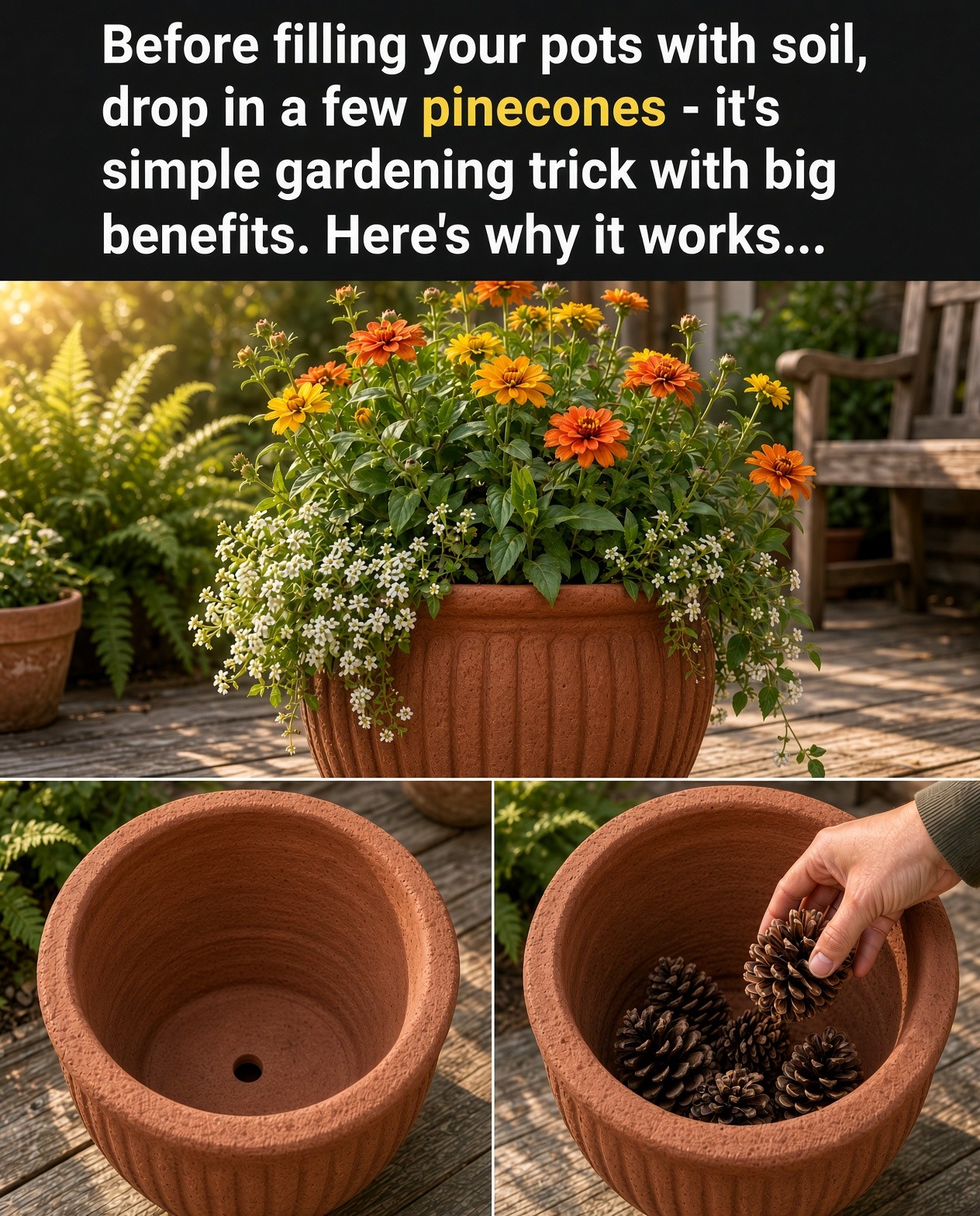
Pinecones in Planters: What This Garden Trick Really Does
Pinecones can be useful in large decorative planters, but their most practical role is not the one many viral gardening posts claim. A loose layer of clean, dry pinecones can occupy some unused space in a very deep container, reducing the amount of potting mix you need to buy and making a heavy planter easier to move. They are especially useful for seasonal containers whose decorative depth is much greater than the root depth required by the plants inside. The important distinction is that pinecones should not be sold as a guaranteed drainage fix. University Extension guidance consistently emphasizes that a container needs functional drainage holes and a suitable potting mix first. A coarse layer beneath fine mix does not automatically make water leave the root zone faster. Think of pinecones as a lightweight volume-filler option, not a cure for poor drainage.

1. Start With a Planter That Actually Drains
Before adding a single pinecone, inspect the container itself. A working drainage hole is one of the most important features of a healthy planter because excess water must have a way to leave the root zone. Illinois Extension calls a hole at the bottom of the container critical, explaining that poorly drained soil leaves too little air for roots and increases the risk of root problems. If a decorative pot has no drainage hole, pinecones cannot solve that problem. Drill an appropriate opening when the material allows, or use the decorative pot as a cachepot with a properly draining nursery container inside. Also keep the drainage opening clear after planting. Raising the pot slightly above a solid patio or deck can help water escape instead of collecting beneath the container.

2. Use Pinecones Mainly to Reduce Weight and Soil Volume
The clearest reason to use pinecones is simple: they are much lighter than wet potting mix. A large urn can become surprisingly heavy after it is filled and watered, especially on balconies, porches, patios, or raised surfaces. In a deep planter holding shallow-rooted annual flowers, herbs, or a seasonal display, the lower portion may contain more soil than the plants actually need. A loose pinecone layer can occupy some of that unused depth, leaving a substantial upper section of quality mix for the roots. This can reduce both material cost and the finished weight of the container. The savings make the most sense when the planter is genuinely oversized for the plants. If the container is already an appropriate depth, filling it normally is often simpler and gives the roots more usable growing volume.

3. Choose Clean, Dry, Sound Pinecones
Not every pinecone belongs in a planter. Select cones that are dry, firm, and free from visible mold, active insects, sticky fresh sap, paint, or other contaminants. Give them a quick outdoor shake to remove loose needles and soil. If the cones have been sitting in wet ground, let them dry thoroughly in a sheltered, airy place before using them. This matters because you do not want to bury a damp mass of organic material under potting mix. Clean, dry cones are also easier to handle and less likely to introduce unwanted debris. For outdoor seasonal containers, ordinary dry cones from a clean yard are generally the most sensible choice. If the planter will live indoors, skip the shortcut and use a cleaner, more predictable material instead; bringing garden debris inside creates unnecessary pest and moisture concerns.

4. Keep the Pinecone Layer Loose
Once you have a draining planter and clean cones, place them loosely rather than packing them down into a solid layer. The goal is simply to occupy some excess volume. Cramming cones tightly can create an irregular void-filled base that is difficult to inspect and may settle unevenly. Leave the drainage opening completely unobstructed. For a tall seasonal planter, the bottom third is a reasonable starting point when the plant’s root requirements are comfortably met above it, but the exact amount depends on the container and the plant. Do not reduce the soil depth simply because a pot looks deep. Roots still need enough continuous growing medium for moisture, nutrients, anchorage, and oxygen. The taller or more demanding the plant, the more conservative you should be with filler.

5. Add a Breathable Mesh Before the Potting Mix
A sheet of sturdy mesh over the pinecones can make the planter much easier to manage. The mesh helps keep fine potting mix from falling deep into the gaps between the cones while water is added. Use a material that allows water to pass through and does not create a sealed barrier. Lay it loosely over the cone layer and extend it slightly up the sides if necessary. Then add your container mix above it. This step is especially useful when the cones are large and irregular. The aim is not to create a second drainage system. It is simply to keep the root zone together so the potting mix remains where the plant’s roots actually grow. If you use fabric, choose a breathable landscape or horticultural material rather than an impermeable plastic sheet.

6. Use Quality Potting Mix for the Root Zone
The material above the pinecones matters far more to plant health than the filler below. Use a potting mix designed for containers rather than heavy soil dug from the garden. Oregon State University Extension recommends commercial potting or planter mixes because they are structured to provide appropriate drainage and aeration in the confined environment of a container. The mix should be deep enough for the specific crop or ornamental you are planting. A tomato, pepper, shrub, or young fruit plant needs substantially more root space than a shallow-rooted annual flower. Fill around the roots without compressing the mix excessively. After planting, water thoroughly so the mix settles naturally. If the planter becomes too wet for too long, adding more pinecones will not correct the problem; the root-zone mix, drainage, container size, and watering schedule need attention first.

7. Match the Filler to the Plant
Pinecones make the most sense when the container is deeper than the root system of the plants you want to grow. Seasonal flowers, compact herbs, and some shallow-rooted ornamental displays can work well in oversized decorative pots. Deep-rooted vegetables, shrubs, and small trees require more caution because they may use much more of the container’s available volume. A container that looks enormous is not automatically better. Too little soil can cause the root zone to dry quickly, become temperature-stressed, or lack room for stable growth. Oregon State University notes that larger plants with deeper root systems need substantially larger soil volumes. In practical terms, measure the plant’s mature root needs first, then decide whether you actually have excess depth available for filler.

8. Water the Finished Planter by Checking the Soil
Once the planter is finished, water based on the plant and the condition of the potting mix rather than on a fixed calendar. Container plants can dry faster than garden beds, particularly in hot, windy weather. University of Minnesota Extension notes that container plants often require more frequent attention to maintain even moisture, while overwatering can also be a problem. Check the mix before watering. When the plant needs water, moisten the root zone thoroughly enough to encourage even wetting, then allow excess water to drain completely. Do not leave the pot standing in a tray of stagnant water. If the soil remains wet for unusually long periods, investigate the container and potting mix instead of assuming the pinecones need to be rearranged. Good container care comes from matching water to the plant’s needs and the weather.

9. Remember That Pinecones Are Organic Material
Pinecones are woody natural material, which means they change over time. In a container that is emptied seasonally, that can be perfectly manageable. As the cones are repeatedly exposed to water and microbial activity, they may soften, shrink, or break apart. Fine potting mix can settle into the spaces they leave behind, causing the soil level to drop. This is one reason the trick is better suited to seasonal decorative containers than to permanent plantings expected to remain untouched for many years. When you repot, inspect the lower layer and replace or remove degraded material. The fact that pinecones are biodegradable is useful from a reuse perspective, but it also means they should not be treated as a permanent structural component.

10. What Not to Use Pinecones For
Do not use pinecones to rescue a pot with no drainage holes, to replace a suitable potting mix, or to create a shallow root zone for a plant that needs deep soil. Do not assume that a thick organic layer at the bottom will make every container drain better. Extension guidance from Illinois and Oregon State University specifically warns against relying on coarse material in the bottom of containers as a drainage strategy. The container’s drainage opening and the quality of the root-zone mix come first. Pinecones have a narrower job: they can occupy some unused lower volume in a very deep planter and reduce weight. Keeping that role clear prevents the trick from becoming a source of new problems.

11. Better Alternatives for Permanent Large Containers
If you are filling a permanent container rather than a one-season display, think beyond pinecones. A properly sized pot is often the simplest solution because it provides the plant with the root volume it actually needs without creating a large unused cavity. For very large decorative containers, an inverted empty nursery pot or another inert, lightweight internal volume-filler can sometimes reduce the amount of mix required while remaining more stable over time. The exact choice depends on the planter, the crop, and whether the interior material may contact the root zone. Whatever you use, preserve adequate soil depth, keep the drainage opening clear, and avoid trapping water. The principle is the same as with pinecones: reduce unnecessary volume only after the plant’s real root requirements have been accounted for.

12. The Smart Way to Use the Pinecone Trick
Pinecones can be a sensible reuse material when you have an oversized planter and a seasonal planting with genuinely unused depth. Start with drainage, choose clean dry cones, place them loosely, keep the hole open, add a breathable mesh if needed, and preserve enough quality potting mix for the roots. Then water according to the plant and monitor the container for settling as the cones gradually break down. The most important correction to the popular version of this tip is that pinecones should not be marketed as a guaranteed drainage improvement. Their real advantages are lighter weight and reduced use of potting mix in selected deep containers. Used with realistic expectations, they can make a large decorative pot easier to handle while helping you reuse a natural material that might otherwise become yard waste.
