
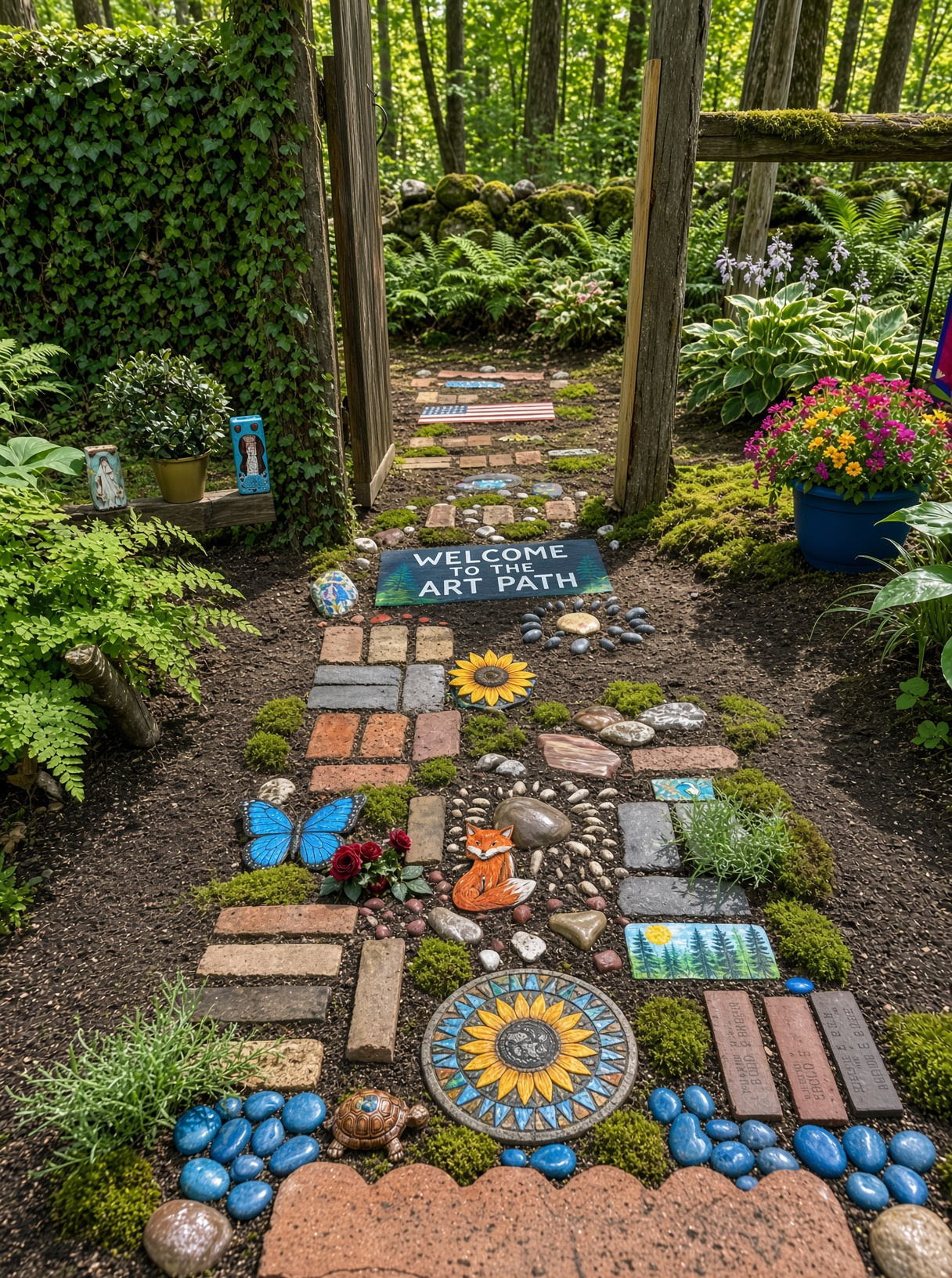
A garden pathway can completely change the way an outdoor space feels. It gives you a practical route between planting beds while also creating a visual line that guides the eye through the garden.
And you don’t necessarily need expensive paving stones or a professional landscaping crew to create one. Wood, gravel, old bricks, concrete, river stones, recycled materials, and even unusual household items can become attractive pathway materials.
The key is choosing a design that suits your garden and preparing the ground properly. Here are 15 inexpensive pathway ideas to inspire your next garden project.
1. Rustic Wooden Plank Pathway
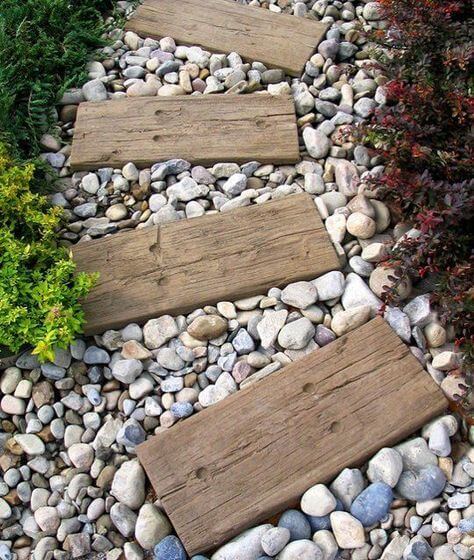
Wooden boards can create a beautiful pathway without requiring a large investment. Their natural color works particularly well alongside shrubs, ornamental grasses, and other informal plantings.
For a rustic appearance, position individual planks across a bed of rounded river stones. The irregular arrangement keeps the path relaxed rather than overly formal.
Before placing the boards, remove weeds and level the area. A landscape fabric underneath the stone layer can help reduce future weed growth.
Choose weather-resistant timber or treat suitable outdoor wood before installation if you want the pathway to last longer.
2. Recycled Glass Bottle Pathway
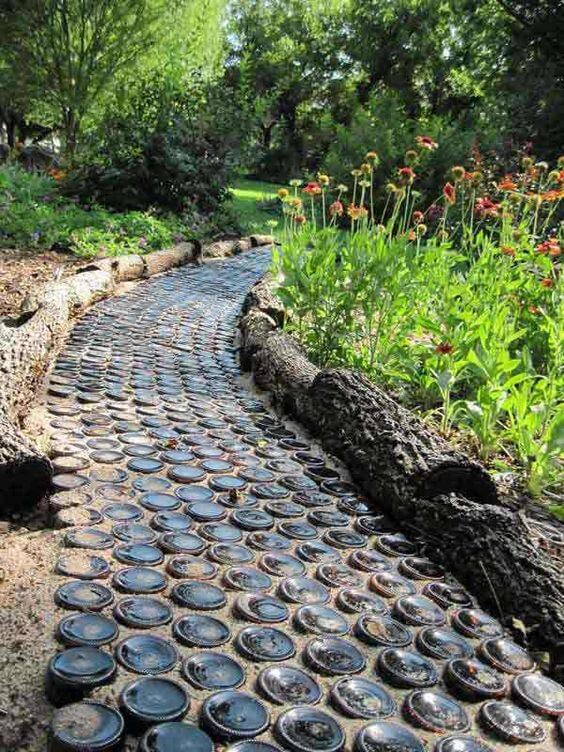
If you’re looking for something completely different, recycled glass bottles can become part of a colorful garden walkway.
Arranged closely together, the rounded bottoms of the bottles create a mosaic-like surface that catches sunlight throughout the day.
This idea works best as a decorative feature rather than a high-traffic walkway. The base must be stable, and the bottles need to be firmly secured so they cannot shift or become a hazard.
For safety, use only intact bottles and make sure the glass is completely surrounded and stabilized by the chosen base material.
3. Woven Wood Garden Path
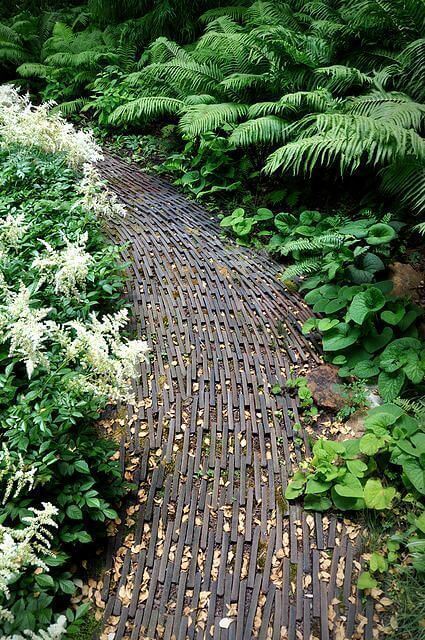
A woven wood pathway gives a garden a woodland character. Narrow wooden pieces can be arranged closely together to create a repeating pattern that follows the shape of the garden.
This design works especially well in shaded areas surrounded by ferns and groundcover plants.
Use straight pieces of reclaimed timber or suitably prepared branches and create a firm, level base before arranging them. Edging or stakes can help keep the pieces from gradually spreading apart.
The result is an organic-looking pathway that blends naturally into a woodland-style planting scheme.
4. Recycled Tire Steps
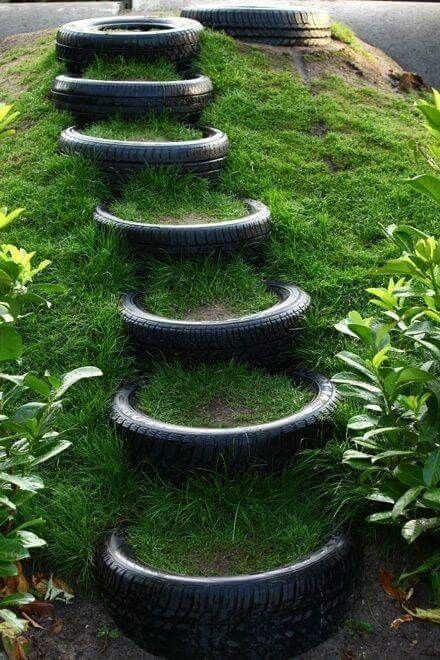
A sloped garden can be difficult to navigate, but recycled materials can provide an inexpensive way to create simple steps.
Old tires can be positioned into a slope and partially embedded into the ground. Soil or another suitable fill material can then be used to create a stable walking surface.
The dark rubber contrasts strongly with green grass, making the pathway look playful and unconventional.
Make sure each step is firmly anchored and level enough to walk on safely. Avoid using damaged tires with exposed wires or sharp edges.
5. Natural Wood-Slice Pathway
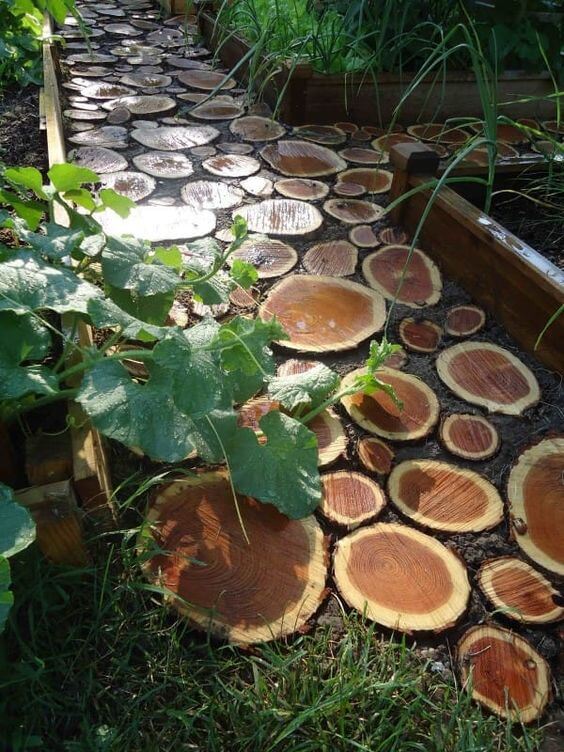
Wood slices make an attractive alternative to conventional stepping stones. The visible growth rings give every piece a slightly different appearance.
Use slices of different diameters to create a casual pattern rather than arranging everything in identical rows.
Prepare the ground first and place the slices firmly into a compacted base. The walking surface should remain as level as possible to reduce tripping hazards.
For outdoor longevity, use naturally durable timber or an appropriate outdoor wood treatment.
6. Circular Concrete Stepping Stones
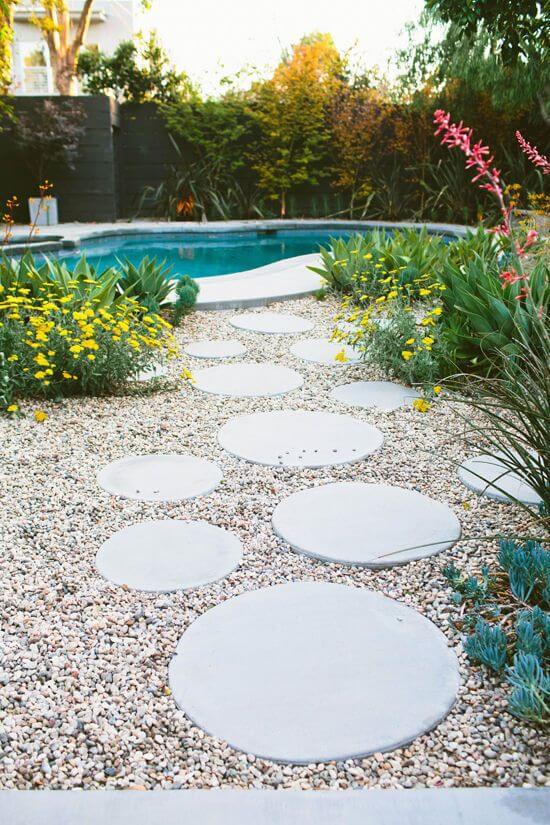
Round concrete stepping stones can give a garden a contemporary look without requiring an expensive continuous paved path.
Place the circles through gravel or another loose aggregate, leaving comfortable spaces between each stepping point.
The contrast between smooth pale concrete and small stones gives the pathway a clean appearance while keeping the installation relatively simple.
You can buy precast circular pavers or make your own using suitable molds and concrete.
7. Pebbles and Sand Pathway
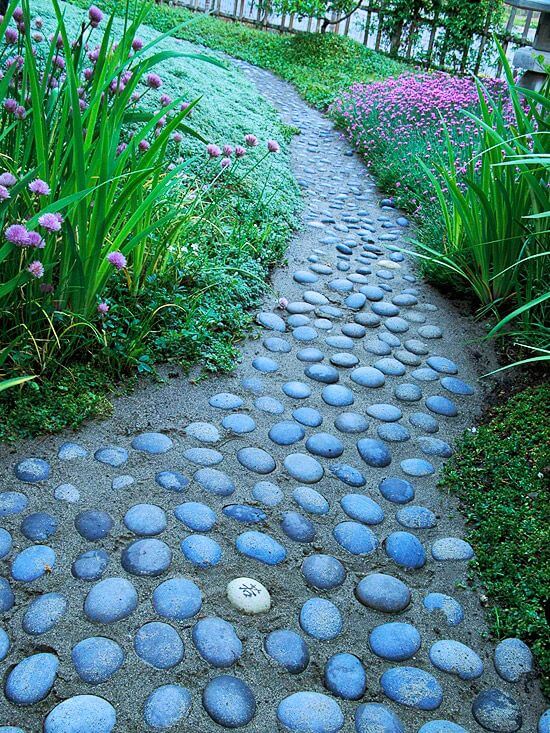
A pebble-and-sand pathway is ideal if you prefer a natural garden style.
Instead of covering the entire walkway with uniform gravel, arrange larger rounded stones through the surface. This creates a stepping-stone effect while retaining the informal appearance of a gravel path.
Dig out a shallow pathway, compact the base, and add an appropriate layer of sand or fine aggregate. Place the larger stones and fill the gaps around them.
A gently curving layout can make the garden feel more spacious and natural.
8. Pebble Stepping Stones

If you like the look of decorative stonework but don’t want to pave an entire pathway, create individual pebble stepping stones instead.
Concrete molds can be used to form each stone, with smooth pebbles pressed into the surface before the material sets.
Once installed into grass, the individual stones create a gentle route through the garden without visually dividing the lawn into separate areas.
This technique also gives you plenty of freedom to experiment with shapes, colors, and pebble patterns.
9. Butterfly Mosaic Pathway
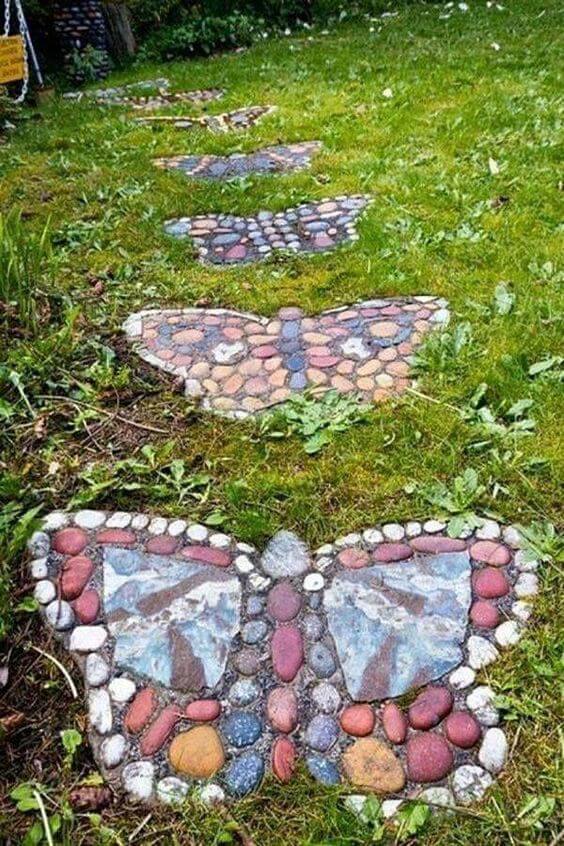
A pathway doesn’t have to be purely functional. A mosaic design can turn each stepping stone into a small piece of garden art.
Butterfly shapes are especially suitable for flower gardens because they reinforce the connection between the pathway and surrounding pollinator-friendly plants.
You can create the design using colored stones, ceramic fragments, or other suitable decorative materials set into concrete or mortar.
Sketch the shape before beginning and keep the walking surface relatively flat so the finished pieces remain practical as well as decorative.
10. Large Stone Path With Groundcover
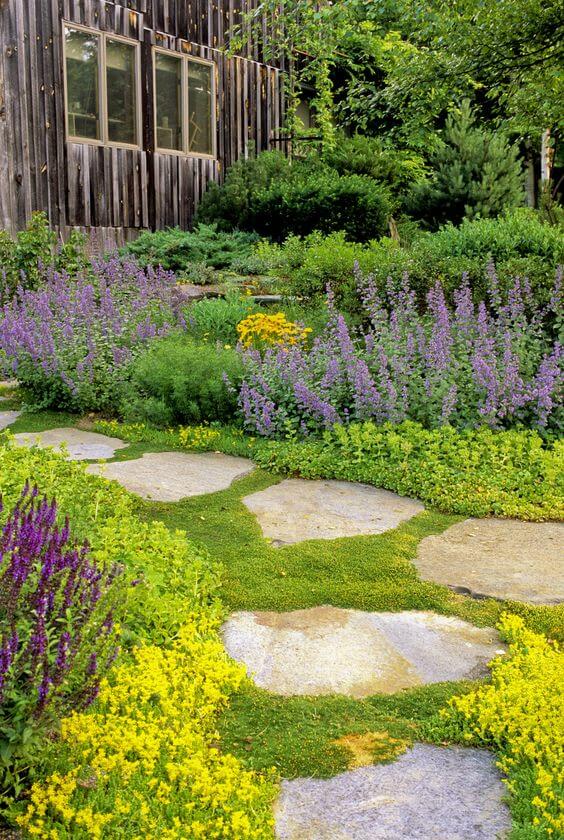
Large irregular stones can create one of the most natural-looking garden paths. Instead of lining them up perfectly, place them at comfortable walking distances and allow groundcover plants to grow around the edges.
Creeping thyme and other low-growing plants can soften the hard edges of the stones and help the pathway blend into the planting beds.
Choose stones with reasonably flat walking surfaces and set them securely into the ground so they don’t rock underfoot.
This style works especially well in cottage gardens, rock gardens, and informal landscapes.
11. Giant Leaf Concrete Stepping Stones
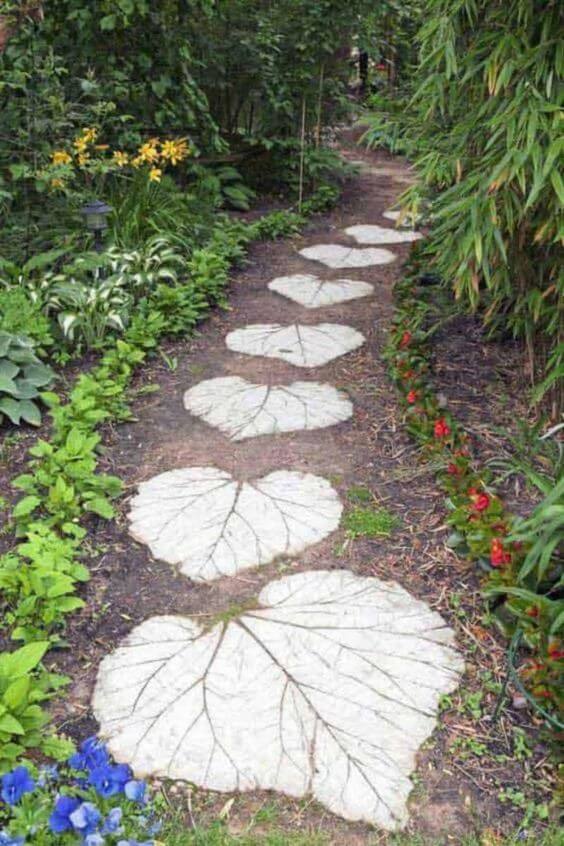
Large leaves can become surprisingly beautiful molds for homemade stepping stones.
Rhubarb, hosta, and other large leaves have prominent veins that transfer their natural patterns to concrete.
Place the leaf against the prepared mold or casting surface, add the concrete mixture, and allow it to cure completely before removing the leaf.
Once installed, the finished pieces resemble oversized leaves scattered along a woodland path.
This is particularly effective in shaded gardens surrounded by hostas, ferns, and other foliage plants.
12. Reclaimed Brick Pathway
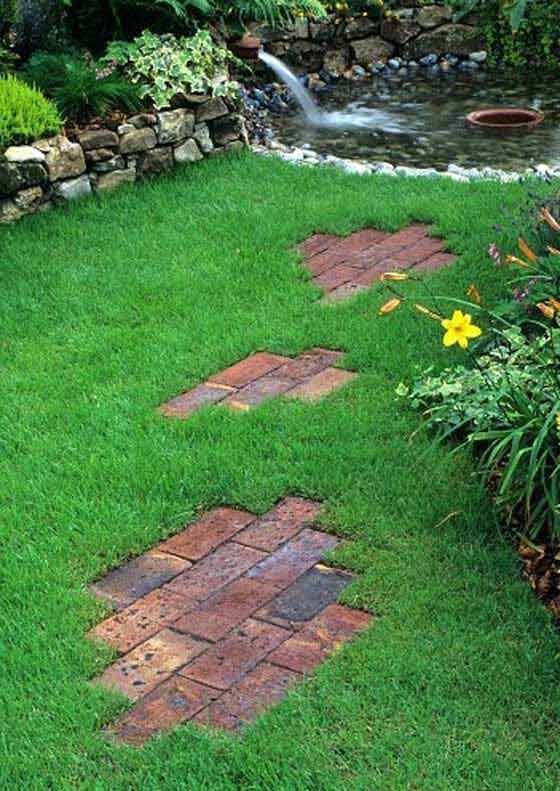
Old bricks are one of the easiest materials to reuse in a garden pathway. Their weathered appearance gives the garden instant character.
Instead of building a solid brick walkway, arrange small groups of bricks as individual stepping sections across grass.
This approach requires fewer materials while still giving the garden a clear walking route.
Set the bricks firmly into the ground and keep their upper surfaces reasonably level with the surrounding lawn.
13. Heart-Shaped Concrete Stepping Stones
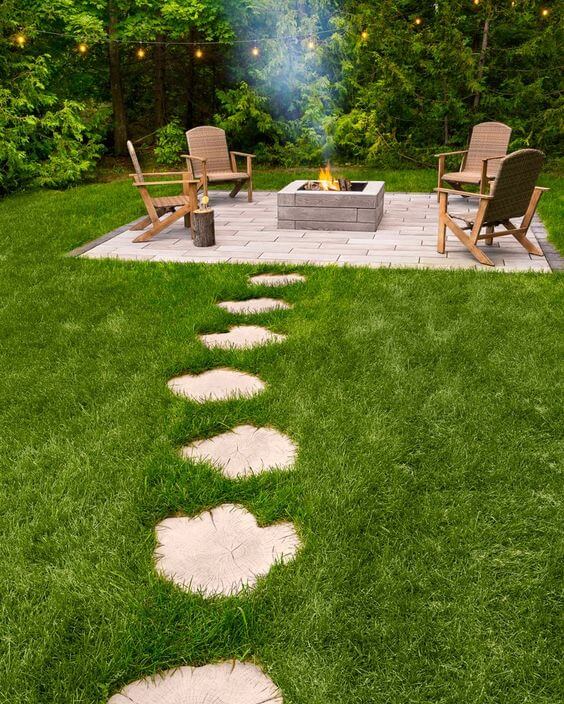
For a more decorative pathway, try using heart-shaped stepping stones.
The shape adds personality without requiring complicated landscaping. It can work especially well when the path leads toward a seating area, fire pit, pergola, or another garden destination.
You can purchase decorative molds or create a suitable reusable mold yourself. For a natural appearance, lightly textured surfaces can be incorporated before the concrete sets.
Arrange the hearts in a gently curving line through the lawn for a softer effect.
14. Concrete and River Rock Pathway
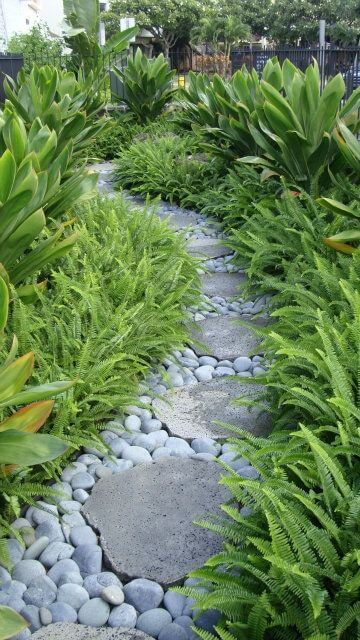
Combine two inexpensive materials—concrete and river rock—to create a pathway with plenty of texture.
Large concrete stepping sections provide the walking surface, while smooth stones fill the spaces around them.
Surround the pathway with ferns and other lush foliage for a woodland or tropical-inspired appearance.
The combination of hard concrete, rounded stones, and soft green plants creates a strong contrast that makes even a simple pathway feel carefully designed.
15. Dark Pavers and Gravel
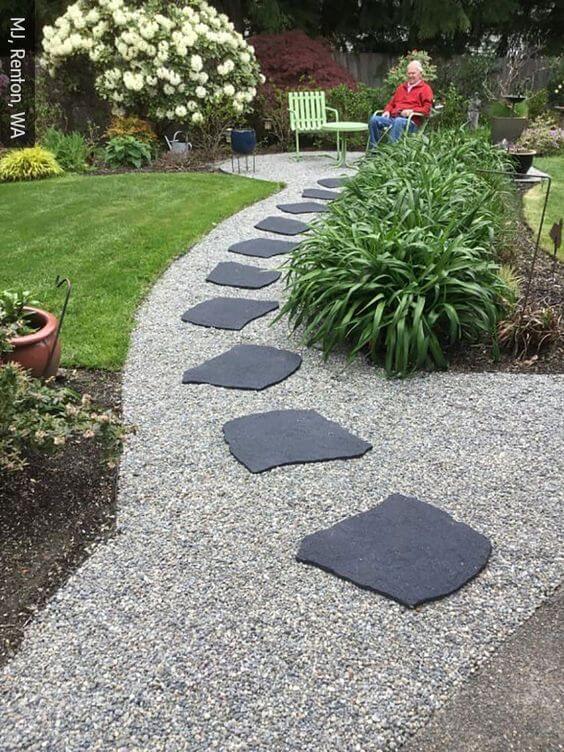
For a more modern garden, combine dark irregular pavers with light-colored gravel.
The strong contrast makes the individual stepping stones easy to see while the gravel creates a clean background around them.
This design can follow a gentle curve through lawns and planting beds, creating a clear route without requiring a fully paved walkway.
Slate-colored stone, dark concrete, or suitable recycled pavers can all produce a similar effect.
How to Make a Budget Garden Pathway Look Expensive
The material itself isn’t always what makes a pathway look attractive. Layout and preparation often make the biggest difference.
- Keep the route intentional: Let the pathway lead somewhere useful, such as a patio, bench, shed, or garden gate.
- Prepare the base: Level and compact the ground before installing stones, wood, or pavers.
- Repeat materials: Using the same stone or color elsewhere in the garden creates visual continuity.
- Soften hard edges: Plant groundcovers, grasses, or low perennials around the pathway.
- Follow natural curves: Gentle curves often look more relaxed than perfectly straight lines.
- Keep stepping distances comfortable: A beautiful path still needs to be practical to walk across.
Choose Materials That Suit Your Garden
A woodland garden might look best with wood slices, natural stones, or woven branches. A modern landscape may suit concrete circles and dark pavers, while a cottage garden can make beautiful use of reclaimed bricks and irregular stepping stones.
Think about the plants already growing around the proposed pathway before choosing your material. The best designs usually make the path feel like part of the garden rather than an object placed on top of it.
Final Thoughts
A garden pathway doesn’t have to be expensive to make a big difference. With a little creativity, everyday materials such as old bricks, reclaimed wood, gravel, river stones, concrete, and recycled items can become attractive features.
Whether you prefer a rustic wood-slice trail, a colorful mosaic, a simple gravel path, or modern concrete stepping stones, choose a design that complements the plants and architecture around it.
Good preparation is just as important as the material you choose. Level the ground, create a stable base, position the stepping surfaces securely, and finish the edges with plants or gravel.
With those basics in place, even a modest budget can produce a garden pathway that feels intentional, welcoming, and uniquely yours.