
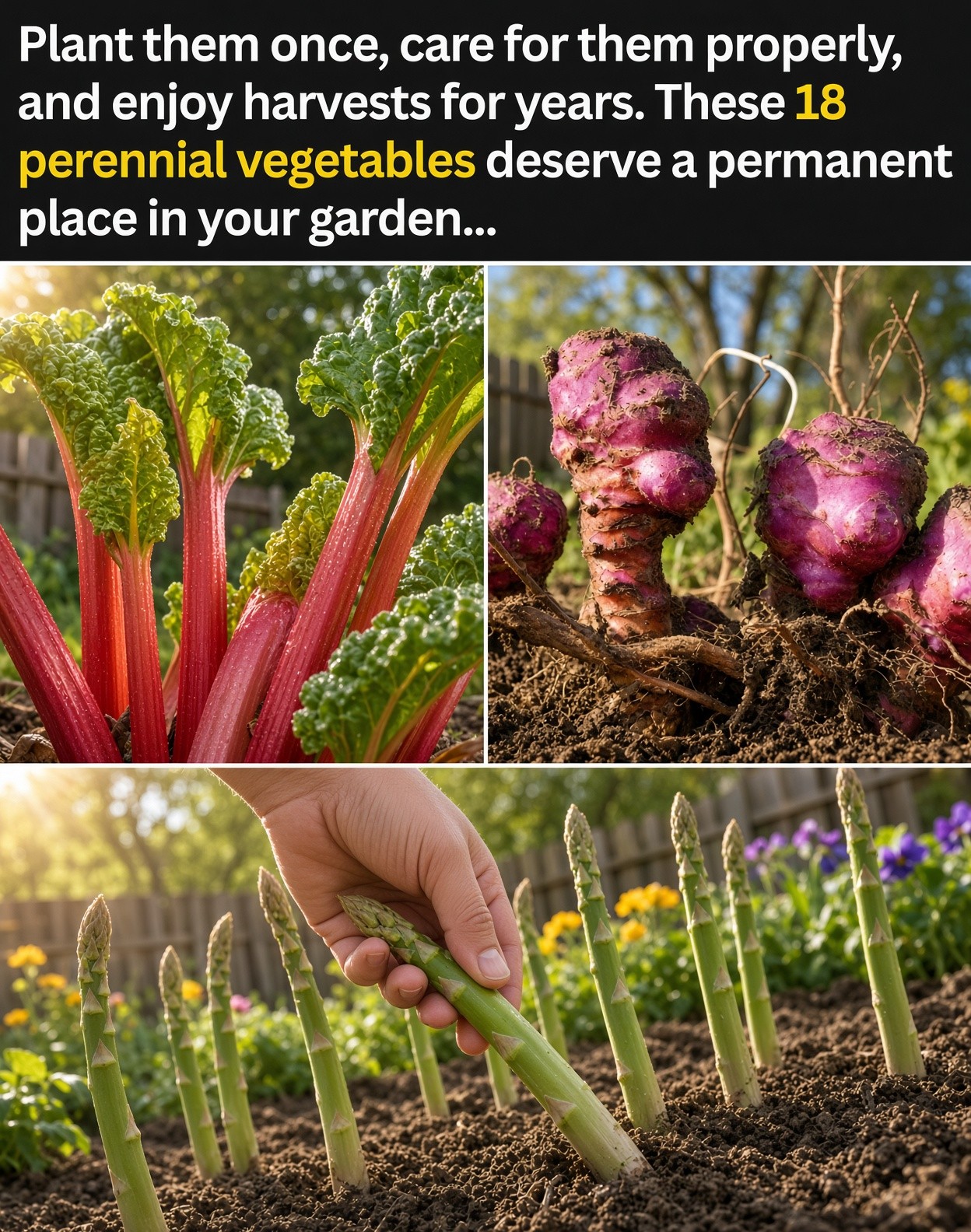
Discover long-lived edible plants that can return season after season, with practical advice on growing, harvesting, climate, and garden management.

What Are Perennial Vegetables?
Perennial vegetables are edible plants that can remain productive for several growing seasons instead of being replanted from seed every year. They are not maintenance-free: long-lived crops still need suitable soil, water, weed control, feeding, and sometimes division. Their advantage is continuity. Once established, the same planting can return each season, reducing repeated soil preparation and giving the garden a more permanent food-producing structure.
Asparagus
Asparagus is one of the best-known perennial vegetables. It produces tender spears in spring and then grows tall, feathery foliage that replenishes the plant’s underground reserves. University of Minnesota Extension says an asparagus planting can last 15 years or more. Choose a sunny, well-drained location because the bed is intended to remain in place for many years. Gardeners planting crowns generally wait about two years before harvesting, while seed-grown plants normally need longer. After harvest, let the remaining shoots develop into ferns so the plant can rebuild its reserves.
Rhubarb
Rhubarb is a hardy perennial vegetable grown for its tart leaf stalks. The stalks are used in pies, sauces, jams, and other cooked dishes, while the leaves should not be eaten. University of Minnesota Extension recommends well-drained soil and advises waiting until the second season before harvesting established plants. Mature rhubarb becomes large, so give it space. Harvest mature stalks by pulling and twisting rather than removing the entire plant. Established clumps can eventually be divided to renew crowded growth.
Jerusalem Artichoke
Jerusalem artichoke, also called sunchoke, is a perennial sunflower relative grown for underground tubers. Tubers left in the soil can produce new plants, which makes the crop easy to maintain but potentially difficult to remove. University of Minnesota Extension lists Jerusalem artichoke among perennial plants and documents its vigorous growth. A dedicated bed is often more practical than planting it in a frequently rotated vegetable plot. Dig the tubers after the growing season and expect some regrowth if small pieces remain underground.
Sorrel
Sorrel is a perennial leafy green with a naturally sharp, lemon-like flavor. It can be harvested repeatedly once established and works well in salads, soups, sauces, and mixed greens. A fertile soil with dependable moisture encourages tender leaves. Regular harvesting of young growth can keep the plant useful through the season. When an old clump becomes crowded, division can provide fresh planting material and help maintain vigor. Sorrel is especially useful in a kitchen garden because a small permanent patch can supply leaves without the repeated sowing required by annual salad greens.
Egyptian Walking Onion
Egyptian walking onions are unusual alliums that can produce small bulbils at the top of their stems. As the stem bends, the bulbils can touch the soil and establish new plants nearby, giving the onion its distinctive name. They are useful for gardeners who want a self-renewing source of onion-family greens. Plant them in a sunny, reasonably fertile location with good drainage. Because the bulbils can spread the planting gradually, place walking onions where that natural expansion is welcome rather than in a tightly controlled annual vegetable row.
Sea Kale
Sea kale is a less common perennial member of the cabbage family grown for tender shoots and leaves. It is associated with coastal habitats and prefers well-drained soil. Young spring shoots are traditionally harvested while tender, and the plant can become a long-lived part of an edible landscape when conditions suit it. Because sea kale is less widely grown than asparagus or rhubarb, gardeners should check local climate, winter conditions, and plant availability before committing a large area. It is best treated as a specialist perennial rather than a universally easy vegetable.
Good King Henry
Good King Henry is an old-fashioned perennial green that can provide spinach-like leaves after the plant becomes established. Young leaves are tender enough for fresh use, while older leaves are commonly cooked. Fertile soil and consistent moisture help produce better foliage, especially during dry weather. It can take time to establish, so patience is important in the first season. Once a healthy clump develops, selective harvesting allows the plant to keep producing new leaves without the annual sowing cycle of conventional spinach.
Lovage
Lovage is a perennial herb often included in edible perennial gardens because its leaves and stems have a strong celery-like flavor. It can be used in soups, stocks, stews, sauces, and other savory dishes. Mature plants can become quite tall and broad, so place lovage where it will not shade smaller vegetables. Fertile, well-drained soil and regular moisture encourage vigorous growth. One plant can produce a generous supply, and mature clumps may be divided when they become too large for their space.
Perennial Kale
Some kale cultivars and related leafy brassicas can remain productive for multiple years in suitable climates. Their value comes from repeated leaf harvest: gardeners pick outer leaves while leaving active growing points intact. Full sun, fertile soil, and regular moisture support steady growth. Perennial status does not eliminate common brassica pests, so inspect plants regularly for caterpillars and other damage. Because the term ‘perennial kale’ covers several different plants and cultivars, check the exact variety’s climate range before planting.
Chayote
Chayote is a vigorous vine that behaves as a perennial in warm, frost-free climates but is commonly grown as an annual where winter freezes occur. It produces edible green fruits and needs a strong trellis because mature vines can spread extensively. Plant it only where there is enough vertical support and a long warm season. In suitable climates, the plant can return from its underground portion. In colder regions, growers may need to protect or replace it. Harvest fruits while young and tender rather than allowing them to become excessively mature.
Horseradish
Horseradish is a hardy perennial grown for its pungent roots. It can remain in the soil for years, but even small root fragments may regenerate, so its planting location should be chosen carefully. A dedicated bed or container makes control easier. Loose, fertile soil helps produce harvestable roots and makes digging simpler. Roots are commonly harvested when mature and used fresh for sauces and condiments. If you remove the plant, clear remaining root pieces thoroughly because forgotten fragments can restart the patch.
Watercress
Watercress is a long-lived aquatic green when it has consistently wet, cool, clean conditions. It should not be treated like an ordinary dry-soil vegetable. The peppery leaves can be eaten fresh or added to cooked dishes. Water quality is crucial: wild watercress should never be harvested from a stream simply because the plants look healthy, since contaminated water can create food-safety risks. A controlled container or clean managed water system is a safer growing approach for home gardeners who want a dependable supply.
Chinese Artichoke
Chinese artichoke, also called crosne, is a specialty perennial tuber crop that produces small, irregular white roots. It is not as common as potatoes, but gardeners interested in unusual vegetables may enjoy its crisp texture and distinctive appearance. Plant tubers in loose soil and mark the area clearly so dormant roots are not accidentally disturbed. Tubers left behind can regenerate, allowing a planting to continue from season to season. Good soil structure is especially useful because the small tubers are easier to harvest from loose ground.
Oca
Oca is a South American tuber crop that can behave as a perennial in frost-free regions but is usually grown as an annual where freezing winters occur. The plant forms tubers late in the season, and harvest normally takes place after the foliage declines. Climate strongly affects performance because tuber formation depends on temperature and day length. In warm areas it may persist naturally, while colder gardeners generally lift the crop before damaging frost. Treat oca as a climate-dependent perennial rather than assuming it will overwinter outdoors everywhere.
Skirret
Skirret is a historic perennial root vegetable that produces clusters of slender, sweet roots. It prefers moist, fertile soil and can remain in place for several seasons. Roots are generally harvested in autumn or winter, depending on climate and desired size. Dividing mature plants can help renew a patch and provide additional planting material. Skirret is uncommon in modern garden centers, so seeds or plants may take some searching. Its main appeal is as a distinctive heritage crop for gardeners who enjoy growing vegetables that are less familiar than carrots and parsnips.
Perennial Leeks
Some perennial leek-like alliums can maintain a planting through offsets that replace harvested stems. The benefit is not that one stem lasts forever, but that the planting can renew itself when young offsets are left behind. A sunny site with fertile, well-drained soil works well, while mulch can help conserve moisture. Harvest selectively and leave enough young growth to continue the patch. Since different allium species and cultivars have different growth habits, identify the exact plant before assuming it has the same perennial behavior as another leek or onion.
How to Build a Long-Lived Perennial Garden
A successful perennial vegetable garden is planned around each plant’s real life cycle, climate needs, and spreading habit. Put long-lived crops such as asparagus in permanent locations where they will not interfere with annual rotations. Give vigorous spreaders their own space and record planting dates so you know when each crop is ready for substantial harvest. Mulch can suppress weeds and moderate soil moisture, while compost and appropriate fertilizer support long-term growth. Most importantly, match the crop to your climate. Some plants remain perennial only in warm regions, while others are reliably hardy in colder gardens. That distinction is what turns a list of interesting plants into a practical garden plan.
Credible Sources
University of Minnesota Extension — Growing asparagus in home gardens
University of Minnesota Extension — Growing rhubarb in home gardens
University of Minnesota Extension — Perennial weeds and Jerusalem artichoke