
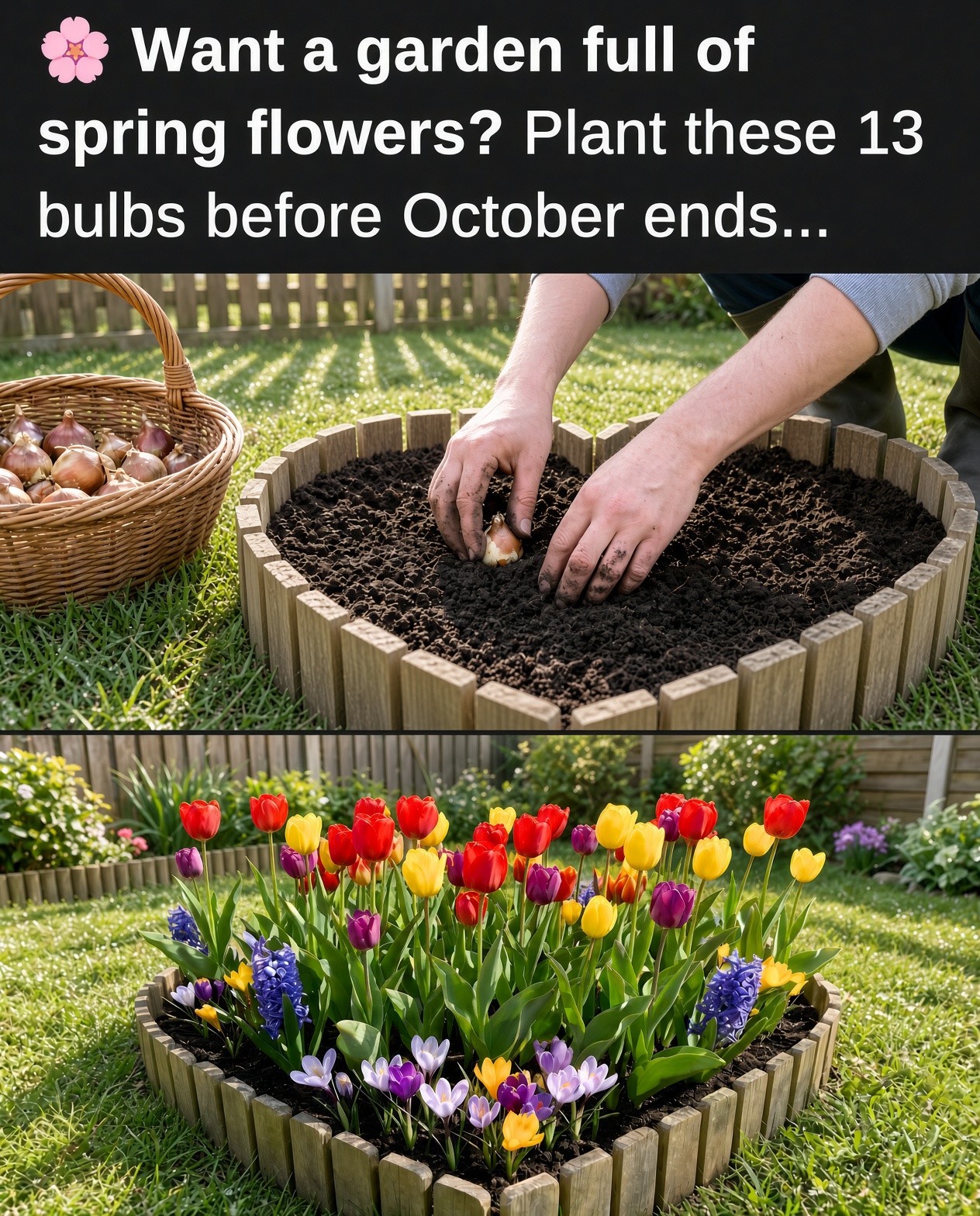
Autumn is the time to plant many spring-flowering bulbs. While the garden rests through the colder months, bulbs can establish roots and prepare to deliver color from late winter into spring. By combining early, midseason, and later bloomers, you can build a display that changes week by week.
This guide covers 13 choices, from delicate snowdrops to dramatic alliums, plus practical advice for getting bulbs established.
13 bulbs to plant this autumn

1. Wild tulips
Small, resilient species tulips bring early color in yellow, red, cream, or purple. Choose varieties suited to your climate and plant in a sunny, sharply drained spot. They often look best in informal clusters among low groundcovers.

2. Daffodils
Daffodils are dependable spring favorites with trumpet or cup-shaped flowers in yellow, white, and two-tone combinations. Plant bulbs in well-drained soil, generally two to three times as deep as the bulb is tall. Many varieties return for years.

3. Winter aconites
Winter aconites produce low carpets of bright yellow flowers, often before many other perennials wake up. They prefer humus-rich soil that stays lightly moist but drains well, in sun or partial shade. Tubers and plant parts are toxic if eaten.

4. Camas
Camas produces upright spikes of star-shaped blue, violet, or white flowers. It suits sunny to lightly shaded beds with moisture during spring growth and drainage appropriate to the species. Source bulbs from reputable growers; never harvest wild plants.

5. Ornamental alliums
Alliums carry globe-shaped flower heads above strap-like leaves, creating height and structure in late spring. Most prefer full sun and well-drained soil. Plant large bulbs deeper than small ones and leave room for their mature spread.

6. Hyacinths
Hyacinths offer dense flower spikes and a strong fragrance in pink, blue, purple, white, or yellow. Give them sun and free-draining soil; avoid keeping bulbs waterlogged. They also work in containers, although some varieties flower less strongly in later years.
7. Siberian squill
Siberian squill (Scilla siberica) has vivid blue, star-shaped flowers and can naturalize under deciduous trees or along borders. Plant in autumn in well-drained soil and sun to partial shade. It can spread readily, so choose its location thoughtfully.
8. Grape hyacinths
Muscari produces compact spikes of tiny, grape-like blue or purple flowers, sometimes white or pink. These small bulbs are easy to tuck into borders, rock gardens, and containers. They multiply over time and look effective planted in groups.
9. Dwarf irises
Reticulated or dwarf irises flower early with intricate blue, violet, or purple petals marked in yellow or white. They need excellent drainage and a sunny position, especially during summer dormancy. Avoid heavy, persistently wet soil.
10. Snowdrops
Snowdrops are among the earliest flowers to appear, with delicate white bells that suit woodland edges and shaded borders. They prefer humus-rich soil that does not dry out completely in active growth. They often establish well when planted “in the green” after flowering.
11. Crocuses
Crocuses bring bright cup-shaped flowers in purple, white, yellow, and striped shades. Plant corms in groups in sunny or lightly shaded, well-drained ground. Early crocuses can provide valuable pollen and nectar for pollinators on mild days.
12. Common bluebells
Bluebells create arching stems of bell-shaped blooms and are best suited to partial shade and humus-rich soil. Choose the right species for your garden and region; native English bluebells should not be dug from the wild, and Spanish bluebells may spread aggressively.
13. Striped squill
Striped squill (Puschkinia) produces pale blue to white star-shaped flowers with delicate blue stripes. Plant the small bulbs in autumn in well-drained soil, in sun or partial shade. They work well at the front of borders or naturalized beneath deciduous shrubs.
How to plant spring bulbs successfully
- Pick the right time. Plant spring-flowering bulbs after summer heat has passed and before the soil freezes or becomes too cold to work. Timing varies by climate and bulb type; tulips are often planted later in autumn than daffodils and crocuses.
- Check the site. Most bulbs prefer sun or partial shade and soil that drains freely. Woodland bulbs such as snowdrops and bluebells tolerate more shade, while many tulips and alliums flower best in sunnier spots.
- Prepare the soil. Loosen compacted ground and incorporate organic matter where useful. Avoid planting in areas that stay waterlogged, since bulbs may rot.
- Plant at the right depth. A useful general rule is to plant most bulbs at a depth about two to three times their height, measured from the base of the bulb to the soil surface. Follow the supplier’s instructions for species that differ.
- Place them correctly. Set pointed bulbs with the tip facing up and roots down. If the shape is unclear, plant on the side. Space bulbs according to their mature size and the package guidance.
- Water sensibly. Water after planting if the soil is dry. Thereafter, keep containers from drying out completely, but never leave bulbs sitting in saturated compost.
- Plant in groups. Small clusters and drifts usually look more natural than single bulbs in straight lines. Repeat the same varieties through a bed for a cohesive design.
Plan for a longer season of flowers
Start with very early bloomers such as snowdrops and winter aconites, then add crocuses, dwarf irises, squills, and grape hyacinths. Daffodils, hyacinths, and tulips can extend the show into mid- and late spring, while alliums add height later in the season. Exact flowering dates depend on variety, weather, and local climate.
For containers, use pots with drainage holes and a free-draining potting mix. You can layer bulbs at different depths if their planting requirements are compatible; put later-flowering, larger bulbs lower down and smaller early bulbs nearer the surface. Avoid letting the pot become waterlogged during winter.
Care after flowering
When flowers fade, remove spent blooms if desired, but leave green foliage in place until it yellows naturally. Leaves replenish the bulb’s stored energy for next year. Avoid tying or braiding leaves, and delay mowing lawns containing naturalized bulbs until their foliage has died back. Feed container bulbs during active growth according to product directions if you want them to perform again.
Frequently asked questions
Can I plant bulbs late in autumn?
Often, yes, if the ground remains workable. Plant them promptly rather than storing them for long periods, but understand that late planting may reduce flowering in some types.
Do all bulbs need full sun?
No. Many prefer sun, but snowdrops, bluebells, and some squills are suitable for partial shade. Always check the needs of the particular species.
Why do bulbs fail to flower?
Common causes include poor drainage, planting too shallowly, insufficient winter chilling for the variety, damaged bulbs, or removing foliage before it has died back.
Are all bulbs safe around pets and children?
No. Some bulbs and plant parts are toxic if eaten, including daffodils, snowdrops, and winter aconites. Store bulbs safely and supervise children and pets in the garden.