
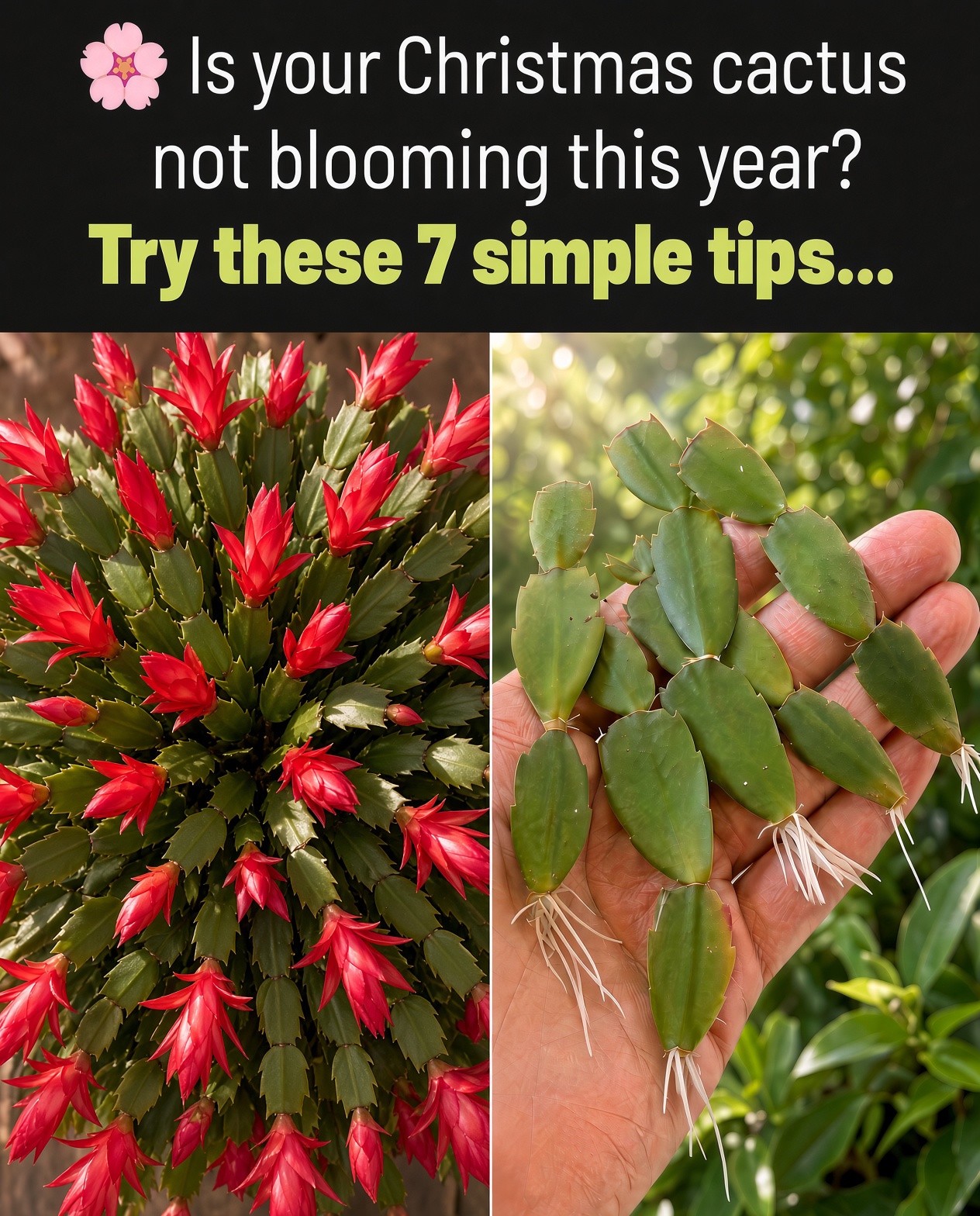
A healthy Christmas cactus can grow for years without flowering if its autumn conditions aren’t quite right. The secret is a reliable stretch of long nights, cooler temperatures, bright daytime light, and consistent care.

A flowering Christmas cactus needs a clear seasonal signal—and steady conditions once buds appear.
Why isn’t your Christmas cactus blooming?
Christmas cactus (Schlumbergera) is a tropical forest cactus, not a desert cactus. It naturally grows in shaded, humid environments and responds to seasonal cues to make flowers. A plant can look green and vigorous yet fail to bloom if nights are interrupted by household lights, temperatures remain too warm, or watering is inconsistent.
In many homes, the best time to start preparing for holiday flowers is early to mid-autumn. The exact timing varies with cultivar, local daylight, room temperature, and whether your plant is a true Christmas cactus or a Thanksgiving cactus, which often flowers earlier.
7 ways to encourage Christmas cactus flowers
1. Start early enough
Work backward from the season you want to enjoy the flowers. Begin adjusting conditions about six to eight weeks before your target bloom period. Waiting until December to change the light and temperature may be too late for flowers by Christmas, though the plant may still bloom later.
2. Provide long, uninterrupted nights
Long nights help trigger flower-bud formation. Aim for approximately 12–14 hours of continuous darkness each night; some cultivars respond best to 14–16 hours. Keep the routine consistent for about six weeks. A spare room that stays dark after sunset can work well. If you use a cover, make sure it blocks light without crushing the stems or trapping heat.
Don’t leave the plant in darkness all day. It still needs light to stay healthy. A bright room with no strong evening light is often simpler than repeatedly moving it in and out of a closet.
3. Give it bright, indirect daylight
Place the cactus near an east-facing window or another bright spot where direct midday or afternoon sun won’t scorch the flattened stem segments. Too little daylight can weaken growth; harsh sun can leave the stems red, pale, or damaged. If the plant spends warm months outdoors, keep it in partial shade and bring it inside before chilly weather.
4. Let autumn nights get cooler
Cool nights support bud formation. A useful target is around 55–65°F (13–18°C), with daytime temperatures commonly around 65–70°F (18–21°C). Persistently warm nights—especially above about 70°F (21°C)—can make flowering less reliable. Avoid cold drafts, heaters, fireplaces, and sudden temperature swings. Don’t expose the plant to frost or very cold conditions in an attempt to force blooms.
5. Water consistently, but don’t keep the mix soggy
Despite its name, this isn’t a drought-loving desert cactus. Use a loose, well-draining potting mix and a container with drainage holes. During bud formation, check the top layer of mix and water when it begins to feel dry, then let excess water drain away. Don’t leave the pot sitting in a saucer of water.
Severe drying can stress the plant and contribute to bud drop, while constantly wet soil deprives roots of air and can lead to root rot. Adjust frequency to your home’s temperature, pot size, and mix rather than following a rigid calendar.
6. Once buds appear, keep conditions steady
When tiny buds show at the ends of the stems, congratulate yourself—and resist the urge to keep rearranging the plant. Keep it in bright, indirect light, water when needed, and avoid sudden changes in temperature, drafts, or light exposure. Moving a budding plant repeatedly between very different environments can encourage buds or flowers to drop.
Resume a normal, careful watering routine as buds develop. Don’t compensate for a few dropped buds by flooding the pot with water or adding extra fertilizer.
7. Prune after flowering to encourage more tips
Flowers form at the ends of stem segments. After the flowering season, pinch or snip one or two segments from selected stem tips to encourage branching. More branches can mean more potential flowering points in a future season. Use clean hands or clean scissors, and avoid heavy pruning while the plant is setting buds or flowering.
Healthy pieces can also be used as cuttings. Let the cut end dry briefly, then place the cutting in a lightly moist, well-draining propagation medium. Keep it in bright indirect light while it roots.
A simple autumn bloom plan
| Stage | What to do |
|---|---|
| About 6–8 weeks before desired bloom | Begin long, uninterrupted nights and provide cooler nights with bright daytime light. |
| While buds are forming | Keep the routine consistent; water when the top layer begins to dry and drain the pot fully. |
| When buds become visible | Stop experimenting with placement. Avoid drafts and sudden temperature changes. |
| During flowering | Maintain bright indirect light and steady moisture without waterlogging. |
| After flowers fade | Allow a short rest, then return to normal seasonal care. Prune lightly after flowering if you want more branching. |
If it still won’t flower, check these common problems
- Lights are on late at night: A nearby lamp, kitchen light, or bright hallway can interrupt the dark period. Try a reliably dark room.
- The room stays too warm: Warm nights can delay or prevent bud formation. Find a cooler location that is still safe and draft-free.
- It gets too little daytime light: Long nights are only half the recipe; the plant needs bright, indirect light during the day.
- Watering swings between drought and soggy soil: Check the mix itself and make sure the pot drains freely.
- The plant is stressed or recently moved: Newly purchased or repotted plants may need time to settle and grow. Avoid unnecessary repotting before flowering; holiday cacti often tolerate being slightly pot-bound.
- It may be a Thanksgiving cactus: These related holiday cacti look similar but often bloom earlier. An earlier flowering time doesn’t necessarily mean anything is wrong.
Frequently asked questions
How long does it take a Christmas cactus to form buds?
Should I put my Christmas cactus in a closet?
Should I fertilize it to make it bloom?
Why are the flower buds falling off?
Does a Christmas cactus need full sun?
Can I make it bloom more than once a year?
Final thoughts
Getting a Christmas cactus to flower is mostly about timing and consistency. Give it long, dark nights, cooler autumn temperatures, bright indirect light, and sensible watering for several weeks. When the buds finally appear, leave the plant somewhere stable and let it do its thing. If it doesn’t flower this season, use the experience to adjust the routine next autumn—healthy plants often reward patient care.