
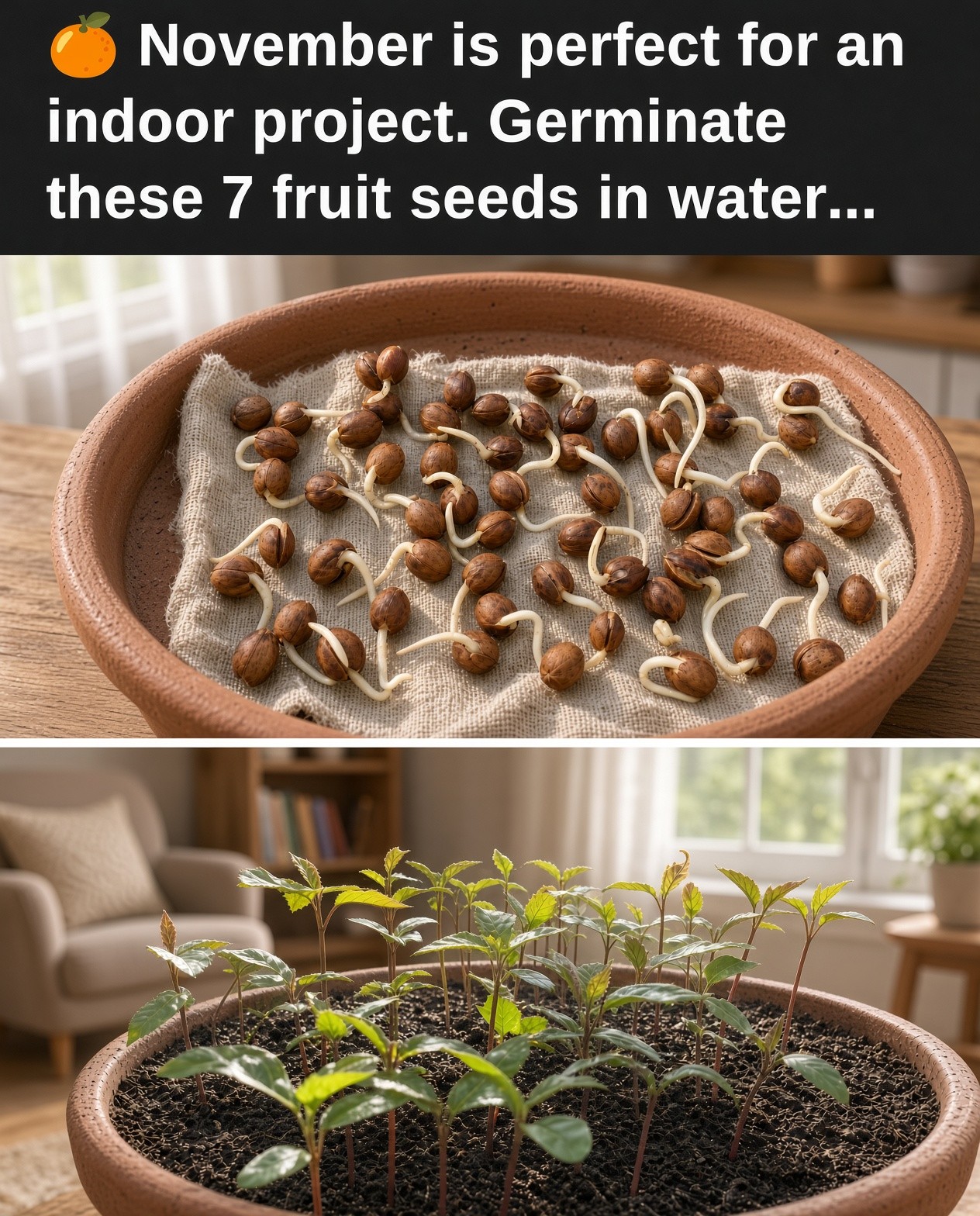
Turn fruit scraps into a fun growing project with clean seeds, a little patience, and the right balance of moisture, warmth, and air.
Starting fruit from seed is an inexpensive way to watch a new plant develop. Water can help hydrate some seeds and makes roots easy to observe, but there is an important distinction: not every fruit seed should remain submerged in water. Avocado seeds are commonly suspended over a glass; most other seeds do better in a damp paper towel or a well-drained seed-starting mix after a brief soak.
7 fruit seeds to try at home

Seed 1
Avocado: The classic water-sprouting seed
Wash a fresh, undamaged pit and identify its broad end (the root end). Suspend it over a glass with three or four toothpicks so the lower quarter sits in water. Keep it warm in bright, indirect light and top up the water as needed. Roots and a shoot may take several weeks. Change the water regularly and pot it once roots are a few inches long.

Seed 2
Mango: A large seed with a protective husk
Remove all fruit flesh and scrub the flat pit clean. Let the outside dry briefly, then carefully open the woody husk at its seam if it separates easily; do not cut into the kernel. Place the kernel in a shallow dish with its lower edge touching water, or wrap it in a damp paper towel inside a loosely closed container. Keep warm and check often for mold. Pot after a healthy root and shoot appear.

Seed 3
Lemon and other citrus: Fresh seeds are the key
Rinse seeds from a ripe lemon, orange, or lime thoroughly. Fresh seeds usually do best when sown promptly rather than left to dry. A short soak can help hydrate them, but fully submerging them for long periods can deprive them of oxygen. Put them in moist paper towel or sow in a small pot of seed-starting mix; keep warm, humid, and not waterlogged.

Seed 4
Papaya: A tropical seed that needs warmth
Scoop seeds from a ripe papaya and wash off the slippery coating. Soak briefly if desired, then drain. For reliable germination, sow them in a warm, free-draining potting mix or place them in a damp—not dripping—paper towel. Keep them warm and inspect regularly. Seedlings need strong light once they emerge and room to develop a taproot.

Seed 5
Pomegranate: Clean seeds before starting
Remove the juicy red coating from the seeds and rinse them well. A brief soak is optional; it is usually more useful to sow cleaned seeds in moist seed-starting mix than to leave them underwater. Keep the container warm and evenly moist with drainage. Germination can be uneven, so start several seeds and give seedlings good light after sprouting.

Seed 6
Lychee: Use very fresh seeds
Wash a large, plump seed as soon as you eat the fruit. Lychee seeds lose viability quickly, so do not dry or store them for long. Soak briefly, then place in a damp medium or sow in a pot, keeping it warm and lightly moist. The seed should not sit submerged for days. Pot the seedling carefully and protect it from cold and harsh direct sun.
Seed 7
Peach or plum: Cold treatment may be needed
Stone-fruit seeds are more complicated than tropical seeds. Clean the pit thoroughly; many varieties need a period of cold, moist stratification before they will germinate. A brief soak can hydrate the seed, but it does not replace the chilling period. Follow a species-specific stratification method, then sow the kernel or pit in a draining medium. Avoid cracking hard pits with force, which can injure the embryo.
A simple method for water-assisted germination
- Clean the seed. Remove every trace of sugary fruit pulp, which can encourage mold.
- Choose the right setup. Suspend an avocado pit with its base in water. For most smaller seeds, use a damp paper towel or sow into seed-starting mix rather than keeping them underwater.
- Keep conditions warm. Many tropical fruit seeds germinate best in a warm place with bright, indirect light. Exact temperatures vary by species.
- Maintain moisture, not saturation. If using a paper towel, keep it damp but not dripping. Replace water in jars regularly and rinse containers if they become cloudy.
- Check for mold and roots. Remove rotting seeds. Germination timing varies from days to several weeks—or longer for seeds with dormancy requirements.
- Transplant carefully. When a healthy root has formed, plant the seedling in a pot with drainage. Handle the root gently and keep the mix evenly moist.
Quick comparison
| Fruit | Best beginner method | Key point |
|---|---|---|
| Avocado | Suspend pit over water | Keep the broad bottom in water; pot after roots develop. |
| Mango | Damp towel or shallow dish | Clean the husk; keep warm and watch for mold. |
| Lemon/citrus | Brief soak, then sow | Use fresh seeds and warm, moist mix. |
| Papaya | Clean, then sow or damp towel | Warmth and drainage are important. |
| Pomegranate | Clean seeds, then sow | Remove the juicy coating and avoid stagnant water. |
| Lychee | Brief soak, then sow | Plant promptly; fresh seeds are more reliable. |
| Peach/plum | Species-specific cold treatment | A water soak alone usually does not overcome dormancy. |
Common mistakes to avoid
- Leaving seeds fully underwater too long: stagnant water contains less oxygen and can promote rot.
- Letting seeds dry after germination starts: emerging roots are delicate and can be damaged by drying.
- Using fruit that is not mature: seeds from fully ripe fruit are generally a better starting point.
- Putting seedlings straight into harsh sun: acclimate them gradually and provide bright light without overheating them.
- Expecting identical fruit: seedlings may differ from the parent fruit in flavor, size, and time to maturity. Some trees grown from seed take years to fruit or may never fruit well indoors.
Frequently asked questions
Can all fruit seeds germinate in a glass of water?
No. Avocado is the familiar example, but many fruit seeds are better started in damp paper towel or soil. Extended submersion can deprive seeds of oxygen and encourage rot.
How often should I change the water?
For an avocado pit, refresh the water regularly—at least weekly, and sooner if it becomes cloudy or smells unpleasant. Keep the lower portion of the pit in water rather than submerging the whole seed.
When should I move a sprouted seed into soil?
Transplant when a healthy root and shoot are developing and the seedling can be handled without damaging the root. Use a pot with drainage and a light, well-draining potting mix.
Will a tree grown from a grocery-store seed produce fruit?
Possibly, but not predictably. Seed-grown plants may take many years to mature and may not produce fruit like the parent. For dependable harvests, a named grafted variety is usually a better choice.