
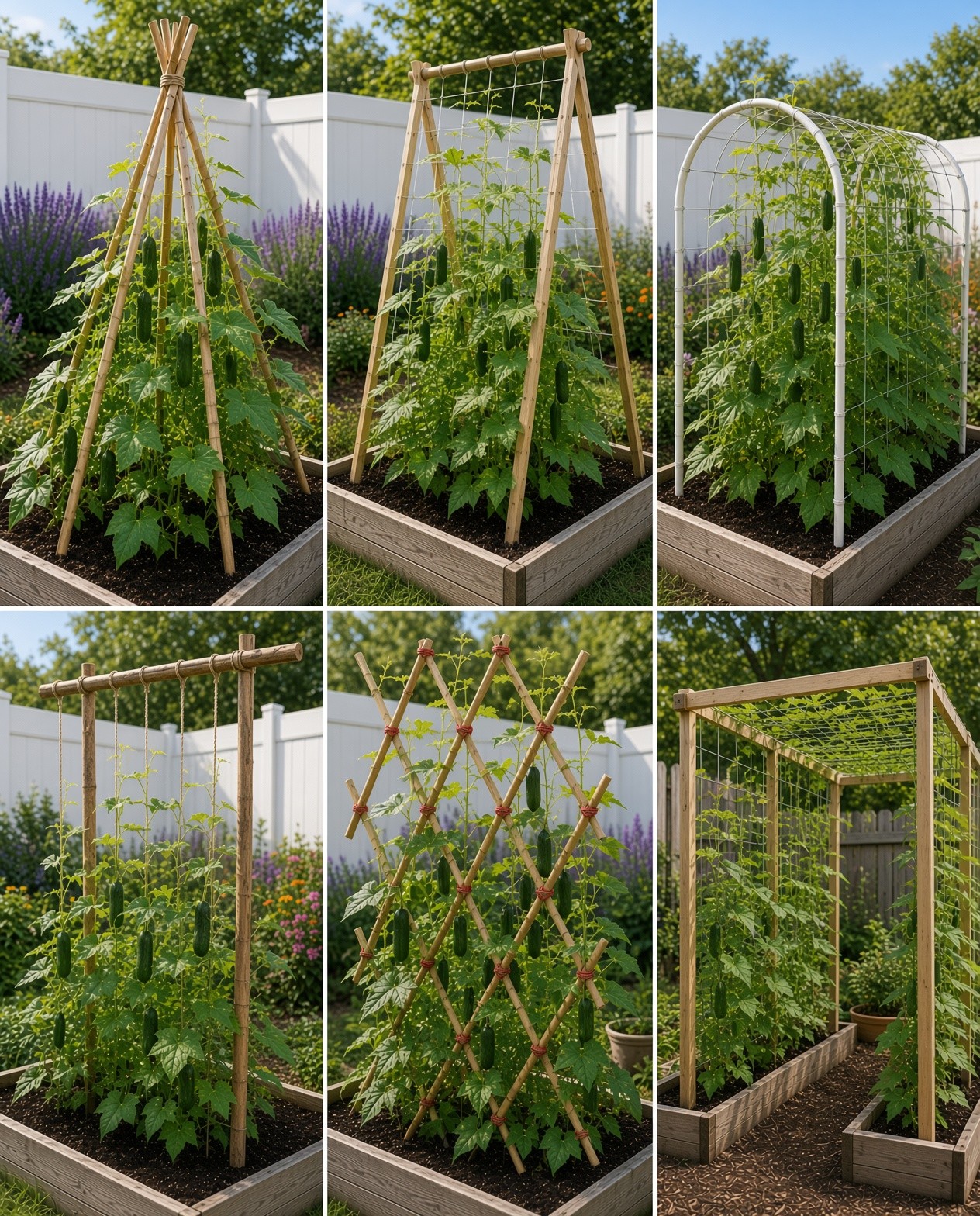
When tomatoes and cucumbers are allowed to sprawl, they can quickly consume more garden space than the harvest seems to justify. A better approach is to send the vines upward. Vertical supports can make a small bed easier to manage, keep fruit off the soil, and make ripe vegetables easier to spot. The best system is the one that matches the crop, the available space, and the weight of a mature plant.
1. Turn a Fence or Wall into a Living Trellis
A fence, garden wall, or sturdy frame can become the backbone of a productive vertical garden. Attach horizontal wires, netting, or a simple wooden lattice, then guide young cucumber vines or indeterminate tomatoes upward as they grow. This is especially useful along the edge of a small garden because the support occupies very little ground area while giving the plants a large vertical surface.

For cucumbers, let the tendrils grab the mesh naturally and add soft ties only where the vine needs help. For tomatoes, use gentle clips or loose ties and check the attachment points regularly as the stems thicken. Leave enough room between plants for sunlight and airflow rather than packing every square inch with foliage.
2. Build a Simple A-Frame for Two-Sided Growing
An A-frame trellis is a practical choice when you want to grow on both sides of the same structure. Two panels, lengths of lumber, or sections of sturdy fencing can be hinged or tied together at the top. Cucumbers can climb one side while another crop uses the opposite face, making the structure useful in a compact raised bed. The angled shape also makes harvesting comfortable because the fruit tends to hang away from the densest part of the bed.

Keep the frame firmly anchored, particularly if it will carry a mature cucumber crop. Train the vines early, before they become tangled, and use soft plant ties rather than wire directly against tender stems. A little training every few days is much easier than trying to untangle a full-grown vine later.
3. Use the Classic String-and-Stake Method for Tomatoes
For tomatoes, you do not need an elaborate structure to gain the advantages of vertical growing. A row of strong stakes with horizontal twine can create a simple support system that is inexpensive and easy to extend. As the plants grow, tuck or loosely tie the stems into the support. This keeps fruit elevated, opens the canopy to air movement, and makes it easier to walk along the row and harvest.

Choose stakes that are long and strong enough for the mature plants, and put them in place before the roots become dense. Inspect the twine as the plants gain weight. If a branch is carrying a heavy cluster of tomatoes, give it its own support rather than expecting one line of twine to do all the work.
4. Create a Cattle-Panel Arch or Garden Tunnel
If you have two parallel beds, an arched panel can turn the space between them into a productive tunnel. A rigid cattle panel or similar heavy-duty mesh can be bent into an arch and anchored securely at both sides. Cucumbers, beans, and other vigorous climbers can spread over the top, while the walkway underneath remains open. Besides saving ground space, the tunnel makes a dramatic garden feature and puts hanging fruit at eye level.

Use strong anchors and inspect the structure after storms or periods of heavy growth. Keep the path beneath the arch clear enough to walk and harvest comfortably. If a cucumber becomes hidden inside the foliage, check frequently; large overripe fruits can be surprisingly easy to miss.
5. Use a Heavy-Duty Arbor for a Long-Lasting Vertical Garden
For gardeners who want a permanent-looking solution, a robust arbor or cattle-panel-style frame can support several seasons of climbing vegetables. Train vines up the sides and across the top, turning an otherwise unused vertical plane into a productive growing zone. This approach works particularly well when a garden needs a clear entrance, a shaded walkway, or a strong support for vigorous vines.

The key is to build for the mature plant rather than the seedling. A structure that feels oversized in spring can become surprisingly loaded by midsummer. Use weather-resistant fasteners, anchor the posts securely, and leave enough clearance around the structure for watering, pruning, and harvesting.
Final thought: The secret to successful vertical gardening is not simply making plants grow upward; it is giving them a support system that is strong, accessible, and suited to their growth habit. Start training vines while they are young, keep ties loose, maintain steady moisture, and check the structure as the crop gains weight. Whether you use a fence, an A-frame, twine, an arch, or a sturdy arbor, going vertical can turn a crowded vegetable patch into a more organized and productive garden.