
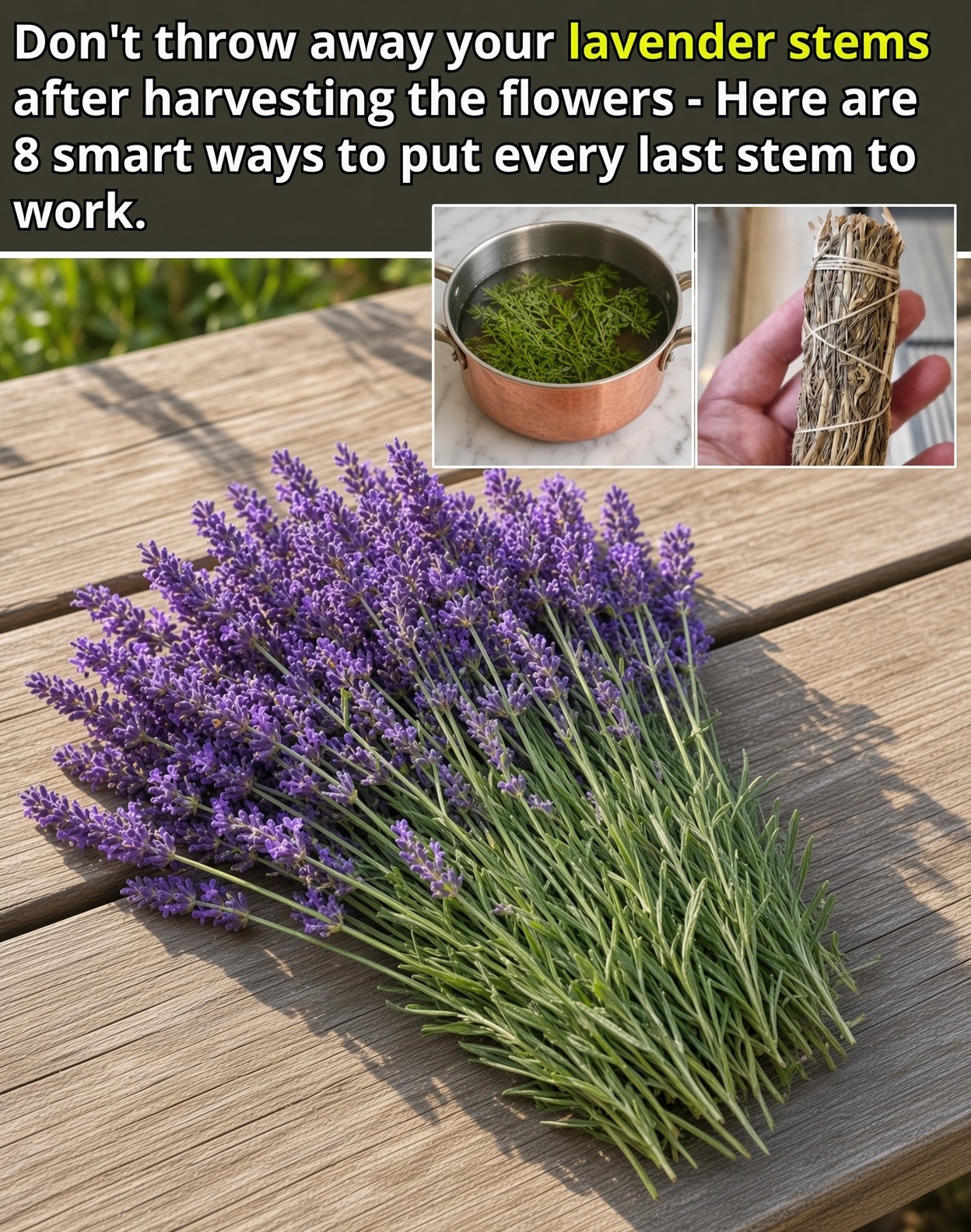
Don’t throw away the woody leftovers after harvesting lavender—give them a second life around the house, garden, and grill.
This is a fresh rewrite based on the GardeningSoul article you supplied; it does not reproduce that article verbatim. The photos are real third-party images embedded directly into the files and are credited below.

Lavender is usually harvested for its fragrant flowers, but the woody stems left behind can still be useful. Instead of treating them as waste, you can turn them into simple home-fragrance, craft, garden, and household projects.
1. Turn Dry Stems Into Natural Fire Starters
Once lavender has been stripped of its buds, the woody stalks can still be useful. When they are completely dry, bundle a small handful with untreated natural twine and use the bundle as kindling in an appropriate fireplace or outdoor fire pit. Keep the bundle small, use normal fire-safety practices, and never leave a fire unattended.

2. Make a Simple Lavender-Scented Cleaning Vinegar
Give plain white vinegar a botanical twist by steeping it with clean, dry lavender stems. Roughly chop the stems, place them in a jar, cover them with white vinegar, and leave the mixture for about two to three weeks. Strain it well and dilute with water before using it on suitable household surfaces. Never mix vinegar with bleach or chlorine-based cleaners.

3. Tuck Stems Into Scented Sachets and Bundles
Crumble or cut dry stems into short pieces and add them to a small cotton, muslin, or organza sachet. They can be combined with a little dried lavender flower for a stronger fragrance, then placed in drawers, linen cupboards, luggage, or storage boxes. Refresh the scent by gently rubbing the sachet from time to time.

4. Add Them to a Gentle Simmer Pot
For a cozy natural fragrance, add a few clean lavender stems to a saucepan of water with ingredients such as lemon, orange peel, rosemary, or cinnamon. Keep the heat low and top up the water as needed. The goal is a gentle simmer—not a pan that is allowed to boil dry.
5. Reuse Them Around the Garden
After drying, lavender stems can be broken into smaller pieces and scattered lightly around established garden areas or added to a compost-friendly mulch mix. Think of this primarily as a way to reuse plant material and add organic matter; do not rely on lavender stems alone as a proven pest-control treatment.
6. Make a Relaxing Lavender Foot Soak
For a simple at-home ritual, simmer a handful of clean dried stems in water for about 10 minutes, let the liquid cool to a comfortably warm temperature, and strain it into a basin. Add warm water and soak your feet. Use only clean, untreated plant material and stop if your skin becomes irritated.

7. Experiment With Lavender on the Grill
Thicker, clean culinary lavender stems can be used as aromatic skewers for small pieces of vegetables or other foods. Because stems can scorch quickly, soak them first if appropriate and keep them away from direct flare-ups. Only use lavender that is known to be culinary and free from pesticides or other treatments not intended for food use.

8. Add the Stems to Potpourri and Herb Blends
Dried stems make useful bulk and texture in potpourri. Break them into short pieces and combine them with dried lavender flowers, citrus peel, rose petals, cloves, cinnamon, or other fragrant botanicals. For a drawer sachet, put the mixture into a breathable fabric bag so the aroma can escape without leaving loose pieces behind.
One More Easy Option: Compost the Extras
If you have more stems than you can reuse, add them to a balanced compost pile. Because they are woody, chopping them into shorter pieces will help them break down more readily. They are useful as dry, carbon-rich material alongside wetter kitchen and garden scraps.
Why Keep the Stems?
Lavender stems are light, fragrant, easy to dry, and surprisingly versatile. A few bundles can become kindling, a cupboard freshener, a simmer-pot ingredient, garden material, or a rustic craft supply. The simplest benefit is also the most practical: you get more use from the plant you already grew.