
Introduction
Irises bring dramatic flowers and sword-shaped foliage to the garden, but their leaves can become messy after blooming. That often leads gardeners to ask the same question: should you cut back iris leaves, and if so, when? The answer depends on whether the foliage is still healthy, whether the plant has finished flowering, and what season you are in.

The most important rule is simple: do not rush to cut healthy green iris leaves during summer. Those leaves are still working, using sunlight to produce energy and store resources in the rhizome for the next growing season. Instead, remove spent flower stalks after blooming, cut away clearly diseased or damaged leaves when necessary, and perform the main foliage cleanup after a hard frost when the leaves have naturally died back.
Why Iris Leaves Matter
Iris foliage is more than decoration. After the flowers fade, the leaves continue photosynthesizing and helping the plant replenish its underground rhizomes. Those stored reserves are important for producing strong growth and flowers the following year.
Cutting healthy green foliage too early can reduce the plant’s ability to build those reserves. That is why a tidy-looking bed is not always a healthier bed. If the leaves are green and actively growing, leaving them alone is usually the best thing you can do.
When Should You Cut Back Iris Leaves?
There are three useful moments to think about when caring for iris foliage. Immediately after flowering, remove the spent flower stalks. During summer, inspect the leaves but only remove foliage that is diseased, badly damaged, or dying. In fall, wait until frost has naturally killed the foliage before making the major seasonal cutback.

This approach gives the iris the longest practical period to photosynthesize while still helping reduce disease problems and keeping the garden tidy at the end of the season.
After Flowering: Remove the Spent Flower Stalks
Once the iris has finished blooming, the old flower stalks can be removed even though the leaves should generally remain. Cutting away spent stalks keeps the plant looking neat and prevents it from putting unnecessary energy into seed production if you do not intend to collect seed.

Use clean, sharp pruners and cut the flower stalk close to its base. Take care not to injure the rhizome or surrounding foliage. Removing the old stalks is a much safer summer cleanup than cutting the entire fan of healthy leaves.
Should You Cut Iris Leaves Back in Summer?
In most cases, no. Healthy green iris leaves should remain in place during summer because they are actively producing energy for the plant. Even if the foliage looks a little tired after flowering, resist the temptation to shear it down simply for appearance.
There is an important exception: diseased or badly damaged leaves should be removed. If you see suspicious spotting, yellowing, rotting tissue, or foliage that has been heavily damaged, targeted removal can help keep the problem from spreading.
How to Remove Diseased or Damaged Iris Leaves
When only a few leaves are affected, remove those leaves rather than cutting down the entire plant. Use clean pruners and make a neat cut as close to the base of the affected leaf as practical without damaging healthy growth.

Do not place visibly diseased iris foliage into your home compost pile. Bagging and disposing of infected material helps reduce the chance of carrying pathogens into future compost applications. Disinfect the cutting tool before moving on to another iris plant.
The Best Time for Fall Iris Pruning
The main iris foliage cleanup is usually best done after the first hard frost has caused the leaves to die back naturally. At that point, the plant has had the growing season to photosynthesize and store energy in the rhizome.
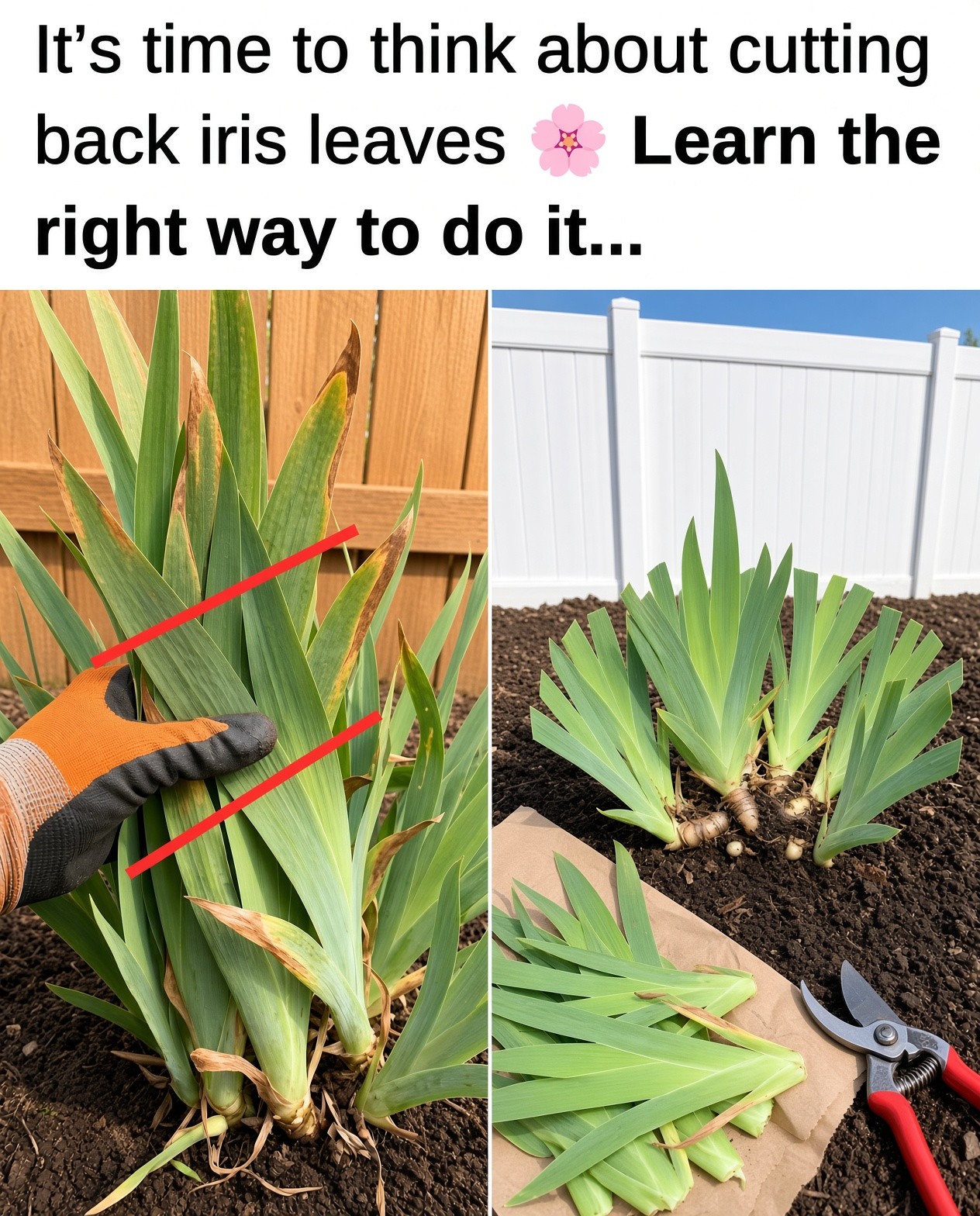
Once the foliage is brown, collapsed, or clearly finished for the season, use sharp pruners to cut the leaves down. A commonly recommended height is around 6 inches above the ground. Leaving a short amount of foliage makes the clump easier to handle while avoiding an unnecessarily tight cut against the rhizome.
How to Cut Back Iris Leaves Correctly
Choose a dry day if possible and use sharp, clean pruners. Gather the dead foliage into a manageable fan and cut it back evenly, leaving roughly 6 inches of leaf bases above the soil. Avoid tearing or sawing through the leaves with a dull tool.
Clean cuts make the job quicker and reduce unnecessary plant damage. After pruning, clear away loose dead material from around the iris. Good garden hygiene is especially useful where fungal or bacterial leaf problems have occurred during the growing season.
Why Clean Pruning Tools Are Important
Pruning tools can move plant pathogens from one iris to another. This is especially important when you have already removed diseased foliage. Before moving to another plant, wipe or disinfect the blades and make sure they are free of plant residue.
Sharp blades are equally useful because they make clean cuts with less crushing. Wearing gardening gloves is also a sensible precaution because iris foliage can be irritating to some people’s skin.
Iris Borers and Garden Cleanup
Good seasonal cleanup can also help reduce pest problems. Iris borers are notorious pests of iris plants, and removing old foliage and garden debris can help disrupt places where pests may persist.
Regularly inspect iris plants during the growing season for unusual damage, soft spots, discolored leaves, or other signs that something is wrong. Catching problems early is generally easier than trying to rescue a badly damaged rhizome later.
What About Iris Leaves That Look Messy?
If the leaves are healthy but simply unattractive after flowering, patience is usually the better choice. Iris foliage naturally loses its fresh appearance as the season progresses, but that does not mean it has stopped working for the plant.
Instead of cutting the leaves down, use surrounding plants to soften the view or place irises where the foliage can be less noticeable after flowering. This allows the iris to continue storing energy without sacrificing the plant’s future performance just to keep the border perfectly tidy.
Should You Fertilize After Cutting Back Iris Leaves?
Iris care depends on the variety, soil, and growing conditions, so fertilizer should not be treated as an automatic requirement. If a soil test or your normal gardening program indicates a need for nutrients, a suitable balanced fertilizer can be applied according to its label directions.
Avoid excessive fertilizer, especially high-nitrogen products, because lush foliage is not necessarily the goal. Healthy rhizomes and appropriate growing conditions are more important than forcing rapid leafy growth.
Winter Protection After Fall Cleanup
After the foliage has been cut back, make sure the iris bed is reasonably clean and well drained. In colder climates, a light layer of suitable mulch can help protect plants from severe temperature fluctuations, but avoid piling wet organic material directly against the rhizomes.
Be particularly careful with bearded irises because their rhizomes generally prefer to remain close to the soil surface and can suffer when they stay excessively wet. Good drainage is often more valuable than heavy winter covering.
Common Iris Pruning Mistakes to Avoid
The biggest mistake is cutting healthy green leaves down in summer. Other common errors include using dirty pruners, leaving diseased foliage in the garden, cutting too close to the rhizome, and pruning before frost has allowed the leaves to finish their seasonal work.
Avoid treating every iris exactly the same way without considering the type you grow. Bearded, Siberian, Japanese, and other irises can differ in their cultural needs. When in doubt, identify the variety and follow care recommendations suited to that type.
Final Thoughts
So, should you cut back iris leaves? Yes—but timing matters. Remove spent flower stalks after blooming, remove diseased or badly damaged foliage when necessary, and save the major foliage cutback for fall after a hard frost has naturally killed the leaves.
By allowing healthy green leaves to remain through the growing season, you give the rhizomes time to store the energy needed for future growth and flowering. With clean tools, careful timing, and good garden hygiene, iris pruning becomes a simple seasonal task rather than a risky haircut.
SEO Keywords
should you cut back iris leaves, when to cut back iris leaves, how to cut back iris leaves, iris pruning, when to prune irises, iris care after blooming, cutting iris leaves in fall, iris leaf cleanup, bearded iris care