
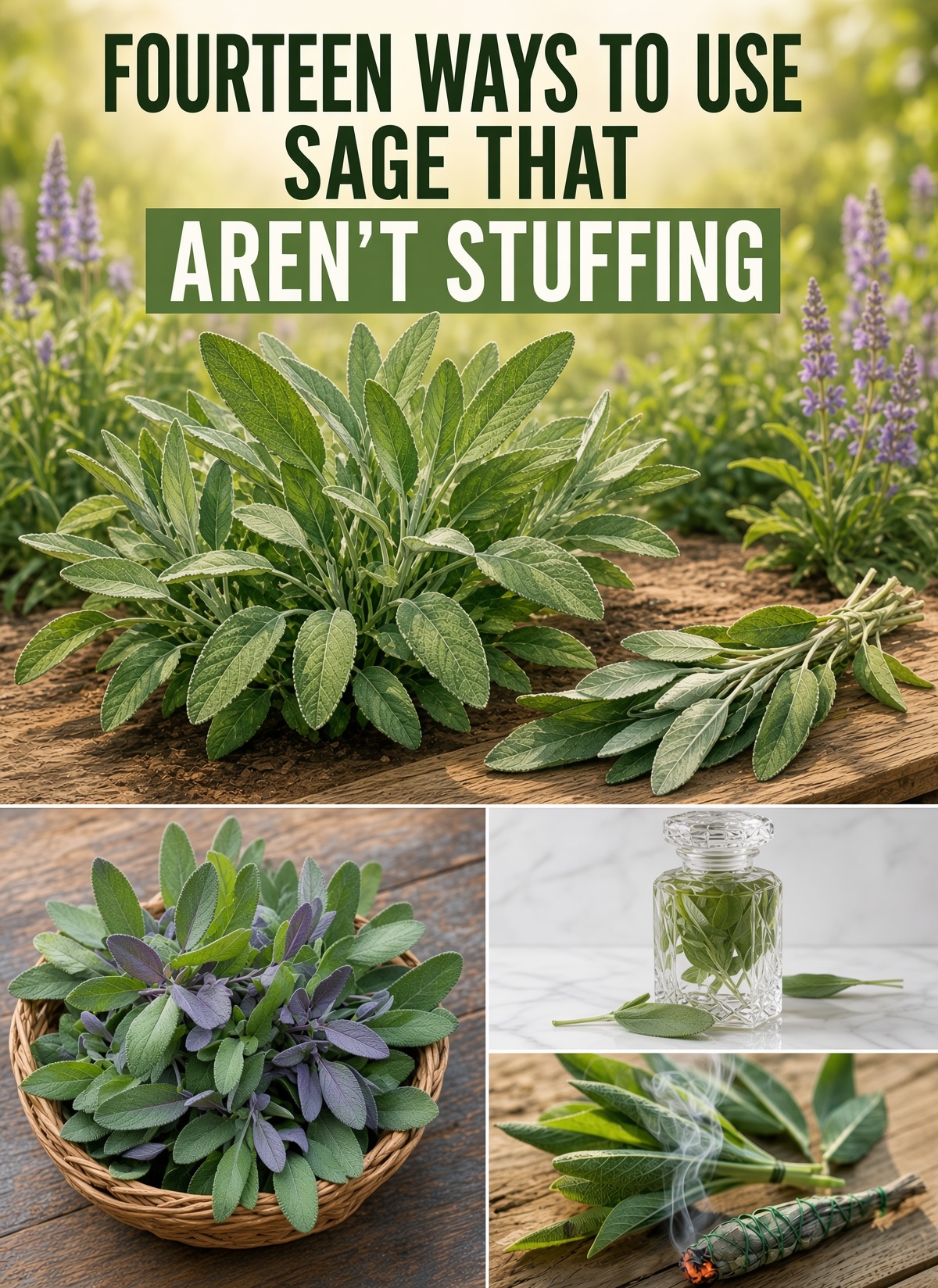
Sage Leaves: A Useful Herb for the Kitchen and Home
Sage (Salvia officinalis) is one of those herbs that earns its place in a garden because it can do several jobs at once. The soft, silvery leaves bring a warm, earthy flavor to food, and the plant is attractive enough to fit into ornamental beds as well as culinary gardens. It is also a practical herb to preserve: fresh leaves can be used immediately, dried leaves keep for months, and chopped leaves can be frozen for later cooking. Sage prefers plenty of sunlight, good drainage, and soil that is not constantly wet. Once established, it is relatively tolerant of dry conditions, which makes it a useful choice for gardeners who do not want to water every plant every day. Good harvesting also encourages a productive plant. Instead of stripping every leaf at once, take healthy stems in moderation and allow the plant to keep enough foliage for continued growth. The result is a long-lasting herb that can move from garden to kitchen without much fuss.

1. Harvest Sage at the Right Time
For the best flavor, harvest sage in the morning after surface moisture has dried but before the plant experiences the strongest heat of the day. Choose healthy, unblemished leaves and snip stems with clean scissors rather than tearing the foliage. Young leaves tend to be milder and softer, while older leaves carry a stronger aroma and can be especially useful for drying. You can harvest throughout the growing season, but avoid removing such a large percentage of the plant that it struggles to recover. A useful rule is to take only a modest portion of the foliage at one time, especially on a young plant. Regular light harvesting can actually help keep sage from becoming overly tall and woody. If flower buds are developing and your main goal is tender leaves, trimming the growing tips before heavy flowering can encourage a fuller shape. Save the clean trimmings instead of throwing them away; they can be used fresh, frozen, or dried.

2. Cook With Fresh Sage Leaves
Fresh sage has a strong, savory character, so a little can transform a simple meal. It pairs especially well with butter, garlic, poultry, pork, sausage, white beans, winter squash, potatoes, mushrooms, and creamy pasta dishes. Whole leaves can be fried briefly in butter or oil until crisp and used as a garnish, while finely chopped leaves can be stirred into stuffing, sauces, soups, and vegetable dishes. Because the flavor is concentrated, start with a small quantity and add more if needed. Sage can also be combined with lemon, parsley, thyme, or rosemary for more complex herb blends. One advantage of growing your own is that you can pick exactly what you need rather than buying a large bunch that may go unused. Keep freshly cut stems cool and dry, and use the leaves promptly for the brightest aroma.

3. Make and Store Dried Sage
Drying is one of the easiest ways to preserve a large harvest. Tie small bunches of healthy stems and hang them in a warm, dry, well-ventilated place away from strong direct sunlight. The leaves are ready when they feel crisp and crumble easily rather than bending or feeling cool and moist. Strip the dry leaves from the stems and store them in a clean, airtight jar in a cool, dark cupboard. You can also use a dehydrator or a low oven if your equipment allows gentle drying. The most important point is that the leaves must be thoroughly dry before storage; residual moisture can encourage mold and spoil the entire batch. Label the jar with the date so older herbs are used first. Dried sage is excellent in stuffing, beans, roasted vegetables, sauces, meat rubs, soups, and homemade seasoning blends, so even a small garden plant can provide a surprisingly useful supply.

4. Freeze Sage for Quick Everyday Use
Freezing is another convenient way to keep sage close at hand when you cook. Wash the leaves only if necessary and dry them thoroughly before freezing, because excess surface water can form ice crystals and make the leaves limp. Chop the leaves and place small portions in an ice-cube tray with a little water or olive oil, then freeze until firm. Transfer the cubes to a labeled freezer bag or container so they are easy to grab for soups, sauces, beans, pasta, or skillet dishes. You can also freeze whole leaves on a tray before transferring them to a bag, although they are most useful in cooked dishes after thawing. Frozen sage will not have exactly the same texture as fresh leaves, but its flavor can remain very useful. Portioning it in advance prevents waste and makes it easy to add a small amount while a meal is cooking.

5. Sage Tea: A Simple Traditional Preparation
Sage tea is a traditional herbal drink made by steeping fresh or dried leaves in hot water. For a mild cup, use a small number of leaves, steep for several minutes, and strain before drinking. Lemon or a little honey can soften the strong herbal flavor. Sage tea is commonly enjoyed as a warm, caffeine-free beverage, but many online sources make stronger health claims than current evidence supports. It is better to think of sage tea as a traditional drink rather than a guaranteed remedy for a medical condition. Concentrated sage preparations are different from ordinary culinary use because they deliver much larger amounts of plant compounds. People who are pregnant, breastfeeding, taking medication, or managing a health condition should check with a qualified health professional before consuming concentrated herbal preparations regularly. A simple cup made from food-grade leaves is best approached as a flavorful part of a varied diet.

6. Give Sage a Useful Place in the Garden
Sage is not only a kitchen herb. Its flowers can attract bees and other pollinators, and its silvery foliage provides useful contrast beside greener herbs and vegetables. Because it likes full sun and free-draining soil, it can fit naturally into Mediterranean-style beds, raised herb gardens, containers, and dry borders. Avoid planting it in areas where water sits after rain. In humid climates, good airflow around the stems can help reduce problems caused by persistently wet foliage. Light pruning can also keep the plant compact and encourage new lateral growth. If your sage becomes woody and sparse, do not automatically cut deep into the oldest bare stems; instead, take moderate cuts above healthy leafy growth and let the plant respond. With a sunny position, reasonable drainage, and regular harvesting, sage can remain productive for years and provide both culinary value and attractive garden structure.
7. Preserve More, Waste Less
A productive sage plant can provide several kinds of harvest at the same time. Fresh leaves can go straight into dinner, smaller excess leaves can be chopped for the freezer, and mature stems can be dried for a long-term pantry supply. Using the plant in several forms reduces the chance that a harvest will go to waste. You can also combine dried sage with garlic, onion, thyme, or black pepper to make a homemade seasoning blend. Fresh leaves can be paired with browned butter, roasted squash, beans, or potatoes for simple meals that need very few ingredients. The key is to harvest according to the plant’s growth rather than taking everything at once. Leave enough healthy foliage for the plant to continue photosynthesizing and producing new stems. A little attention to timing, storage, and portioning can turn one garden herb into a dependable ingredient throughout much of the year.
8. Keep Sage Healthy With Simple Care
Sage generally prefers a sunny location, well-drained soil, and watering that allows the root zone to dry somewhat between drinks. Overwatering is a common problem because the plant looks tough and people assume it needs frequent irrigation. In containers, make sure the pot has open drainage holes and never leave the root zone sitting in a tray of stagnant water. If stems become long and sparse, check the light before assuming the plant needs more fertilizer. Poor light is a major reason woody herbs become leggy. After pruning, water thoroughly but avoid keeping the soil wet for long periods. In colder climates, protect the crown according to the hardiness of the particular cultivar. Regular light harvesting is often the best form of maintenance because it keeps the plant useful, encourages branching, and gives you a continuous supply of fragrant leaves.
Final Thoughts on Sage Leaves
Sage rewards gardeners who use the whole plant thoughtfully. The leaves can season everyday meals, be dried for the pantry, frozen for quick cooking, or steeped as a traditional herbal tea. The flowers add ornamental value and can support visiting pollinators, while the plant itself fits beautifully into sunny herb beds and containers. The biggest practical lesson is that sage does not need complicated care: give it plenty of light, keep the soil well drained, water sensibly, harvest regularly, and preserve the excess before it goes unused. Be cautious with concentrated herbal remedies and keep medical claims modest. Used primarily as a culinary herb, sage is one of the most satisfying plants to grow because a small amount can add a lot of flavor. With one healthy plant near the kitchen, you can have a steady supply of aromatic leaves ready whenever a recipe needs something savory, fragrant, and distinctly herbal.
Practical note: Sage is primarily a culinary herb. Traditional herbal uses are not the same as proven medical treatments, and concentrated preparations require more caution than ordinary food use.