
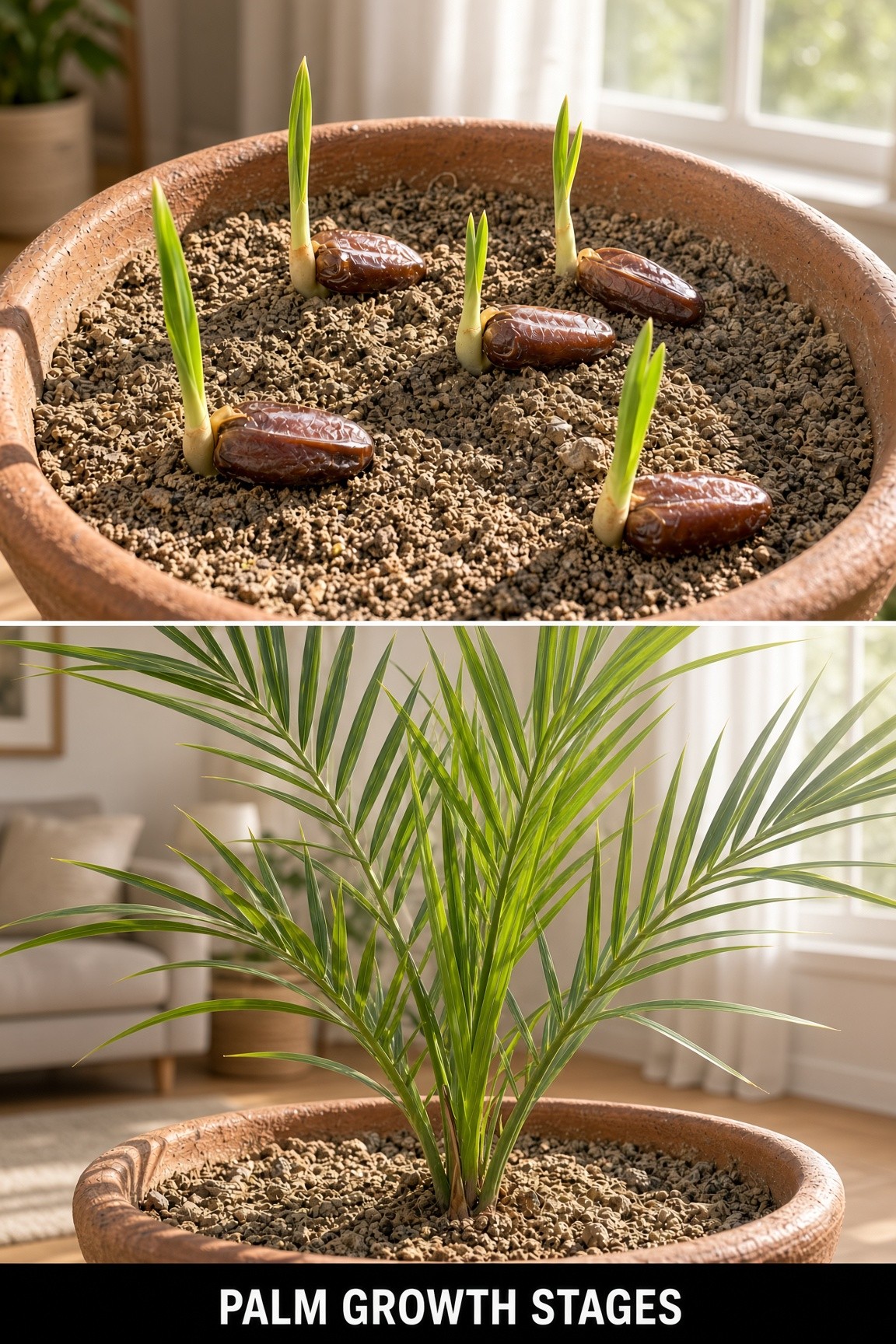
Growing a date palm from a date pit is an inexpensive and satisfying project. The basic process is simple—clean the seed, hydrate it, sow it in a warm and airy medium, and keep conditions steady while you wait. The main challenge is patience: palm seeds can germinate unevenly, and a seedling needs years of growth before it resembles a mature tree.
- Clean the pit completely and soak it for 1–2 days.
- Sow about 2–3 cm deep in a draining mix.
- Keep warm (around 25–35°C) and evenly moist, never waterlogged.
- Expect germination to take weeks to months, not a guaranteed fixed number of days.
- Seed-grown palms may not produce the same fruit as the date you ate.

STEP 1
Choose and clean viable date seeds
Start with several pits from ripe dates, since germination is variable. Remove every trace of sticky fruit flesh; leftover sugars can encourage mold. Rinse the pits thoroughly and inspect them. Discard seeds that are cracked, soft, or smell rotten. Seeds from ordinary dried dates may sprout too, provided they have not been heat-treated or otherwise damaged. Because seedlings are genetically variable, a seed-grown palm will not necessarily resemble the parent or produce the same quality of fruit.

STEP 2
Soak before sowing
Place clean seeds in room-temperature or lukewarm water for 24–48 hours, changing the water daily. Soaking is a practical way to hydrate the seed before planting, but it does not guarantee faster germination. Avoid boiling water or aggressive sanding: damaging the embryo can ruin the seed. If you are preparing a batch, label the container with the date so you can track progress.

STEP 3
Plant in a warm, well-drained medium
Use a clean pot with drainage holes and a loose seed-starting mix that holds some moisture without becoming soggy. A blend made for seed starting with added perlite or coarse horticultural sand works well. Sow each pit about 2–3 cm (roughly 1 inch) deep, then cover lightly. A deeper, narrow pot gives the emerging root room to grow. Keep the medium evenly moist—not saturated—and never leave the pot standing in water.

STEP 4
Keep warmth and moisture steady
Warmth is one of the most important germination factors for palms. Aim for approximately 25–35°C (77–95°F) where practical, and keep the pot in a consistently warm place. A seedling heat mat can help in a cool room; follow the mat instructions and avoid overheating. Check moisture regularly. A loose clear cover can slow drying, but ventilate it and remove it once shoots appear. Germination timing varies: some seeds sprout in weeks, while others take several months. Do not discard a firm seed simply because it is slow.

STEP 5
Give the seedling light, space, and careful water
When a shoot appears, move the pot to a very bright spot and introduce direct sun gradually so the tender leaf does not scorch. Water thoroughly, then let excess drain. Water again when the surface begins to dry; the goal is moisture around the developing root without persistently wet compost. Palm seedlings use the food stored in the seed at first, so there is no need to rush fertilizer. After the seedling has been growing for a couple of months, a palm fertilizer used at the label rate can support continued growth.

STEP 6
Plan for long-term growth
Repot only when the plant has established roots and the current container is becoming restrictive. Handle the root gently and use a pot with drainage. Date palms eventually need abundant light and considerable space; a container-grown plant may remain ornamental, but it will not behave like a full-sized orchard tree. Outdoors, choose a sunny site with excellent drainage and protect young plants from cold. Indoors, give the palm the brightest available light and rotate the pot occasionally for even growth. Remove only fully dead fronds; do not cut the central spear or growing point.
Watering, feeding, and everyday maintenance
Young palms need a more consistent supply of moisture than established trees, but their roots still need oxygen. Check the pot rather than watering by the calendar: warm, sunny conditions dry the mix faster than cool weather. If the surface stays wet for days, improve drainage and reduce watering. Yellowing leaves can have several causes, including overwatering, poor light, cold stress, or nutrient problems, so inspect the growing conditions before adding fertilizer.
Once the seedling is actively growing and has moved beyond its earliest stage, use a fertilizer formulated for palms or a balanced product suitable for container plants. Follow the label and err on the side of a weaker, less frequent feed rather than applying concentrated fertilizer to dry roots. Flush the pot occasionally with water to help prevent fertilizer salts from building up, and make sure the drainage holes remain open.
Growing a date palm indoors or outdoors
Indoors: Put the pot beside the brightest window available, ideally with several hours of direct sun once the plant is acclimated. Turn it periodically, keep it away from cold drafts, and watch for spider mites or scale insects. Indoor air can be dry, but standing the pot in water is not a solution; focus on good light, sensible watering, and airflow.
Outdoors: Date palms prefer full sun and soil that drains freely. Acclimate a potted seedling gradually before leaving it in stronger sunlight. Young palms are more vulnerable to cold than established specimens, so bring container plants under cover when temperatures threaten to approach freezing. In climates with cool, wet winters, a pot may be easier to protect than a permanent outdoor planting.
Before planting in the ground, research your local climate and the eventual size of the species. True date palms can become very large, and a small seedling is not a reliable guide to its mature dimensions.
Will a seed-grown date palm produce dates?
Possibly—but fruit is not guaranteed, and seed is not the best route if your goal is a particular eating variety. Date palms have separate male and female plants, so a seedling’s sex cannot be determined reliably when it is young. Roughly half of seedlings may be male, and a female seedling will not necessarily be true to the parent variety. Fruit production also requires suitable heat, a long growing season, and pollination; it can take many years. For predictable fruit, growers generally prefer a known female cultivar propagated from an offshoot.
Troubleshooting common problems
- No sprout yet: Keep the seed warm and the medium lightly moist. Germination can be slow and uneven; check periodically for softness or rot.
- Mold on the seed: Remove visible fruit residue, improve ventilation, and avoid saturated soil. If the seed itself becomes soft or foul-smelling, discard it.
- Seedling looks stretched or pale: Increase light gradually and rotate the pot so growth stays balanced.
- Brown leaf tips: Check watering consistency, fertilizer strength, water quality, and dry air before assuming a disease is present.
- Roots stay wet: Use a draining potting mix and a container with unobstructed drainage holes.
A simple care checklist
Clean the pit thoroughly · soak for 24–48 hours · sow in a warm, draining mix · keep moisture even · wait patiently · provide bright light after sprouting · feed lightly only once established · protect the young palm from cold.