
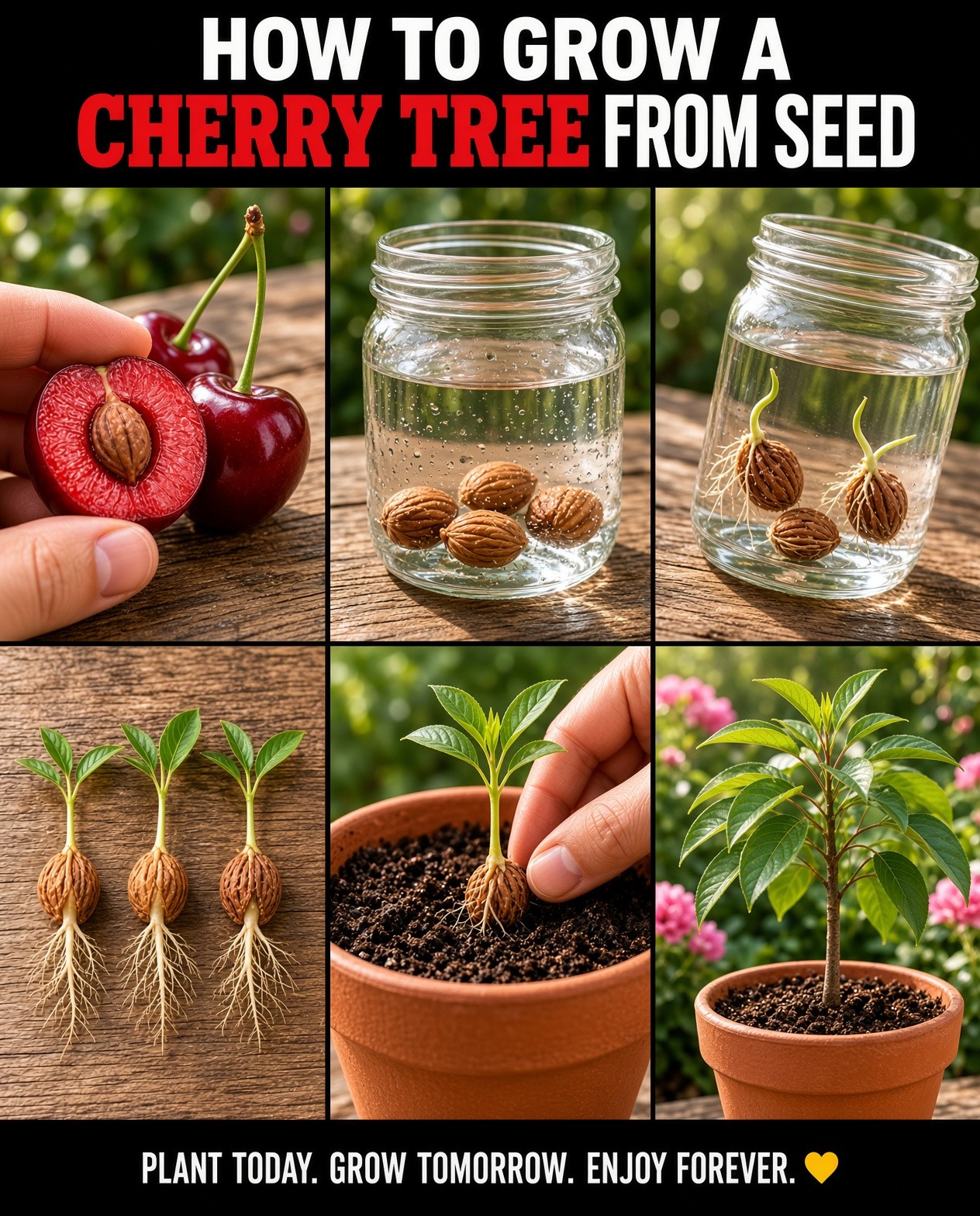
Growing a fruit tree from a seed is inexpensive and fascinating: you get to watch a tiny embryo become a leafy seedling. But it helps to understand one important limitation before you begin. A seed-grown tree usually will not produce fruit identical to the fruit you ate, and it may take many years to bear. Commercial fruit trees are commonly grafted to preserve a known variety and encourage earlier, more predictable crops.
For home gardeners, however, seed growing is a wonderful experiment, a way to practice propagation, or a route to raising a seedling that can later be grafted. Here are seven fruits to try, plus the basics that give seeds the best chance of success.
1. Peach

Peach pits can produce vigorous seedlings, making them a popular choice for a home propagation project. The resulting tree may differ from its parent, although seedlings sometimes produce similar fruit.
How to start
- Remove the pit from a ripe peach and scrub away all flesh.
- Let the hard pit dry briefly, then provide a cold, moist chilling period—often around three to four months—using a slightly damp medium in the refrigerator.
- Check periodically for mold or early roots, then plant in a deep pot with drainage when the seed begins to crack or sprout.
Give the seedling bright light and gradually acclimate it outdoors when conditions are mild. Peaches need a suitable climate and adequate winter chill to flower and fruit well.
2. Apple

Apple seeds germinate readily with the right treatment, but an apple grown from seed is genetically different from its parent. It may take many years to fruit, and the apples may be small, sour, or otherwise unlike the original.
How to start
Wash seeds clean, mix them with barely moist sand or a paper towel, and refrigerate for roughly 8–12 weeks; some seeds need longer. Sow the chilled seeds in potting mix about 1 cm deep and keep them evenly moist. Once seedlings have several true leaves, give them strong light and plenty of room.
Apple trees generally need a compatible pollination partner, and many varieties require winter chilling. For dependable fruit of a named variety, choose a grafted tree rather than relying on a seedling.
3. Lemon

Lemon seeds are easy to collect and can sprout without cold stratification. Seed-grown lemons can be attractive evergreen houseplants in a sunny location, though they may take years to flower and the fruit may not match the parent.
How to start
Choose plump seeds from a fresh lemon, rinse off the slippery coating, and sow while fresh. Plant each seed about 1–2 cm deep in a sterile, well-draining mix. Keep it warm, humid, and lightly moist; a clear cover can help, but ventilate it to prevent mold. Remove the cover after germination and provide the brightest light available.
Citrus dislikes cold drafts and waterlogged roots. Outdoors, plant only where the climate is suitable; in cooler areas, grow the seedling in a container that can be moved inside.
4. Avocado

An avocado pit makes a satisfying growing experiment. The familiar water method can work, but planting the cleaned pit directly in a pot of airy mix is also effective and avoids transferring delicate roots later.
How to start
Wash the pit and identify its broader, flatter base. Suspend the lower portion in water or plant it with the bottom half in moist potting mix. Keep it warm and provide bright indirect light. Germination can take several weeks or longer, so be patient and replace water regularly if using the glass method.
Once established, give the plant a bright position, a pot with drainage, and water when the top layer of mix begins to dry. An avocado grown from seed is unlikely to produce fruit indoors and may need many years and a suitable climate to fruit at all.
5. Mango

Mango is best suited to warm climates or a bright, warm indoor growing space. Fresh seeds lose viability with time, so start soon after eating the fruit. The hard outer husk can be difficult to open; handle it carefully and avoid cutting into the inner seed.
How to start
Remove all flesh, clean the husk, and allow its surface to dry. If you can safely open the husk, plant the intact inner seed in a deep pot of well-draining mix, curved edge down or on its side. Keep it warm and evenly moist, not soggy. Alternatively, sow the whole cleaned husk, allowing for slower or less reliable germination.
Give the seedling plenty of sunlight as it grows. Mango trees become large and need heat, sun, and space; a seedling may never fruit well in a cool home or small pot.
6. Cherry

Cherry pits can germinate, but they usually need a longer cold period than many tropical seeds. Seedlings may differ from the parent, and sweet cherries in particular can be challenging to grow and pollinate.
How to start
Remove every trace of fruit, rinse the pits, and chill them in barely moist sand or vermiculite for several months; exact requirements vary by species. Check regularly for mold. Sow chilled pits in a pot or protected seedbed, and keep the medium moist. Protect outdoor pots from rodents, which may dig up the seeds.
Cherry trees need a climate that meets their winter-chill requirements and enough sunlight. Consider a nursery-grown tree if your goal is a reliable harvest.
7. Plum
Plum stones are another useful seed-starting project. As with other stone fruits, the seed inside the hard shell often needs cold, moist stratification. Germination and the eventual fruit quality are variable.
How to start
Clean the stone thoroughly and chill it in a barely moist medium for several weeks to a few months, depending on the plum type. You can also sow cleaned stones outdoors in autumn in a protected spot, where natural winter conditions may provide the cold period. Keep the site labeled and guard it against animals.
Move seedlings carefully because young roots can be sensitive to disturbance. Choose a sunny final site with good drainage and adequate room for the mature tree.
Simple care for young fruit trees
- Use drainage holes. Roots need oxygen; standing water can cause rot.
- Water thoughtfully. Keep young seedlings consistently moist while avoiding saturated soil.
- Give enough light. Most fruit trees need strong light and gradually adjusted outdoor conditions.
- Pot up gradually. Move seedlings into a slightly larger container when roots fill the current pot.
- Label everything. Record the fruit type and sowing date so you can track germination.
- Wait before feeding. Avoid heavy fertilizer on newly germinated seedlings; begin gentle feeding only after they are established and follow product directions.
Will a seed-grown tree produce the same fruit?
Usually not. Apples, cherries, plums, and many other fruit trees are genetically variable when grown from seed. The seedling may grow into a healthy tree but produce fruit with a different flavor, size, or harvest time. Citrus sometimes produces seedlings similar to the parent, but this is not guaranteed. If your priority is a predictable crop, buy a named grafted variety suited to your climate. Seedlings can also be grown as rootstocks and grafted later.
Frequently asked questions
Can I grow these trees in pots?
You can start all seven in pots. Keeping a mature fruit tree in a container is more demanding: it needs a suitably large pot, regular watering, nutrition, pruning, and often a compact or grafted variety. A seedling may eventually outgrow a windowsill.
How long until a tree grown from seed bears fruit?
It varies by species and growing conditions. Many seed-grown fruit trees take several years, and some take a decade or more. Some never fruit well in a given climate. Seedlings typically take longer than grafted nursery trees.
What is stratification?
Stratification is a period of cool, moist conditions that helps certain seeds overcome dormancy. Apples, cherries, peaches, and plums commonly need it; fresh tropical seeds such as mango and lemon generally do not.