
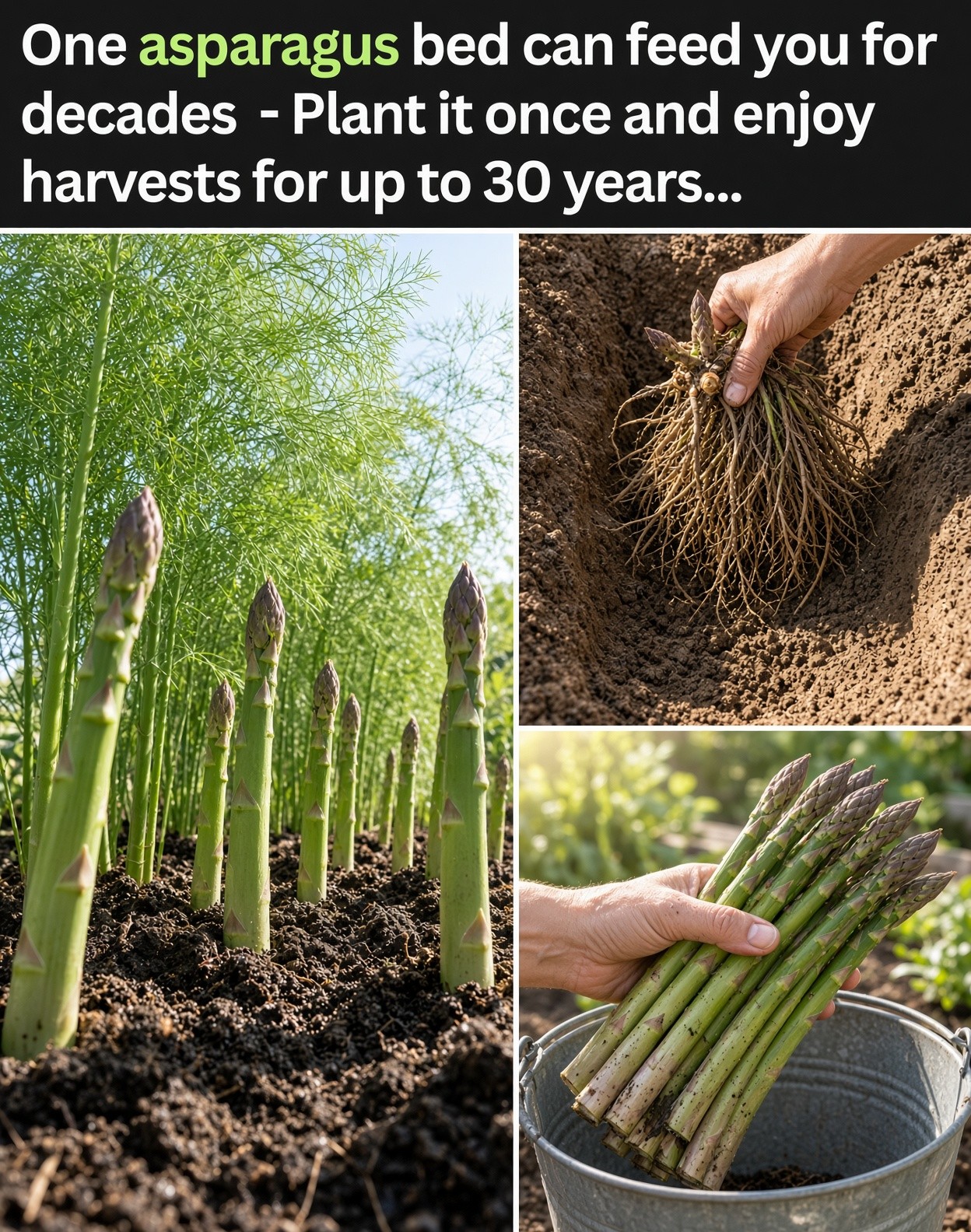
Here are seven practical ways to make your asparagus patch productive, healthy, and easier to maintain over the long term.
Choose a permanent sunny site

Because asparagus stays in the same place for many years, location matters. Choose a spot receiving at least six to eight hours of direct sun daily. Avoid low areas where spring frost collects and places where rainwater pools after a storm. Poor drainage can weaken roots and encourage crown rot.
Give the bed room to grow. Rows are commonly spaced about 3–4 feet apart in a home garden, while crowns within a row are often placed 12–18 inches apart. If you grow other vegetables nearby, consider placing asparagus along the north side of the garden so its tall summer foliage does not shade shorter crops.
Remove persistent perennial weeds before planting. Once asparagus roots spread, digging deeply to remove weeds can damage the crowns, so starting with a clean bed saves effort later.
Prepare fertile, well-drained soil

Asparagus performs best in fertile soil that holds moisture without becoming waterlogged. A soil pH around 6.5–7.0 is a useful target. If possible, test the soil before planting; use the results to guide any lime or fertilizer additions rather than guessing.
Work mature compost into the planting area to improve soil structure and organic matter. Avoid placing fresh manure directly against the crowns. In heavy clay, improve drainage and consider a raised bed if water regularly stands in the soil. Very sandy soil may need extra organic matter and more frequent watering.
Because the bed will be difficult to renovate once established, take time to remove roots of bindweed, couch grass, thistles, and other stubborn weeds. This preparation is one of the best investments you can make in a long-lived asparagus patch.
Plant asparagus crowns carefully

Most home gardeners start with one-year-old dormant crowns because they establish faster than seed-grown plants. Plant in early spring when the soil can be worked and severe frost is less likely. Follow the supplier’s instructions for your climate and soil.
Dig a trench roughly 6–8 inches deep and wide enough to spread the roots without bending them sharply. Place crowns about 12–18 inches apart, with the buds facing upward and roots spread out naturally. Cover initially with about 2–3 inches of soil and water thoroughly. As shoots grow, gradually fill the trench until the soil is level with the surrounding bed.
Do not compact the soil heavily over the crowns. Mark the row so you know where they are, and avoid walking on the planting area. Crowns may send up slender shoots in the first season; allow them to grow rather than harvesting them.
Water consistently and mulch

Keep the soil evenly moist while crowns establish, especially during dry weather. Water deeply enough to moisten the root zone, then let excess water drain away. Newly planted asparagus is more vulnerable to drying out than a mature bed, and sandy soils usually need more frequent irrigation than heavier soils.
A layer of clean straw, shredded leaves, or another loose organic mulch helps conserve moisture, reduce weeds, and soften temperature swings. Keep mulch from being packed tightly against emerging spears, and replenish it as it decomposes. Drip irrigation or a soaker hose delivers water near the roots while keeping foliage relatively dry.
Established plants still need moisture during the fern-growing period after harvest. Drought stress at this stage can reduce the energy stored in the crowns and affect next spring’s crop.
Keep weeds under control
Weeds compete with asparagus for water, light, and nutrients. Pull small weeds by hand and use mulch to suppress new growth. Work carefully around the row: asparagus roots and crowns can spread close to the soil surface, and deep hoeing or tilling may damage them.
Check the bed regularly rather than waiting until weeds are large. Remove weeds before they set seed, and avoid using herbicides unless the product label explicitly permits use around asparagus and you can follow all harvest and safety instructions. For a small home bed, careful hand-weeding is often the simplest option.
Keep the paths between rows manageable too. A clean, accessible path makes it easier to harvest, inspect the plants, and notice pest or disease problems early.
Harvest gradually, not too early

Newly planted asparagus needs time to develop. As a general guide, avoid harvesting in the first year after planting crowns. In the second year, some gardeners take only a very light harvest from vigorous plants, while others wait until the third year. Seed-grown plants usually need longer. The plant’s strength and local growing conditions should guide your decision.
When harvesting begins, pick spears when they are around 6–8 inches tall and still have tight tips. Use a clean, sharp knife to cut just below the soil surface, taking care not to injure neighboring shoots or the crown. During warm spring weather, inspect the bed every day or two because spears can grow quickly.
Keep the harvest period short for young beds. Mature, vigorous plants can generally be harvested for around six to eight weeks, depending on climate and plant health. Stop harvesting when spears become noticeably thin or the plants need recovery, then allow the remaining shoots to grow into ferns.
Protect the ferns and crowns after harvest

After the harvest ends, leave new shoots to develop into tall, feathery ferns. These green stems capture sunlight and replenish the energy stored underground for next year’s spears. Do not cut the foliage back while it is still green and active.
Continue watering during dry spells, remove weeds, and check for asparagus beetles or signs of disease. If foliage becomes heavily infested or diseased, seek local extension advice before deciding how to manage it. In autumn, wait until the ferns yellow or brown and frost has finished them off before cutting them down. In many regions, gardeners cut old stems back near ground level and remove diseased debris.
A light winter mulch can help suppress weeds and protect the soil, especially in colder climates. Avoid burying the crown under a dense, soggy layer. In spring, remove or loosen excess mulch as new spears begin to emerge.
Common asparagus-growing mistakes to avoid
- Planting in shade: too little sun can reduce vigor and spear production.
- Choosing wet soil: persistent waterlogging raises the risk of root and crown problems.
- Harvesting too soon: young crowns need time to build reserves.
- Cutting green ferns: removing active foliage too early reduces the energy available for next year.
- Letting weeds take over: competition is especially damaging while plants establish.
- Overfertilizing without testing: use soil-test guidance and avoid applying nutrients unnecessarily.
Frequently asked questions
Can asparagus really produce for 30 years?
Some well-managed beds may last for decades, but 30 years is not guaranteed. Many reliable gardening references describe productive plantings lasting around 15–20 years or longer when site conditions and care are favorable.
Is it better to grow asparagus from seed or crowns?
Crowns are usually easier for beginners and reach harvest readiness sooner. Seed is less expensive but takes longer to establish and requires more patience.
Can asparagus grow in a container?
It can grow in a very large, deep container, but its extensive root system and long life generally make an in-ground bed a better choice. Containers dry out faster and may limit long-term productivity.
What should I do with asparagus after harvesting?
Stop cutting spears and allow the shoots to grow into ferns. Keep the plants watered and weeded so the foliage can replenish the crowns before autumn dormancy.
A long-term crop worth the wait
Growing asparagus is less about quick results and more about building a strong perennial bed. Choose a sunny, well-drained site, improve the soil before planting, set crowns carefully, and protect the foliage after harvest. Most importantly, give young plants time to establish before taking a full crop.
With these seven habits, you can enjoy the spring ritual of harvesting fresh asparagus for many years—and make each season’s crop a little more rewarding.