
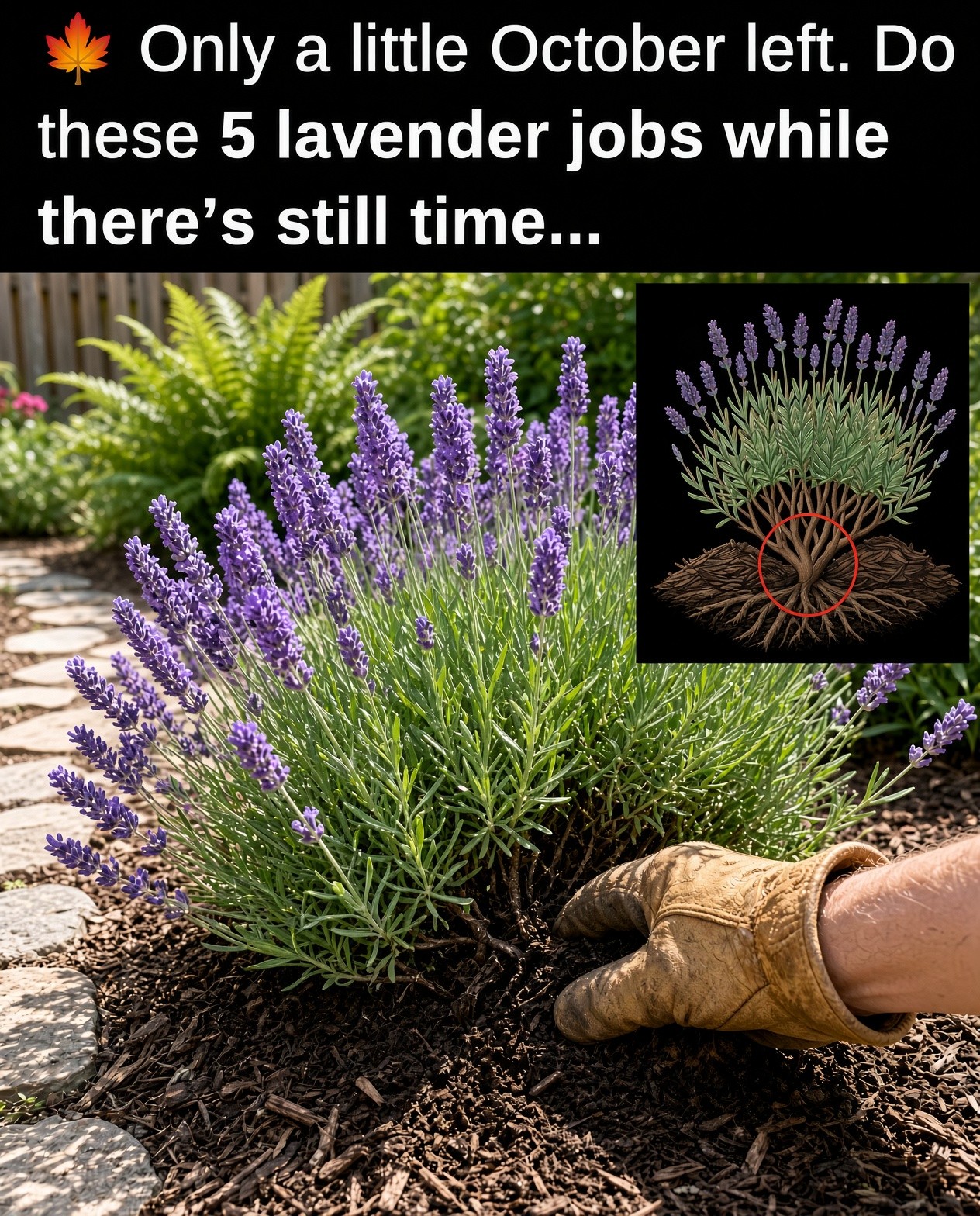
Lavender brings beautiful flowers, fragrant foliage, and a Mediterranean feel to the garden. However, cold temperatures combined with wet soil can make autumn and winter challenging for these plants.

1. Check Your Lavender’s Winter Hardiness
Before preparing lavender for winter, identify the variety growing in your garden. Different types have different levels of cold tolerance, so knowing which one you have helps you decide whether it needs extra protection.
English lavender (Lavandula angustifolia), including varieties such as ‘Munstead’ and ‘Hidcote’, is generally more cold-hardy than French or Spanish lavender. Some lavandin hybrids, such as ‘Phenomenal’, are also known for their winter tolerance when grown in suitable conditions.
French and Spanish types are often more vulnerable to frost. Their precise hardiness depends on the species, cultivar, and local climate.
What to do in October
- Check the plant label to identify your lavender variety.
- Compare its hardiness with the winter temperatures in your area.
- Leave hardy, established plants in the ground when their location and drainage are suitable.
- Move tender container-grown varieties to an appropriate sheltered, bright location before severe frost arrives.
If a tender variety is planted in the ground, avoid digging it up hastily unless moving it is necessary. Disturbing the roots just before winter can add stress. Consider appropriate protection based on your local conditions.
Important: Cold tolerance alone does not guarantee winter survival. Lavender can struggle in cold, waterlogged soil even where temperatures are normally within its hardiness range.

2. Avoid Heavy Pruning Late in Autumn
Regular pruning helps lavender stay compact, but late autumn is not the time for a severe cutback in colder regions. Heavy pruning can remove healthy growth and leave the plant more vulnerable to winter stress.
Lavender also does not reliably produce new growth from old, leafless woody stems. Cutting deeply into these areas can leave the plant with bare branches that struggle to recover.
What you can do instead
- Remove clearly broken or diseased stems.
- Leave healthy green foliage in place.
- Avoid major reshaping when freezing weather is approaching.
- Save any necessary corrective pruning for spring, when new growth makes it easier to assess the plant.
If your lavender looks slightly untidy, do not worry about making it perfectly rounded before winter. Preserving healthy growth is more important than achieving a neat shape at this time of year.
For future seasons, the main annual trim is generally best completed after flowering, with timing adjusted to the variety and local climate. Avoid cutting far into bare wood.

3. Check Drainage Around Your Lavender
Excess moisture is one of the main winter risks for lavender. When soil remains saturated, roots receive less oxygen and become more vulnerable to root and crown rot.
Autumn rain can reveal drainage problems that were less obvious during the summer. Heavy soil, blocked container holes, and pots sitting in full saucers can all keep roots too wet.
For lavender planted in the ground
Look for puddles or areas where water remains long after rain. Avoid digging around established lavender in October just to loosen the soil, because disturbing the roots can cause additional stress.
If the planting site regularly becomes waterlogged, plan a longer-term improvement, such as redirecting surface runoff or choosing a raised, free-draining location for future plants. Make major changes when conditions are suitable rather than disturbing the existing root system unnecessarily.
For lavender growing in pots
- Check that the container has unobstructed drainage holes.
- Remove debris blocking the bottom of the pot.
- Raise the container slightly on suitable pot feet if water collects underneath.
- Empty any saucer that remains full after rainfall.
- Move pots to a sheltered position when excessive winter rain is a concern.
Lavender usually prefers soil that drains freely rather than a growing medium that stays consistently wet. During cool, rainy weather, established plants in the ground often need little additional watering.

4. Clear Wet Leaves from the Crown
Fallen autumn leaves can become trapped between lavender’s lower branches and around the crown. When this debris stays wet, it can hold moisture against the plant’s base and reduce airflow.
Clearing away compacted leaves and decaying material is a simple way to keep the area around the lower stems cleaner. The aim is not to strip the plant of healthy foliage, but to remove debris that stays damp against it.
How to tidy the base
- Gently remove fallen leaves caught among the lower branches.
- Clear dead plant material from around the crown.
- Avoid pulling or bending healthy stems.
- Keep thick, wet layers of leaves or organic mulch away from the main stem.
- Check the plant again after windy or rainy weather.
Handle the plant carefully, especially if its lower stems have become brittle. You do not need to remove every fallen leaf from the garden. Concentrate on debris that has accumulated inside the plant or directly against its crown.
Should you add mulch?
A thick layer of moisture-retaining mulch around lavender’s crown can be counterproductive in a wet climate. If you want to cover the soil surface, a suitable layer of gravel or small stones may help keep the crown drier, provided the material does not bury the stems or interfere with drainage.

5. Arrange Suitable Winter Protection
Not every lavender plant needs to be wrapped or covered for winter. Hardy varieties growing in sunny, well-drained soil may cope well without elaborate protection. Tender varieties, container-grown plants, and plants in exposed locations may need extra care.
Protect against harsh winds
In an exposed garden, a simple windbreak can help reduce the impact of cold, drying winds. If you use a breathable covering, support it so it does not press tightly against the plant. Air circulation is important, and tightly wrapped plastic can trap moisture.
Protect container-grown plants
Pots experience greater temperature fluctuations than the surrounding garden soil, so container-grown lavender can be more vulnerable during cold weather.
If severe frost is expected and your variety is not reliably hardy, move the pot to a suitable bright, sheltered location. Keep the growing medium relatively dry through winter while checking it occasionally so the plant is not completely neglected.
Be careful with snow and heavy covers
Snow can provide some insulation for the ground, but heavy, wet snow and ice can weigh down branches and damage the centre of a lavender bush. Avoid piling snow onto the plant intentionally.
Where a protective frame is needed, make sure it is stable and leaves room for air to circulate. Remove temporary protection when the harshest weather has passed and conditions allow the plant to receive normal light and airflow again.

Extra Lavender Care Tips for Winter
Once these five tasks are complete, keep your winter routine simple. Lavender generally prefers plenty of light, good airflow, and soil that does not remain saturated.
- Water sparingly: Established plants in the ground rarely need extra water during cool, wet weather.
- Avoid unnecessary feeding: Fertilizer is generally not needed as lavender enters winter dormancy.
- Keep containers draining freely: Prevent pots from standing in water.
- Check for damage: Remove broken material carefully, but postpone major pruning until conditions are appropriate.
- Plan spring maintenance: Assess winter damage when new growth begins and trim only as needed, avoiding bare woody stems.
Final Thoughts
Preparing lavender for winter does not require a complicated routine. Identify the variety, avoid heavy late pruning, check drainage, clear wet debris from the crown, and provide protection if your climate demands it.
Above all, remember that lavender dislikes prolonged waterlogged conditions. Extra watering, thick wet mulch, and tightly wrapped covers may create more problems than they solve.
With these simple October tasks, you can help your lavender face winter in better condition and give it a stronger chance of producing fresh growth when spring returns.