
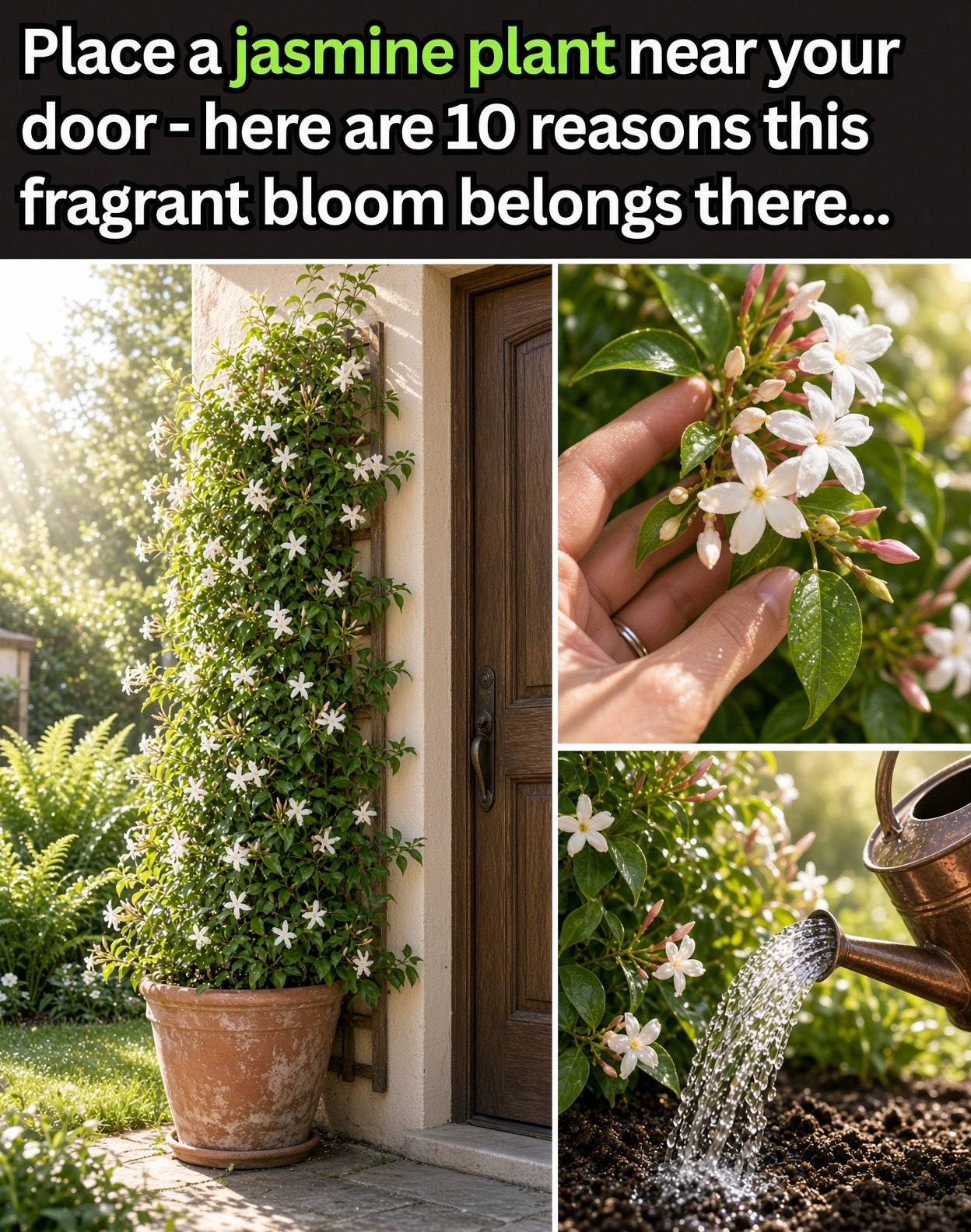
A front entrance can be more than a place to walk in and out. With the right plants, it can become a welcoming corner filled with greenery, flowers, and a lovely natural fragrance. Jasmine is an especially appealing choice because many varieties produce delicate blooms with a distinctive sweet scent.

1. Enjoy a Naturally Fragrant Welcome
One of jasmine’s greatest attractions is its fragrance. Depending on the species and variety, its flowers can release a sweet, rich perfume that makes a garden entrance feel especially inviting.
Planting jasmine close to a frequently used doorway, porch, or walkway puts the flowers where you are most likely to notice their scent. Some varieties are particularly fragrant in the evening, making them appealing near an outdoor seating area.
For the strongest floral display, choose a variety suited to your climate and give it enough light to flower well. Remember that fragrance varies between varieties and can be influenced by temperature, weather, and the number of open blooms.
2. Create a Pleasant, Relaxing Outdoor Space
Fragrance can contribute to how we experience a space. A pleasant-smelling entrance may make returning home or sitting on the porch feel more enjoyable, especially when combined with greenery and a comfortable place to pause.
Jasmine is a simple way to introduce a sensory element into a garden without installing fountains, decorative lighting, or elaborate landscaping. Its flowers, leaves, and climbing growth can make even a modest entrance feel more thoughtfully designed.
Although jasmine’s scent is often described as relaxing, it should not be considered a treatment for anxiety or other health conditions. Enjoy it as a garden fragrance rather than relying on it for a medical benefit.

3. Add a Calming Touch to Your Evening Routine
Some jasmine varieties release a particularly noticeable fragrance during the evening. A plant near a porch, patio, or open-air seating area can make the space more enjoyable when the day begins to cool.
You could place a container beside a garden bench or grow jasmine near an outdoor dining area, provided the plant receives suitable light. Taking a few quiet moments outside to appreciate the flowers can become a pleasant part of your daily routine.
Research into jasmine fragrance and relaxation is still limited, and findings about concentrated fragrances or essential oils do not automatically apply to a living plant outdoors. Jasmine should not be described as a guaranteed sleep aid or as having effects equivalent to medication.
4. Bring a Sense of Harmony to Your Entrance
In some cultural and spiritual traditions, jasmine symbolizes purity, harmony, affection, and good fortune. These associations make it a popular choice for spaces intended to feel peaceful and welcoming.
In Feng Shui-inspired garden design, plants near an entrance may be selected to create a balanced and inviting transition between outdoors and indoors. A healthy jasmine plant can contribute to that appearance through its fresh foliage and delicate blossoms.
These meanings are cultural and symbolic rather than scientifically established effects. You can still use jasmine to create an entrance that reflects your own taste and makes visitors feel welcome.

5. Welcome Bees and Other Garden Visitors
Flowering jasmine can contribute to a garden that supports pollinators and other small wildlife. Depending on the variety, flowering season, and local conditions, its blooms may attract bees and other insects searching for floral resources.
Growing flowering plants near your entrance can also give you an opportunity to observe garden visitors up close. If you have room, combine jasmine with other suitable flowering plants so that food sources are available over a longer part of the growing season.
Choose plants that thrive in your local climate and avoid using pesticides unnecessarily around flowers visited by pollinators. Jasmine alone will not guarantee improved pollination for nearby vegetables or fruit trees, but it can be one useful part of a diverse planting scheme.
6. Enjoy Fragrance Without Relying on Artificial Air Fresheners
A jasmine plant can provide a natural floral scent in the outdoor area around your door. For people who enjoy fresh flowers, this can be a pleasant alternative to adding another scented product to the entrance.
However, a flowering plant should not be treated as an air purifier. Although plants interact with gases and particles under certain conditions, a potted jasmine outdoors has not been shown to reliably remove indoor pollutants or disinfect the air in a home.
For a fresh-smelling entrance, keep the area clean, remove decaying plant material, and make sure water does not collect in trays or containers. Jasmine adds fragrance, but it cannot replace good ventilation or ordinary household cleaning.

7. Make Everyday Moments Feel More Mindful
A fragrant plant near the entrance can encourage you to notice small details that might otherwise go unnoticed: a newly opened flower, the movement of leaves in a breeze, or the scent that becomes more noticeable at a particular time of day.
You might pause beside the plant before leaving in the morning or spend a few minutes observing it when you return home. These simple moments can make a garden feel more connected to everyday life.
Jasmine is not a substitute for professional mental health support, and its fragrance does not guarantee a particular psychological effect. Its value here is straightforward: it offers a living, changing feature that can make an ordinary outdoor space more enjoyable.
8. Improve Your Home’s Curb Appeal
Jasmine can make a front entrance more attractive through its glossy leaves, delicate flowers, and graceful growth habit. Depending on the variety, it can be grown as a climbing vine, a shrub-like plant, or a container specimen trained around a support.
A trellis beside the doorway can guide a climbing variety upward and create a floral feature without using much ground space. In a smaller entrance, a well-sized pot can provide greenery without requiring a permanent planting bed.
Choose a location that leaves doors, steps, railings, and walkways clear. Train stems away from hinges, lights, gutters, and other fixtures, and prune when necessary to keep the entrance safe and easy to use.

9. Add Another Layer to Your Garden’s Natural Pest Management
Jasmine is sometimes promoted as a plant that repels mosquitoes and other pests because of its fragrance. However, there is not enough reliable evidence to recommend a living jasmine plant as an effective way to keep unwanted insects away from a doorway.
Its more dependable contribution is to provide ornamental value and, when flowering, potentially support some beneficial insects. If mosquitoes are a concern, remove standing water where they can breed and use appropriate, proven protective measures.
For a healthier garden, focus on diverse planting, regular inspections, and identifying a pest before deciding how to manage it. Jasmine can be part of an attractive garden, but it should not be relied upon as a pest-control solution.
10. Grow Jasmine in a Container or Train It on a Support
You do not need a large garden to grow jasmine near your front door. Many varieties can be grown in pots, making them suitable for patios, balconies, porches, and smaller entrances. The best choice depends on your climate, available sunlight, and the mature size of the plant.
Jasmine Varieties to Consider
- Arabian jasmine (Jasminum sambac): Known for its fragrant flowers and suitability for containers in warm conditions.
- Common jasmine (Jasminum officinale): A climbing plant that can be trained along a suitable trellis or garden support.
- Pink jasmine (Jasminum polyanthum): Known for pink flower buds that open into white flowers; it can grow vigorously and needs room and support.
- Star jasmine (Trachelospermum jasminoides): A fragrant evergreen climber often called jasmine, although botanically it belongs to a different genus.
Check the identity of a plant before buying it: common names can refer to different species, and their temperature requirements are not identical. Some jasmine plants need protection from frost, while others tolerate cooler conditions better.

How to Position Jasmine Near Your Front Door
The right location helps jasmine grow well and makes its fragrance easier to enjoy. Before planting, consider how much sunlight the entrance receives, whether the spot is exposed to strong wind, and how much room the mature plant will need.
- Choose suitable light: Many flowering jasmines perform best with several hours of sunlight or bright light, although requirements vary by species and climate.
- Use well-draining soil: Choose a suitable potting mix and a container with drainage holes if growing in a pot.
- Leave enough space: Keep the plant away from door swings, steps, and narrow walkways.
- Provide support: Use a stable trellis for climbing types and guide stems as they grow.
- Consider the fragrance: Place the plant where you can enjoy its scent without blocking the entrance.
- Check local growing conditions: Heat, winter temperatures, wind, and shade all influence which variety will thrive.
Simple Jasmine Care Tips
Watering
Water according to the plant’s needs, the weather, and the growing medium. Container-grown jasmine often dries out faster than plants growing in the ground. Keep the soil appropriately moist while avoiding waterlogged roots.
Sunlight
Provide the light recommended for your particular species. Insufficient light can limit flowering, while intense heat and direct afternoon sun may stress some plants in hot climates.
Fertilizing
If your jasmine is actively growing, a suitable balanced fertilizer may help support healthy growth. Follow the product label and avoid overfeeding, which can encourage foliage at the expense of flowers or cause salt buildup in containers.
Pruning
Trim after flowering when appropriate for the variety. Remove damaged growth and guide climbing stems along their support. Avoid cutting indiscriminately before checking when your plant forms its flower buds.
Cold Weather
Protect frost-sensitive varieties when temperatures fall. In cooler climates, growing jasmine in a movable container can make seasonal protection easier. Follow guidance for the exact species rather than assuming every plant sold as jasmine has the same hardiness.
Final Thoughts
Placing jasmine near your front door is a simple way to add fragrance, flowers, and greenery to an often-overlooked part of the home. It can enhance curb appeal, create a more inviting outdoor space, and provide seasonal flowers that may attract garden visitors.
The key is to choose the right variety and give it suitable light, drainage, room, and support. Claims that jasmine reliably purifies the air, repels pests, or treats anxiety and sleep problems should be viewed cautiously. Its real strengths are its beauty, fragrance, and ability to make an entrance feel more welcoming.
With thoughtful placement and consistent care, a jasmine plant can become a beautiful feature you enjoy every time you arrive home.