
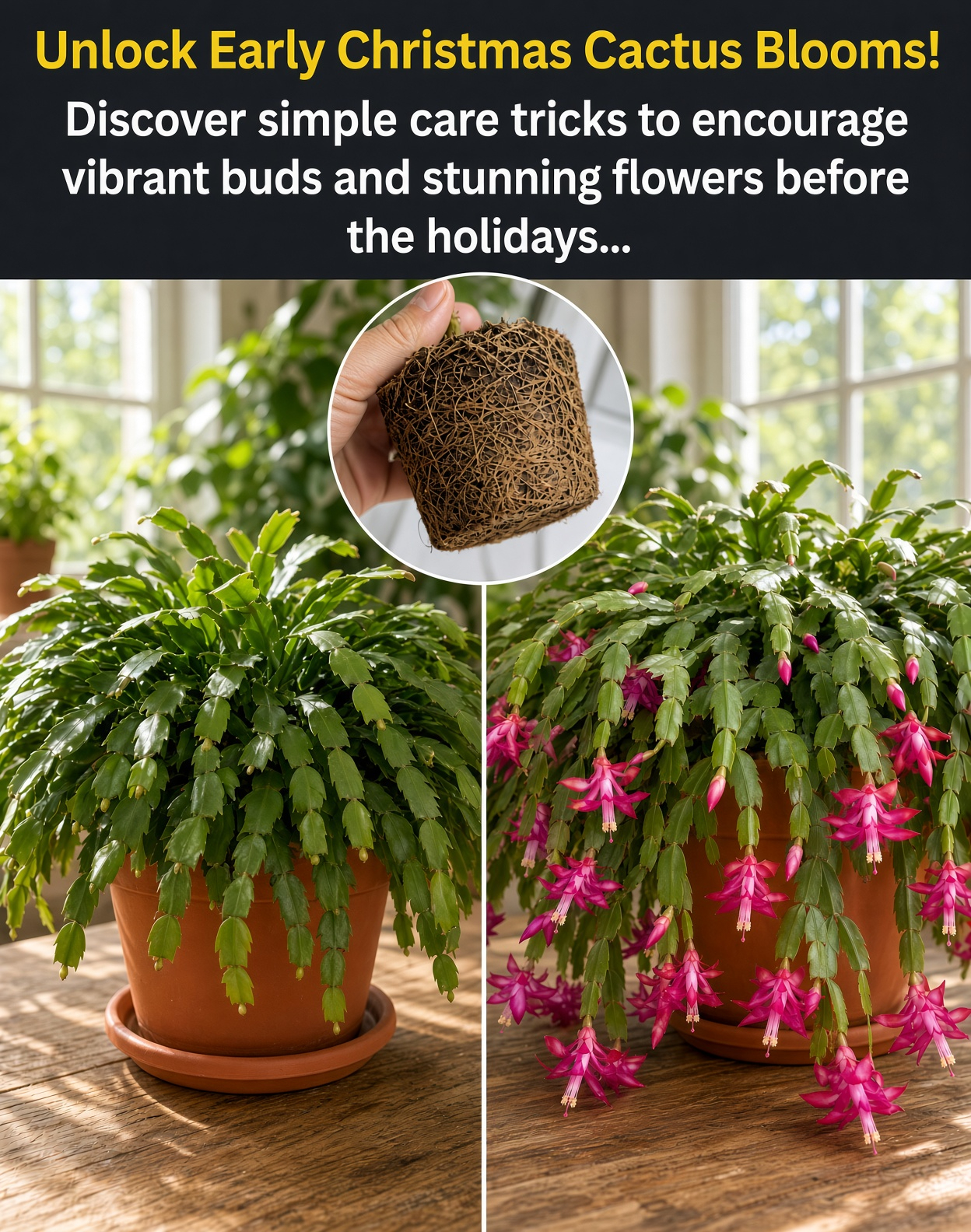
A Christmas cactus covered in colorful flowers is one of the loveliest sights of the holiday season. But if your plant produces plenty of green segments without forming buds—or blooms later than you hoped—you may need to adjust its seasonal care.
The secret to earlier flowers is not adding more fertilizer or watering more often. Christmas cactus responds primarily to the length of its nights and the temperatures around it. With a consistent routine, you can encourage flower buds to form earlier and enjoy a beautiful display before Christmas.

1. Give Your Christmas Cactus Long, Uninterrupted Nights
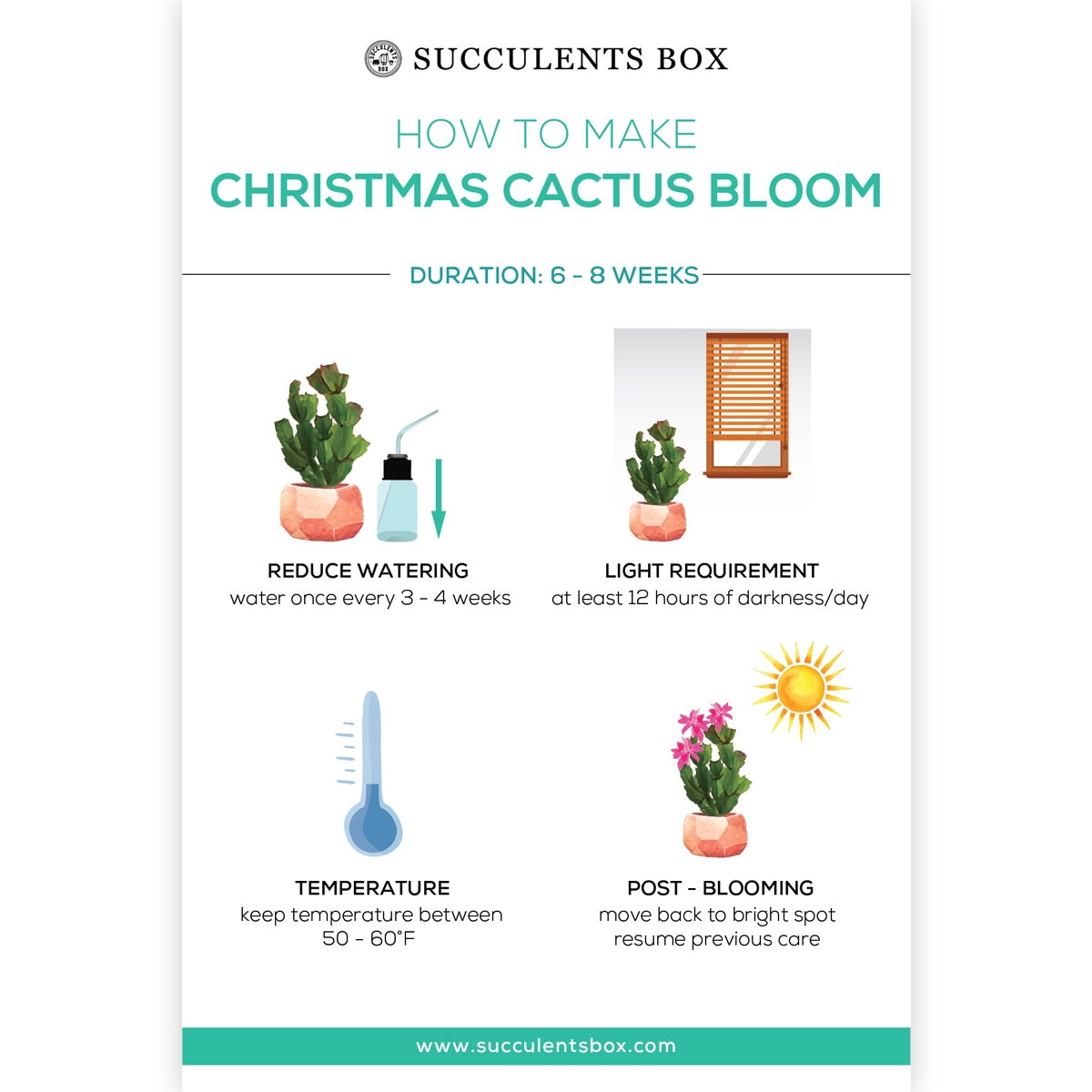
One of the most important factors in flowering is darkness. Christmas cactus is a short-day plant, meaning that long, uninterrupted nights help trigger the formation of flower buds.
To encourage earlier blooming, begin providing the appropriate night conditions about six weeks before your desired flowering period. Aim for approximately 12–14 hours of uninterrupted darkness each night, depending on the plant and growing conditions.
During the day, keep the plant in a bright location with indirect light. At night, place it in a naturally dark room or another location where household lamps won’t shine on it.
Consistency matters more than complicated routines. Repeated exposure to bright indoor lighting late at night can interfere with the darkness the plant needs to initiate buds.
2. Keep Temperatures a Little Cooler
Cooler autumn nights are another important signal for Christmas cactus. A consistently warm room, especially at night, may delay flowering even when the plant receives enough darkness.
During the bud-forming period, try to provide nighttime temperatures around 55–65°F (13–18°C), with daytime temperatures generally around 65–70°F (18–21°C).
A bright, cool room can work well. Keep the plant away from heating vents, radiators, and places where hot air blows directly onto its stems.
Don’t expose the plant to freezing conditions or sudden temperature changes. The goal is a gentle seasonal shift, not extreme cold. Once buds begin forming, maintain stable conditions so they can develop without unnecessary stress.
3. Adjust Watering Without Letting the Plant Wilt
Christmas cactus needs a different watering approach from desert cacti. It grows naturally in humid, forested environments and doesn’t benefit from being left bone-dry for long periods.
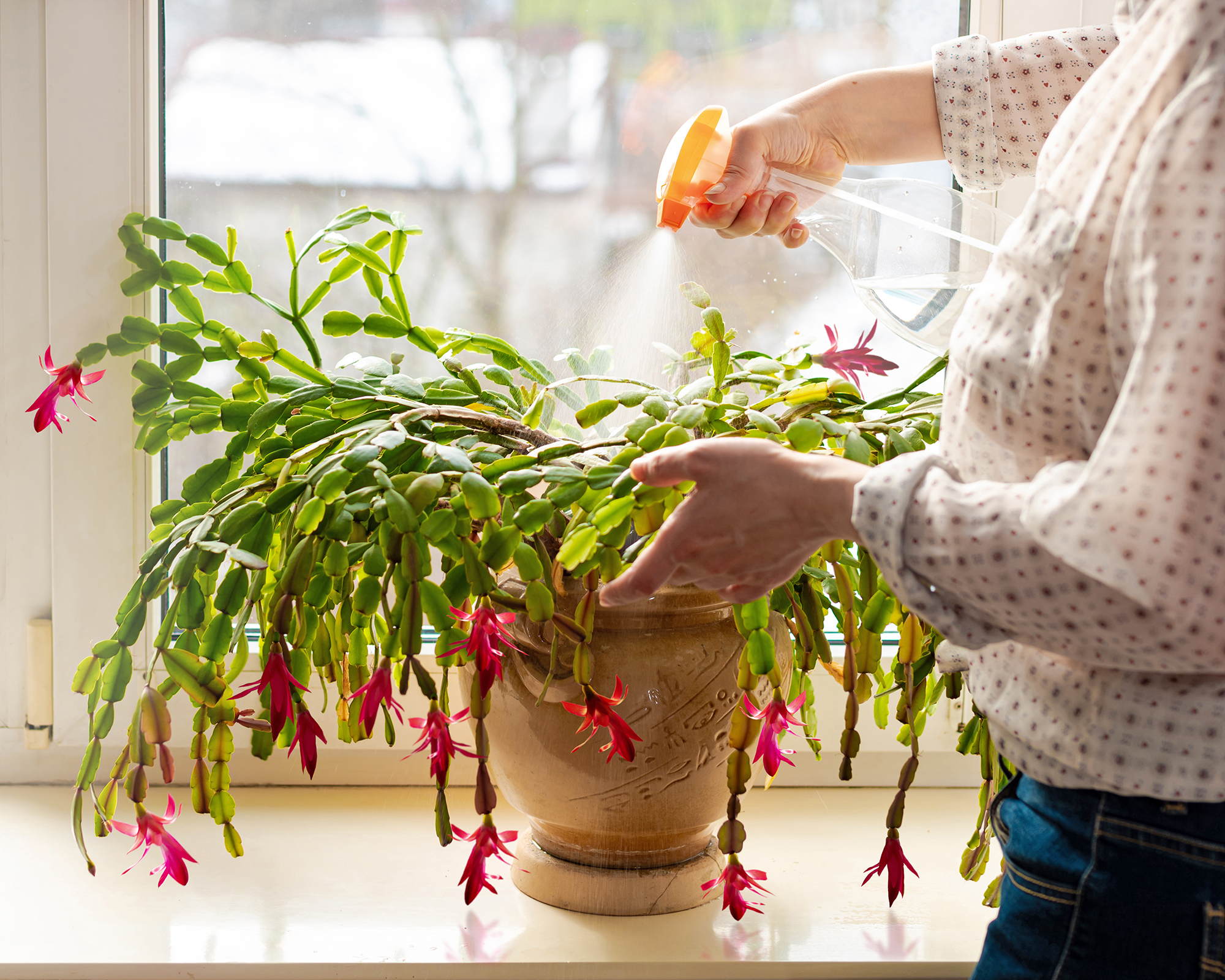
As the days shorten and the plant begins preparing to flower, allow the upper layer of potting mix to dry slightly before watering again. Check the soil rather than following a rigid calendar, because drying time depends on the pot, room temperature, and humidity.
When watering is needed, water thoroughly and allow excess water to drain away. Never leave the pot standing in a saucer full of water.
Too much water can damage the roots, while severe dryness may cause stems to shrivel and flower buds to drop. Aim for a balanced routine instead of deliberately stressing the plant.
4. Provide Bright, Indirect Light During the Day
Dark nights help trigger flowering, but the plant still needs adequate light during daytime hours. A location near a bright window is often ideal, provided strong direct sunlight doesn’t scorch the stems.
An east-facing window can provide gentle morning light. A bright position near a west-facing window may also work if the plant is protected from intense afternoon sun.
If your Christmas cactus sits in a dim corner, move it gradually to a brighter location before the bud-forming period. Avoid making sudden changes once the buds are developing, because the plant responds best to stable conditions.
Healthy green segments and steady growth during the growing season give the plant a better foundation for producing flowers later.
5. Pause Fertilizing When Bud Formation Begins
Regular feeding can support healthy growth during spring and summer, but continued heavy fertilizing in autumn is unnecessary when the plant is preparing to flower.
Feed during the active growing season with a balanced houseplant fertilizer, following the product label. As the natural flowering period approaches, reduce or pause feeding rather than applying extra fertilizer in an attempt to force blooms.
Too much fertilizer can contribute to salt buildup and root stress. It also won’t compensate for nights that are too bright or temperatures that are too warm.
Once flowering has finished and new growth resumes, return to a suitable feeding routine during the active growing season.
6. Keep the Plant in a Well-Drained Pot
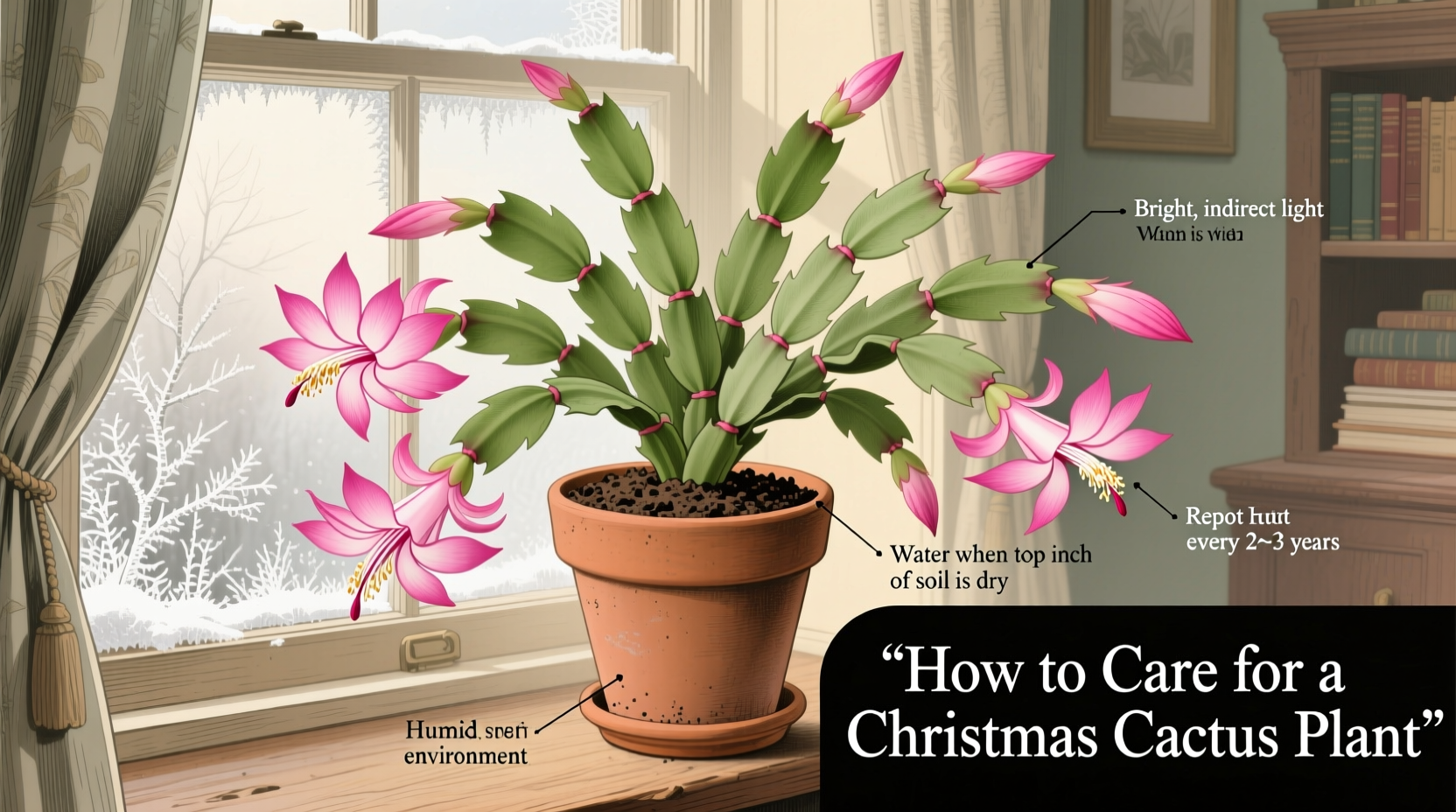
Christmas cactus usually flowers well when it is healthy and growing in an appropriately sized container. It doesn’t need an oversized pot, which can hold excess moisture around the roots for too long.
Choose a pot with drainage holes and use a loose, well-draining mix suited to tropical cacti. If the plant is thriving and the roots are healthy, there’s no need to repot it simply to make it bloom earlier.
Repot when the plant genuinely needs more room or its growing mix has deteriorated, preferably after flowering. Avoid disturbing the roots during the period when you are trying to encourage buds.
7. Leave the Plant Undisturbed Once Buds Appear
When tiny buds begin to appear at the ends of the segments, your Christmas cactus is moving into its flowering stage. At this point, consistency becomes especially important.
Try to keep the plant in the same location. Sudden changes in temperature, light, humidity, or watering can contribute to bud drop.
Continue checking the soil and water when needed. Keep the plant away from cold drafts and hot air vents, and don’t move it repeatedly between rooms with very different conditions.
If you want to display the plant somewhere else, wait until the flowers begin opening and choose a spot with suitable light and stable temperatures.
Why Is Your Christmas Cactus Still Not Blooming?
If your plant continues growing green segments without producing buds, review its environment before changing several care habits at once.
- Too much light at night: Lamps or room lighting may interrupt the required dark period.
- Nights that are too warm: Warm conditions can delay flower-bud formation.
- Insufficient daytime light: A very dim location may limit healthy growth.
- Watering problems: Waterlogged soil can damage roots, while severe dryness may stress the plant.
- Excessive fertilizing: Too much fertilizer can harm roots and won’t make buds appear sooner.
- Sudden environmental changes: Moving a plant after buds form may contribute to bud drop.
Also remember that holiday cacti sold under the names Christmas cactus and Thanksgiving cactus can flower at slightly different times. Your plant’s variety and its previous growing conditions can affect the schedule.
A Simple Schedule for Earlier Christmas Cactus Blooms
- Spring and summer: Provide bright indirect light, water when needed, and feed during active growth.
- About six weeks before your target bloom date: Begin providing long, uninterrupted nights and suitably cool conditions.
- During bud formation: Avoid excessive watering, unnecessary feeding, and abrupt changes in the plant’s environment.
- When buds appear: Maintain stable light and temperatures, and water consistently according to soil moisture.
- When flowers open: Enjoy the display and continue avoiding hot drafts and sudden changes.
- After flowering: Allow a short recovery period before returning to normal active-season care.
Final Thoughts
Encouraging your Christmas cactus to bloom early is mostly about getting the timing right. Long, uninterrupted nights, cooler temperatures, bright indirect daytime light, and careful watering provide the main signals the plant needs.
Start the routine several weeks before your desired flowering date, and make changes gradually. Although you can’t guarantee an exact bloom date, consistent care gives your plant a better chance of producing beautiful flowers in time for the holiday season.