
Autumn rose care is less about doing everything and more about choosing the right tasks at the right time. A few thoughtful steps—adjusted for your rose variety and local climate—can help plants enter winter in good condition without removing healthy canes or encouraging tender new growth.
1. Identify Your Rose Before You Start
October rose care begins with knowing what you grow and how cold your local winter becomes. Hardy shrub roses and rugosas often need less protection than tender hybrid teas, floribundas, or grafted varieties in colder regions. Climbing roses also differ: some flower mainly on older canes, so heavy autumn pruning can remove next season’s buds. Check plant labels or cultivar information before cutting, feeding, or covering the base. Let the plant type and weather—not the calendar alone—guide your decisions.

2. Stop Late High-Nitrogen Feeding
As roses approach dormancy, avoid high-nitrogen fertilizer that could encourage soft new shoots just before cold weather. Tender growth may be damaged by frost. In many regions, routine rose feeding ends well before the first hard freeze; follow the product label and local guidance. Do not force another flush of growth simply because the plant still has green leaves. Focus instead on steady moisture when needed, good sanitation, and allowing existing canes to mature naturally.

3. Let Rose Hips Develop
If frost is approaching in a cold-winter area, stop routinely deadheading repeat-flowering roses and allow some spent flowers to develop into rose hips. This can help signal the plant to slow down and provides colorful autumn and winter interest. Hips are not essential for every rose, and some modern cultivars produce few or none, so treat this as a useful option rather than a strict rule. Avoid cutting healthy canes just to make the plant look perfectly tidy.

4. Water Deeply When Soil Is Dry
Autumn rain may be unreliable, and roses entering winter in very dry soil can experience stress. Check the soil around the root zone and water slowly at the base when it has begun to dry. Aim for evenly moist soil, not a waterlogged planting hole. Newly planted roses deserve particular attention because their roots are not yet extensive. Watering needs depend on soil type, rainfall, temperature, and whether the plant is still growing.

5. Avoid Heavy Fall Pruning
In cold climates, save major shaping for the recommended pruning period in your region, often late winter or early spring. Hard pruning in autumn can stimulate vulnerable growth during warm spells and may expose canes to winter damage. Remove dead, diseased, broken, or dangerously long stems when necessary. Climbing roses need special care because many carry next year’s flowers on existing wood. When in doubt, make only essential cuts now.

6. Remove Diseased Leaves and Debris
Sanitation is useful, especially if black spot or other fungal problems affected your roses. Collect fallen leaves and remove badly infected foliage or canes where appropriate. Dispose of diseased material in accordance with local waste guidance rather than adding it to a cool compost pile that may not destroy pathogens. Clear debris around the base while avoiding root damage. Do not strip every healthy leaf from a plant unnecessarily; focus on diseased material and keep tools clean.

7. Protect the Base at the Right Time
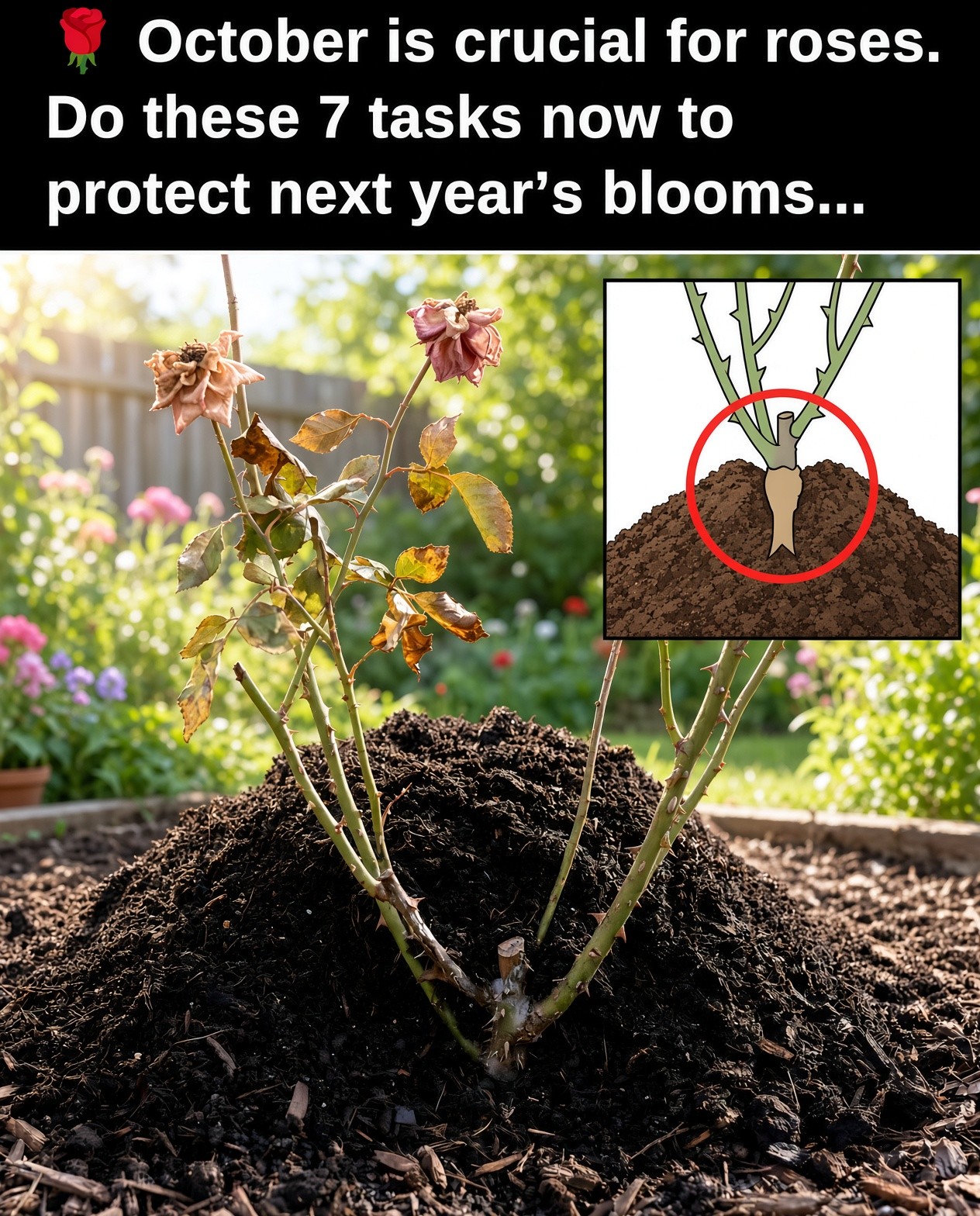
Winter protection should match the rose variety and climate. Tender grafted roses in cold regions may benefit from a mound of loose, well-drained soil or compost over the graft union after dormancy and consistently cold weather arrive. Bring soil from elsewhere to avoid disturbing nearby roots. Hardy shrub roses often need much less intervention. Avoid covering plants too early while conditions remain warm and wet, and do not assume every rose needs the same protection.

A Simple October Rose-Care Checklist
Inspect your roses before reaching for tools. Confirm the variety if possible, stop late nitrogen feeding where the growing season is ending, leave some hips if appropriate, and water only when the root zone needs it. Remove diseased debris, limit pruning to necessary cuts, and plan protection for tender varieties when dormancy and local weather make it appropriate. A little restraint can preserve the wood that carries next year’s flowers.

Final Thoughts: Follow Your Climate
October is a useful reminder to prepare roses for the season ahead, but it does not mean the same thing in every garden. A gardener in a mild, rainy climate has different priorities from someone facing early, severe freezes. Identify your rose, understand whether it blooms on old or new growth, monitor soil moisture, remove diseased debris, and delay major pruning until the appropriate season. Thoughtful timing and modest, targeted care can help roses enter winter in better condition.
