
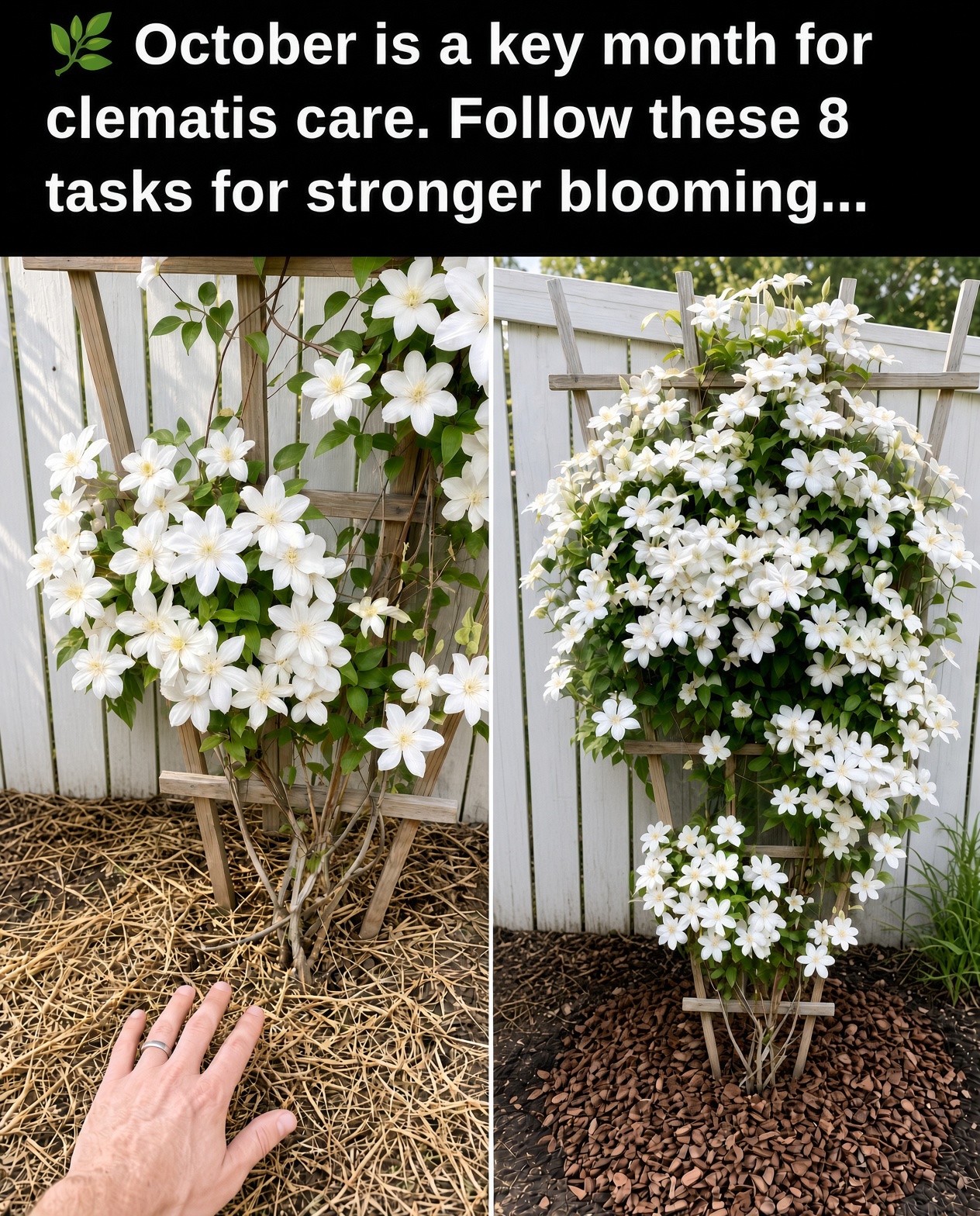
October clematis care is about making a few careful decisions before winter. The most important is knowing when your variety flowers, because pruning at the wrong time can remove stems that would carry next season’s blooms. With sensible watering, a protected root zone and attention to plant health, you can prepare your vine without unnecessary cutting.
1. Identify the Clematis Pruning Group
Before pruning, identify the group. Group 1 types such as many Clematis alpina, macropetala and montana flower on older growth. Group 2 hybrids often produce an early flush on old wood and may flower again on new growth. Group 3 types, including many viticella cultivars and ‘Jackmanii’, flower on new growth and are generally cut back in late winter or early spring. Check the plant label or a reliable cultivar guide: the wrong cut can remove next season’s flower buds.

2. Avoid Hard Pruning in October
For most clematis, October is not the time for a major haircut. Leave healthy stems in place, especially on Group 1 and Group 2 plants. Remove only broken, dead or clearly diseased growth when necessary. Group 3 clematis can usually be pruned hard, but waiting until the recommended late-winter or early-spring window makes the task easier. If you are unsure whether a stem is alive or carries buds, leave it until you can identify the plant.

3. Put Routine Fertilizing on Hold
As growth slows toward winter, avoid routine high-nitrogen feeding that may encourage soft new shoots. Tender late growth can be damaged by frost. Follow fertilizer-label directions and local advice, since climate and growing conditions vary. In most gardens, better autumn priorities are checking soil moisture, maintaining a healthy root zone and removing diseased material. Resume feeding when active growth begins in the next growing season and the plant’s needs are clearer.

4. Water During Prolonged Dry Spells
Clematis usually appreciates consistently moist but well-drained soil, especially while establishing. If autumn is dry, check the soil a few inches below the surface and water slowly near the root zone when it has started to dry. Avoid brief surface sprinkling that leaves deeper roots dry, but do not keep the bed waterlogged. Newly planted clematis may need closer monitoring than established vines.

5. Refresh Mulch Carefully
Organic mulch can moderate soil temperature and reduce moisture swings around clematis roots. Apply a modest layer of bark chips or compost where appropriate, but keep it a few inches away from the crown and stems. Mulch piled against the base can trap excess moisture and contribute to crown problems. In damp climates or heavy soil, use less mulch and prioritize drainage.

6. Secure Vulnerable Vines
Long clematis stems can be damaged by strong winds, especially when loosely attached to a trellis. Gently secure vulnerable stems with soft ties, leaving room for movement. Avoid bending brittle or tangled stems sharply. Group 1 and Group 2 plants deserve particular care because surviving older wood may be important for next season’s flowers.

7. Remove Diseased Material and Clean Tools
Inspect stems and foliage for blackening, sudden collapse or other signs of disease. Prune affected stems back into healthy tissue when appropriate, and remove debris rather than leaving it around the crown. Clean pruner blades after handling diseased material. Clematis wilt can damage above-ground growth, but symptoms do not always mean the whole plant has died.

8. Do Not Dig Up a Wilted Clematis Too Quickly
A clematis that suddenly wilts may look beyond saving, but the crown and roots can remain alive even when stems collapse. Remove clearly affected growth, care for the root zone and watch for regrowth in the next growing season before deciding to remove the plant. Avoid overwatering in an attempt to rescue it, since soggy soil can add root stress.

A Simple October Clematis Checklist
Identify the pruning group; leave healthy stems alone; stop routine late nitrogen feeding; water deeply if soil is dry; keep mulch away from the crown; tie in vulnerable vines; remove diseased debris; and give a wilted plant time before digging it out. These are general guidelines, not fixed rules for every climate. Use the plant’s condition and local weather to decide what to do.

More October Clematis Care Tips
Check the planting site after heavy rain. Clematis roots prefer moisture, but they also need oxygen, so water that remains around the crown for long periods is a warning sign. If the area stays saturated, consider improving drainage when the ground is suitable for working, rather than adding more water or piling on a thick layer of mulch. Container-grown clematis need particular attention because pots can dry quickly in wind yet remain wet in cool, rainy weather. Make sure the container drains freely and raise it slightly if its drainage holes are blocked.
Inspect the trellis, fence or other support before winter weather arrives. Tighten loose fittings and replace damaged ties with soft, flexible material that will not cut into stems. Clematis uses leaf stalks to grip narrow supports, so a fine mesh or slender trellis wires can be more useful than a very thick post alone. If the vine has grown into a dense tangle, avoid pulling stems free by force. Untangling is often safer during active growth, when the stems are more flexible.
]*>’, html_text).group(0)[10:-1] + alt=”Clematis vine secured to a garden trellis”>
Common October Clematis Mistakes to Avoid
One common mistake is cutting every stem back because the plant looks untidy. That may remove next season’s flowers from varieties that bloom on old wood. Another is feeding heavily late in the season in the hope of encouraging more flowers. Fertilizer cannot correct the wrong pruning timing, poor drainage or unsuitable light, and late soft growth can be vulnerable to cold. A third mistake is watering automatically without checking the soil. Clematis needs moisture, but the right amount depends on rainfall, soil and container size.
Also avoid piling wet leaves or mulch tightly against the crown. Organic matter can be helpful when used in moderation, but a constantly damp collar around the stems may encourage problems. Do not assume a wilted plant is dead and immediately dig it up; roots and the crown can sometimes survive damage to the top growth. Finally, do not treat every clematis as if it had the same needs. Identify the cultivar and pruning group wherever possible, then use local gardening advice to adjust the timing to your climate.
How to Plan for Spring
Use October to make spring care easier. Keep a note of the clematis name, its pruning group, where it grows and how it performed during the season. Record whether it flowered early, late or in more than one flush. This information helps you decide when to prune and whether the plant may need a different support or a better location. If flowering was poor, investigate the likely cause before adding fertilizer: the vine may have been pruned at the wrong time, shaded by nearby growth, stressed by drought or growing in soil that stays too wet.
When winter passes, check for living buds and fresh shoots before removing old stems. Follow the pruning approach for the correct group, make clean cuts with sharp tools and tie new growth onto the support as it develops. Feed only when active growth resumes and the product directions recommend it. These simple records and seasonal checks help avoid guesswork and protect the plant’s natural flowering habit.
Choosing the Right Winter Approach
Winter protection should be proportionate to the clematis and the conditions in your garden. Many established, hardy varieties need little special covering beyond suitable soil and a stable support. Young plants, container-grown vines and clematis in exposed locations may need closer monitoring. In pots, roots are more exposed to cold than roots in the ground, so move containers to a sheltered position where practical and make sure excess water can drain away. Do not wrap foliage tightly in plastic, which can trap moisture and restrict airflow. Use breathable protection only when local conditions and the plant’s needs justify it.
Remember that autumn appearance alone is not a reliable measure of plant health. Some leaf yellowing and decline are normal as the season changes. Focus on the crown, stem condition, soil moisture and any unusual signs such as sudden wilting or spreading dark lesions. When a problem is uncertain, take a clear photograph and seek advice from a local nursery or horticultural service before applying treatments. Correct identification is more useful than using a pesticide or fertilizer without knowing the cause.