
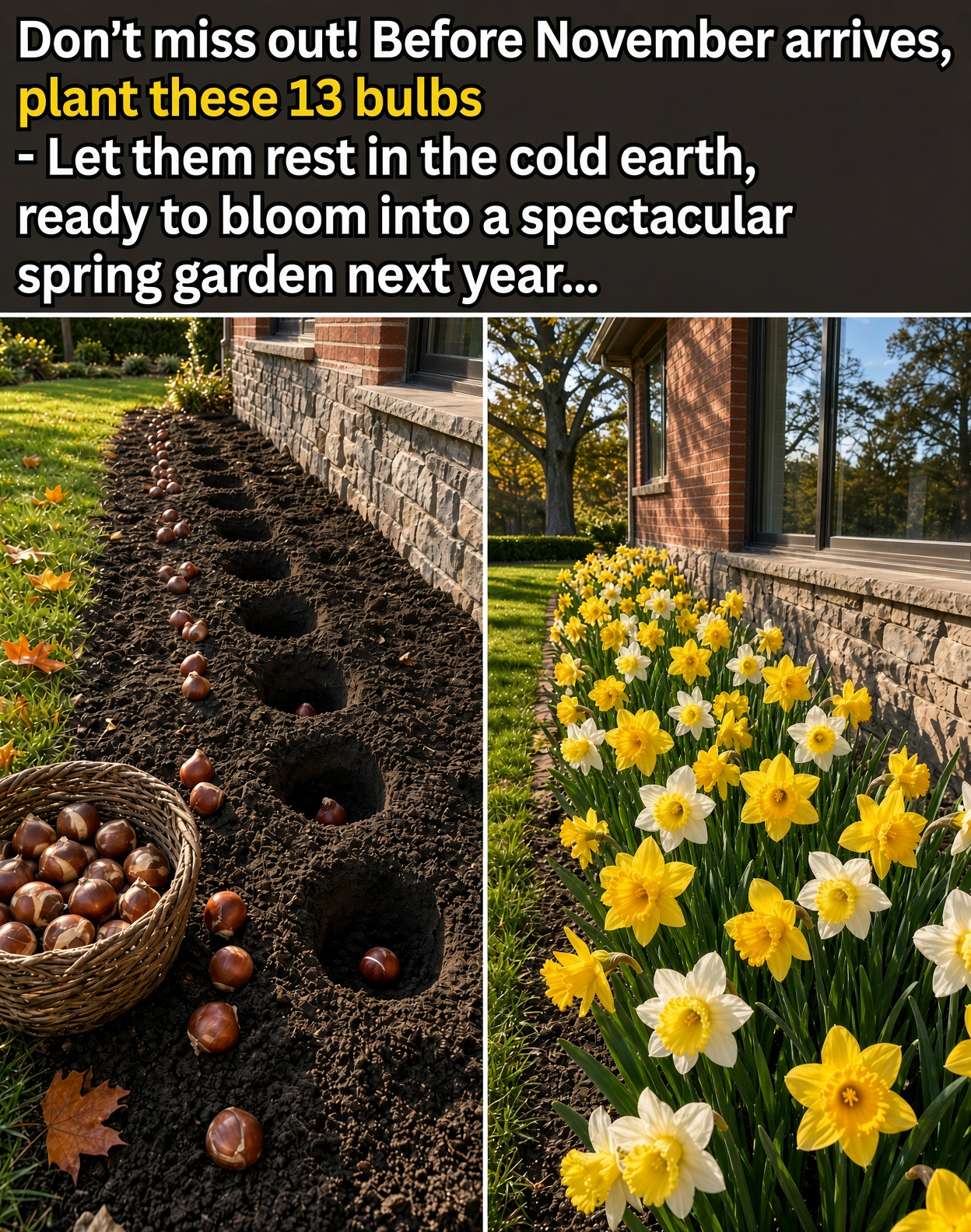
October may look like the end of the gardening season, but it is actually an important planting month for many spring-flowering bulbs.
If your garden soil is still workable, October is an excellent opportunity to plant a mixture of early, mid-season, and late spring bloomers.
1. Tulips
Tulips are one of the most popular choices for fall bulb planting. Their flowers come in an enormous range of colors, from soft pastels to deep reds, purples, oranges, yellows, and nearly black shades.
Plant tulip bulbs in a sunny location with soil that drains well. For most garden situations, bulbs are planted several inches below the soil surface and spaced closely enough to create groups rather than isolated flowers.
Instead of arranging every bulb in a perfectly straight line, plant clusters of several bulbs together. This produces a much fuller display when they bloom in spring.
In warmer climates, gardeners may need to provide tulips with an appropriate chilling period before planting, depending on the variety and local conditions.
2. Daffodils
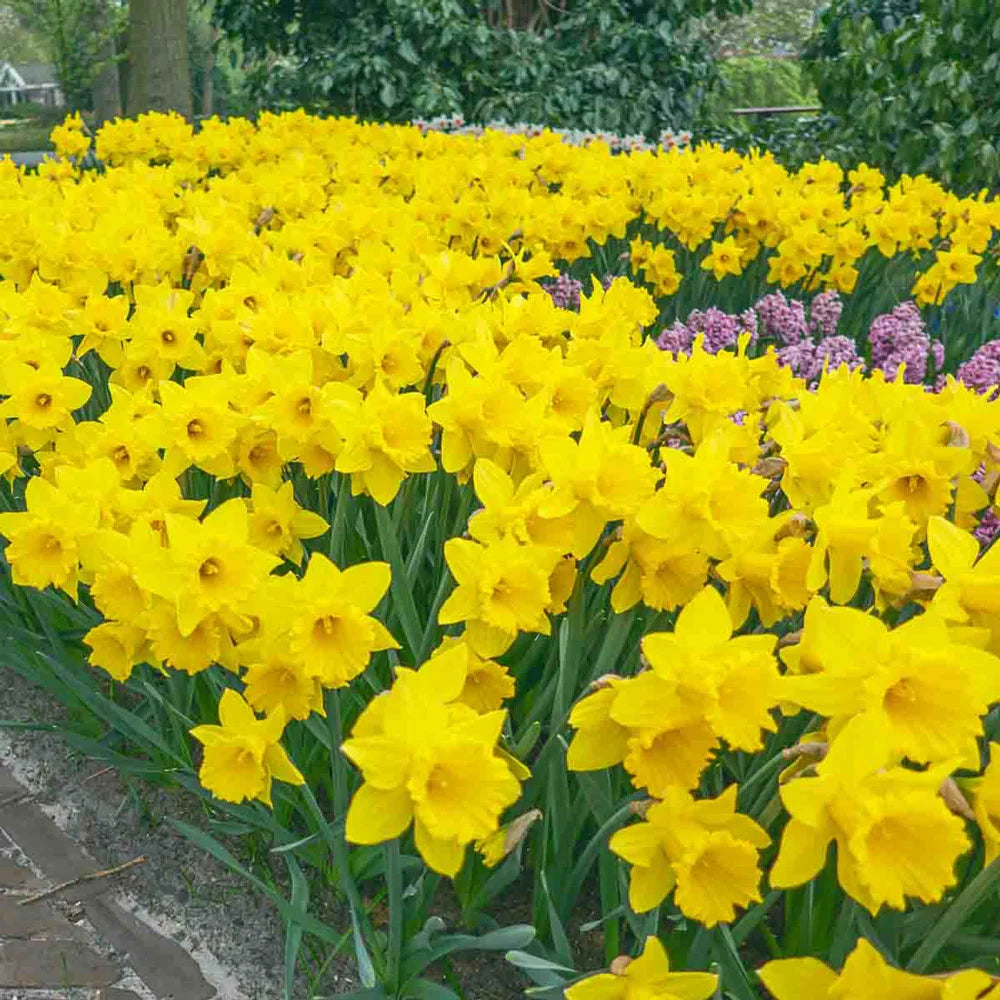
Daffodils are among the easiest spring bulbs to grow and are especially useful for gardeners who want a dependable display with relatively little maintenance.
The classic yellow trumpet flowers are familiar to almost everyone, but daffodils also come in white, cream, orange, and combination colors.
Choose a location with sun or light shade and well-drained soil. Plant the bulbs with their pointed ends facing upward and give them enough room to multiply over time.
One of their biggest advantages is their ability to naturalize. Once established, many varieties can remain in the ground and gradually form larger groups.
After flowering, allow the foliage to turn yellow naturally rather than cutting it down immediately. The leaves help replenish the bulb for the following season.
3. Hyacinths

Hyacinths are an excellent choice when fragrance is just as important as color.
Their dense flower spikes are packed with small star-like blooms and can appear in shades of purple, pink, blue, white, yellow, and other pastel tones.
Plant hyacinth bulbs in well-drained soil in a sunny or lightly shaded position. They work beautifully in borders, containers, and near entrances where their fragrance can be appreciated.
When handling the bulbs, some gardeners prefer wearing gloves because the outer bulb material can irritate sensitive skin.
Hyacinths can also be grown indoors by gardeners who want fragrant flowers during winter.
4. Crocus
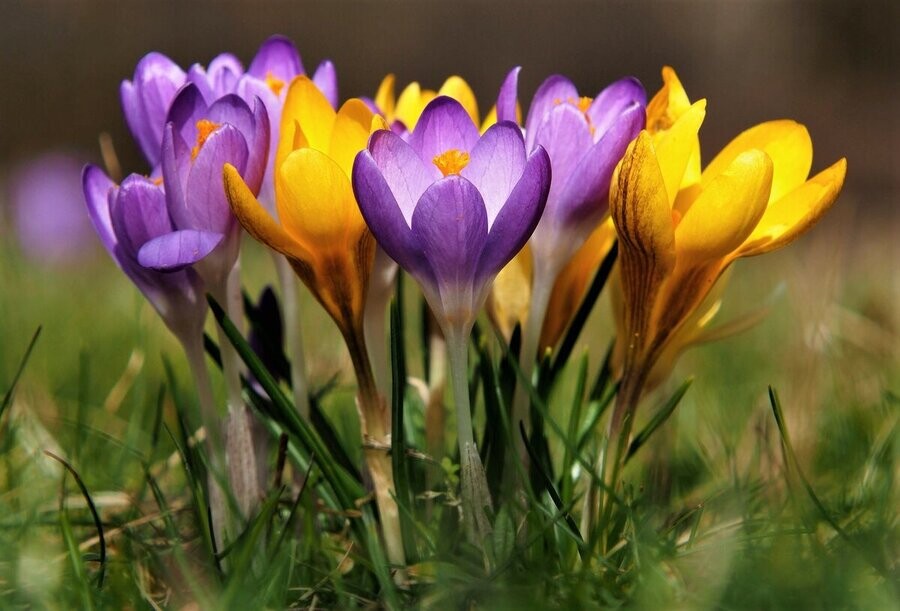
Crocuses are small but incredibly useful spring bulbs. They are often among the first flowers to appear after winter and can sometimes push through snow.
Purple, yellow, white, and striped varieties can be planted throughout lawns, rock gardens, borders, and underneath deciduous trees.
Because the plants are short, crocuses look particularly impressive when planted in groups rather than individually.
Choose soil with good drainage and avoid areas where water remains around the bulbs. Once established, crocuses can naturalize and gradually create larger patches of early spring color.
For gardeners in suitable climates, saffron crocus is another interesting option, although it has different growing requirements and is grown for its saffron-producing flowers.
5. Alliums
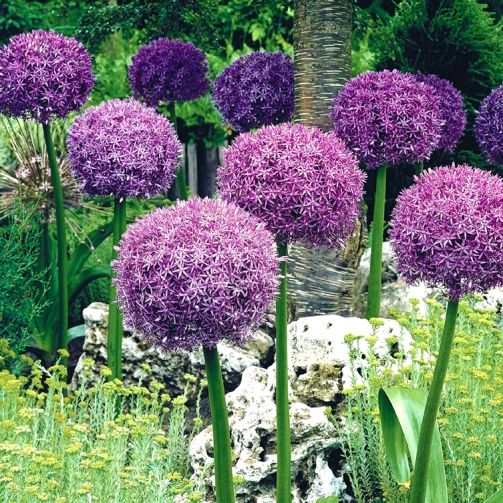
Alliums bring something completely different to the spring garden. Instead of traditional cup-shaped flowers, they produce rounded clusters made from many tiny individual blooms.
Large varieties such as ‘Globemaster’ can create spectacular purple spheres on tall, sturdy stems.
Plant allium bulbs in a sunny location with soil that drains freely. The recommended planting depth depends on the size of the bulb, so check the instructions for the specific variety.
Alliums work particularly well when planted among lower-growing perennials. Their foliage can begin fading before the flower heads appear, so surrounding them with plants that fill the space later can keep the border looking attractive.
They are also popular with pollinators when in bloom.
6. Snowdrops

Snowdrops are among the flowers gardeners look forward to most after a long winter.
Their small white, bell-shaped flowers appear on slender stems and can emerge while the surrounding landscape still looks dormant.
They prefer well-drained, humus-rich soil and are especially attractive when planted beneath deciduous trees or along shaded garden paths.
Plant the bulbs promptly after purchasing them because they can be less forgiving when allowed to dry out completely.
Once established, snowdrops can slowly form naturalized groups, creating a beautiful early-season display.
7. Anemones
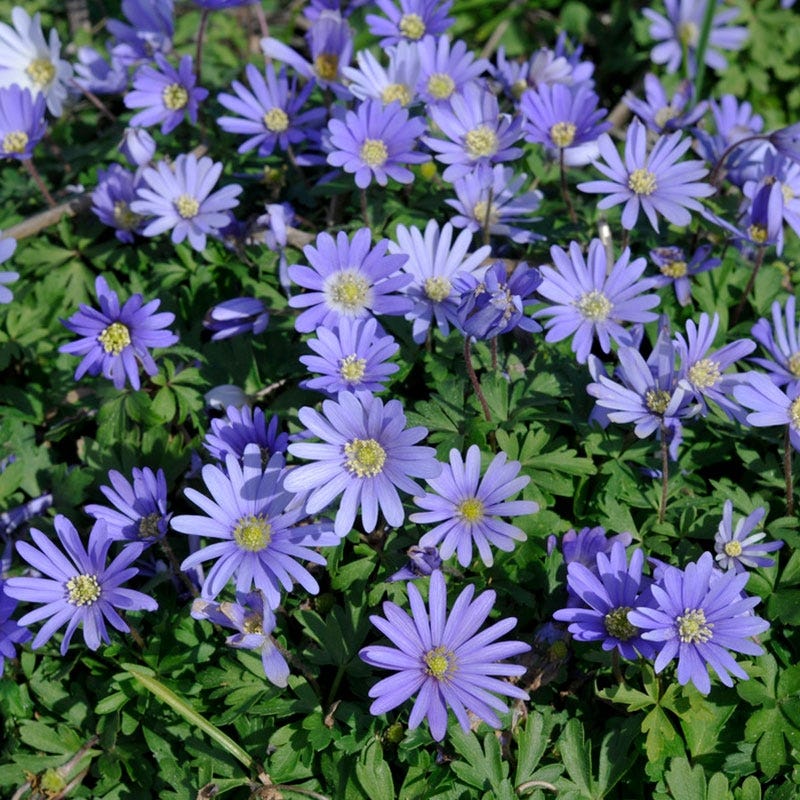
Anemone blanda, often called the Grecian windflower, is a low-growing spring bloomer that can bring a soft carpet of color to garden beds.
The flowers resemble small daisies and commonly appear in blue, pink, purple, and white shades.
Before planting, soaking the dry tubers briefly in water can help rehydrate them. Plant them in well-drained soil where they receive full sun or partial shade.
Anemones look particularly good around larger bulbs such as daffodils and hyacinths because their low growth fills the spaces near the ground.
They can also work beautifully in rock gardens and naturalized areas.
8. Grape Hyacinths
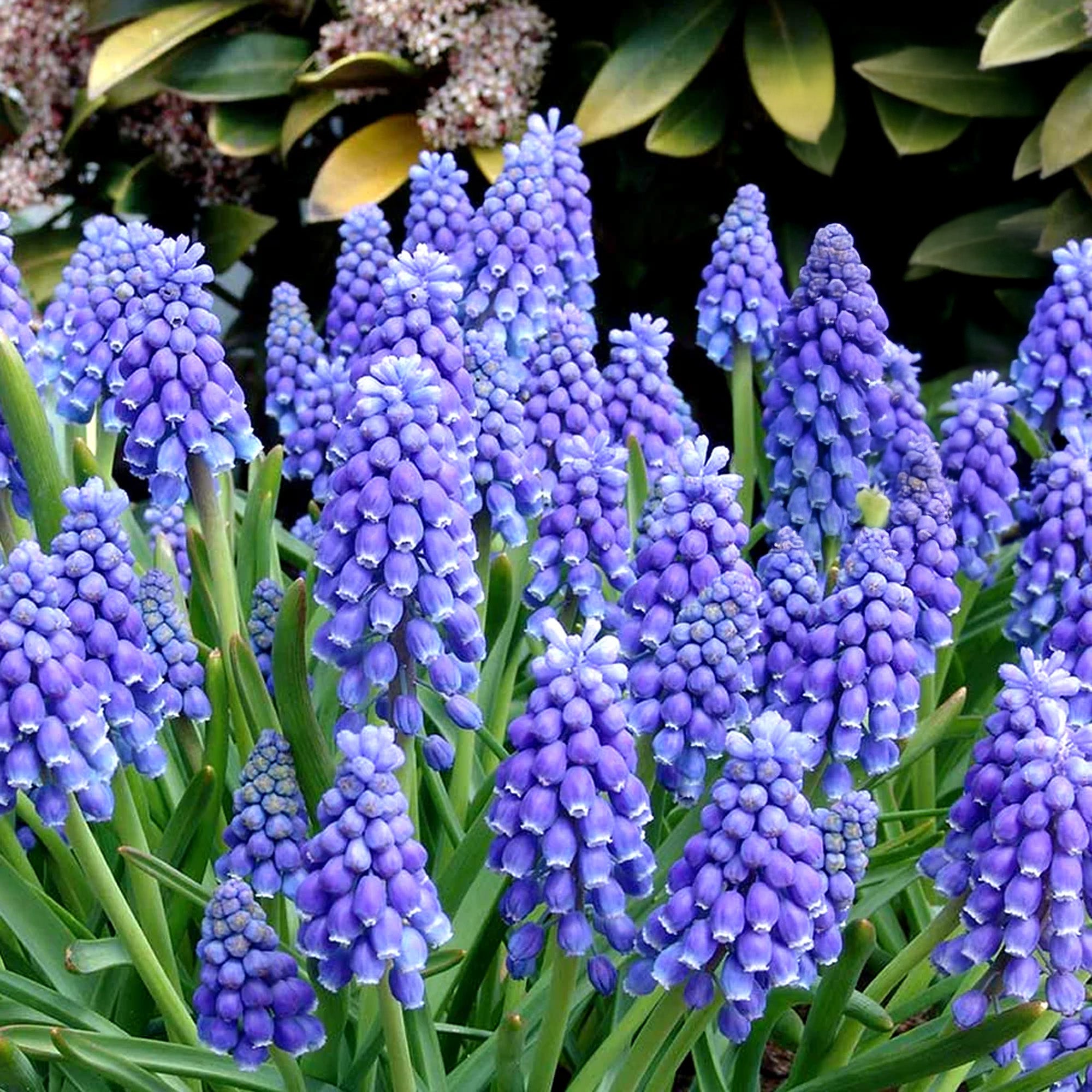
Grape hyacinths may be small, but their intense blue flowers can make a big impact when planted in groups.
Muscari armeniacum produces compact spikes of tightly packed flowers that pair especially well with tulips and daffodils.
Plant the bulbs in groups or broad drifts rather than scattering only a few throughout a large garden bed. Over time, they can multiply and create a naturalized effect.
After flowering, leave the foliage in place until it has naturally yellowed. The leaves help replenish the underground bulb for future growth.
Grape hyacinths are also useful in containers, rock gardens, borders, and informal lawn plantings.
9. Iris Reticulata
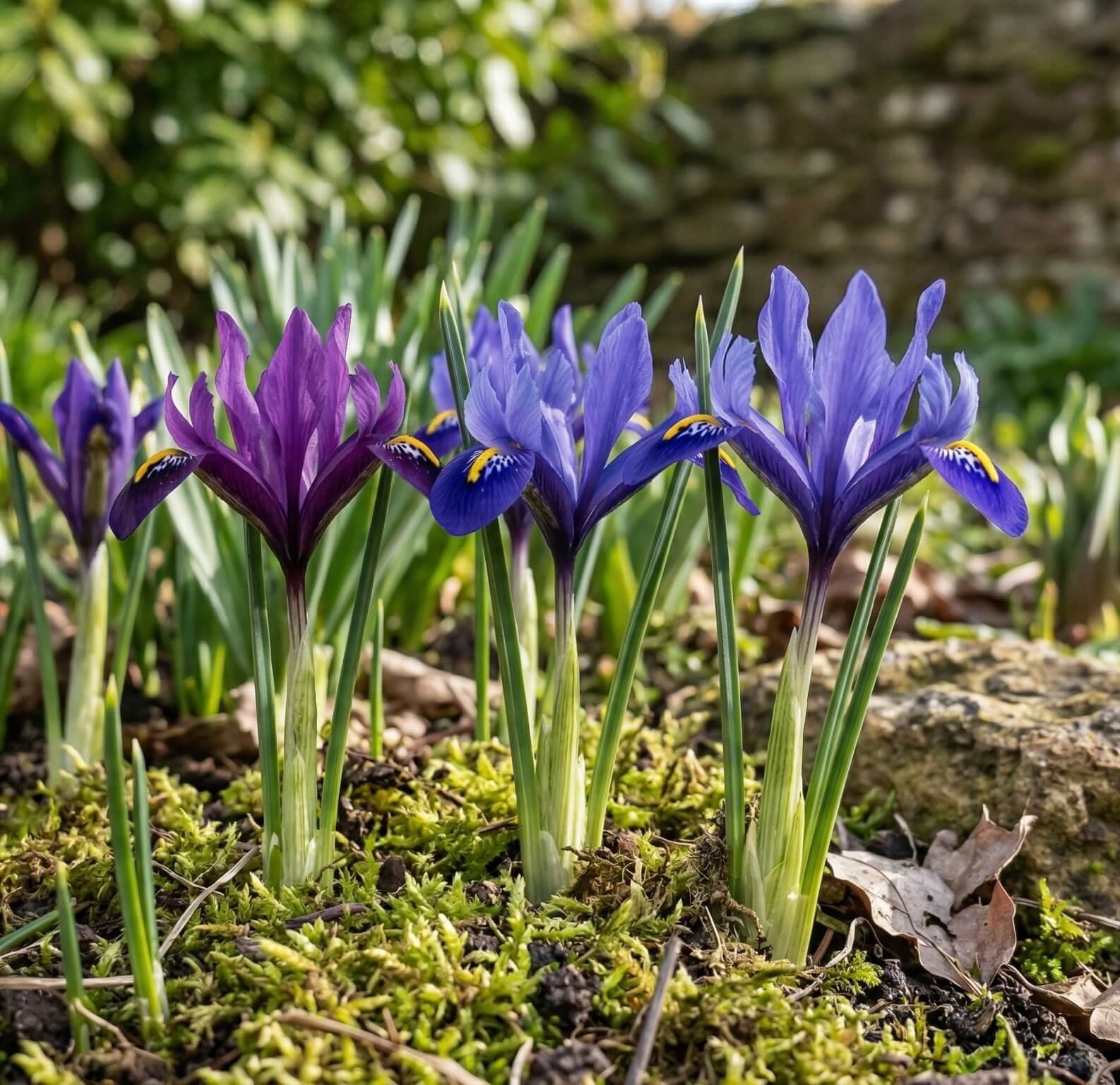
Iris reticulata is a dwarf iris that produces surprisingly dramatic flowers despite its small size.
The blooms often combine blue, purple, white, and yellow markings, giving the flowers a striking appearance in late winter and early spring.
Because these irises remain relatively short, they are excellent choices for the front of borders, rock gardens, and containers.
Good drainage is especially important. Avoid planting them in areas where water regularly collects during winter.
For an attractive early display, combine Iris reticulata with other small bulbs such as crocuses and snowdrops.
10. Fritillaria

Fritillaria adds an unusual look to spring borders. Fritillaria meleagris, commonly called snake’s head fritillary, has hanging bell-shaped flowers decorated with a distinctive checkerboard pattern.
It is particularly attractive when naturalized in informal areas and meadow-style plantings.
Plant fritillaria in moist but well-drained soil. Avoid locations where the bulbs remain waterlogged.
For something more dramatic, Fritillaria imperialis, or crown imperial, produces tall stems topped with clusters of hanging bell-shaped flowers.
These unusual bulbs can provide a welcome change from the more familiar tulips and daffodils.
11. Glory-of-the-Snow

Glory-of-the-snow is aptly named because its flowers can appear while patches of winter weather are still lingering.
Chionodoxa luciliae produces star-shaped blue flowers with lighter centers, creating an attractive early-season display.
These small bulbs can be planted beneath deciduous trees, in lawns, along borders, or around larger spring bulbs.
Because they naturalize readily, a small initial planting can gradually develop into a larger colony.
Plant them in autumn and combine them with crocuses and snowdrops for a succession of very early flowers.
12. Leucojum
.jpg)
Leucojum, sometimes called snowflake, can easily be confused with snowdrops because both produce white bell-shaped flowers.
Leucojum flowers are generally larger, with graceful nodding blooms marked with green tips.
Leucojum aestivum is particularly suited to areas that remain consistently moist but still drain reasonably well.
Try planting it near damp garden edges, ponds, beneath deciduous trees, or in naturalized areas.
Once established, these bulbs can remain in place for years and require relatively little attention.
13. Dutch Iris

Dutch iris is a graceful late-spring choice that adds height and strong color to a bulb planting scheme.
The flowers can combine blue, purple, white, and yellow, with slender petals that stand out beautifully among green foliage.
Plant the bulbs in a sunny position with soil that drains well. Heavy, poorly drained ground can create problems, so improve drainage before planting if necessary.
Dutch iris also makes an excellent cut flower. If you grow enough plants, you can enjoy their blooms outdoors while bringing some stems inside.
They pair particularly well with later tulips and alliums, helping extend the garden’s display into late spring and early summer.
How to Plant Flower Bulbs Correctly
Once you’ve chosen your bulbs, proper planting is the next important step.
- Choose firm bulbs: Avoid bulbs that are soft, moldy, badly damaged, or severely shriveled.
- Prepare the soil: Loosen compacted soil and improve drainage where necessary.
- Check the planting depth: Follow the instructions for each variety. A common general guideline is roughly two to three times the bulb’s height.
- Position the bulb correctly: For typical bulbs, the pointed growing end faces upward and the root end faces downward.
- Water after planting: Give newly planted bulbs a thorough watering to settle the soil around them.
- Protect the planting: A light layer of mulch can help moderate soil temperature and provide winter protection in colder climates.
- Mark the location: Small labels can prevent accidental digging or planting over dormant bulbs later.
Create a Longer Spring Flowering Season
One of the smartest ways to design a bulb garden is to combine plants with different flowering periods.
Very early flowers such as snowdrops, crocuses, glory-of-the-snow, and Iris reticulata can begin the display.
Daffodils, hyacinths, grape hyacinths, and many tulips can then take over during the middle portion of spring.
Later flowers such as alliums and Dutch iris can extend the display toward late spring and early summer.
You can also mix different bulb heights. Put shorter varieties near paths and the front of borders, then place taller alliums, tulips, and Dutch iris farther back.
Common October Bulb-Planting Mistakes
Even easy bulbs can struggle if planted under poor conditions.
- Planting in waterlogged soil: Excess moisture can encourage bulb rot.
- Planting too shallow: Bulbs may be more exposed to temperature changes and can have weaker growth.
- Planting damaged bulbs: Soft or moldy bulbs are less likely to establish successfully.
- Overcrowding: Give bulbs enough space for healthy growth and good air circulation.
- Cutting foliage too early: Allow bulb foliage to yellow naturally after flowering so energy can return to the underground bulb.
- Forgetting where bulbs were planted: Mark the planting areas before winter arrives.
Final Thoughts
Planting bulbs in October is one of those gardening jobs that rewards patience. The garden may look quiet during winter, but underground, the bulbs are establishing roots and preparing for their next growing season.
Tulips and daffodils can provide classic spring color, while hyacinths add fragrance. Crocuses, snowdrops, anemones, and glory-of-the-snow can bring some of the earliest flowers of the year.
Alliums, fritillaria, Dutch iris, Leucojum, grape hyacinths, and Iris reticulata add different shapes, heights, and flowering periods to the display.
Plant a mixture rather than relying on only one variety, and you can create a garden that changes continuously from late winter through spring.
The important thing is to get the bulbs into workable, well-drained soil before the ground freezes solid. Then, once winter passes, the reward arrives in the form of fresh leaves, colorful flowers, and a garden ready for a new season.