
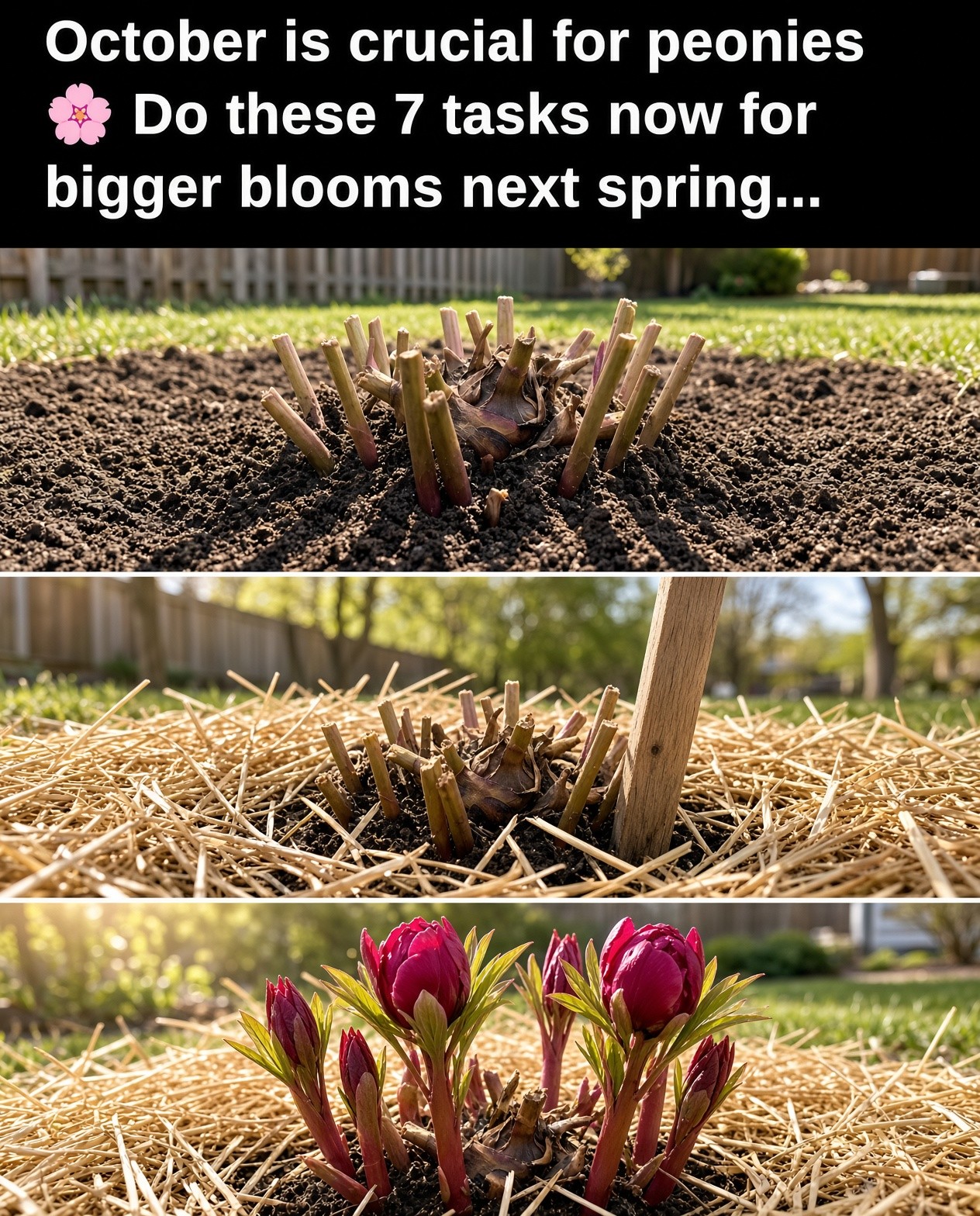
October is a useful month to prepare peonies for winter, but the right timing depends on the plant’s condition, climate and type. This original guide focuses on practical fall care backed by horticultural guidance.
Why October matters for peonies
October peony care is mainly about timing. Herbaceous peonies spend the growing season producing foliage that supports the plant before dormancy, so autumn cleanup should wait until that foliage naturally declines. The Royal Horticultural Society recommends cutting herbaceous peony foliage back in autumn after it has died down. That makes the plant’s condition more useful than a fixed calendar date. October is also a good time to inspect the crown, soil, drainage and general health of the plant. Remember that peony types differ: herbaceous and intersectional peonies die back to the ground, while tree peonies keep woody stems and need different pruning. A light, purposeful cleanup is usually better than aggressive fall work.

Let healthy foliage finish its job
Do not cut healthy green peony leaves simply because autumn has arrived. While the foliage remains green, it is still contributing to the plant’s energy production. Allow it to yellow and decline naturally before doing the final cleanup. Once the leaves are brown, collapsed or clearly finished, they can be removed. There is no need to preserve foliage that is already dead, but removing healthy leaves early can shorten the plant’s useful growing period. If a frost arrives and the foliage quickly collapses, that is a practical signal that the season is ending. This simple approach avoids unnecessary pruning and lets the plant enter dormancy on its own schedule.

Cut back herbaceous peonies after dieback
When herbaceous peony foliage has died back, cut the stems close to soil level with clean, sharp secateurs. The RHS recommends autumn cutting at ground level and notes that this helps reduce the risk of peony wilt. Work carefully around the crown because the dormant eyes at its surface are next year’s growth points. Do not dig or cut through the crown while removing stems. Before pruning, confirm that the plant is actually an herbaceous or intersectional peony. Tree peonies are woody shrubs and should not be treated as plants that disappear underground each winter. After cutting back a herbaceous plant, clear loose stems and leaves from around the crown so the bed is easier to inspect and maintain.

Remove diseased leaves and debris
Autumn cleanup can also improve plant hygiene. University of Minnesota Extension identifies gray mold and other diseases that can affect peonies, particularly during cool, wet conditions. Diseased leaves, stems and buds may develop brown or black spots, wilt or gray fungal growth. If your plant showed clear disease symptoms, remove affected debris rather than leaving it around the crown. Normal autumn yellowing is different from obvious disease, so do not treat every changing leaf as a problem. Clean your cutting tools after working on a diseased plant and avoid adding heavily infected material to a home compost pile unless your composting method reliably destroys pathogens. Good sanitation cannot guarantee a disease-free spring, but removing suspicious debris gives new shoots a cleaner starting environment.

Check the crown and planting depth
Poor flowering can sometimes be linked to planting depth. For herbaceous peonies, the RHS recommends keeping the red growth buds, or eyes, covered by no more than about 2.5 cm (1 inch) of soil. A peony that produces plenty of foliage but few flowers may be worth checking for excessive depth. Begin gently by brushing soil away from the crown instead of immediately digging up the whole plant. If it is clearly planted too deeply, replanting may be necessary, but unnecessary disturbance can delay flowering. When correcting depth, handle the thick roots carefully, set the eyes at the recommended shallow level, firm the soil gently and water the plant in. Correct depth is especially important when planting or dividing peonies in autumn.

Move or divide only when necessary
Peonies are long-lived perennials and do not need regular division simply because they are old. Consider moving or dividing when a plant has outgrown its space, has lost suitable light, needs rejuvenation, or you deliberately want additional plants. The RHS recommends dividing herbaceous peonies in late autumn. Lift the clump carefully because the fleshy roots can be damaged, then divide the crown so each section has viable dormant buds and attached roots. Replant divisions promptly at the correct shallow depth. Newly divided plants may take time to rebuild enough root mass for heavy flowering, so patience is important. If an established peony is healthy, flowering well and comfortably positioned, leaving it alone is often the simplest option.

Water new plantings carefully
Watering should depend on the plant and the weather rather than an automatic October schedule. Established peonies are deep-rooted and usually need little routine watering once established. Newly planted or divided peonies need more attention while their roots settle. Give a new plant a thorough watering after planting so soil closes around the roots, then check the soil during dry spells. The RHS recommends regular watering for newly planted peonies, especially during their first season. Avoid keeping the bed constantly saturated, because peonies prefer fertile, well-drained soil and wet conditions can contribute to root and crown problems. Deep, occasional watering when the soil is genuinely dry is more useful than frequent shallow watering.

Use winter mulch strategically
Winter mulch is most useful when it solves a specific problem. In cold climates, newly planted crowns can be vulnerable to repeated freezing and thawing that lifts roots toward the soil surface. University of Minnesota Extension recommends applying protective mulch after the soil begins to freeze, rather than covering perennial beds too early. Suitable materials can include clean straw or shredded leaves. Established, fully hardy peonies often need much less winter protection. Avoid creating a thick, wet layer directly over the crown, especially where winters are mild or soils drain poorly. The purpose of mulch is to moderate soil conditions, not to keep the plant warm throughout winter. In areas with little freeze-thaw stress, ordinary garden conditions may be sufficient without heavy seasonal protection.

Mark dormant peonies before winter
Marking a peony’s location is a small October task that can prevent a big spring mistake. Herbaceous peonies disappear back to the ground during winter, so their crowns can become almost invisible. A sturdy label placed beside the plant makes it easier to identify the clump when spring digging and planting begin. This is especially helpful for newly divided peonies, which may have a small crown and only a few visible shoots. Write the cultivar name on the marker if you know it, or simply label the plant as a peony. Position the marker beside the crown rather than driving it through the root area. Good labeling also helps you remember which plants were moved or divided during autumn.

The October peony checklist
Before winter, keep the peony checklist simple. Leave healthy green foliage until it naturally declines. Cut herbaceous foliage down after it dies back, then remove loose debris and any clearly diseased material. Check planting depth if a plant has a history of poor flowering, but avoid unnecessary disturbance. Move or divide only when there is a clear reason, and replant divisions shallowly. Water new plants when the soil is dry, while established plants generally need much less irrigation. Consider winter mulch for new plantings where freeze-thaw conditions are a concern, and mark dormant crowns so they are easy to find in spring. Peonies are durable, long-lived plants, so good October care is mostly about correct timing, sanitation and restraint rather than a long list of intensive jobs.
