
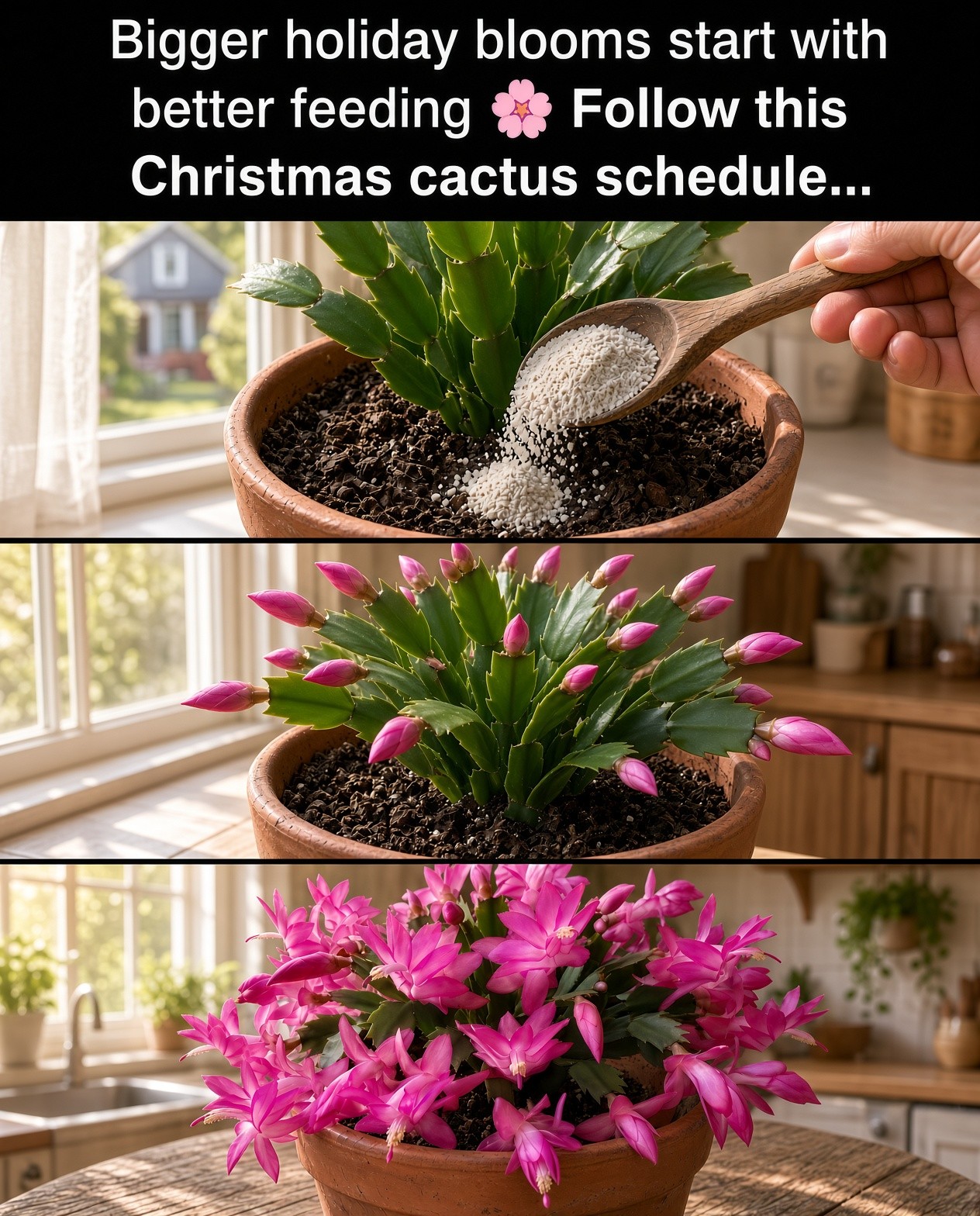
Quick rule: Feed lightly while your Christmas cactus is actively growing, then reduce or stop routine fertilizing as fall bud-setting begins. Flowering depends heavily on light, temperature and uninterrupted darkness—not fertilizer alone.
Why Christmas Cactus Needs a Different Fertilizer Routine
Christmas cactus is a rainforest epiphyte, so it does not follow the feeding habits of a desert cactus. It grows in organic material around tree branches and naturally experiences periods of active growth followed by a quieter flowering cycle. That is why a simple “fertilize all year” routine can work against the plant. The goal is gentle nutrition while new segments are developing, followed by a reduction in feeding as shorter days and cooler nights encourage flower-bud formation. Extension guidance commonly recommends regular but diluted feeding during active growth and little or no fertilizer during the flowering and rest phases. A calendar makes this seasonal rhythm much easier to follow.

The Basic Fertilizer Rule: Dilute and Feed Lightly
A balanced houseplant fertilizer is usually all a Christmas cactus needs. Products such as a balanced 10-10-10 or similar formulation can supply nitrogen, phosphorus, potassium and micronutrients without requiring a complicated supplement stack. The important part is concentration: follow the product label and, when appropriate for your plant and fertilizer, use a diluted solution rather than a concentrated dose. Christmas cactus roots are sensitive to excess soluble salts, especially when the potting mix dries out or drainage is poor. More fertilizer does not mean more flowers. Consistent, modest nutrition is safer than trying to force rapid growth with heavy applications.

January: Let the Plant Rest
After the main holiday display, give the plant a quieter period. If it is still flowering, do not fertilize simply because the calendar says it is a new month. Keep it in bright, indirect light and water according to the condition of the potting mix. After flowering, many plants naturally slow down, so fertilizer is usually unnecessary during this recovery period. Avoid turning a post-bloom plant into a feeding project. Its next flush of growth will come when light and temperature encourage active development. A short rest also gives you time to check drainage, inspect the stems for pests, and remove damaged flowers or debris.

February: Keep Feeding on Hold
February can still be a low-input month, particularly for plants that have recently finished blooming. Continue providing bright filtered light and avoid keeping the pot constantly wet. If the plant is beginning to produce fresh segments because your indoor conditions are warm and bright, its exact timing may differ from the calendar. Even then, there is no need to compensate with a strong fertilizer dose. Watch the plant rather than the date: active new growth is a better signal for restarting feeding than an arbitrary schedule. Different cultivars and indoor environments can shift the timing of growth and flowering by several weeks.

March: Restart With a Gentle Feeding
As spring light increases and new growth becomes visible, feeding can resume. Start conservatively with a balanced houseplant fertilizer diluted according to label guidance. Water the plant appropriately rather than fertilizing a bone-dry root system. A well-drained mix and a pot with drainage holes are essential because fertilizer salts become more concentrated when moisture is poorly managed. March is about restarting the growth cycle, not maximizing growth overnight. Look for firm green segments and gradual new development over the following weeks. If the plant is weak, recently repotted, or showing root problems, correct those issues before increasing fertilizer frequency.

April and May: Support New Segment Growth
Spring and early summer are the main growth-building months for many holiday cacti. During this period, a light, balanced fertilizer can support the production of new segments and roots. Many Extension recommendations use monthly feeding during active growth, while other schedules use somewhat more frequent diluted applications. The safest approach is to follow your fertilizer label and adjust for plant response rather than copying a strong schedule. Never assume that a faster-growing plant needs increasingly concentrated fertilizer. Healthy green segments, firm roots, and steady growth are better targets than maximum size. Always allow excess water to drain freely from the pot.

June: Keep the Routine Consistent
June is often a strong growing month when the plant has adequate light, warmth and moisture. Continue the same modest fertilizer routine instead of changing products every few weeks. University Extension guidance for holiday cacti commonly recommends monthly feeding with a balanced houseplant fertilizer during active summer growth. If your plant is outdoors, protect it from harsh direct afternoon sun and extreme heat. Fertilizer is most useful when the plant is actively growing; it is not a substitute for light, drainage or correct watering. If the potting mix stays wet for long periods, solve the moisture problem before adding more nutrients.

July: Feed for Growth, Not for Instant Flowers
July is still primarily about vegetative growth. New stem segments produced now can contribute to the plant’s structure and future flowering potential. Keep feeding light and consistent, and avoid the temptation to use a concentrated “bloom booster” simply because you want more flowers later. Flowering is controlled by several environmental signals, especially day length and temperature, not fertilizer alone. Good light, suitable temperatures, drainage and appropriate watering matter just as much. If summer conditions become unusually hot, be cautious about fertilizing stressed plants. A plant under heat or water stress is not a good candidate for aggressive feeding.

August: Begin Transitioning Away From Heavy Feeding
Late summer is the point where the calendar should start shifting from growth toward flowering preparation. If your plant is healthy and actively growing, a final light feeding can be reasonable before the fall bud-setting period. Some gardeners use a lower-nitrogen fertilizer at this stage, but changing formulas is not mandatory if a balanced fertilizer has been working well. Avoid the common mistake of assuming that a high-phosphorus product automatically guarantees more flowers. Holiday cacti need the right environmental cues to set buds. As August progresses, pay more attention to light exposure, night temperatures and overall plant stability.

September: Stop Routine Fertilizing as Buds Are Prepared
For many Christmas cacti, September marks the beginning of the flowering-preparation phase. Shorter days and cooler nights help initiate flower buds, and uninterrupted darkness becomes important. At this stage, routine fertilizer applications should generally be reduced or stopped rather than continued at summer levels. This is also a good time to avoid unnecessary pruning, repotting and major changes in location. University Extension sources emphasize the importance of cool conditions and long, uninterrupted nights for bud formation. Your job is increasingly to protect the plant’s environment rather than push more leafy growth.

October: Protect the Bud-Setting Period
October is a month for stability. Keep the plant in bright daytime light while giving it the long, uninterrupted nights required for flowering. Avoid moving it repeatedly, especially once buds become visible. Fertilizer is usually unnecessary during this stage because the plant is shifting from vegetative growth toward reproduction. Sudden temperature changes, drafts, excessive heat and disrupted darkness can interfere with bud development or contribute to bud drop. Instead of adding another feeding, check that the pot drains well and that watering is neither excessive nor neglected. A calm, consistent environment can do more for flowering than another dose of fertilizer.

November: Let the Buds Develop
By November, a Christmas cactus that has received the right seasonal cues may be covered with developing buds. Continue bright, indirect light and stable temperatures. Keep watering consistent with the plant’s needs, allowing the mix to dry somewhat between waterings without letting the root ball remain bone-dry for long periods. Continue to avoid routine fertilizer unless a specific, diagnosed deficiency requires correction. Excess feeding is not a shortcut to larger flowers. The priority now is preventing stress. Do not suddenly move a heavily budded plant from a cool location into a hot room beside a heater, because abrupt changes can trigger bud drop.

December: Enjoy the Flowers
When Christmas cactus is flowering, the feeding calendar takes a back seat. Enjoy the flowers and maintain steady conditions. Bright indirect light, moderate temperatures and careful watering help extend the display. Keep the plant away from hot heating vents and sudden drafts. There is no need to fertilize a plant simply because it is blooming. Once the flowers fade, the plant can gradually transition toward its next growth cycle. Remember that “Christmas cactus” is often used broadly for several holiday-cactus hybrids. Thanksgiving cactus may flower earlier, while Easter cactus follows a later seasonal rhythm, so adjust the calendar to the plant you actually have.

How to Avoid Fertilizer Burn and Salt Buildup
Brown or crispy segment tips, yellowing, poor growth and crusty deposits on the potting mix can all be reasons to investigate the root zone rather than automatically adding more fertilizer. Salt buildup can occur when soluble fertilizers accumulate over time, especially in containers with poor drainage. If you suspect excess fertilizer, flush the potting mix thoroughly with clean water and allow excess water to drain away. Do not leave the plant sitting in a saucer full of runoff. After correcting the problem, pause fertilizing while the plant recovers. If symptoms persist, check roots, watering, light and pests before assuming the problem is nutritional.

Watering and Fertilizing Must Work Together
Fertilizer works best when watering is already under control. Holiday cacti prefer a well-drained growing medium and should not sit in stagnant water. Check the upper portion of the potting mix before watering and then water thoroughly enough for some drainage from the bottom. Empty standing water from the saucer. When using diluted fertilizer, apply it according to the product label and avoid concentrating fertilizer in a dry root zone. A calendar is helpful, but the plant’s condition should always override the calendar. A sick or waterlogged cactus does not need more fertilizer; it needs its growing conditions corrected first.

A Simple Christmas Cactus Fertilizer Calendar
The easiest routine is to think in three phases. During the active spring-and-summer growth period, use a balanced houseplant fertilizer lightly and consistently, often monthly according to Extension guidance. In late summer, begin reducing the emphasis on feeding as the plant approaches bud formation. During fall bud-setting, flowering and the post-bloom rest period, stop routine fertilization and focus on light, temperature and watering. This approach is more reliable than chasing a special fertilizer formula. Your plant may bloom earlier or later than the calendar depending on whether it is a Christmas, Thanksgiving or Easter cactus and on the conditions in your home.

Sources Consulted
- University of Minnesota Extension — Holiday Cacti
- Penn State Extension — Holiday Cacti Care
- University of Florida IFAS — Christmas Cactus
- Iowa State University Extension — All About Holiday Cacti
- North Carolina State Extension Plant Toolbox — Schlumbergera
Editorial note: Fertilizer labels vary by product and concentration. This calendar is a practical general guide, not a substitute for the instructions on the fertilizer you use or for diagnosing a plant-specific nutrient problem.