
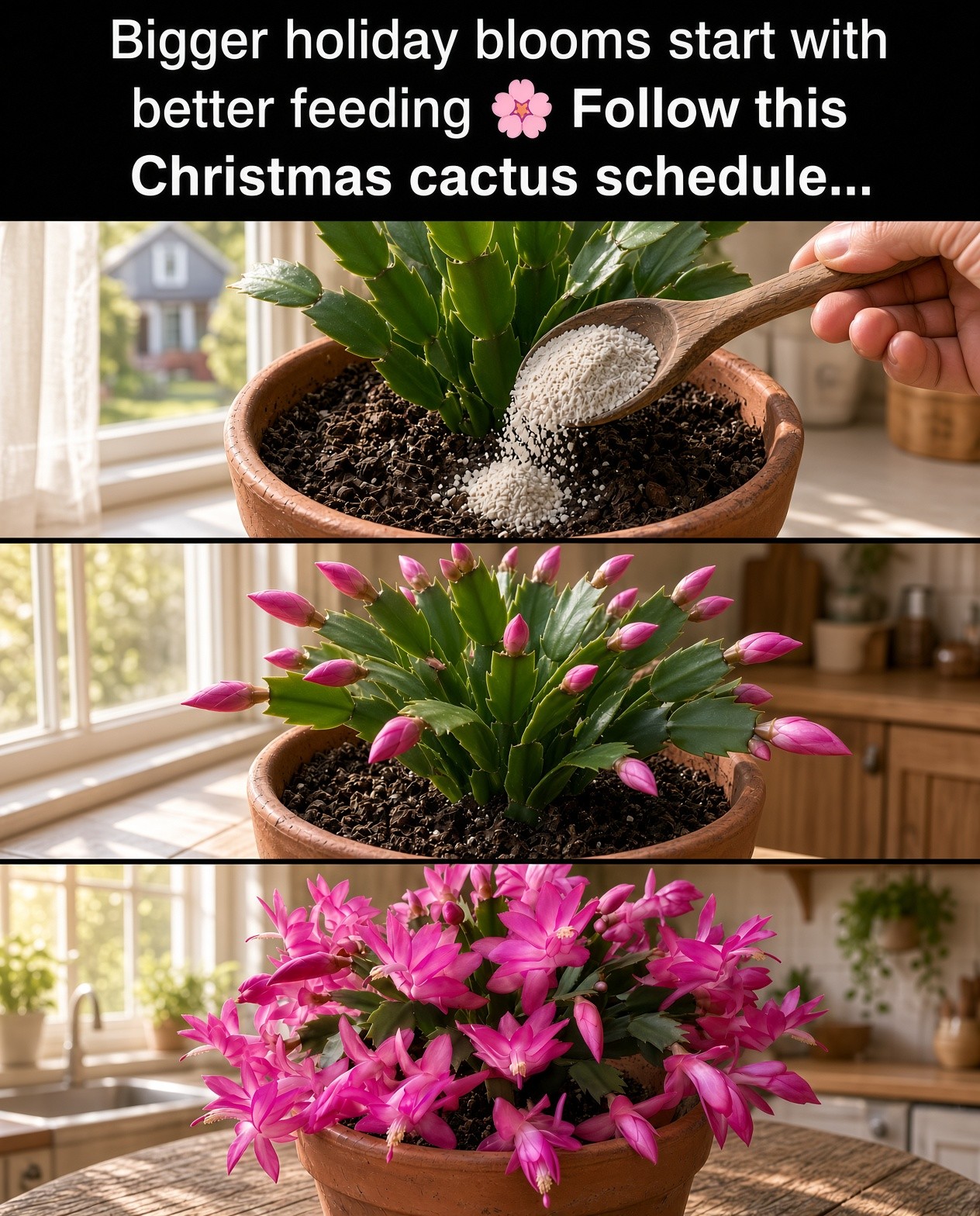
Feed less, feed at the right time, and let the plant’s natural flowering cycle guide your routine.
Christmas cactus (Schlumbergera) is not a plant that benefits from constant heavy feeding. Its thick, segmented stems store moisture, and as an epiphytic cactus it naturally grows where nutrients are not continuously abundant. A good fertilizer routine therefore depends more on timing and dilution than quantity. Use this calendar as a framework rather than a rigid rule because indoor temperature, light, potting mix, and flowering time can vary.
January and February: Give Your Christmas Cactus a Rest
After the holiday display has faded, Christmas cactus enters a quieter phase. The source calendar recommends no fertilizer during January and February, with attention instead directed toward light and careful watering. This rest period is useful because the plant does not need to be pushed into constant growth. Keep it in a bright location, let the potting mix approach dryness before watering, and avoid feeding simply because the calendar has changed.

Original photorealistic image created for this article; no text or stock-photo watermark.
March: Restart With a Light Feeding
As spring light returns, growth can gradually resume. The calendar recommends restarting with a balanced fertilizer at half or quarter strength, used about once a month. Dilution matters because Christmas cactus is not a heavy feeder, and concentrated fertilizer can contribute to salt buildup and root damage. Before feeding, make sure the plant is properly hydrated and the pot drains freely.

Original photorealistic image created for this article; no text or stock-photo watermark.
April and May: Support Active Growth
April and May are the main growing months in the source schedule. During active growth, the guide recommends feeding every two to four weeks with a diluted balanced fertilizer. The purpose is to support healthy new segments and roots rather than produce a sudden flush of soft growth. A modest, consistent routine is safer than occasional heavy doses.

Original photorealistic image created for this article; no text or stock-photo watermark.
June and July: Continue, But Watch Heat
During June and July, a healthy Christmas cactus may continue producing new segments, so the source schedule maintains feeding every two to four weeks at reduced strength. However, avoid treating the calendar as an automatic command. If the plant is heat-stressed, drought-stressed, or sitting in poor drainage, fertilizer can add unnecessary stress. Check the plant and potting mix first.

Original photorealistic image created for this article; no text or stock-photo watermark.
August: Make the Final Feeding
August is the transition point in the source calendar. It recommends one final fertilizer application and suggests moving toward a bloom-focused fertilizer as the plant approaches its bud-setting season. The important idea is that feeding should taper rather than continue indefinitely. Once the plant is moving toward shorter days and cooler nights, the priority shifts from producing foliage to supporting flowering conditions.

Original photorealistic image created for this article; no text or stock-photo watermark.
September and October: Stop Routine Fertilizing
September and October are the no-fertilizer period in the source calendar. Instead of feeding, concentrate on stable conditions that support bud formation: bright daytime light, long uninterrupted nights, and appropriately cool nighttime temperatures. Repeated feeding at this stage is unnecessary and can encourage new vegetative growth when the plant should be preparing to flower.

Original photorealistic image created for this article; no text or stock-photo watermark.
November and December: Enjoy the Blooms
During November and December, the source schedule continues to recommend no fertilizer. The plant’s job has shifted to flowering, so there is little reason to push additional nutrients. Keep conditions stable, water appropriately, and enjoy the flowers. Once the bloom period is completely finished, gradually transition the plant back toward its post-bloom rest routine.

Original photorealistic image created for this article; no text or stock-photo watermark.
Christmas Cactus Fertilizer Calendar at a Glance
January–February: no fertilizer; rest and careful watering.
March: restart with diluted balanced fertilizer about once a month if active growth has begun.
April–July: light feeding every two to four weeks during active growth, adjusting to actual plant conditions.
August: make the final feeding and begin transitioning toward bloom preparation.
September–December: no routine fertilizer while the plant sets buds and flowers.