
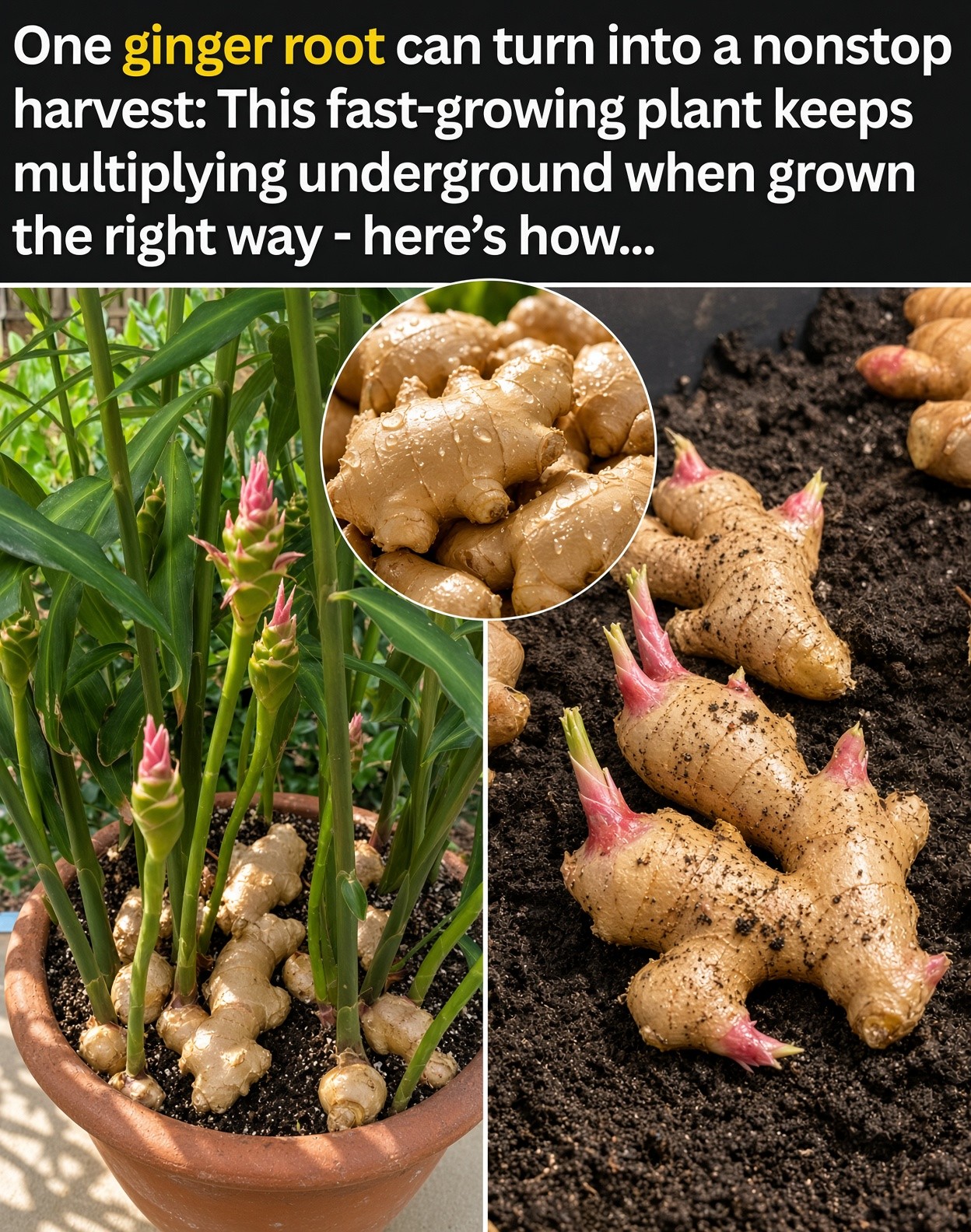
Yes, you can grow ginger from grocery-store ginger. Choose a fresh rhizome with visible buds, give it warmth, plant it in rich but well-drained soil, and be patient. Ginger takes months to mature, but one healthy rhizome can provide both a harvest and planting material for the next crop.
Choose a Fresh, Healthy Ginger Rhizome
Start with a firm, plump piece of grocery-store ginger with several visible buds or eyes. Avoid pieces that are badly shriveled, moldy, soft, or damaged. Fresh or organically grown ginger can be useful because some commercial ginger may have been treated to slow sprouting.

Wake Up the Buds Before Planting
Keep the rhizome somewhere warm and bright but protected from harsh direct sun. If it is unusually dry, a short room-temperature soak can rehydrate it, but prolonged soaking is unnecessary and may encourage decay. Watch for swelling buds.

Cut Large Rhizomes Into Plantable Pieces
A large rhizome can become several plants. Use a clean sharp knife to make roughly 1–2 inch sections, keeping at least one healthy eye on each. Let cut surfaces dry and callus for about 24–48 hours before planting. Small pieces do not need to be divided.

Pick a Wide Container With Drainage
Ginger rhizomes expand horizontally, so a wide planter is more useful than a narrow deep pot. Choose a container with drainage holes and enough surface area for the rhizomes to spread. Large planters and grow bags work well.

Use Rich, Loose, Well-Drained Soil
Use fertile growing medium containing organic matter while maintaining good drainage. A quality potting mix amended with mature compost works well for containers. Ginger likes moisture, but its rhizomes should not sit in stagnant water.

Plant the Rhizome Shallowly With Buds Facing Up
Lay the rhizome horizontally with buds facing upward and cover it with a relatively shallow layer of mix. Extension guidance commonly uses about 2–4 inches for prepared pieces, while the source recommends 1–2 inches; the key is avoiding deep burial in cold, wet soil and allowing shoots to emerge easily.

Warmth Is One of the Biggest Keys to Success
Ginger is tropical and warmth strongly affects sprouting. Roughly 70–85°F (21–29°C) encourages active growth. Spring and early summer are excellent starting periods in many regions, while colder climates can begin containers indoors.

Be Patient While Waiting for Shoots
Several weeks can pass before ginger appears above the soil. Do not repeatedly dig up the rhizome to check for roots. Keep the medium lightly moist and the container warm. Once narrow green shoots emerge, growth usually becomes more noticeable.

Give Ginger Bright, Filtered Light
Provide plenty of bright light without automatically exposing ginger to intense all-day sun. Morning sun with protection from severe afternoon heat can work well, especially in hot climates. Crispy or bleached leaves can indicate excessive light, while weak stretched growth can indicate too little.

Water Consistently—but Never Keep It Soggy
Water when the upper layer begins to dry, then water thoroughly and let excess drain. Never leave the pot standing in water. Yellowing foliage, soft stems, foul-smelling soil, or soft rhizomes can indicate excessive moisture; curling leaves and very dry soil suggest the opposite.

Feed Ginger During Active Growth
Ginger has a long growing season and appreciates fertile soil. During active growth, use an appropriate fertilizer according to its label or periodically add mature compost. University Extension guidance notes that ginger benefits from good nutrition, while excessive fertilizer can harm roots or encourage unbalanced leafy growth.

Add a Little More Soil if Rhizomes Become Exposed
If developing rhizomes become visible near the surface, add a thin layer of loose potting mix or compost over them. This protects the rhizomes and gives them more growing medium without burying the stems deeply.

Move Ginger Outdoors Gradually
In warm climates, move containers outdoors after frost danger has passed and nights are reliably warm. Acclimate indoor plants gradually, starting in a protected bright-shade location before increasing sun exposure. Protect ginger from extreme afternoon heat and cold autumn temperatures.

Growing Ginger Indoors Is Possible
Ginger can also be grown as an attractive indoor container plant. Put it near a bright window, provide warmth, and give the rhizomes enough horizontal room. Avoid cold drafts and containers that stay wet for long periods.

Know When to Harvest
Young ginger can sometimes be harvested after several months, but a larger mature harvest commonly takes about 8–10 months under favorable conditions. As the foliage yellows and dies back naturally, the plant is approaching dormancy and the rhizomes are nearing maturity. Reduce watering as foliage declines.

Harvest Some and Replant the Rest
You can harvest part of a rhizome while leaving the rest growing, or harvest the entire container at season’s end. Save several firm pieces with healthy buds for the next planting cycle. This creates a simple loop: plant, grow, harvest, save, and replant.

Sources Consulted
- University of Georgia Extension — Growing Ginger and Turmeric at Home
- University of Georgia Extension — Ginger growing and fertilizing guidance
- University of Georgia Extension — Ginger as a tropical container crop
This article is an original rewrite for gardening education. Fertilizer rates and growing conditions should be adapted to the product label, climate, container size, and condition of the plant.