

Christmas cactus is often treated like a desert cactus because of its name, but that can lead to one of the biggest care mistakes. Schlumbergera naturally grows in humid forest environments where water is available but drains away quickly.
That means the plant appreciates moisture, but it does not want its roots sitting in saturated soil. At the same time, allowing the entire root ball to become extremely dry for long periods can cause stress, especially when the plant is developing flower buds.
The key is to find the balance between moisture and drainage. Once you understand when the plant actually needs water and how to let excess moisture escape, watering becomes much easier.
Why Christmas Cactus Needs Different Watering Than Desert Cacti

Christmas cactus is an epiphytic plant. In its natural environment, it can grow on trees and other elevated surfaces where water passes through the growing material rather than remaining around the roots.
Because of this, its ideal growing medium is airy and free-draining. The roots should have access to moisture and oxygen rather than being surrounded by stagnant water.
This is why watering a Christmas cactus is not simply a matter of either keeping it completely dry or watering it frequently. The plant needs a rhythm of thorough watering followed by a period in which excess moisture can drain and the upper layer of soil can dry.
Check the Soil Before You Water

The simplest way to decide whether your Christmas cactus needs water is to check the soil.
Push your finger about 1 to 2 inches into the growing medium. If that area still feels noticeably moist, wait before watering. If it has dried out, it is generally time to give the plant a thorough drink.
The exact interval will change throughout the year. A plant in a warm, bright room may dry considerably faster than one sitting in a cooler location with lower light.
Pot size and soil composition matter too. A small container filled with an airy mix may dry much faster than a large pot filled with moisture-retentive soil.
Water Thoroughly Instead of Giving Tiny Sips

When your Christmas cactus actually needs water, do not simply sprinkle a small amount over the surface.
Water slowly and evenly until the growing medium is thoroughly moistened and excess water begins to leave through the drainage hole.
This helps hydrate the entire root ball instead of leaving only the uppermost layer wet.
After watering, allow the container to drain completely. If the pot is sitting in a saucer or decorative outer container, remove any collected water rather than leaving the bottom of the pot submerged.
Use Room-Temperature Water

Room-temperature water is a practical choice for Christmas cactus. Extremely cold water is unnecessary and can create an abrupt temperature change around the roots.
There is also no need to flood the plant with a powerful stream. Pour gently over the soil and allow the water to soak in gradually.
If the soil has become unusually dry and water initially runs down the sides of the root ball, slow the watering down and give the medium time to absorb moisture.
Never Let the Pot Sit in Standing Water

Good drainage is just as important as the amount of water you give the plant.
After watering, check the saucer underneath the pot. If water has collected there, empty it rather than allowing the container to remain submerged.
The same applies to decorative cachepots without drainage holes. A Christmas cactus may look attractive inside a decorative container, but trapped water underneath the nursery pot can keep the root zone excessively wet.
Whenever possible, use a container with a drainage hole and make sure that hole remains unobstructed.
Bottom Watering Can Work Very Well

Christmas cactus can be watered from either the top or the bottom. Neither method is universally required; the important part is achieving even moisture followed by proper drainage.
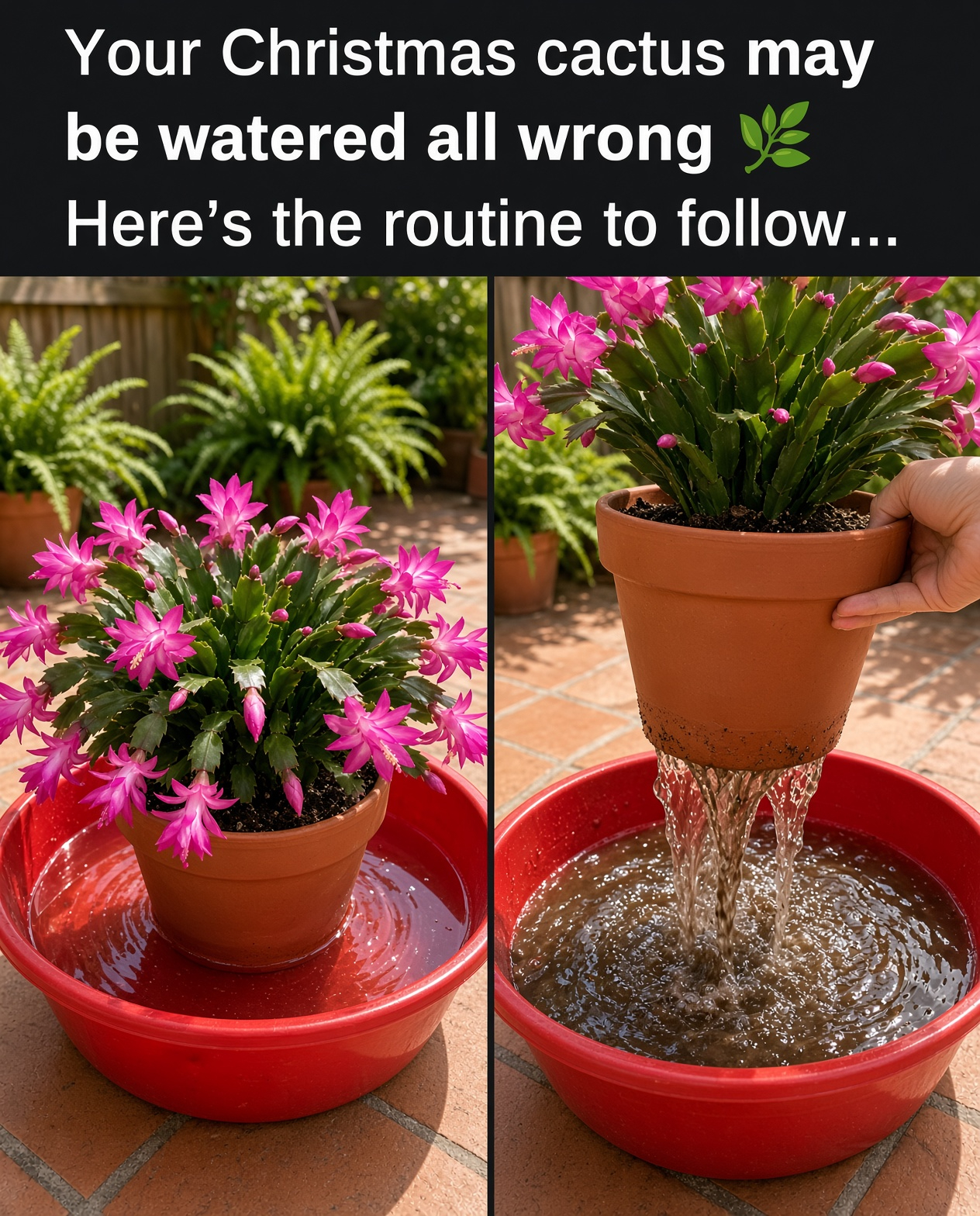
For bottom watering, place the pot in a shallow container of water and allow the growing medium to absorb moisture through the drainage hole. Around 15 to 20 minutes is often enough for the soil to become evenly damp.
Then remove the pot and let it drain thoroughly.
Bottom watering can be particularly convenient when the soil surface has become difficult to wet evenly. However, it should not mean leaving the pot permanently immersed in water.
Why Occasional Top Watering Is Still Useful
Even if you prefer bottom watering most of the time, occasional top watering can be useful.
Watering from above allows fresh water to move through the growing medium and can help carry away accumulated fertilizer salts and minerals.
When doing this, pour slowly and evenly across the soil surface. Avoid creating a powerful stream that washes soil away or damages the shallow roots.
Adjust Watering Through the Seasons

A Christmas cactus does not need exactly the same watering routine throughout the year. Temperature, light, growth, and flowering all affect how quickly the potting mix dries.
Spring and summer
During active growth, the plant generally appreciates more regular moisture. Allow the upper portion of the soil to dry between waterings, then water thoroughly.
Do not interpret “more regular” as “constantly wet.” The growing medium should still have an opportunity to drain and breathe between waterings.
Fall and bud formation
As the plant begins preparing for flowering, watering can be reduced somewhat. Allow the soil to dry a little farther between waterings while avoiding prolonged severe dehydration.
Once flower buds appear, consistency becomes particularly important. Sudden changes in moisture, temperature, light, or location can contribute to stress and bud loss.
Winter and flowering

While the plant is flowering, keep an eye on the soil and provide water when the upper layer has dried sufficiently.
After flowering finishes, the plant enters a quieter period. At this stage, allow more drying between waterings and avoid treating the plant as though it were in peak summer growth.
How to Recognize an Overwatered Christmas Cactus

Overwatering is not simply about using too much water during one watering session. The bigger problem is often that the growing medium remains wet for too long.
Watch for several warning signs occurring together:
- Yellowing or unusually pale segments.
- Soft, dark, or mushy stems.
- A musty or sour smell coming from the soil.
- Weak or stunted growth.
- A limp appearance even though the soil remains wet.
- Roots that have become damaged because of prolonged saturation.
If the soil remains wet for an unusually long time after watering, check the container and growing medium before simply adding more water.
What Underwatering Looks Like

Christmas cactus can also suffer when it is allowed to remain dry for too long.
Dehydrated segments may become thinner, wrinkled, limp, or noticeably shriveled. The plant can lose its normal firmness and healthy appearance.
If the soil is genuinely dry, give the plant a thorough watering rather than repeatedly adding tiny amounts of water.
Allow excess water to drain away afterward, then return to checking the soil before the next watering.
The Best Watering Routine at a Glance
| Situation | What to Do |
|---|---|
| Top 1–2 inches are still moist | Wait and check again later. |
| Upper soil has dried | Water thoroughly and let excess drain away. |
| Water collected in saucer | Empty the saucer. |
| Plant is in active spring/summer growth | Maintain more regular moisture while allowing the surface to dry. |
| Fall bud formation | Allow slightly more drying between waterings. |
| Plant is flowering | Keep moisture reasonably consistent without saturating the soil. |
| After flowering | Allow the soil to dry more between waterings. |
| Using bottom watering | Soak for about 15–20 minutes, then remove and drain completely. |
5 Simple Rules to Remember

- Check the soil before watering. Do not water simply because a certain number of days has passed.
- Water thoroughly. When the plant needs water, moisten the root zone rather than giving it a tiny surface sprinkle.
- Let excess water escape. Good drainage is essential.
- Empty the saucer. Never allow the pot to sit in standing water.
- Adjust with the seasons. Active growth, bud formation, flowering, and the post-bloom period have different moisture needs.
Final Thoughts
Watering a Christmas cactus correctly is really about balance. This plant comes from humid forest habitats, so it needs more moisture than a typical desert cactus—but its roots still need plenty of air and excellent drainage.
Check the top inch or two of soil before watering, use room-temperature water, soak the root zone thoroughly when it is dry enough, and always allow excess water to drain away.
During spring and summer, the plant can generally be kept somewhat more evenly moist. As fall arrives and buds begin forming, allow a little more drying between waterings. During flowering, aim for consistency, and after blooming, gradually allow the plant to dry more between drinks.
Once you stop thinking of Christmas cactus as a desert plant and start treating it like the moisture-loving epiphyte it is, its watering needs become much easier to understand—and the risk of keeping those roots constantly soggy becomes much easier to avoid.