

Hydrangea pruning can seem confusing because not every hydrangea follows the same rules. Some varieties produce flower buds on stems from the previous year, while others form their flowers on fresh growth. A third group can flower on both old and new wood.
That difference is the key to successful pruning. If you cut an old-wood hydrangea at the wrong time, you may remove the stems carrying next season’s flower buds. On the other hand, new-wood hydrangeas are much more tolerant of late-winter pruning.
The good news is that you do not need to prune a hydrangea aggressively every year. Healthy shrubs that already have a good shape may need little more than occasional cleanup.
Why Prune a Hydrangea at All?

Pruning is useful when a hydrangea has dead, damaged, weak, or badly crowded stems. Removing unnecessary growth can improve the plant’s structure and create more space around the remaining branches.
Pruning can also help an older shrub that has become congested. Removing a small number of old stems at the base can encourage a more open structure without turning the entire plant into a collection of short stubs.
But pruning should have a purpose. Cutting simply because the plant looks large is not always beneficial. Many hydrangeas naturally develop an attractive shape without heavy annual pruning.
First, Understand Old Wood and New Wood

The phrase “old wood” simply refers to stems that grew during a previous season. “New wood” refers to stems produced during the current growing season.
This distinction matters because hydrangeas do not all create flower buds in the same place.
- Old-wood bloomers: Form next season’s flower buds on existing stems from the previous year.
- New-wood bloomers: Produce flower buds on fresh growth that develops during the current growing season.
- Old-and-new-wood bloomers: Some reblooming cultivars can produce flowers from both older stems and new growth.
Once you know which group your plant belongs to, the pruning schedule becomes much easier to understand.
Old-Wood Hydrangeas: Prune Soon After Flowering

Several familiar hydrangeas bloom mainly on old wood. These include traditional bigleaf hydrangeas, mountain hydrangeas, oakleaf hydrangeas, and climbing hydrangeas.
Because their future flower buds can already be present on older stems, the safest time for significant pruning is generally shortly after flowering has finished.
Bigleaf hydrangea
Hydrangea macrophylla is the classic bigleaf hydrangea, commonly grown for large mophead or lacecap flower clusters. Traditional cultivars should not receive a major pruning session in fall, winter, or early spring because doing so can remove the buds that would have produced the next flowers.
After flowering, you can remove faded flower heads, dead branches, weak stems, and a few of the oldest branches if the shrub has become crowded.
Mountain hydrangea

Hydrangea serrata, commonly called mountain hydrangea, is another old-wood bloomer. Its leaves are generally smaller and its flower clusters often have a lacecap appearance.
Wait until flowering has finished before doing the main pruning. Focus on removing spent flowers and unwanted or damaged stems rather than cutting the entire shrub back.
Oakleaf hydrangea
Hydrangea quercifolia is particularly easy to recognize because its leaves resemble the shape of oak leaves. It also develops attractive foliage color as the seasons change.
Like bigleaf and mountain hydrangeas, oakleaf hydrangea generally flowers on older wood. Keep pruning light and do it after flowering rather than making a major cut during the dormant season.
Climbing hydrangea

Hydrangea anomala subsp. petiolaris is a climbing hydrangea that can grow against walls, fences, and tree trunks. It generally does not need regular hard pruning.
If it has grown beyond its allotted space, prune it after flowering and concentrate on branches that are interfering with nearby structures or plants.
How to Prune Old-Wood Hydrangeas

- Wait until flowering has finished. Use the end of flowering as your practical pruning signal.
- Remove spent flower heads. Cut just above a healthy pair of buds or leaves.
- Remove dead stems. Cut dead growth back to healthy tissue or remove it at the base.
- Remove weak or damaged branches. Prioritize stems that clearly contribute little to the plant.
- Thin crowded growth. If necessary, remove a few of the oldest stems at ground level.
- Stop before over-pruning. Leave the majority of healthy stems intact.
New-Wood Hydrangeas: Prune in Late Winter or Early Spring

New-wood hydrangeas are more forgiving because their flower buds develop on fresh stems produced during the growing season.
The main examples are panicle hydrangeas and smooth hydrangeas. Their pruning window is generally late winter to early spring, while the plant is dormant and before strong new growth begins.
Panicle hydrangea
Hydrangea paniculata is recognizable by its cone-shaped flower clusters. Many cultivars begin with pale flowers that gradually develop pink, red, or green tones as the blooms age.
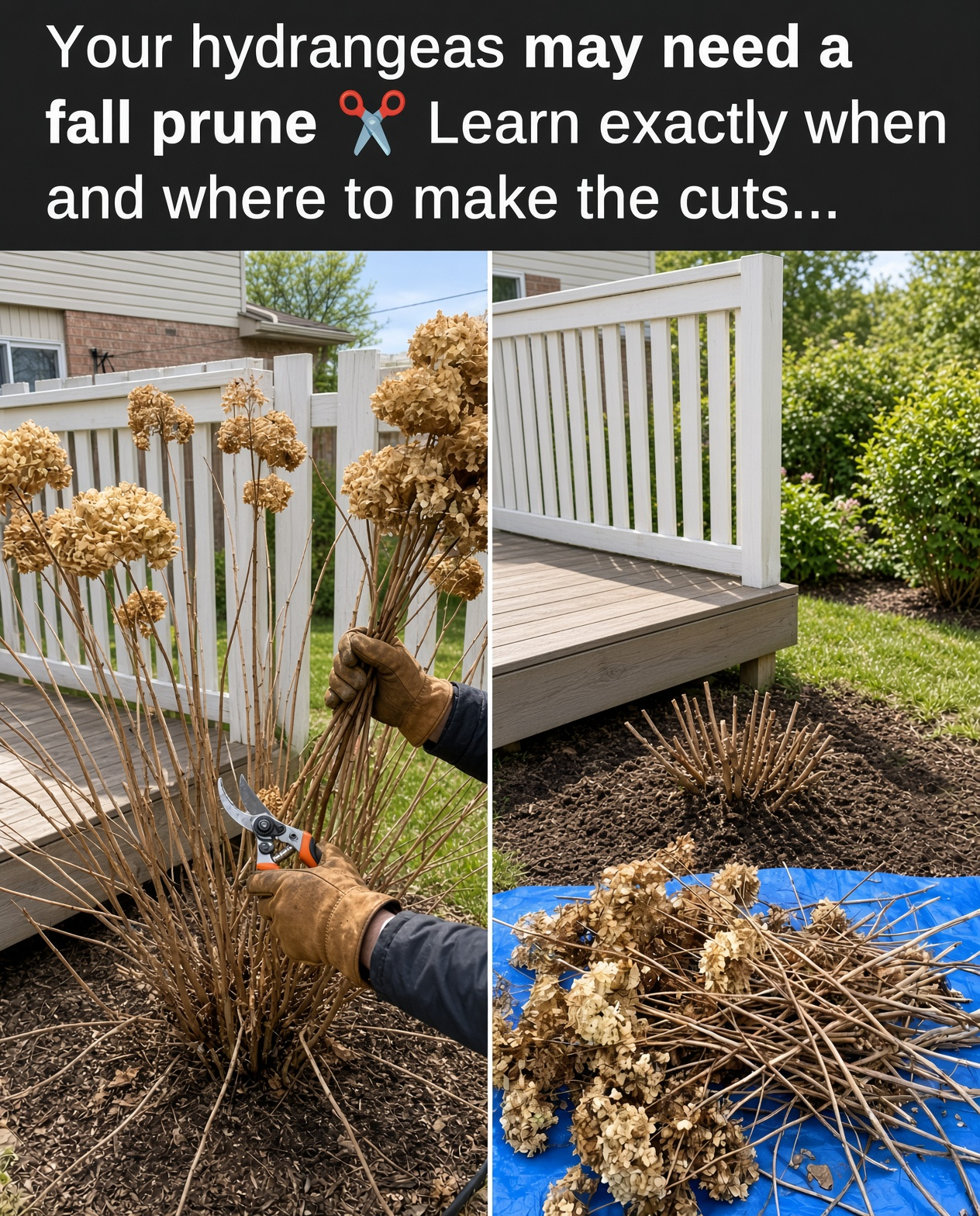
Because it flowers on new wood, you can prune a panicle hydrangea during the dormant season. Remove dead and damaged stems first, then shorten selected branches to healthy buds if you need to reduce size or improve the shape.
Panicle hydrangeas tolerate substantial pruning, but a hard cut is not automatically necessary. A naturally well-shaped plant may only need a light cleanup.
Smooth hydrangea
Smooth hydrangea, including the popular ‘Annabelle’, also blooms on new wood. Established plants can tolerate a harder dormant-season pruning when size or structure requires it.
Older plants can be cut back significantly, sometimes to around 6 to 12 inches above the ground. However, young plants benefit from being allowed to establish before receiving severe pruning.
What About Reblooming Hydrangeas?

Some modern bigleaf and mountain hydrangeas can bloom on both old and new wood. These are often described as reblooming or remontant hydrangeas.
They offer a little more flexibility because flowers can develop from surviving old buds and later from new growth. However, that does not mean they should be aggressively pruned whenever you want.
If pruning is necessary, keep it selective. Remove dead or damaged branches, thin severely crowded areas, and deadhead spent flowers above healthy buds.
Heavy early-spring pruning can delay or reduce the first flush of flowers, while pruning immediately after the first flush can interfere with later reblooming. Light pruning is therefore usually the safer approach when preserving as many flowering opportunities as possible.
4 Hydrangea Pruning Mistakes to Avoid

1. Pruning at the wrong time
This is the biggest mistake because timing can directly affect flowering. Cutting old-wood hydrangeas during the dormant season can remove the buds intended for the following summer.
If you are uncertain about your plant, identify it before making major cuts.
2. Copying another gardener’s pruning routine
A pruning method that works perfectly for a panicle hydrangea may be inappropriate for a traditional bigleaf hydrangea.
Two shrubs can look broadly similar while having completely different flowering habits. Always base the pruning schedule on the plant you actually have.
3. Pruning more than necessary
Once you begin cutting, it can be tempting to keep going until the shrub looks perfectly tidy. Resist that temptation.
Start with dead, damaged, weak, crossing, or badly crowded branches. Then step back and look at the plant before deciding whether another cut is genuinely useful.
4. Removing a stem before confirming it is dead

Hydrangea stems can look completely lifeless after winter while still containing living tissue. Before removing a questionable branch, give the plant enough time to begin waking up.
A simple scratch test can help. Gently scrape a tiny area of the outer bark. Green tissue underneath indicates living wood, while dry brown tissue suggests that the section may be dead.
Use Clean, Sharp Pruning Tools
A good pair of sharp pruning shears makes clean cuts much easier. Before working on a hydrangea, make sure the blades are clean and free of obvious dirt or plant residue.
Clean cuts are preferable to crushing or tearing stems with blunt tools. If you move between plants after cutting obviously diseased material, clean the blades before working on another shrub.
Wear gloves if they make handling the plant and pruning equipment more comfortable, especially when working through dense branches.
Quick Hydrangea Pruning Guide
| Hydrangea Type | Flowering Wood | General Pruning Window | Pruning Approach |
|---|---|---|---|
| Bigleaf | Old wood | After flowering | Light, selective pruning |
| Mountain | Old wood | After flowering | Light cleanup and thinning |
| Oakleaf | Old wood | After flowering | Selective pruning |
| Climbing | Old wood | After flowering, when needed | Mostly space and shape control |
| Panicle | New wood | Late winter to early spring | Flexible; shape and size can be controlled |
| Smooth | New wood | Late winter to early spring | Established plants tolerate harder pruning |
| Reblooming bigleaf/mountain | Old and new wood | Light pruning when needed | Preserve healthy older and newer stems |
Final Thoughts
Pruning hydrangeas becomes much simpler once you stop treating every variety the same. The first question should always be whether your plant flowers on old wood, new wood, or both.
Old-wood hydrangeas generally benefit from pruning soon after flowering, while panicle and smooth hydrangeas can usually be pruned during late winter or early spring. Reblooming types give you more flexibility, but they still benefit from a restrained approach.
When in doubt, make fewer cuts rather than more. Remove clearly dead or damaged growth first, preserve healthy flowering wood, and avoid turning a healthy shrub into a collection of bare stems.
With the right timing and a little restraint, pruning becomes a simple maintenance job rather than something to fear—and your hydrangeas can keep their natural shape while producing flowers season after season.