
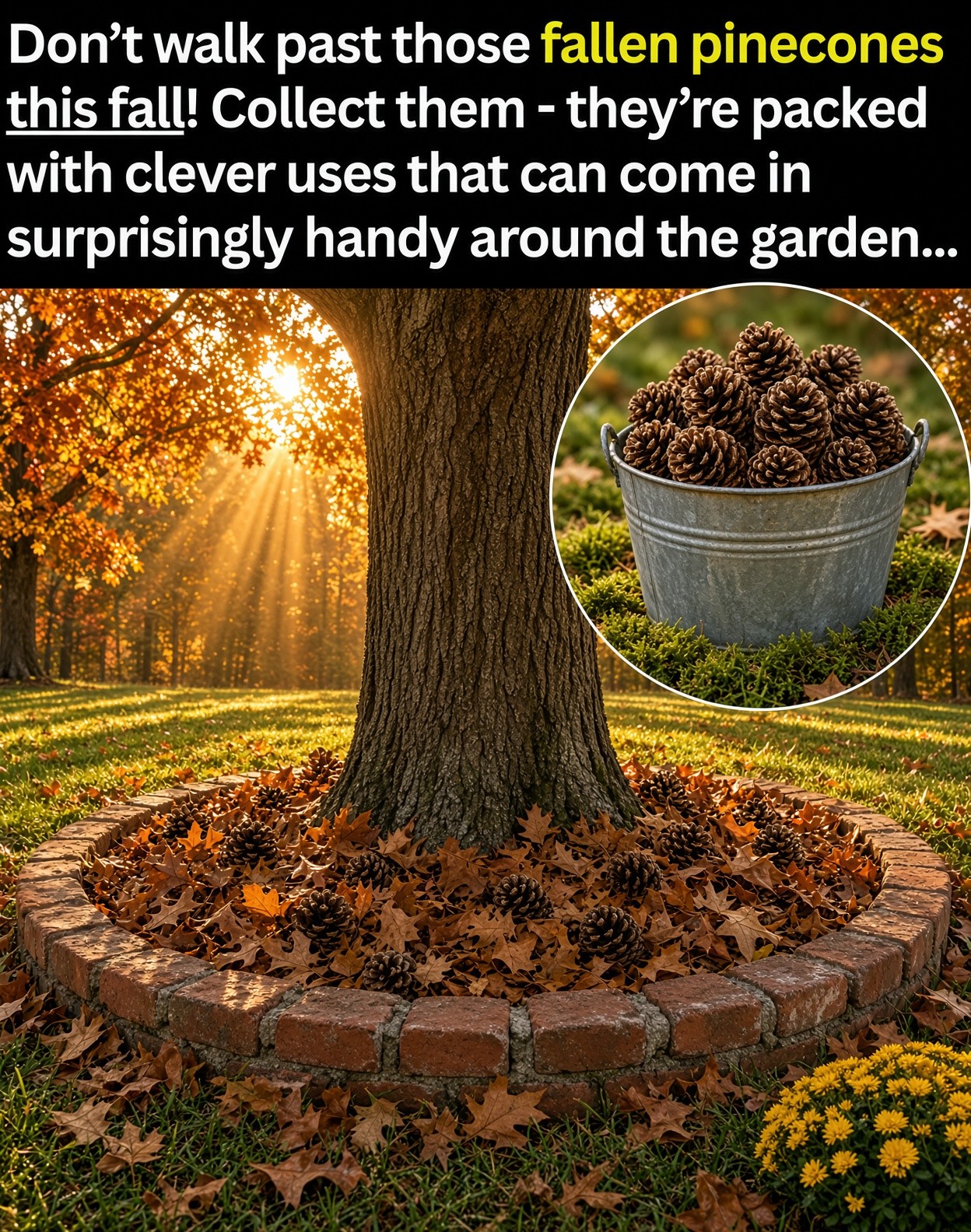
Every autumn, pine cones appear beneath conifers in gardens, parks, and woodland areas. It is easy to think of them as something to rake away, but their durable, textured structure makes them useful for many garden projects. From simple mulch accents and wildlife features to bird feeders and seasonal crafts, pine cones can be reused instead of immediately going into the yard-waste bin.

There is one important distinction, though: not every popular pine-cone gardening tip is equally useful. Some online articles describe cones as a universal drainage material, powerful pest repellent, or special soil improver. Those claims are often overstated. This guide focuses on practical uses that make sense, while also explaining where a little caution is needed.
Understanding Pine Cones Before You Reuse Them
Pine cones are the woody reproductive structures produced by conifers. The familiar large cones found on the ground are usually female seed-bearing cones; smaller pollen-producing cones are much less conspicuous. Their woody scales make them durable, but that durability also means they decompose slowly compared with leaves or grass clippings.
If you are collecting cones from your own property, choose clean, dry cones from an area that has not recently been treated with pesticides or other chemicals. Brush away loose dirt and plant debris, then let the cones dry thoroughly in a well-ventilated place. You do not need to sterilize every cone for ordinary outdoor landscaping. For crafts or indoor projects, inspect them carefully for insects, mold, excessive sap, and moisture before bringing them inside. Avoid collecting large quantities from public land unless collection is permitted. It is also better to leave some natural cones and other plant debris in place because woodland ecosystems use fallen material as part of their habitat and nutrient cycles.
15 Practical Ways to Use Pine Cones in the Garden
1. Use Pine Cones as a Rustic Garden Mulch

Whole pine cones can make a useful decorative mulch in ornamental beds, especially where you want a natural woodland look. They are slow to break down compared with soft plant material, so they can remain visible for a long time. A layer of cones can also cover bare soil and make it harder for small weed seedlings to establish, although cones work best as part of a broader mulch system rather than as a complete weed-control solution.
2. Create a Natural Bed Border

A line of pine cones can give the edge of a flower bed a simple, inexpensive definition. Place them in a continuous row along a path, beneath shrubs, or around a small island bed. This is mainly a design use rather than a structural edging material, so do not rely on cones to hold soil in place on a slope. For a stronger border, combine them with stones, logs, or another stable edging material.
3. Protect Freshly Planted Seeds From Digging

If birds, squirrels, cats, or other animals repeatedly disturb newly planted areas, scattering several pine cones over the surface can make the bed less inviting to dig. Leave enough open soil for seedlings to emerge and for rain or irrigation to reach the ground. This simple trick is most useful during the short period when seeds are vulnerable, rather than as a permanent barrier.
4. Build a Wildlife-Friendly Garden Corner

Instead of throwing every fallen cone away, leave some in a quiet corner beneath shrubs or near a log pile. Pine cones add structure to the ground layer and can become part of the small, sheltered spaces used by garden invertebrates. The broader principle is more important than the cone itself: leaving some natural debris undisturbed can increase habitat variety in a garden.
5. Make a Pine Cone Bird Feeder

One of the easiest projects is a classic pine cone feeder. Tie a string around a dry cone, coat the scales with an appropriate bird-safe spread, and press birdseed onto it before hanging it from a sturdy branch. Pennsylvania 4-H specifically demonstrates pine-cone bird feeders as a simple wildlife activity. Keep feeders clean, place them where cats cannot easily ambush birds, and choose food appropriate for the birds in your area.
6. Add Cones to a Pollinator or Insect Habitat

Pine cones can also be incorporated into a small insect-habitat structure. Tuck dry cones beneath shrubs, under a loose piece of bark, or into a purpose-built habitat where they stay relatively dry. They should be treated as one component of a habitat, not as a guaranteed nesting site for a particular insect. A mixture of hollow stems, bark, leaves, stones, and undisturbed soil generally creates more useful habitat than cones alone.
7. Use Them in Compost in Moderation

Pine cones are carbon-rich woody material, but they break down slowly. If you want to compost them, crush or chop them first and mix small amounts into a pile that also contains faster-decomposing green materials. Their coarse structure can contribute air spaces, but large quantities may remain intact for a long time. Think of crushed cones as a minor structural ingredient, not a compost accelerator that will rapidly disappear.
8. Make a Rustic Garden Path Accent

Pine cones can add texture beside stepping stones or along the edge of a woodland-style path. For a walking surface, however, whole cones are not ideal: they can roll, shift, or become uncomfortable underfoot. Use them as an accent along the sides of a stable path rather than as the main walking material. This gives you the visual effect without creating a slippery or uneven surface.
9. Use Pine Cones in Seasonal Garden Crafts

Dry pine cones are naturally attractive and can be turned into wreaths, garlands, plant-stake decorations, table arrangements, or seasonal displays. Add evergreen sprigs, dried flowers, berries, or twine for a garden-inspired look. For outdoor projects, keep decorations simple and avoid coatings that could leach unwanted chemicals into soil or water.
10. Use Them as a Decorative Container Top-Dressing

Pine cones can be placed on the surface of large outdoor containers as a decorative top layer. They can help cover exposed potting mix and give the container a finished woodland appearance. Do not use pine cones as a drainage layer at the bottom of a pot. A container with a drainage hole and a suitable potting mix is the better foundation; a coarse layer at the bottom can interfere with water movement rather than improve it.
11. Add Texture Around Shrubs and Perennials

A scattering of pine cones around established shrubs, ornamental grasses, and perennials can make a planting look more natural while protecting patches of bare soil from direct exposure. Keep cones a little away from crowns and stems, just as you would with other mulches. The goal is to cover soil without creating a damp, crowded collar around the plant.
12. Combine Pine Cones With Leaf Mulch

Pine cones work particularly well as a visible top layer over softer materials. For example, you can place shredded leaves or compost closer to the soil and use a modest layer of cones on top for texture. Organic mulch can help conserve moisture, moderate soil temperature, reduce erosion, and suppress weeds when applied correctly. University of Minnesota Extension recommends keeping mulch at an appropriate depth and away from plant stems and trunks.
13. Help Hold Down Lightweight Garden Materials

Small pine cones can be useful as temporary weights for loose pieces of natural garden material. Place a few over the edges of leaf mulch, burlap, or other lightweight coverings when wind is a problem. This is a simple reuse idea, but cones are not substitutes for proper landscape staples or other secure fastening methods when a covering needs to remain firmly in place.
14. Collect Them for Children’s Nature Projects

Clean, dry pine cones are excellent natural objects for supervised nature activities. Children can sort them by size, count them, examine their scales with a magnifying glass, or use them in simple crafts. Pennsylvania’s Better Kid Care resources also use pine cones among natural materials children can collect, sort, observe, and incorporate into creative play. Always supervise young children and avoid cones with mold, sharp debris, or unknown chemical exposure.
15. Turn Pine Cones Into a Woodland-Style Garden Display

Sometimes the best use is simply visual. Arrange cones beside rocks, fallen branches, potted plants, lanterns, or a birdhouse to create a woodland-inspired garden vignette. Because cones already have an earthy, seasonal appearance, they can make a garden feel connected to the surrounding landscape without requiring expensive decorative materials.
How Pine Cones Fit Into a Healthy Mulching Strategy
Pine cones are useful, but they are not a magic garden material. They should not replace proper mulch, drainage, irrigation, wildlife habitat, or fire-safety practices. In particular, do not assume that a thick layer of cones will eliminate weeds, repel every pest, insulate every plant, or improve compacted soil by itself. For containers, use a pot with a drainage hole and a quality potting mix rather than filling the bottom with pine cones. For mulch, keep the layer moderate and leave space around stems and trunks. University of Minnesota Extension notes that mulch helps conserve moisture, suppress weeds, moderate soil temperature, and protect soil when applied correctly; it also recommends keeping mulch away from plant stems and using appropriate depths. Penn State Extension similarly describes mulch as useful for moisture conservation, temperature moderation, erosion control, and weed suppression.
What About the Popular Pine-Cone Claims?
Several popular gardening tips deserve a little context. Pine cones do not make a reliable drainage layer at the bottom of containers, and there is no reason to expect them to transform heavy clay soil simply because they are mixed into it. Their woody material can eventually contribute organic matter, but decomposition is slow. Likewise, their texture may discourage some animals from disturbing soil, but that is different from being a proven universal pest repellent.
For wildfire-prone areas, never assume that pine cones are a fire-safe mulch simply because they are larger than bark. Dry organic materials can burn, and local fire guidance should always take priority. Keep combustible landscape materials away from structures where recommended and follow local regulations.
Final Thoughts
Pine cones are a good example of a garden material that becomes more valuable when you stop thinking of it as waste. They can add texture to beds, protect freshly seeded areas from disturbance, provide materials for wildlife projects, support simple bird feeders, contribute small amounts of woody carbon to compost, and turn into attractive seasonal decorations. The key is to use them for what they actually do well. Treat pine cones as a durable, natural garden accessory and structural material—not as a cure-all. Combine them with leaves, compost, bark, stones, native plants, and other habitat materials, and you can turn a pile of fallen cones into useful resources throughout the garden.