
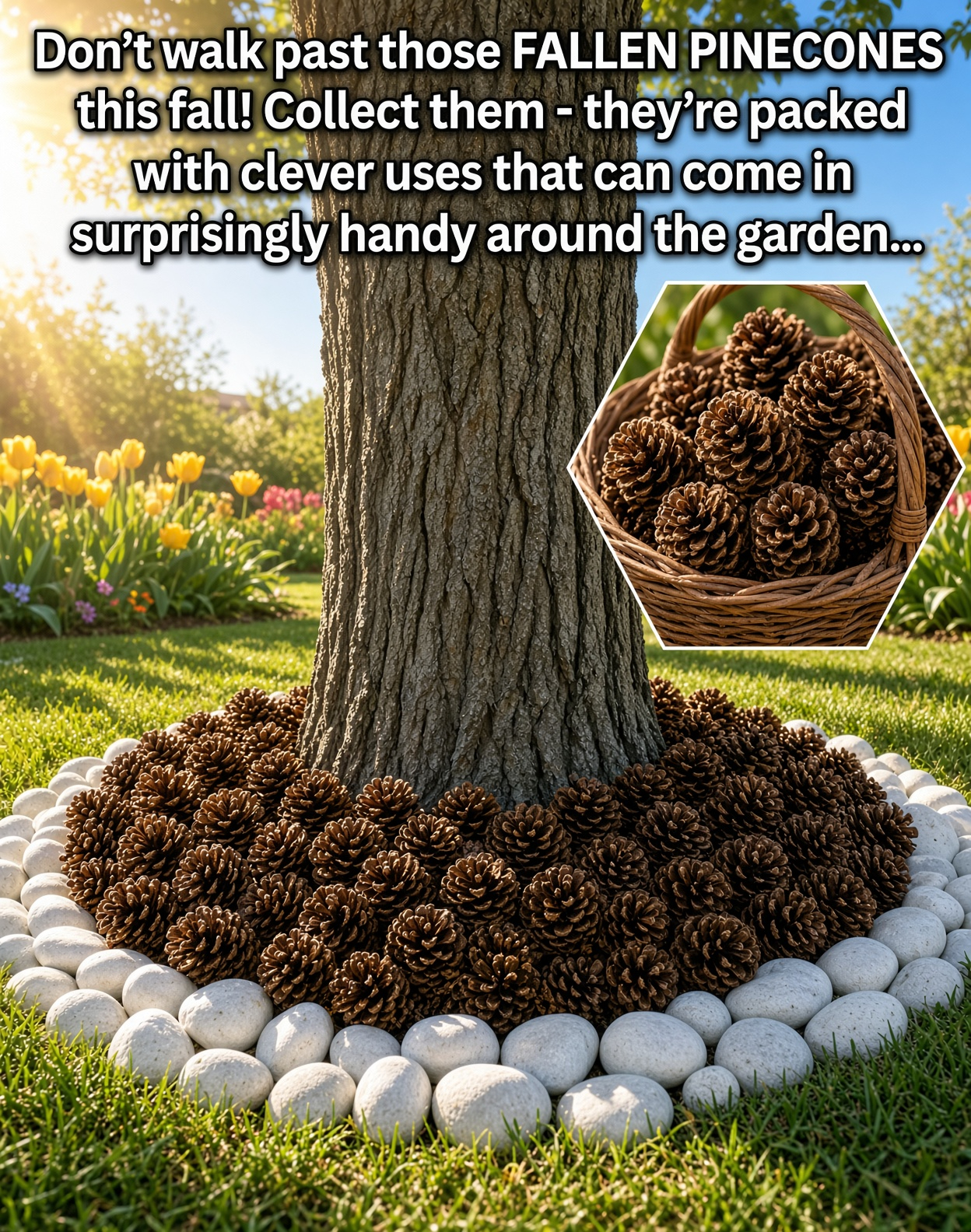
If pine trees grow anywhere near your garden, you probably know the annual routine: pine cones fall everywhere, you rake them into piles, and then wonder what you’re supposed to do with them.
Before you throw them away, take another look. Pine cones are tough, lightweight, free, and naturally slow to break down. That combination makes them useful for a surprising number of garden projects.
They can become mulch, wildlife habitat, natural decorations, pest barriers, compost ingredients, and much more. However, some popular advice about pine cones is misleading, so it’s important to use them in the right situations.
1. Use Pine Cones as a Natural Mulch
One of the simplest ways to use pine cones is to spread them around established plants as a coarse mulch.
Whole cones create plenty of air spaces between them, while also shading the soil surface. This can help reduce evaporation and make it harder for small weeds to establish.
They work particularly well beneath trees, shrubs, ornamental grasses, and other established plants where you want a natural woodland appearance.
Because whole pine cones break down slowly, they can remain useful much longer than softer organic materials. If you have a large supply, you can simply collect them and redistribute them around the garden when needed.

2. Create a Barrier Around Bulbs
Planting bulbs in autumn can sometimes attract unwanted attention from squirrels and other animals that like to dig in freshly disturbed soil.
A layer of pine cones placed over the planting area creates an uneven, awkward surface that can discourage casual digging.
This isn’t a guaranteed solution for determined animals, but it can make a newly planted bed less convenient to disturb. Once spring shoots appear, move the larger cones aside so the emerging plants have plenty of room.
3. Discourage Digging Around Young Plants
Pine cones can also be useful around newly planted seedlings and garden beds where animals repeatedly disturb loose soil.
Place the cones around the perimeter of the planting area rather than directly against delicate stems. The irregular surface creates a physical obstacle while still allowing rainwater to reach the soil.
This is especially useful in ornamental beds where you don’t want to rely on chemical deterrents.

4. Build a Small Wildlife Shelter
Don’t underestimate the value of a messy garden corner.
A loose pile of pine cones can create small gaps and sheltered spaces where insects and other tiny garden creatures can hide. Instead of clearing every corner of the yard, consider placing some cones beneath shrubs, along a hedge, or in a quiet section of the garden.
This creates additional structure without requiring you to buy a manufactured insect shelter.
Keep the pile loose rather than compressing it tightly. Natural spaces between the cones are part of what makes the material useful as shelter.
5. Add Pine Cones to a Compost Pile
Pine cones are woody and therefore decompose much more slowly than vegetable scraps, grass clippings, and soft leaves. That doesn’t mean they have no place in compost.
The trick is to break or crush them into smaller pieces first. Smaller pieces have more surface area for microorganisms to work on.
Use them as a carbon-rich material alongside plenty of nitrogen-rich ingredients. Don’t fill the entire compost pile with pine cones, because a large quantity of woody material will take a long time to break down.

6. Make Rustic Garden Path Edging
If you have a woodland-style garden, pine cones can become surprisingly attractive path edging.
Arrange larger cones along the edge of an informal path to visually separate the walkway from flower beds or groundcovers.
The cones won’t behave like permanent bricks or stones, so this works best as a decorative garden feature rather than structural edging. Replace or rearrange them whenever necessary.
The natural brown color also works beautifully with bark, wood, stone, and autumn foliage.
7. Use Pine Cones in Container Displays
Pine cones make inexpensive decorative additions to outdoor containers.
Place a few large cones on the surface of soil around seasonal flowers, ornamental grasses, or evergreen plants. They add texture without competing with the plants for attention.
You can also combine pine cones with small branches, moss, stones, and other natural materials to create a woodland-inspired container display.
8. Make a Simple Pine Cone Bird Feeder
A pine cone’s overlapping scales make a convenient surface for holding bird food.
For a simple outdoor craft, attach natural twine to a dry pine cone and use an appropriate bird-safe food mixture that adheres to the scales. Hang it from a sturdy branch where you can watch visiting birds.
Place feeders where birds have some nearby cover, while keeping them away from areas where predators can easily hide.
Remember to clean feeding areas regularly and avoid using ingredients that are unsafe for local wildlife.
9. Create Natural Garden Decorations
Pine cones are practically made for rustic garden decorating.
Use them in seasonal baskets, wreaths, planter arrangements, fairy-garden scenes, or outdoor table decorations. You can leave them completely natural or combine them with other materials such as twigs, dried flowers, moss, and stones.
Because each cone has a different shape, even a simple collection can look more interesting than manufactured decorations.
10. Protect Bare Soil From Erosion
On a small garden slope, loose pine cones can help cover exposed soil while you establish longer-term plants.
The cones break up the visual expanse of bare soil and can help slow the movement of rainwater across the surface.
They aren’t a substitute for proper erosion-control planting on a steep slope, but they can be useful as part of a simple naturalistic garden design.

11. Use Them Around Acid-Loving Plants Without the pH Myth
You may have heard that pine cones will dramatically acidify your soil. That claim is often exaggerated.
Whole pine cones are woody and decompose slowly, so they should not be treated as a reliable way to lower soil pH. If you’re growing blueberries, azaleas, rhododendrons, or other acid-loving plants, use a soil test and appropriate soil amendments instead of relying on pine cones to change the pH.
That said, pine cones can still be used as a surface mulch around these plants when their coarse texture and natural appearance are useful.
12. Create a Natural Winter Cover
A loose layer of pine cones can provide some physical protection around dormant plants during winter.
The cones create air spaces rather than forming a dense, wet mat. This makes them interesting as a supplemental protective material around hardy perennials and garden beds.
However, don’t bury tender plants completely under a thick pile of wet cones. Use them as one component of winter protection rather than assuming they can replace purpose-made frost protection.
13. Make a Rustic Garden Marker
Large pine cones can even become temporary plant markers.
Write a plant name on a small wooden tag and attach it to a pine cone, or use the cone itself as part of a decorative marker arrangement.
This works particularly well in herb gardens, woodland gardens, and seasonal displays where practical labels can also contribute to the overall look of the bed.
14. Use Pine Cones for Autumn and Holiday Crafts
If you collect more pine cones than your garden can possibly use, bring some into your craft projects.
Clean, dry cones can become wreath decorations, table arrangements, hanging ornaments, seasonal centerpieces, and miniature woodland displays.
Before bringing cones indoors, inspect them carefully for insects, mold, or excessive moisture. Drying them thoroughly helps make indoor use cleaner and more convenient.
Natural cones often look beautiful without paint or glitter, especially when combined with evergreen branches, dried seed heads, and other garden materials.
15. Make a Dedicated Pine Cone Collection Area
Sometimes the smartest use for pine cones is simply to store them until you need them.
Keep a basket, garden bin, or dry corner where you can collect clean fallen cones throughout the year. Then you’ll always have material available for mulch, decorations, wildlife shelters, or seasonal projects.
Sort them by size if you collect a lot. Large cones are excellent for decorations and path edging, while smaller or broken cones are easier to use in compost or as loose mulch.
One Pine Cone Tip You Should Ignore
There is a popular gardening suggestion that says you should put a thick layer of pine cones at the bottom of every container to improve drainage.
That isn’t a good general rule.
Adding a separate layer of coarse material at the bottom of a container does not automatically improve drainage, and it can reduce the amount of usable root-zone soil. Instead, choose a container with proper drainage holes and use a well-draining potting mix appropriate for the plant.
Pine cones are much more useful on the soil surface, as decorative material, or in suitable garden and compost applications.
How to Prepare Fallen Pine Cones
Before using collected pine cones, give them a quick inspection.
- Discard cones that are visibly moldy or rotten.
- Shake out loose needles, dirt, and debris.
- Allow damp cones to dry completely.
- Keep cones intended for indoor crafts dry and pest-free.
- Break larger cones into pieces when adding them to compost.
- Avoid collecting material from areas treated with chemicals if you plan to use it around edible crops.
Best Uses for Pine Cones at a Glance
| Use | Best For |
|---|---|
| Surface mulch | Shrubs, trees, ornamental beds |
| Bulb barrier | Recently planted bulbs |
| Wildlife shelter | Quiet garden corners |
| Compost ingredient | Broken or crushed cones |
| Path edging | Informal woodland gardens |
| Bird feeder | Backyard bird areas |
| Crafts | Autumn and winter decorating |
| Container decoration | Seasonal planters |
Final Thoughts
Pine cones may look like garden waste, but they’re actually one of those free natural materials that can be surprisingly useful once you stop throwing them away.
Use them as surface mulch, arrange them around bulbs, create wildlife shelters, add them to compost in moderation, decorate containers, build rustic garden features, or turn them into simple seasonal crafts.
Just remember that pine cones aren’t a miracle soil amendment. They shouldn’t be relied upon to dramatically change soil acidity, and they aren’t a substitute for proper drainage in containers.
Used realistically, though, these fallen cones can save money, reduce waste, and give your garden a natural woodland character—all from something you may have previously considered nothing more than yard cleanup.