
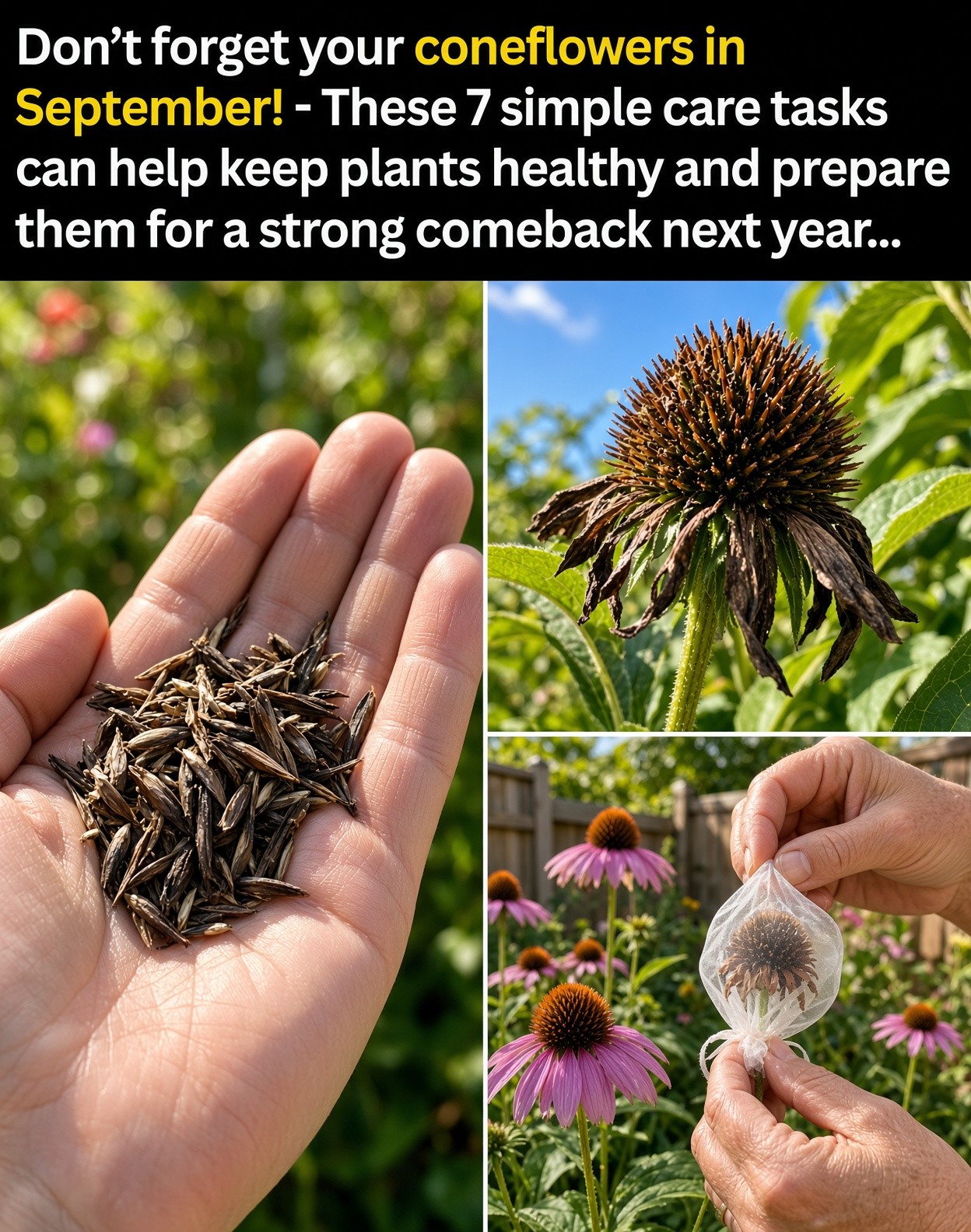
A practical fall care guide for Echinacea
September is a transition month for coneflowers. Summer blooms may be fading, seed heads are developing, and the foliage is beginning to change, but the plant is not finished for the year. Instead of cutting everything down immediately, use September to protect healthy growth, remove genuine problems, support roots, and prepare the garden for winter.

1. Stop Deadheading Every Flower
By September, many coneflowers are moving from peak bloom toward seed production. That does not mean every faded flower head needs to be removed. Leaving several healthy, mature seed heads on the plant can provide food for seed-eating birds and adds useful structure to the fall garden. If you want a tidier appearance, selectively remove a few spent blooms while keeping the strongest seed heads standing. This balanced approach lets the plant finish its seasonal cycle without sacrificing winter interest.

2. Let Healthy Green Foliage Keep Working
Green leaves are still valuable after flowering slows. As long as the foliage is healthy, it continues photosynthesis and helps the perennial maintain energy reserves in its crown and roots. That is why an early September haircut is usually unnecessary. Remove broken stems, completely dead leaves, or badly damaged growth, but leave healthy green foliage in place until it naturally declines. Penn State Extension notes that purple coneflower is a herbaceous perennial and recommends fall cleanup when plants are affected by disease rather than simply cutting healthy plants down on a calendar schedule.

3. Inspect and Remove Diseased Leaves
September is an excellent time for a close inspection. Look at the upper and lower surfaces of leaves for powdery white growth, dark or expanding spots, severe discoloration, distorted tissue, or rotting stems. Powdery mildew and leaf spot diseases can affect Echinacea, and removing clearly diseased material helps keep infected debris from accumulating around the plant. Use clean, sharp pruners and disinfect them before moving to another healthy plant. Avoid putting heavily diseased foliage into a casual home compost pile unless you know your compost reaches conditions capable of destroying the relevant pathogens.

4. Keep Watering When Fall Is Dry
Cooler September temperatures can make a garden look as though it no longer needs water, but soil can still become dry. Established coneflowers are relatively drought tolerant, yet newly planted or recently divided plants need more consistent moisture while roots establish. Container-grown coneflowers can also dry quickly. Check the soil several inches down rather than judging only by the surface. When watering is necessary, moisten the root zone deeply and then allow excess water to drain. Coneflowers prefer well-drained soil, so constantly saturated conditions are best avoided.

5. Divide Overcrowded Plants Only If They Need It
Fall division can be useful for mature coneflowers in climates where new divisions have enough time to establish before hard freezing. However, September itself is not a reason to dig up a healthy clump. Consider division when a plant has become crowded, flowering has declined, the center of the clump is weakening, or you simply want additional plants. University of Minnesota Extension explains that Echinacea can be propagated by division and that divisions should be replanted promptly, kept moist while establishing, and given suitable conditions for recovery.

6. Replant Divisions at the Original Depth
If you decide to divide a coneflower, water the plant first if the soil is dry. Dig around the clump and lift as much of the root system as possible. Separate healthy sections so each piece has viable roots and crown or shoots, then replant promptly at approximately the same depth as before. Water thoroughly after planting. In colder regions, complete fall division early enough for the new plants to establish before the ground freezes; otherwise, waiting until spring can be the safer option.

7. Pull Weeds Before They Drop More Seeds
September weeds can become next year’s problem. Many late-season weeds are preparing to flower or set seed, so removing them now can prevent a larger flush of seedlings next season. Pull weeds carefully around coneflower crowns and remove plants that are competing for moisture and nutrients. At the same time, avoid the temptation to sterilize the entire flower bed. A garden with some standing stems, seed heads, and natural plant debris can offer useful habitat and food for wildlife.

8. Leave Some Winter Habitat
A completely bare flower bed is not necessarily a healthier flower bed. Mature coneflower seed heads can feed birds, while standing stems and surrounding plant material may provide shelter for insects. Penn State Extension identifies purple coneflower as a valuable nectar source for butterflies, bees, and other pollinators, with seed heads that provide food for songbirds such as goldfinches. Leaving healthy stems standing through winter is therefore a practical way to keep the garden useful after the flowers fade.

9. Add a Light Layer of Mulch
If the soil surface is exposed or weeds are becoming difficult to manage, fall is a good time to check your mulch. A moderate layer of shredded leaves, fine bark, or another suitable organic material can help conserve moisture, reduce weeds, and moderate soil temperature changes. You do not need a huge mound. Most importantly, keep mulch away from the immediate crown of the coneflower. Wet material piled directly against the crown can hold too much moisture and increase the risk of rot.
10. Do Not Automatically Fertilize in September
Coneflowers are not heavy feeders, so a calendar-based application of high-nitrogen fertilizer is usually unnecessary. Excessive feeding can encourage lush vegetative growth when the plant should be moving toward dormancy, particularly in climates approaching frost. If your soil is poor, a modest amount of finished compost can be a useful way to add organic matter. When nutrient problems are suspected, a soil test is more informative than guessing and repeatedly applying fertilizer.
11. Decide Whether to Cut Back in Fall or Spring
There is no universal requirement to cut every coneflower to the ground in autumn. Some gardeners prefer a neat winter bed and remove stems after they turn brown. Others leave healthy stems and seed heads standing until late winter or early spring. Both approaches can work. If your priority is wildlife and winter structure, leaving healthy seed-bearing stems is a good option. If your plants have significant disease problems, however, removing affected material is more important than preserving it for winter interest.
12. Watch the Crown and Drainage as Weather Cools
Coneflowers tolerate a range of soils, but good drainage remains important. As autumn rain increases and temperatures fall, pay attention to places where water collects around the crown. Do not allow mulch, wet leaves, or compacted debris to form a thick, constantly damp layer directly over the plant. If a bed repeatedly stays saturated, improving drainage is more useful than simply watering less. Penn State Extension lists purple coneflower among plants suited to well-drained conditions and notes that the species can tolerate both moist and relatively dry sites.
13. Collect Mature Seeds if You Want More Plants
September can also be a good seed-collecting month once the flower heads have fully matured and dried. Wait until the centers are brown and dry rather than harvesting green heads. Cut mature heads and allow them to dry further in a protected location if necessary. Then separate the seeds and store them in a labeled paper envelope in a cool, dry place. Record the variety or flower color and collection date. Keep in mind that some Echinacea seed benefits from a period of cold conditions before germination, so fall sowing can sometimes let nature provide that process outdoors.
14. Do Not Panic When Flowers Finish
A coneflower that has finished flowering in September is not necessarily struggling. The plant is simply shifting priorities. During summer, most of the visible energy goes into flowers and pollinator activity; later in the season, the perennial is transitioning toward dormancy and winter survival. Continue watering during genuine dry spells, remove disease problems, and allow healthy foliage to decline naturally. Avoid trying to force a second flush with heavy fertilizer.
15. Use September to Improve Next Year’s Garden
September care is also an opportunity to observe what worked. Notice which coneflowers stayed upright, which locations dried too quickly, which plants developed mildew, and which varieties attracted the most pollinators. Purple coneflower generally performs best in full sun to partial shade and well-drained soil. Good spacing also improves airflow, which can reduce the conditions that favor some foliar diseases. Take a few notes now and you will have useful information when choosing locations, cultivars, and maintenance routines next spring.
16. The Simple September Coneflower Checklist
The best September routine is surprisingly simple: leave healthy green foliage alone, preserve some mature seed heads, remove genuine disease problems, water deeply during dry periods, divide only when necessary, pull seed-producing weeds, and keep mulch moderate and away from the crown. You do not need to make the garden perfectly clean or cut everything down at the first sign of autumn. Let the plant’s condition, your climate, and your garden goals guide the timing. With that approach, coneflowers can provide flowers, wildlife value, and winter structure while quietly preparing for another season.
What Coneflowers Need in Fall
Purple coneflower (Echinacea purpurea) is a North American herbaceous perennial that is generally easy to grow. Penn State Extension describes it as suitable for Zones 3–9, with flowers typically appearing from late June into early September. It performs well in full sun or partial shade and prefers well-drained soil. Once established, it can tolerate periods of drought, although newly planted and recently divided specimens need more dependable moisture.
Its ecological value is another reason not to rush fall cleanup. The flowers provide nectar for bees, butterflies, and other pollinators, while mature seed heads can feed birds. Good spacing, appropriate drainage, and removal of clearly diseased debris can also help reduce disease pressure.
Should You Cut Coneflowers Back in September?
Usually, there is no need to cut healthy coneflowers to the ground simply because the calendar says September. If the stems and leaves are still green, they are still functioning. Leaving healthy stems until late winter or early spring can also provide winter structure and wildlife habitat. On the other hand, removing diseased material is a different matter. If plants show significant powdery mildew, leaf spots, stem rot, or other disease symptoms, sanitation should take priority.
Final Thoughts
Coneflower care in September is less about doing more and more about doing the right things at the right time. Keep healthy foliage working, water when the soil is genuinely dry, remove disease, control weeds, divide only when necessary, mulch lightly, and leave some mature seed heads standing. A little restraint can make the fall garden more useful to wildlife and can help your Echinacea enter winter in good condition.