
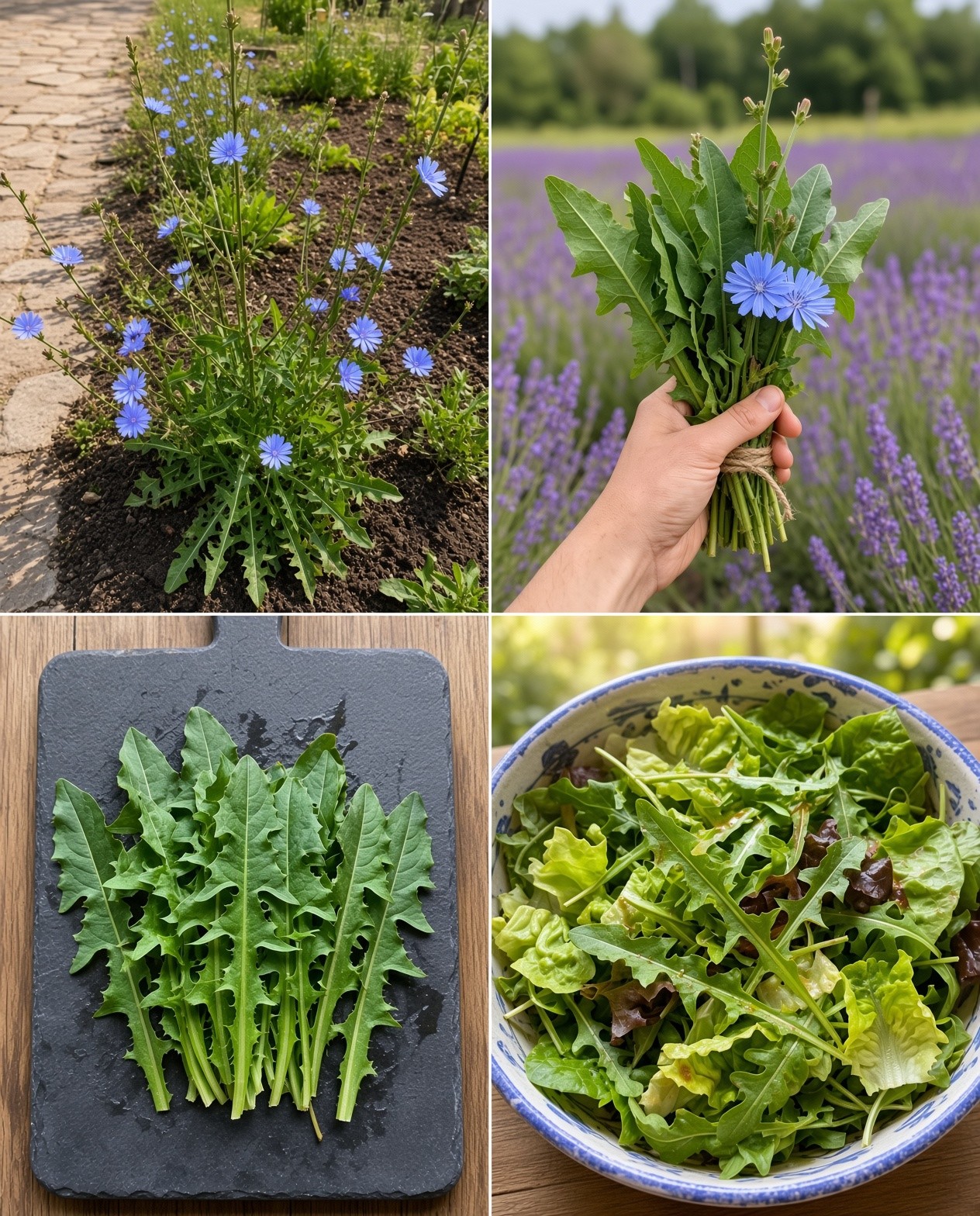
That bright blue flower growing along roadsides and empty lots all summer belongs to a plant almost nobody thinks to touch. Chicory offers more than its delicate flowers: its young leaves can be used as a bitter salad green, while its long root has a long culinary tradition as a roasted coffee substitute.

1. The Blue Flower Most People Walk Past
That bright blue flower appearing along roadsides, field edges, paths, and neglected lots is often chicory (Cichorium intybus), a hardy plant that has lived alongside people for centuries. Its flowers are especially noticeable because their clear blue color stands out against dry grass and green roadside vegetation.
 Chicory is more than a pretty wildflower. The plant has edible leaves and a substantial root, giving it several traditional food uses. The important first step, however, is accurate identification: wild plants should never be eaten simply because they resemble a familiar species.
2. How to Recognize Chicory
Common chicory forms a basal rosette of leaves and sends up tall, branching flowering stems. The leaves can be deeply lobed or toothed, while the flowers are usually a distinctive sky-blue to lavender-blue and open most strongly in suitable daylight.
 Appearance can vary with age and growing conditions, so do not rely on flower color alone when foraging. Check several characteristics, use a reliable regional field guide, and avoid collecting any plant you cannot identify with confidence.
3. The Young Leaves Are the Edible Green
Chicory’s young leaves can be eaten as a leafy green. Their flavor is noticeably bitter, which puts them in the same broad culinary conversation as other bitter greens such as escarole and endive. Younger leaves are generally more tender and easier to use than older foliage.
 Try them in a mixed salad where the bitterness is balanced by sweeter vegetables, a bright dressing, nuts, cheese, or fruit. They can also be lightly cooked, which softens both the texture and some of the bitterness.
4. Why Bitterness Can Be Part of the Appeal
Bitter greens are not meant to taste like lettuce, and chicory is a good example. Its sharper flavor can add contrast to otherwise mild salads and can make simple meals feel more interesting without requiring a long ingredient list.
 If the taste is too strong, use a small amount alongside milder greens rather than making chicory the entire salad. Cooking is another option, particularly when the leaves have become tougher later in the season.
5. The Root Has a Completely Different Use
Below the soil, chicory develops a long root that has a famous culinary history of its own. After cleaning, slicing, drying, and roasting, the root can be ground and brewed as a coffee-like drink with a deep, earthy character.
 Roasted chicory root is naturally caffeine-free on its own, although commercial coffee blends may combine it with caffeinated coffee. The flavor is different from coffee, so it is best thought of as a roasted root beverage rather than an exact coffee replacement.
6. Foraging Requires More Than Knowing the Plant
Chicory can grow in places that look wild but are not necessarily clean. Roadsides may be exposed to vehicle pollution, sprayed areas may contain herbicides or pesticides, and vacant lots can have contaminated soil or unknown chemical residues.
 For food use, choose plants from clean, unsprayed locations away from busy roads and industrial areas. Harvest only healthy growth, wash it thoroughly, and avoid collecting from land where you do not have permission to forage.
7. A Simple Way to Use Chicory at Home
For a fresh green, harvest young leaves, remove damaged portions, wash them carefully, and use them raw in a mixed salad or cook them gently. If you want to explore the root, use a dependable preparation method and make sure the plant has been positively identified before harvesting underground parts.
 Wild plants can vary in bitterness and texture, so start with a small culinary portion rather than assuming that more is better. The goal is to enjoy chicory as a food, not turn a traditional ingredient into an unsupported health remedy.
8. A Forgotten Plant Worth Noticing
Chicory is a reminder that useful plants can be hiding in plain sight. The same plant can offer a blue summer flower, tender young greens, and a root that has been transformed into a roasted beverage for generations.
 The most valuable lesson is not that every roadside plant is secretly a superfood. It is that careful observation, accurate identification, and responsible harvesting can open the door to a much richer relationship with the plants around us.
Look Twice at Those Blue Flowers
Chicory is an excellent example of a plant that can be beautiful, useful, and easily overlooked at the same time. Its flowers brighten roadsides, its young foliage can add character to a salad, and its root has a place in traditional roasted beverages.
The next time you see those unmistakable blue flowers, take a closer look—but forage only when you are certain of the identification and the site is safe.