
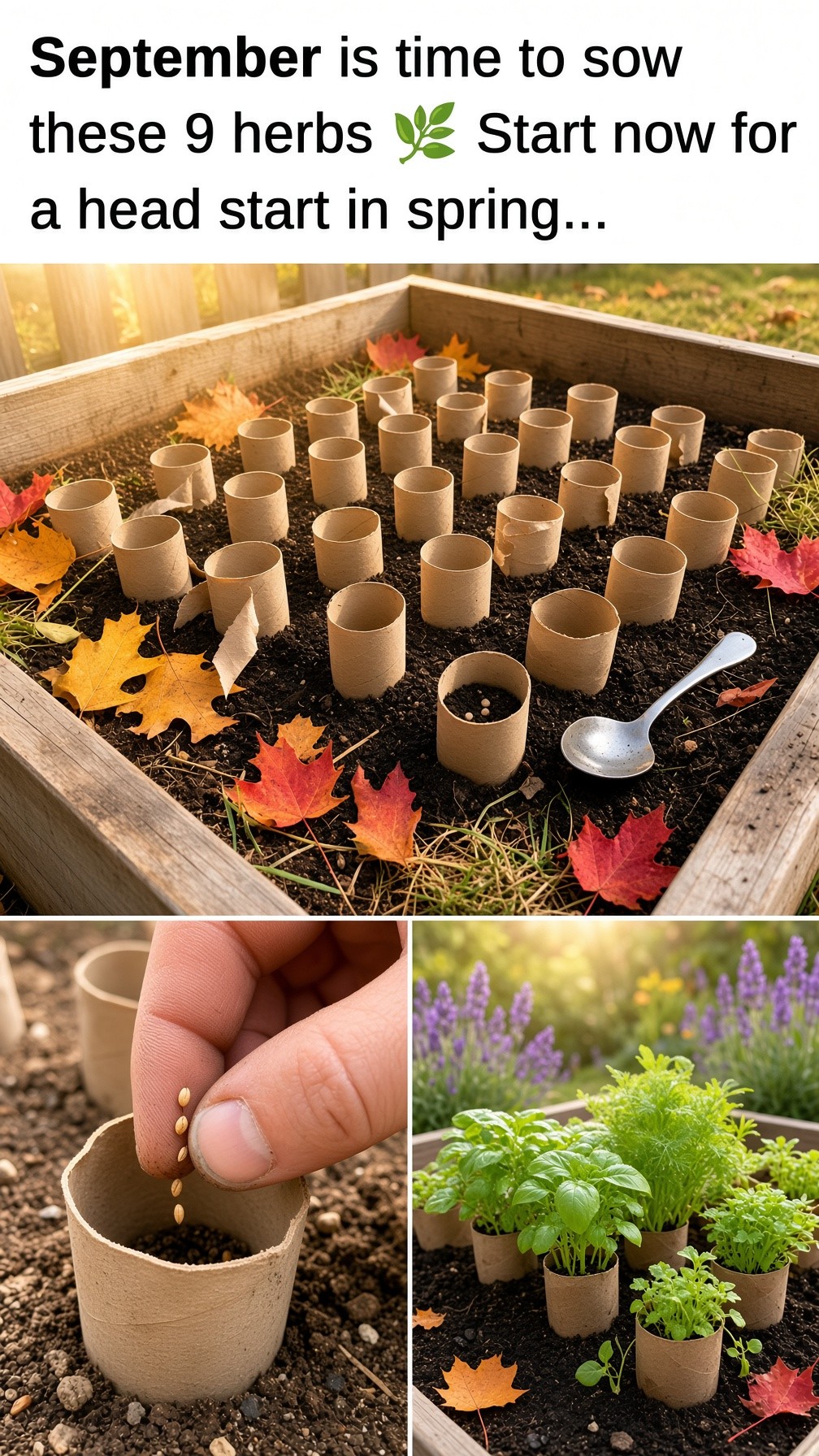
September is not the end of the gardening season—it can be the beginning of your next one. In many climates, early fall offers cool air and soil that is still warm enough for seeds to establish. By choosing suitable herbs and protecting young plants when necessary, you can give your spring garden a valuable head start.

1. Parsley
Parsley is a useful cool-season herb to start from seed. In climates where the soil remains workable, an early-fall sowing can give plants time to establish before winter and resume growth when spring arrives.
Because parsley seed can be slow to sprout, use fine, weed-free soil and keep the surface evenly moist during germination. In colder areas, light winter protection can help young plants.
2. Chives
Chives are hardy perennial herbs that can establish roots before winter and resume growth in spring. Their compact habit makes them useful along bed edges, paths, and in containers.
 Sow in a sunny or lightly shaded spot with well-drained soil. Once established, chives need relatively little attention and can provide fresh leaves year after year.
3. Cilantro
Cilantro naturally prefers cool weather, making fall a useful sowing window in regions with moderate winters. Getting plants established before the coldest period can give you an earlier start when temperatures rise.
 Sow cilantro where you want it to grow because its taproot dislikes repeated disturbance. Keep the seedbed consistently moist until seedlings appear.
4. Thyme
Thyme is a drought-tolerant perennial that rewards patience. In suitable climates, early-fall sowing can allow seedlings to establish before winter, although germination may take longer than with leafy annual herbs.
 Thyme seeds are tiny and should not be buried deeply. Press them gently onto fine, well-drained soil and keep the surface lightly moist while they establish.
5. Dill
Dill is a quick-growing annual that prefers cool to mild conditions. A fall sowing can work where winter is gentle, and direct sowing is usually preferable because mature dill does not transplant particularly well.
 Choose a sunny position and sow directly into prepared soil. In colder areas the plants may die back, while mild climates may allow useful fall growth or an earlier spring start.
6. Sage
Sage is a woody perennial that can be grown from seed, although it is slower than some other herbs. A fall sowing can work in moderate climates when seedlings have time to settle before hard freezes.
 Use well-drained soil and avoid keeping the seedbed constantly wet. In colder regions, protect young plants with a light mulch or suitable cover.
7. Protect Young Seedlings From Frost
Fall sowing works best when seedlings have time to establish before the harshest cold arrives. If hard freezes are common, a cold frame, row cover, or light mulch can reduce frost exposure.
 The goal is to buffer temperature swings without smothering young plants. Keep protection breathable and remove or vent it when conditions allow.
8. Why September Can Be a Useful Sowing Window
Early fall can combine cooling air with soil that is still warm enough for germination. Weed growth and some pest pressure may also decline as the season changes.
 The exact timing depends on local weather rather than the calendar alone. Use your first expected frost date, soil conditions, and each herb’s cold tolerance to decide whether September is right for you.
9. Plan for a Spring Harvest
The main advantage of successful fall sowing is the head start. Herbs that establish roots before winter can resume growth as soon as conditions improve, potentially giving you earlier harvests.
 Start with a few herbs suited to your climate and observe how they perform. A little seasonal planning can turn a small patch of soil into an early spring source of fresh flavor.
Make Fall Planting Part of Your Spring Garden Plan
Direct sowing in September can be a smart way to use the changing seasons instead of simply waiting for spring. Start with a few reliable herbs, observe how they respond to your local winter, and adjust your timing next year.
Small seeds in fall can become a fresh herb harvest when spring arrives.