
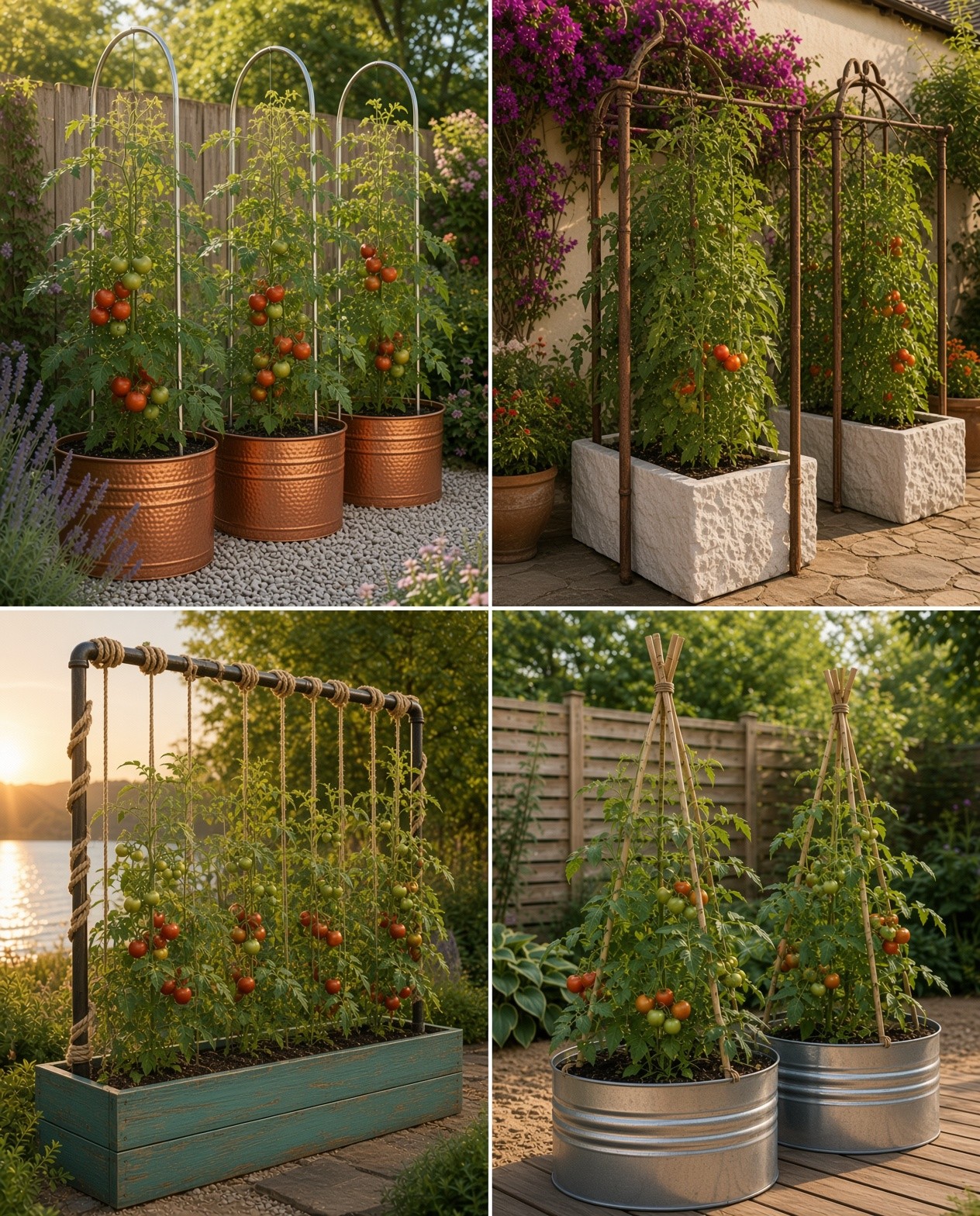
You do not need a huge garden to grow an impressive crop of tomatoes and cucumbers. By moving vines upward instead of letting them spread across the ground, you can make better use of narrow beds, patios, fences, and other small spaces while keeping your harvest easier to see and reach.

1. Trellises and Cages
A sturdy trellis or tomato cage is one of the simplest ways to lift vines off the ground. It gives stems a defined framework, improves air movement around the foliage, and makes ripening fruit easier to see and harvest.
 Choose supports that can handle the mature weight of the plants, especially when a tomato plant is loaded with fruit. Install the support before the plant becomes large so you do not have to disturb established roots later.
2. Vertical Planters
Stacked planters and tower-style containers turn unused vertical space into growing room. They are especially useful on patios, balconies, narrow yards, and other places where ground area is limited.
 Use containers with dependable drainage and a quality growing mix. Check watering frequently because elevated containers can dry faster than plants growing in a larger garden bed.
3. Hanging Baskets
Hanging baskets can be surprisingly productive for compact tomatoes and some cucumber varieties. Raising the plants keeps foliage away from the soil while adding another growing layer above paths, patios, or beds.
 Choose a basket large enough for the plant’s mature root system and make sure the support point is genuinely strong. A heavy container becomes much heavier after it is filled with wet soil and a mature plant.
4. Pallet Gardens
A sound, clean wooden pallet can be adapted into a vertical planter for smaller vegetables and herbs. The structure uses wall or floor space efficiently and can become an attractive feature when planted densely.
 Only use pallets that are safe for gardening and have not been exposed to unknown chemicals. Line planting pockets appropriately, provide drainage, and make sure the finished structure is stable before filling it with soil.
5. String Supports
Garden twine or soft plant string can guide tomato stems upward with very little equipment. The method is inexpensive, adjustable, and particularly useful when you want a tidy row of plants in a narrow bed.
 Tie plants gently and check the supports regularly as stems thicken. Avoid tight knots that can cut into growing stems, and replace weathered string before it fails under the weight of the crop.
6. Grow on a Net or Fence
Cucumber vines are natural climbers, and a strong net, mesh panel, or sturdy fence can give them the surface they need to climb. Vertical growth keeps fruits easier to spot and can reduce contact with wet soil.
 Secure the net firmly at several points and use weather-resistant material. Guide young vines toward the support instead of waiting until they become tangled, and check that the structure can handle wind and fruit weight.
7. Use Companion Planting Around the Structure
The space below and beside a vertical crop does not have to remain empty. Herbs and flowers can fill some of the lower growing area, while thoughtful spacing prevents the garden from becoming overcrowded.
 Choose companions that have compatible light and water needs. Basil, marigolds, and nasturtiums can add useful diversity, but the main goal is still good airflow, adequate light, and enough soil nutrition for every plant.
8. Harvest Often for a Productive Garden
Vertical growing makes it easier to see ripe tomatoes and cucumbers, which is helpful because regular harvesting can keep plants producing. Picking fruit at the appropriate stage also prevents oversized cucumbers and overripe tomatoes from slowing your routine.
 Use clean hands or garden snips as appropriate, and check the vines frequently during peak production. A small harvest basket kept nearby can make regular picking feel effortless.
Grow Up, Not Out
Vertical gardening is less about complicated equipment and more about giving each plant a clear path upward. With sturdy supports, regular training, good airflow, and frequent harvesting, even a compact garden can produce a generous supply of fresh vegetables.
Make the most of the space you have—and let your vegetables climb toward the sun.