
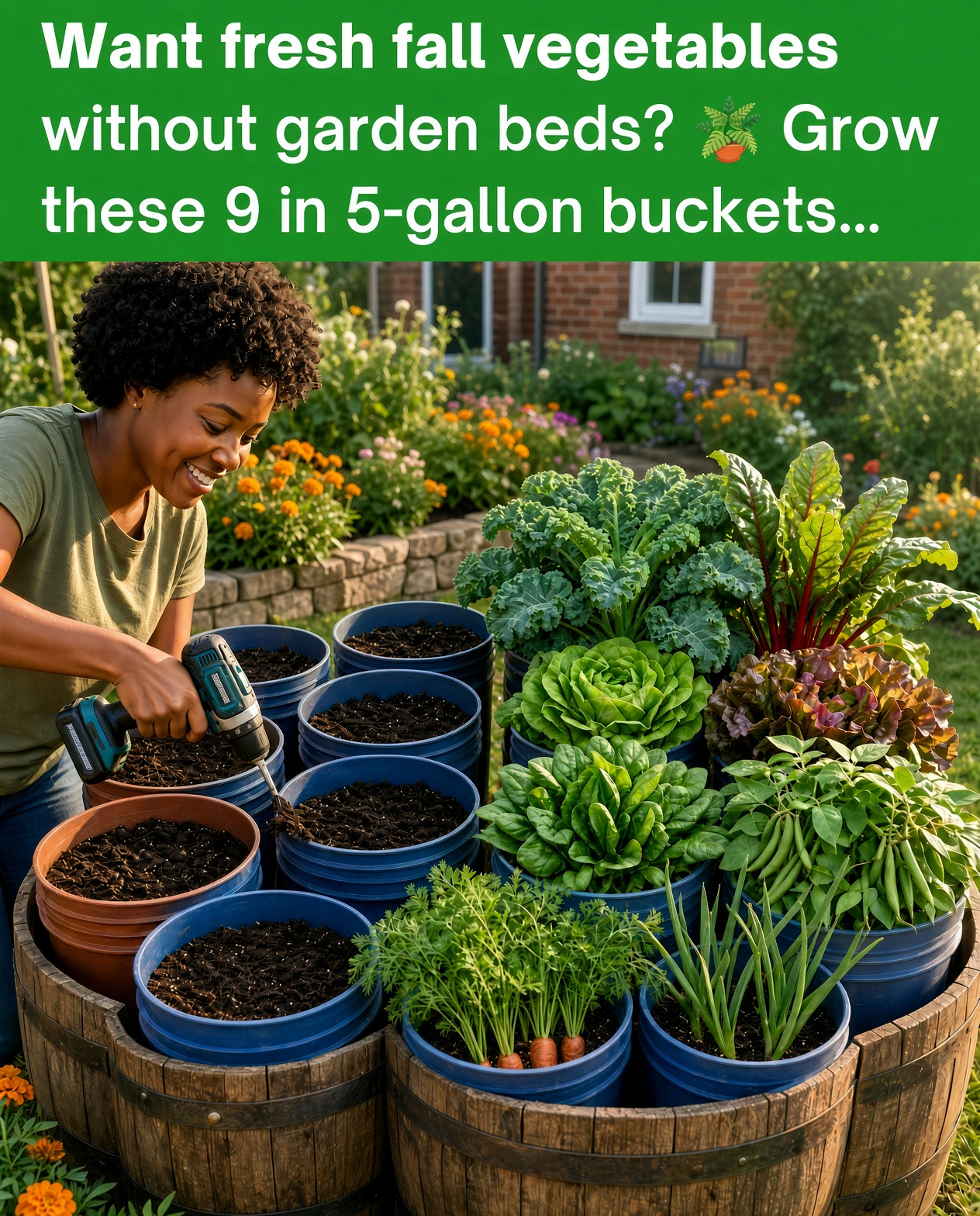
Five-gallon buckets are especially useful because they are inexpensive, easy to move and deep enough for many vegetables. University of Maine Cooperative Extension also lists several vegetables that can be grown successfully in containers of this general size, including beans, beets, chard, carrots, lettuce, radishes and spinach.

How to Prepare a 5-Gallon Bucket for Fall Vegetables
Before planting, make sure your bucket has plenty of drainage. A container that holds water around the roots can create more problems than it solves. Drill several drainage holes through the bottom and check that water can escape freely.
Use a quality container-growing mix rather than filling the bucket entirely with heavy garden soil. A loose potting mix allows roots to spread and makes it easier for excess water to drain away. You can mix in mature compost to provide additional organic matter.
Place the bucket somewhere that receives enough sunlight for the vegetable you plan to grow. Fall crops generally appreciate bright conditions, although some leafy greens can tolerate partial shade, especially when temperatures are still warm.
1. Spinach

Spinach is one of the easiest fall vegetables to grow in containers because it prefers cool weather. Instead of waiting for a large garden bed to become available, you can sow spinach directly into a bucket and enjoy young leaves relatively quickly.
Choose a wide container and keep the soil consistently moist without leaving it waterlogged. Spinach can be harvested gradually, allowing you to pick the larger outer leaves while younger leaves continue developing.
The biggest advantage of growing spinach in fall is temperature. Cooler conditions help the plants produce tender leaves and reduce the risk of premature bolting. If an unusually warm period arrives, moving the bucket to a location with some afternoon protection can help.
2. Kale

Kale is another excellent choice for a fall container garden. It is tough, productive and capable of continuing to provide leaves when temperatures begin dropping.
A single healthy kale plant can occupy much of a 5-gallon bucket, so avoid overcrowding. Give the plant enough room for its leaves to develop and keep the growing mix evenly moist.
Harvest kale by removing the larger outer leaves first rather than cutting the entire plant at once. This allows the center of the plant to keep producing new foliage and can extend your harvest considerably.
3. Radishes
:max_bytes(150000):strip_icc()/how-to-grow-radishes-in-containers-11827065-hero-0725-8d2c5f9c8c744a4c8f4c2b8c5c8a1a9f.jpg)
Radishes are perfect when you want a quick fall harvest. They take up little space, grow rapidly and can be planted several at a time in one container.
Fill the bucket with fine, loose potting mix and sow the seeds directly where they will grow. Because the edible root develops underground, compacted soil can lead to disappointing results, so keep the growing medium loose and well drained.
Small round radish varieties are particularly convenient for container gardening. Succession sowing is another useful technique: plant a small batch, then sow another batch a couple of weeks later for a more continuous supply.
4. Swiss Chard

Swiss chard brings both productivity and color to a fall container garden. The plants can develop attractive green leaves with colorful stems, making them useful even when you want your vegetable garden to look ornamental.
Chard is also a good crop for repeated harvesting. Instead of pulling the whole plant, remove mature outer leaves and leave the central growth point intact. With adequate moisture and nutrition, the plant can continue producing fresh leaves.
Give Swiss chard a container with good drainage and enough space for the leaves to spread. Regular harvesting also helps prevent the bucket from becoming overcrowded.
5. Bush Beans

Bush beans are a useful option when you want something different from leafy greens and root vegetables. Unlike climbing varieties, bush beans have a compact growth habit and generally need less vertical support.
Plant the seeds directly into the bucket once conditions are suitable. Keep the soil evenly moist during germination, because inconsistent moisture can make seed emergence less reliable.
As the plants mature, harvest the pods regularly. Picking beans while they are still young and tender encourages you to keep harvesting rather than allowing the pods to become tough and oversized.
6. Beets

Beets make particularly good use of container space because you can harvest both the roots and the leaves. They also tolerate cool growing conditions, making them a natural candidate for a fall vegetable garden.
Sow beet seeds directly into the bucket and thin the seedlings once they begin developing. Crowded plants compete for water, nutrients and growing room, which can result in smaller roots.
Do not automatically throw away the seedlings you remove. Young beet greens can be used in salads or cooked like other leafy vegetables. This gives you an additional harvest while the remaining plants continue developing underground.
7. Loose-Leaf Lettuce

Loose-leaf lettuce is one of the most convenient vegetables for a small fall garden. Instead of growing one large head, you can pick individual leaves whenever you need them.
Use a wide bucket or container filled with a light, moisture-retentive potting mix. Sow several seeds across the surface, then thin seedlings as necessary so the plants have room to grow.
For an almost continuous supply, try succession planting. Sow a small amount of lettuce every couple of weeks rather than planting everything at the same time. This spreads your harvest over a longer period.
Popular loose-leaf types include Salad Bowl, Oakleaf and Red Sails. Their relatively compact growth makes them especially useful for balconies, patios and other small growing spaces.
8. Garlic
Garlic requires more patience than radishes or lettuce, but it is an excellent crop to start in fall. The cloves can establish roots before winter and continue growing when spring arrives.
Separate a garlic bulb into individual cloves and plant the cloves with the pointed end facing upward. Cover them with soil and place the container somewhere sunny with reliable drainage.
Garlic is particularly important to plan according to your climate. Hardneck types are generally associated with colder growing regions, while softneck types are often preferred in milder climates. Choose a variety appropriate for your local conditions.
9. Carrots
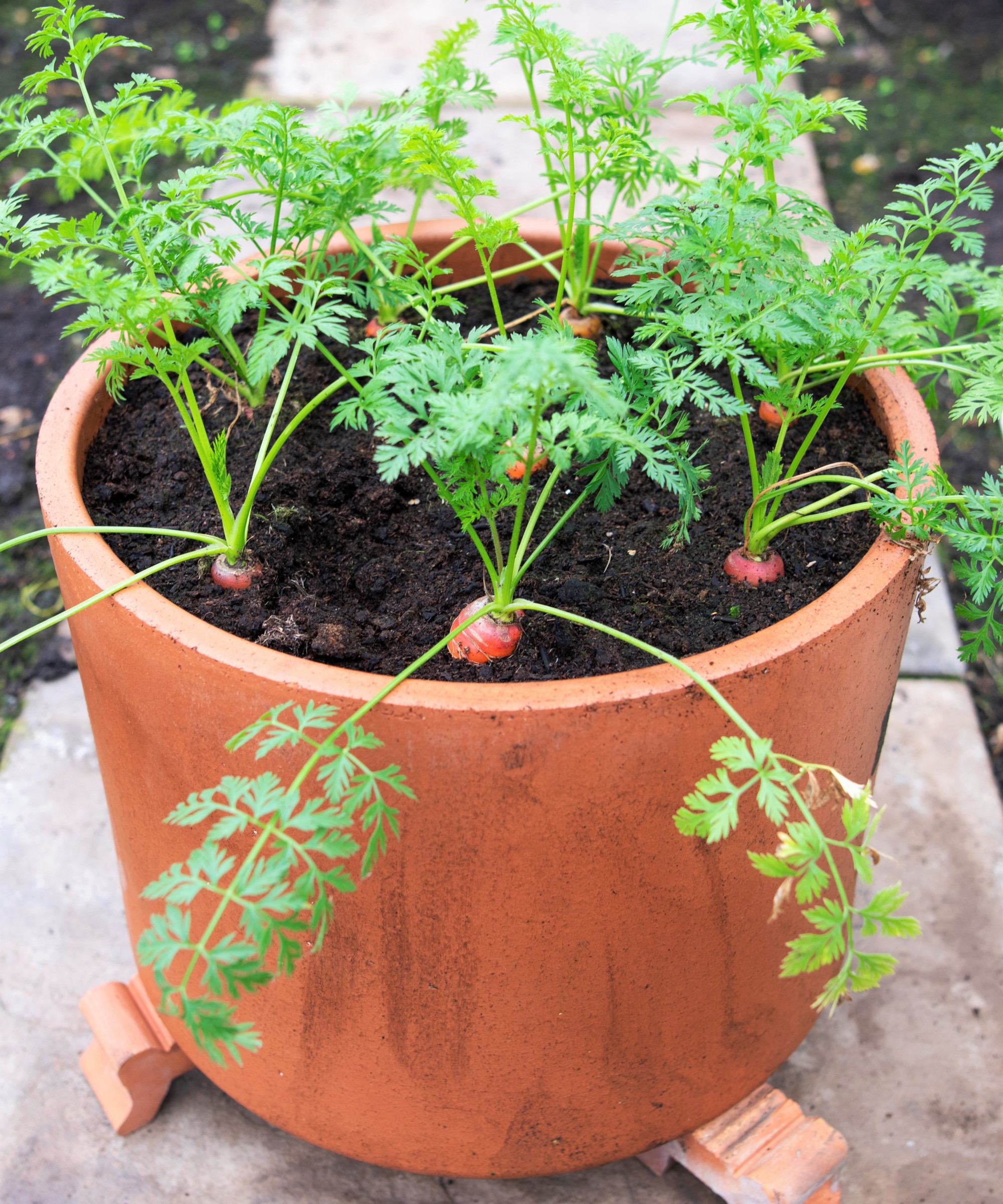
Carrots can thrive in containers as long as you choose varieties that match the available depth. A 5-gallon bucket gives you more room than a shallow planter, but long-rooted carrots still need enough loose soil beneath them.
For container gardening, look for shorter or round varieties such as Thumbelina or other compact types. These varieties are easier to grow successfully when you do not have a very deep garden bed.
Sow carrot seeds directly into the container because their young roots do not appreciate unnecessary disturbance. Once the seedlings appear, thin them carefully so the remaining carrots have enough room to develop.
How to Keep Your Fall Bucket Garden Productive
Container vegetables need slightly different care from vegetables planted directly in the ground. Buckets can dry out faster, particularly when they are exposed to wind or strong sunlight. Check the moisture level regularly rather than watering according to a rigid schedule.
At the same time, avoid keeping the soil permanently saturated. Good drainage is essential, especially during rainy periods. If water remains trapped inside the bucket, roots can suffer from poor aeration and other problems.
Because nutrients are limited in containers, plants may also benefit from occasional feeding with a fertilizer suitable for vegetables. Follow the product directions rather than assuming that more fertilizer will produce better growth.
Why 5-Gallon Buckets Are Great for Fall Gardening
The biggest advantage of bucket gardening is flexibility. You can grow food without owning a large garden, move containers when weather conditions change and dedicate individual buckets to different crops.
Five-gallon containers can also make it easier to separate crops according to their needs. You might place spinach and lettuce where they receive cooler conditions, while keeping garlic and carrots in a brighter position.
Several university extension recommendations support container growing for crops such as beans, beets, chard, carrots, lettuce, radishes and spinach. This makes a small bucket garden a practical option rather than simply a gardening experiment.
Final Thoughts

You do not need a large backyard to enjoy a productive fall vegetable garden. A few 5-gallon buckets, good potting mix, adequate drainage and the right crops can give you a surprising amount of fresh food.
For the fastest results, start with radishes, lettuce and spinach. If you want crops that can provide harvests over a longer period, consider kale, Swiss chard and garlic. Carrots and beets are also excellent choices when you want to make use of the space below the soil surface.
The key is to match the crop to the container, provide consistent moisture and avoid overcrowding. Once your first bucket garden is established, you may find that a small patio or balcony can produce far more food than you expected.