
8 Flower Seeds You Should Harvest in August (Before It’s Too Late)
Introduction
August is one of the best months of the gardening year for saving flower seeds. Many summer flowers are reaching the end of their bloom cycle, and their spent flowers are beginning to form mature seed heads. If you harvest at the right moment, you can collect free seeds for next year’s garden instead of buying new packets every spring.

Learning how to harvest flower seeds is simple, but timing matters. Seeds that are collected too early may be immature, while seed heads left outside too long can be scattered by wind, washed away by rain, or eaten by birds. The key is to watch the flowers closely and collect them when the seed heads have dried and changed color.
Why August Is the Perfect Time to Harvest Flower Seeds
For many summer flowers, August is the point when the first flush of blooms has faded and mature seeds are beginning to develop. Warm weather helps seed heads dry naturally, making them easier to collect and store. This makes August an excellent time to walk through your garden and identify flowers that are ready for seed saving.
Harvesting seeds also helps you preserve varieties that perform especially well in your garden. If a plant produced beautiful flowers, resisted disease, or handled your local weather particularly well, saving its seeds gives you the opportunity to grow more plants with similar characteristics next season.
How to Tell When Flower Seeds Are Ready
The easiest way to know whether flower seeds are ready is to look at the seed head rather than the fading petals alone. Mature seed heads are usually dry, brown, crisp, or papery. The stems may also begin to turn brown, and the seeds should come away easily when the head is handled.

Avoid harvesting pods that are still green, soft, or full of milky-looking seeds. Immature seeds often have poor germination and may rot during storage. A good rule is to let the flower head dry on the plant as long as weather conditions allow, then harvest before wind and rain can scatter the seeds.
1. Marigold Seeds
Marigolds are among the easiest annual flowers from which to collect seeds. Wait until the flower heads have faded completely and become dry. The petals will usually look brown and papery, and the base of the flower will contain long, narrow seeds.
To harvest marigold seeds, remove a dry flower head and gently pull it apart. Look for the dark, slender seeds attached near the base of the dried petals. Separate the seeds from the remaining flower material and spread them out in a dry place for several days before storing them.
Because marigolds are prolific bloomers, you can usually collect plenty of seed from only a few mature flowers. Leave some flowers on the plants for natural reseeding and for garden wildlife.
2. Zinnia Seeds
Zinnias produce abundant seeds and are excellent candidates for late-summer seed saving. Allow the flowers to remain on the plant after they fade. The petals and central flower structure should become dry and brown before you harvest.

Once a zinnia flower head is completely dry, gently pull it apart. Seeds are often attached near the base of dried petals and can look like small arrowheads or flat, dark pieces. Collect the mature seeds and remove loose flower debris before allowing them to finish air-drying.
Choose seeds from healthy plants with the flower colors and forms you most enjoy. Saving from several plants can give you a larger and more varied batch for next year’s garden.
3. Cosmos Seeds
Cosmos are generous seed producers, which makes them one of the easiest flowers to save in August. After the flowers fade, the seed heads become dry and the elongated seeds become easy to see. If you leave mature cosmos heads untouched for too long, the plant may scatter seeds throughout the garden.
Wait until the flower head has dried and the seeds have darkened. Snip off the entire head or gently pull the mature seeds away from the dried flower. Allow the collected seeds to dry completely indoors before putting them into an envelope or jar.
Cosmos often self-seed naturally, so you do not need to collect every seed head. Saving a portion for next year while leaving some for natural reseeding is a great balance.
4. Nigella (Love-in-a-Mist) Seeds
Nigella, commonly called love-in-a-mist, produces distinctive ornamental seed pods that are almost as attractive as its flowers. As the blooms fade, the green pods gradually become dry, papery, and brown. August is often a good time to harvest them before the pods split or scatter their contents.

Cut the mature pods from the plant and bring them indoors to finish drying if necessary. Place them in a paper bag or shallow tray in a dry, well-ventilated area. Once completely dry, shake or rub the pods gently to release the seeds.
Nigella is also known for readily reseeding itself, so even if you miss a few pods, you may find volunteer seedlings appearing in the garden next season.
5. Calendula Seeds
Calendula seeds have a distinctive curved shape and are easy to recognize once the flower head has dried. Allow the blooms to fade naturally and wait until the flower base looks dry and begins to loosen.

The mature seeds can be collected by gently removing them from the dried flower head. Choose fully developed, firm-looking seeds and discard damaged pieces or bits of plant material. Spread the seeds out on a plate, tray, or sheet of paper so any remaining moisture can evaporate.
Calendula can produce a generous amount of seed, so August is an excellent opportunity to collect enough for next year’s flower beds, containers, and pollinator-friendly planting areas.
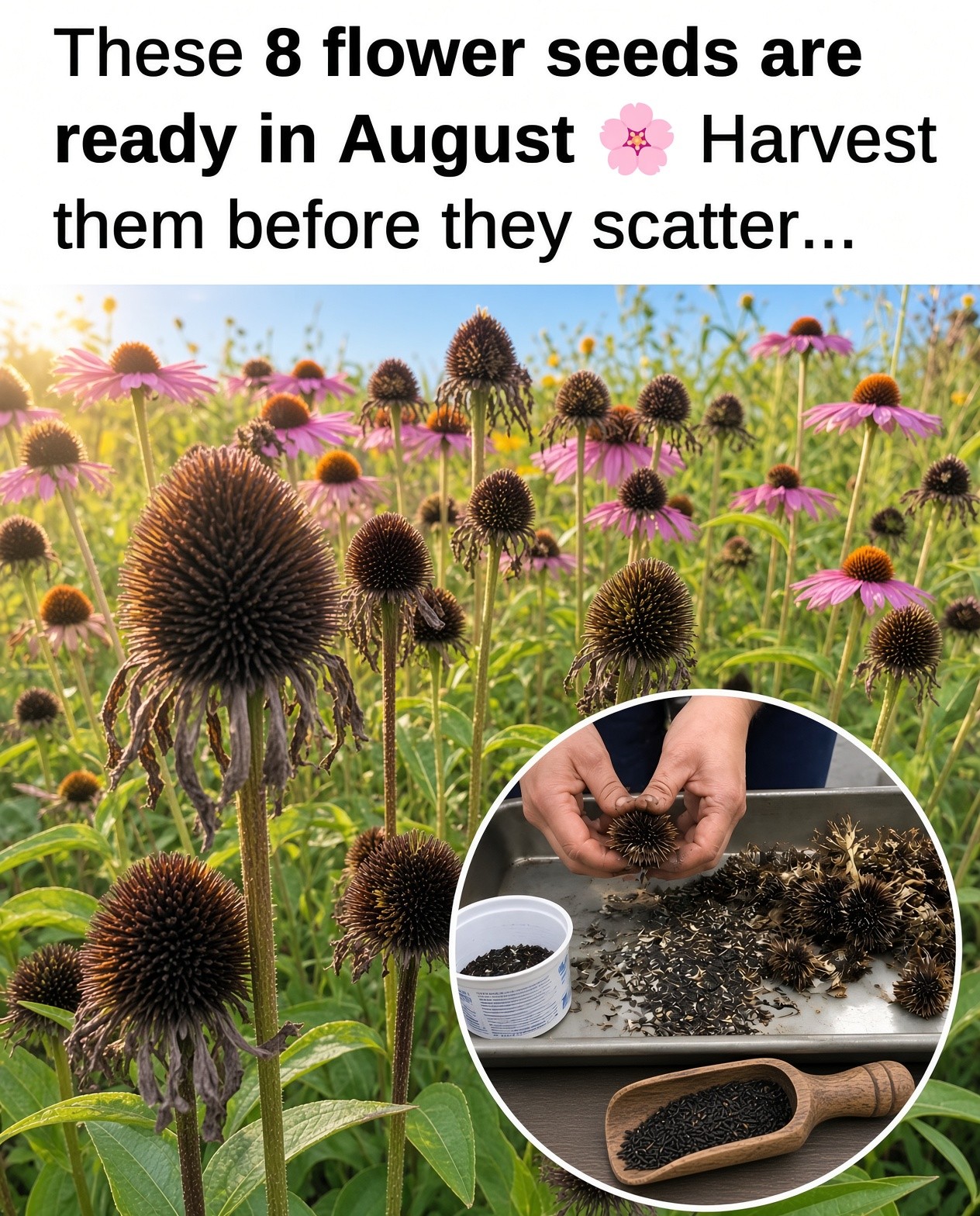
6. Coneflower (Echinacea) Seeds
Coneflowers, including purple coneflower, store their seeds in the prominent central cone. After the petals fade, allow the cone to remain on the plant until it becomes dry and brown. The individual seeds can then be separated from the cone.

Wear gloves when handling dried coneflower heads because the central structure can be stiff and prickly. Rub or gently break apart the dried cone over a clean container to release the seeds. Remove large pieces of plant debris and allow the seeds to dry fully before storage.
Do not harvest every coneflower head. Leaving some mature cones standing through autumn and winter provides an important food source for birds, especially seed-eating species.
7. Poppy Seeds
Poppies develop distinctive round seed pods that make seed collection especially satisfying. When the pods are fully mature, they become dry and the seeds inside can be heard moving when the pod is gently shaken.

Cut mature pods with a little stem attached and place them upside down over a paper bag or container. Shake them gently to release the small seeds through the openings at the top of the pod. Make sure the seeds are completely dry before sealing them for storage.
Because poppy seeds are tiny, work in a sheltered area without strong air movement. A simple paper envelope or small labeled container can help prevent them from being lost during handling.
8. Black-Eyed Susan (Rudbeckia) Seeds
Black-eyed Susans produce their seeds in the dark central cones left behind after the petals fade. Wait until the cones are completely dry, brown, and crisp. If the cone is still soft or green, give it more time to mature.

To harvest the seeds, cut off the dried cone and rub it gently between your fingers over a bowl or paper sheet. The tiny seeds will fall from the cone along with some dry plant material. Separate the larger debris if desired and let the seeds air-dry before storing them.
Rudbeckia is another excellent flower to share with wildlife, so consider leaving several dried seed heads standing through fall and winter instead of harvesting every one.
How to Dry Flower Seeds Before Storage
Proper drying is one of the most important steps in saving flower seeds. Even seeds that look dry on the outside can contain enough moisture to cause mold when sealed in a container. After harvesting, spread the seeds in a single layer on a clean sheet of paper, tray, or shallow dish.

Keep them in a dry, shaded, well-ventilated location for several days. Avoid high humidity and direct heat. Once the seeds are completely dry, transfer them to labeled paper envelopes or airtight containers. Include the flower name and harvest date so you know exactly what you saved.
How to Store Flower Seeds for Next Year
Store dried flower seeds in a cool, dark, dry location. Paper envelopes placed inside a sealed container can provide a useful combination of labeling, organization, and protection from humidity. Keep the collection away from direct sunlight, heat, and damp areas.
Good labeling is essential if you save several types of flowers. Write the flower name, color or variety if known, and the year collected. When spring arrives, you will be able to sow your saved seeds with confidence instead of trying to remember what is in each packet.
Remember that not every saved seed will germinate at the same rate. Some flowers are easy and reliable from seed, while others may have specific germination requirements. Saving a generous amount gives you more opportunities for success.
Final Thoughts
August is an excellent month to look beyond the colorful flowers in your garden and pay attention to the seed heads developing after the blooms fade. Marigolds, zinnias, cosmos, nigella, calendula, coneflowers, poppies, and black-eyed Susans can all provide useful seeds when harvested at the right stage.
The most important rule is simple: wait until the seed heads are mature and dry, but harvest before wind, rain, or wildlife removes the seeds. Dry everything thoroughly before storage, label your collection, and keep it somewhere cool and dry.
Saving flower seeds is an inexpensive and rewarding gardening habit. With a few minutes of work in August, you can create your own supply of seeds for next spring while preserving some of the flowers that made your garden special this year.
SEO Keywords
flower seeds to harvest in August, how to harvest flower seeds, seed saving, save flower seeds, harvest seeds from flowers, flower seed collection, how to dry flower seeds, how to store flower seeds, August gardening