
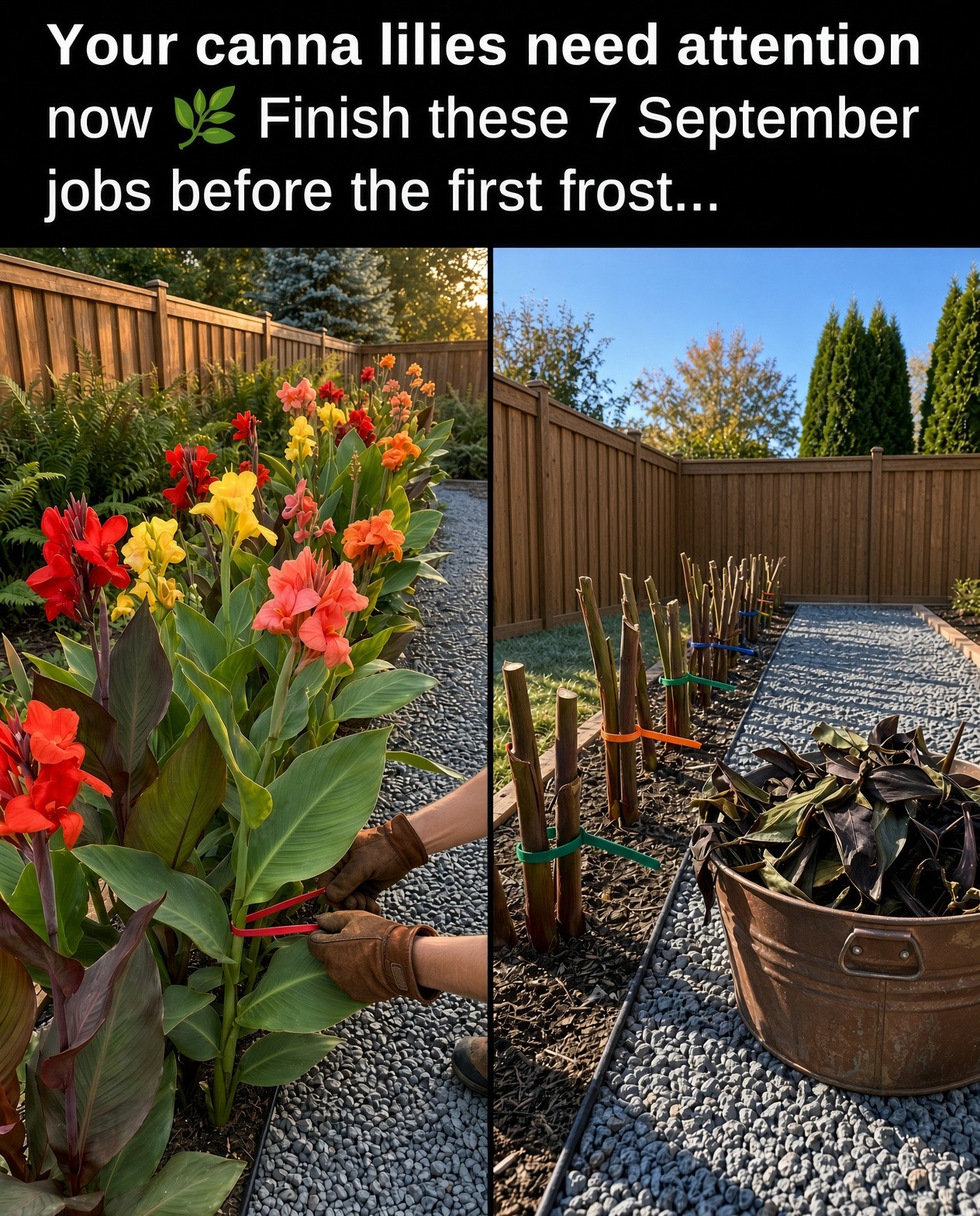
Canna lilies are at their tropical best in summer, but September is when gardeners in colder climates need to start thinking about what happens underground. The leaves may still look magnificent, yet the arrival of frost can quickly change the plant from a summer showstopper into a winter-storage project. The key is not to panic and cut everything back too early. Instead, use September to finish flowering-season care, protect the rhizomes, and prepare for the first serious freeze.

When to Start Preparing Cannas for Cold Weather
Canna lilies bring a tropical look to late-summer gardens, but September is the month to shift from peak-season growth to winter preparation. The exact timing depends on your climate. In regions where cannas are reliably hardy, rhizomes may remain in the ground with suitable protection. In colder areas, however, the rhizomes need to be lifted and stored before a hard freeze. University of Minnesota Extension notes that cannas are tropical and subtropical plants and that their rhizomes must be dug in climates where they cannot survive winter outdoors. Penn State likewise recommends digging after frost has killed the foliage and storing the rhizomes in a cool location.

1. Keep Removing Spent Flowers
Cannas can continue producing flowers late in the season, so September does not automatically mean the end of maintenance. Remove faded flower clusters before they become heavily focused on seed production, especially if you want the plant to keep directing resources toward its rhizomes and remaining growth. Cut the spent flower stalk back to a healthy point with clean pruners. This also keeps the plant looking tidier and makes it easier to inspect the foliage for disease or damage.

2. Keep Healthy Green Leaves for Now
Do not cut every canna leaf simply because autumn has arrived. Green leaves are still photosynthesizing while the plant remains active, helping replenish the underground rhizome. If leaves are healthy, leave them attached until frost or a clear decline in the plant tells you the growing season is ending. Remove leaves early only when they are badly diseased, collapsing, or otherwise creating a sanitation problem.

3. Water During Dry September Weather
Cannas like warmth, moisture, and soil rich in organic matter. Even though fall is approaching, a long dry spell can still stress plants that are actively growing. Check the soil rather than watering according to the calendar. If the root zone is becoming noticeably dry, water deeply around the base so moisture reaches the rhizomes and surrounding roots. As temperatures fall and growth slows, gradually reduce watering. Avoid keeping the soil constantly saturated because excessive moisture can encourage rot.

4. Stop Pushing New Growth With Fertilizer
Late-season fertilizer is usually unnecessary once cannas are approaching dormancy. In particular, avoid encouraging a flush of tender new foliage just as freezing temperatures are approaching. A better September strategy is to let the plant finish its natural growth cycle. If your soil needs improvement, organic matter can be incorporated during the appropriate garden preparation period, but do not treat late-season feeding as a way to force extra growth before winter.

5. Label Your Canna Varieties Before They Go Dormant
If you grow several canna cultivars, September is an excellent time to label them. Flower color and foliage patterns make varieties easy to distinguish while they are growing, but once the stems are cut down and the rhizomes are stored, identification becomes much harder. Use durable plant labels and record the cultivar name, flower color, foliage type, and where it was planted. This small step can save a surprising amount of confusion when spring arrives.

6. Wait for Frost Before the Final Cut in Cold Climates
In colder regions, do not rush to cut healthy canna foliage to the ground simply because September has arrived. Wait until frost blackens the foliage or the plant has clearly entered dormancy. Once the leaves have been damaged by frost, cut the stems down to a short stump. Extension guidance commonly recommends leaving roughly 2 to 3 inches of stem when preparing rhizomes for storage. Cutting after the foliage has died back allows the plant to finish its seasonal cycle before storage.

7. Dig and Store the Rhizomes Before a Hard Freeze
This is the most important task for gardeners in climates where cannas cannot survive winter in the ground. Dig after frost has killed the foliage, but before the soil freezes deeply. Use a garden fork or spade and work several inches away from the clump so you are less likely to slice through the rhizomes. Lift the whole clump gently, shake or brush away excess soil, and inspect it. Discard pieces that are badly damaged, soft, or rotting. Healthy rhizomes should be firm and free of obvious decay.

How to Cure Canna Rhizomes Before Storage
After lifting, allow the rhizomes to dry in a protected, well-ventilated location. Penn State and University of Minnesota Extension both recommend cool, frost-free storage conditions; Penn State describes an ideal range around 45–55°F for many tropical plants, while UMN gives about 40–50°F for stored cannas. The purpose of drying is to reduce surface moisture before the rhizomes spend months in storage. Do not leave them exposed to freezing temperatures, and do not seal damp rhizomes into an airtight container.

How to Pack Canna Rhizomes for Winter
Place cured rhizomes in a box, crate, or other container that allows some air circulation. They can be surrounded loosely with a dry packing material such as peat moss or similar material recommended for bulb storage. The goal is to prevent excessive drying while avoiding trapped moisture. Store the container in a cool, dark, frost-free location. Avoid warm rooms, heated closets, or damp spaces where temperature swings and moisture can encourage rot.

Check Stored Rhizomes During Winter
Winter storage is not completely hands-off. Check the rhizomes periodically for soft spots, mold, shriveling, or other changes. UMN Extension notes that rot can be associated with damage during digging, excessive storage temperatures, and poor air circulation. Remove any rotten material promptly so a problem does not spread. If a rhizome is only slightly dry but remains firm, it may still be viable; severe rot or extensive decay is a different matter and should be removed.

What About Cannas in Warmer Climates?
Gardeners in frost-free or mild climates may not need to dig their cannas at all. Some cannas can remain outdoors where winter temperatures stay within their tolerance range. However, hardiness varies by climate, site, and cultivar. A protected south-facing location may behave differently from an exposed garden. If your area regularly experiences hard freezes, follow local recommendations rather than assuming a canna will survive outdoors simply because it performed well through summer.

Should You Divide Canna Rhizomes in Fall?
Cannas can be divided, but division does not have to be part of every fall routine. If the clump has become crowded or you want more plants next season, division can be done when the rhizomes are being handled. Each division needs a healthy growing point, or eye. Make clean cuts with a sanitized tool and allow freshly cut pieces to dry before storage or planting according to your local growing schedule. If you are simply trying to overwinter a small collection, keeping intact clumps can be simpler.

Common Canna Winter-Preparation Mistakes
The most common mistakes are cutting healthy foliage too early, digging too late, storing wet rhizomes, and keeping them somewhere warm. Another mistake is forgetting to inspect stored material during winter. Canna rhizomes are living structures, so they need the right balance: cool enough to remain dormant, protected from freezing, and dry enough to avoid rot without becoming severely desiccated. Good labeling also matters because dormant rhizomes can look surprisingly similar.

A Simple September Canna Lily Checklist
As September progresses, think in stages: keep healthy foliage working, remove spent flowers, water during dry spells, stop unnecessary fertilizing, label cultivars, and watch the forecast. In cold climates, wait for frost to finish the foliage, then cut the stems back, dig the rhizomes, let them dry, inspect them, and store them somewhere cool and frost-free. Checking them occasionally through winter adds one more layer of protection. These steps turn a dramatic summer plant into a manageable spring garden project.

Final Thoughts
September canna care is really about timing. Keep the plant growing while conditions remain favorable, but have a plan for the moment frost ends the season. Healthy foliage should be allowed to work as long as possible, while dry weather still calls for sensible watering. Once frost has killed the tops in a cold climate, the focus changes quickly: cut back, dig carefully, cure, inspect, label, and store. With a little preparation now, the rhizomes can spend winter safely and be ready to produce another dramatic display when warm weather returns.